A literal heavy lift as state National Guard, Stanislaus Forest join to repair historic site
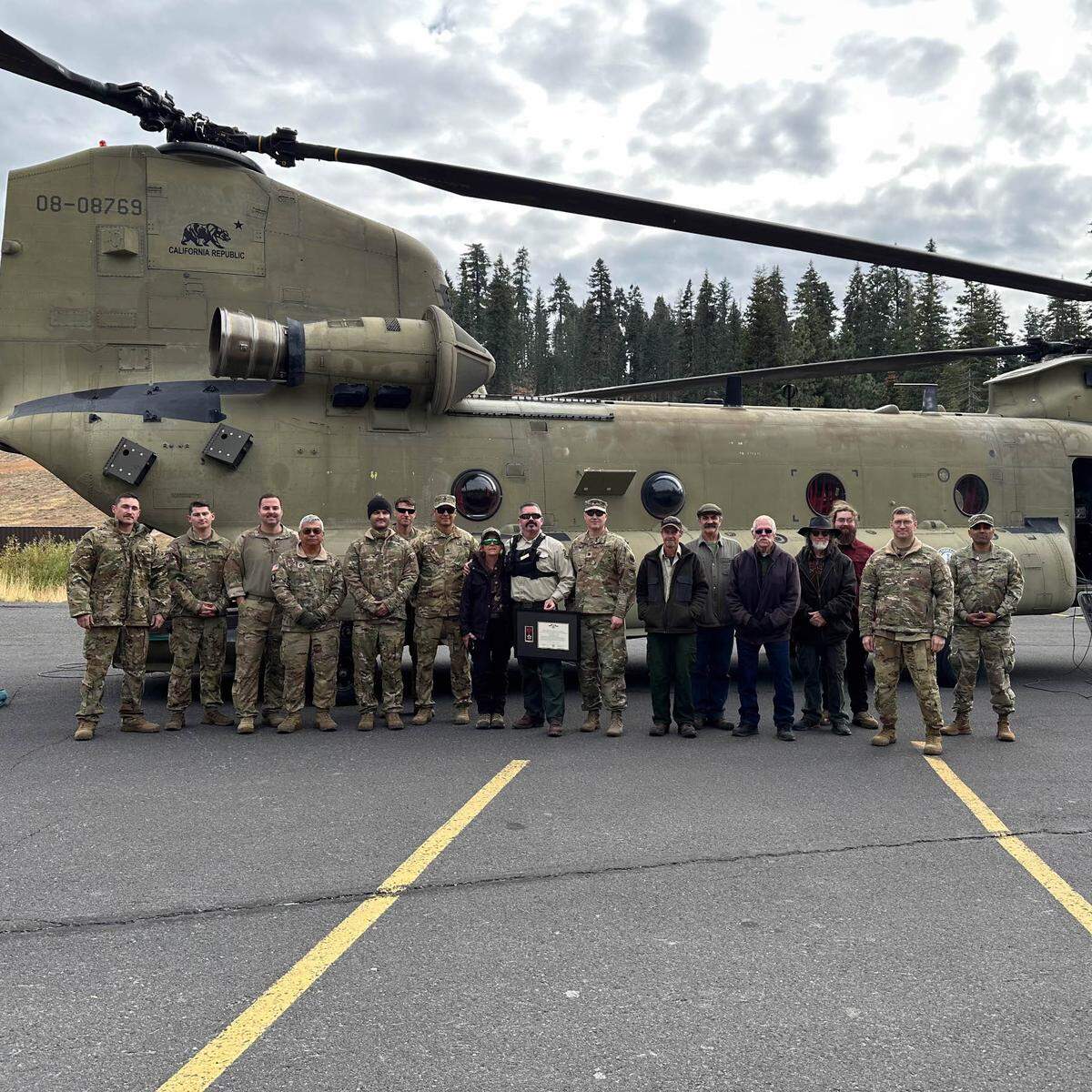
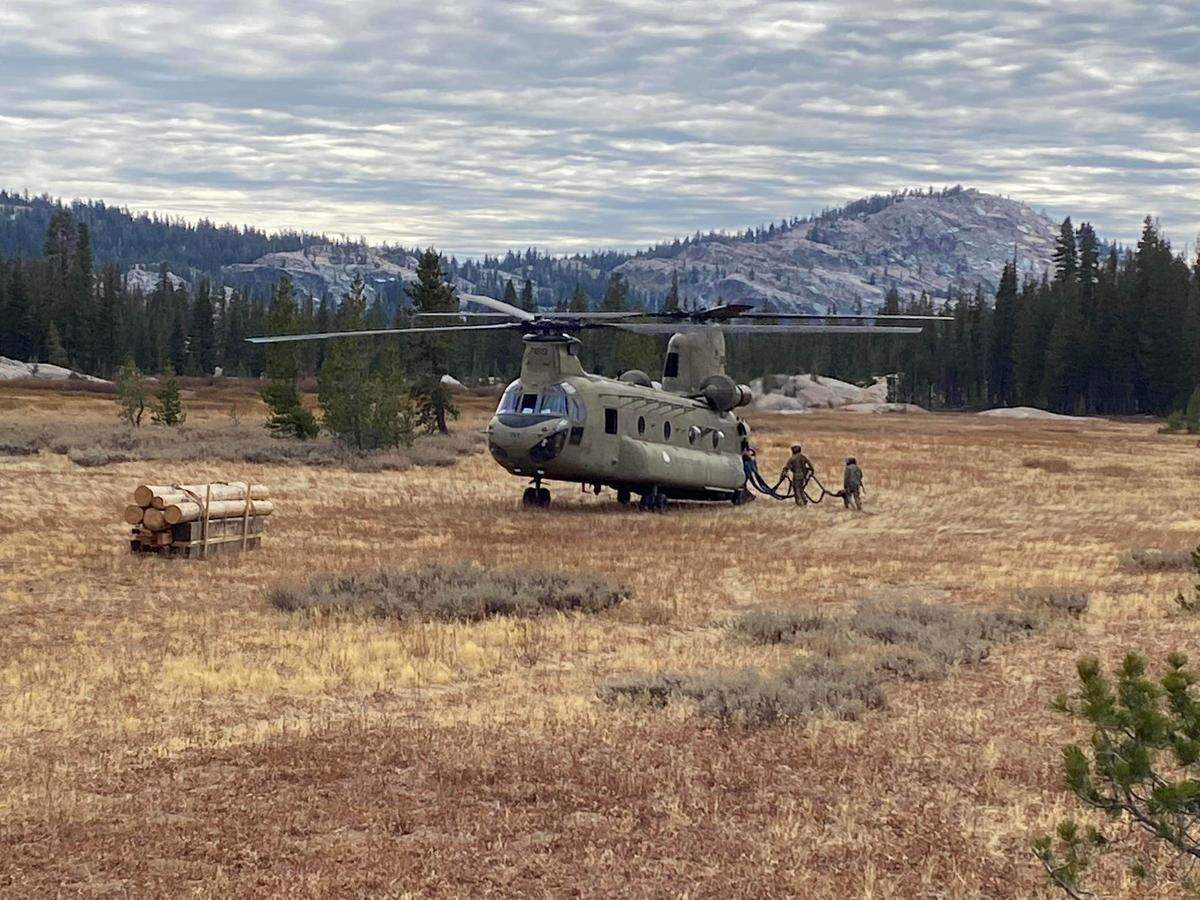
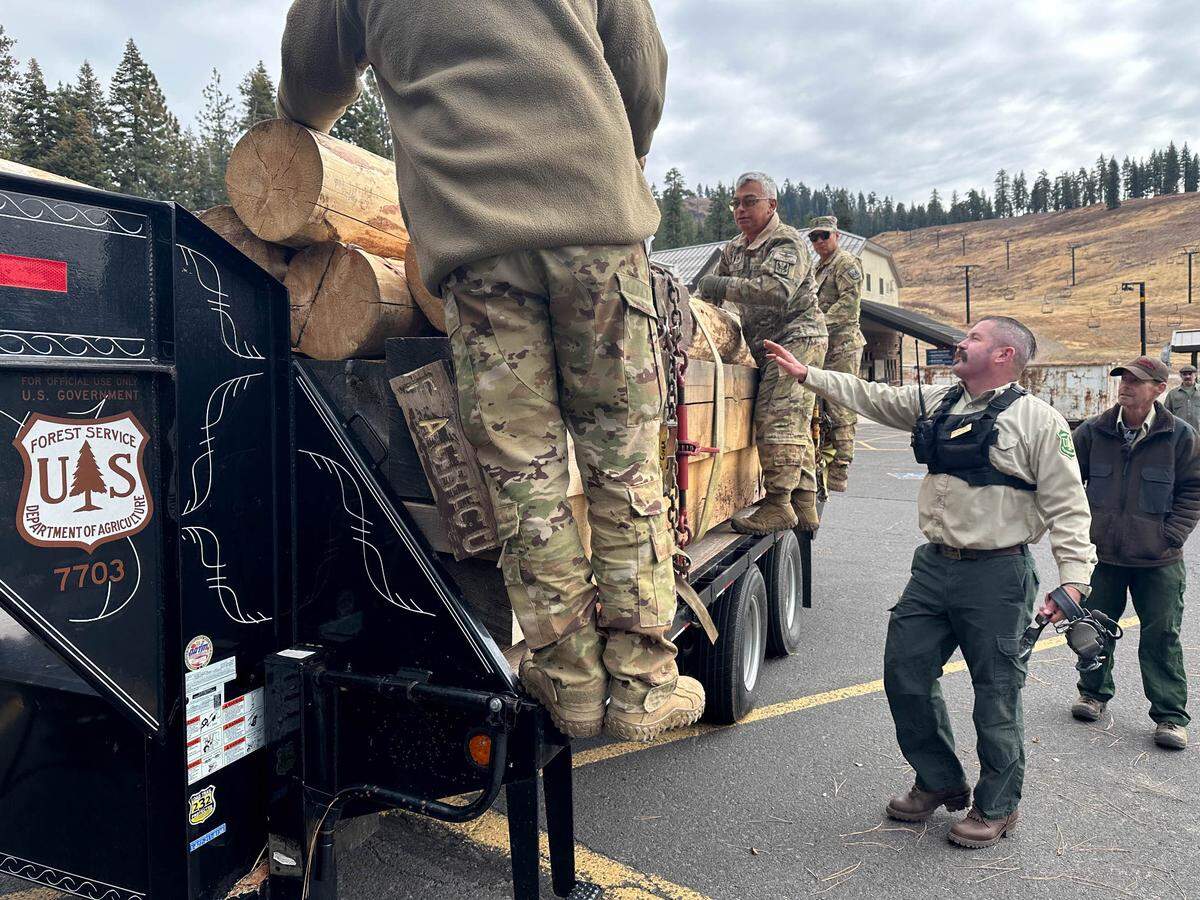
The California National Guard partnered with the Stanislaus National Forest to transport crucial supplies to a remote cultural site near Cooper Meadow on Oct. 30.
The site is Cooper Cabin, a 150-year-old high-elevation range cabin in the Emigrant Wilderness. It has served as a rustic base camp for cattlemen and women since 1875. Recognized as a Chinese heritage site in the American West, the cabin’s wooden walls bear the carved, burned or written names of cowboys dating back to at least 1882.
Kimberly Hill, deputy public affairs officer of the Stanislaus National Forest, said there are no tribal ties to the area.
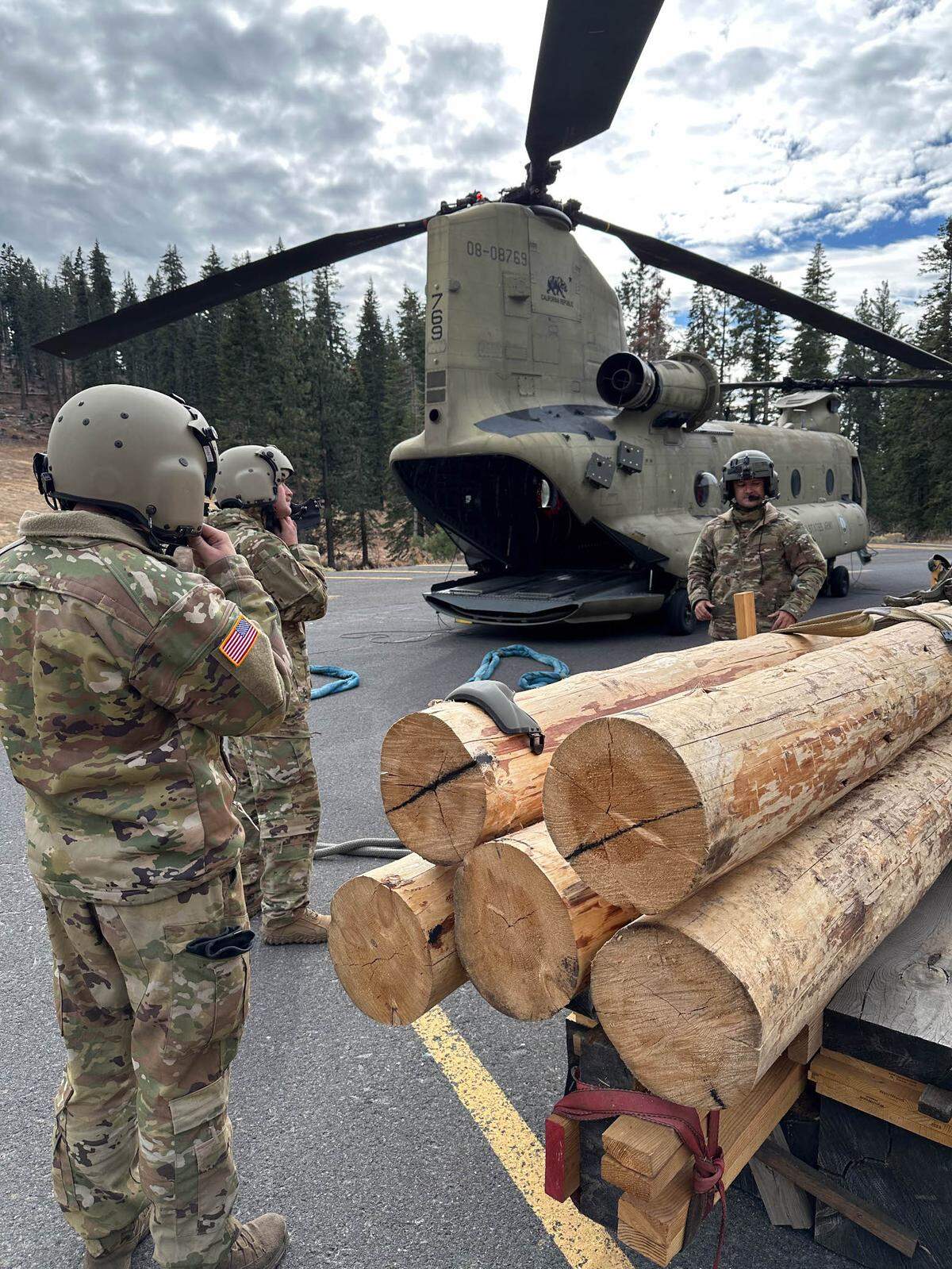
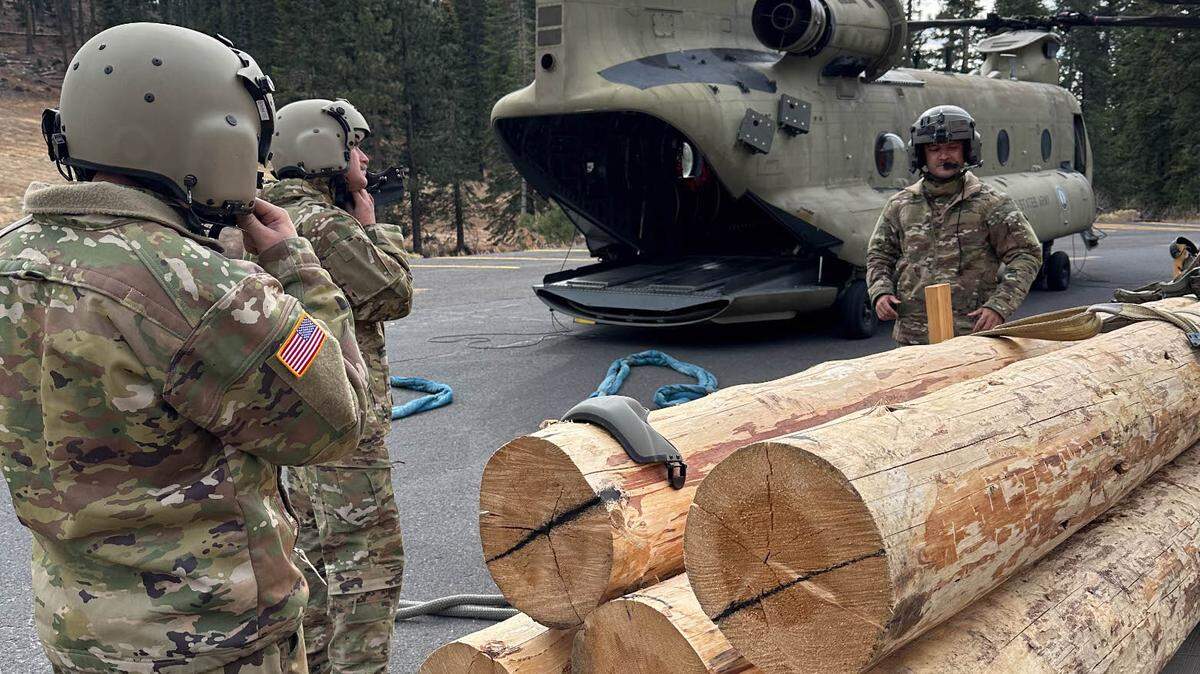
Using CH-47 Chinook helicopters, soldiers from Bravo Company, 1-126th Aviation Regiment, transported nearly 12,000 pounds of timber— both milled and unmilled — needed to repair the historic site. The mission involved two sling loads, a method in which heavy or bulky materials are suspended beneath a helicopter for transport to locations inaccessible by road.
“We are a heavy-lift helicopter company, so sling loads are our bread and butter. We practice them weekly with our training blocks, and it was a great opportunity to have a real-world sling load and personnel to work with,” said Army Capt. Patrick Koeneke, commander of B Co., 1-126th General Support Aviation Battalion.
The Wilderness Act of 1964 created the National Wilderness Preservation System and grants Congress the authority to designate wilderness areas. The act defines wilderness as undeveloped federal land that maintains its natural character and influence.
There are over 800 wilderness areas across the United States, managed by various land agencies, including the National Parks, Bureau of Land Management, U.S. Fish and Wildlife Service and the Forest Service.
This commitment to preservation means that they often lack infrastructure like roads, making supply delivery a challenge. As a result, the Stanislaus National Forest frequently partners with agencies like the California National Guard.
The collaboration allowed the Forest Service to initiate preservation work on the cultural site while providing National Guard aircrews with critical training in a high-altitude environment.
“It provided a great experience and training for our aircrews that we cannot replicate as much as we’d like,” Koeneke said.
The partnership gave Forest Service personnel the opportunity to see the National Guard in action, while Guard members learned about the logistical challenges of managing forested areas.
“This was an invaluable training opportunity for both teams, highlighting their shared commitment to readiness and resourcefulness,” said Shawn Winstead, district ranger for the Summit and Mi-Wok District of the Stanislaus National Forest.
“The success of this operation underscores the power of interagency collaboration in achieving common objectives, ensuring both the Stanislaus National Forest and other vulnerable landscapes receive the support they need in times of crisis.”