Turlock district could hike home power rates 17.6% over 3 years. How do MID, PG&E compare?
Residential power rates in the Turlock Irrigation District could rise nearly 18% over the next three years.
The average monthly bill, now about $145, would reach about $170 by 2027 under the staff proposal. The TID board will consider the matter Tuesday, Nov. 26.
The plan calls for increases of 5.6% at the start of 2025, followed by another 5.6% for 2026 and 5.5% for 2027. The total rise is 17.6% if compounded over the three years.
Customers can use an online bill calculator and get other details on the proposal, on the TID website.
Bills also would go up for commercial and industrial users. Their rates are a little lower than residential due to economies of scale in billing, power line maintenance and other functions.
TID serves about 240,000 people from south Modesto to north Merced County and from the La Grange area to the hills west of Patterson.
Even with the hikes, TID would remain somewhat cheaper than the neighboring Modesto Irrigation District. And both cost far less than Pacific Gas & Electric Co., the largest supplier in Northern California.
The TID board discussed the rate proposal Oct. 29 and voted 5-0 to hold the required public hearing four weeks later. The staff also suggests boosting the low-income discount, which would help some households.
“I think this will be not really pleasant, but it will be OK,” Director Joe Alamo said. “We’re making it as bearable as we can.”
Why does TID need to raise rates?
TID’s bill projections are based on average monthly use of 905 kilowatt-hours. Actual consumption is greater in summer due to air conditioning.
Much of the extra income would go to the cost of generating power. The top source is natural gas, including TID’s own plants and purchases from suppliers around the West.
The district also expects more wind and solar power to meet a state mandate for climate-friendly sources. The target is 60% by 2030 and 100% by 2045. TID stood at 36.9% as of 2023.
The qualifying sources do not include large hydroelectric plants such as the one shared with MID at Don Pedro Reservoir. This has long been their least expensive source.
Why are TID and MID cheaper than PG&E?
TID and MID cost less than PG&E in part because they are public agencies that do not seek to make a profit for investors. The districts do maintain substantial reserves so they can pay low interest rates on bond issues for capital projects.
TID and MID also have lower maintenance costs due to their mostly flat service areas. PG&E’s territory includes mountains that can get wildfires in summer and snowstorms in winter. Part of its rate increases has resulted from being found liable for megafires sparked by its wires.
The TID staff provided this comparison of its proposed residential rates with the other providers:
- TID would go from 16 cents per kilowatt-hour now to 16.9 cents in 2025, to 17.9 cents in 2026, and to 18.9 cents in 2027.
- MID will be at 22.7 cents per kilowatt-hour for the average user as of Jan. 1. This is the last of three annual increases approved by its board, totaling 16%.
PG&E now charges 43.6 cents per kilowatt-hour for a typical user.
All three utilities have rate tiers that reward frugal households while penalizing those that consume more power in a month. They also offer conservation programs and discounts for low-income customers and those with certain electric medical devices.
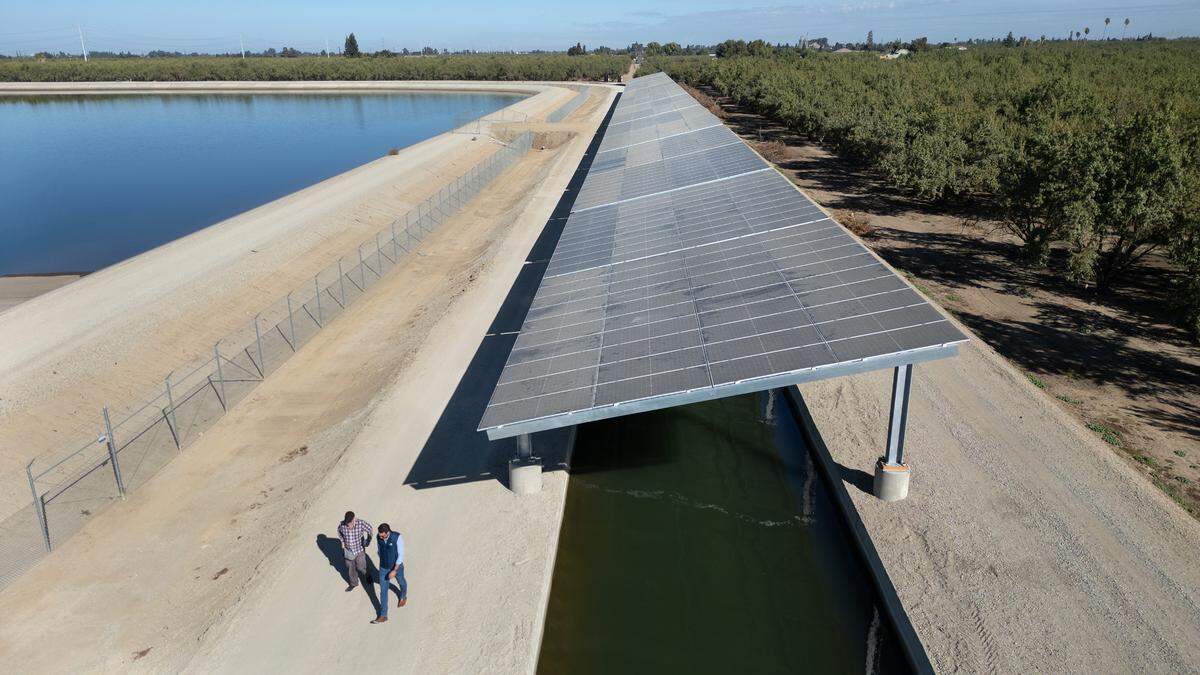
TID has another rate mechanism
TID bills rose in the last few years, but not because of a board vote. The staff has the authority to adjust the rates every six months based on wholesale power costs. This can range from a 1 cent surcharge to a half-cent credit per kilowatt-hour.
Customers got a half-cent surcharge from December 2022 to June of this year, due to especially high gas prices. It now is a half-cent credit thanks to an easing of the fuel market.
The board last increased the base rates, not counting the semiannual staff adjustments, in 2015.
“Kudos for keeping it at zero as long as you did,” Director David Yonan told the staff at the Oct. 29 meeting. “I think good management instills that now is the time to go on the three-year revenue increase.”
The board will meet at 9 a.m. Tuesday, Nov. 26, at the district office, 333 E. Canal Drive, Turlock. Details on watching remotely are at www.tid.org.
This story was originally published November 20, 2024 at 12:15 PM.