What’s killing the fish in backyard ponds of Modesto? Is aerial spraying to blame?

Vector control experts say an insecticide sprayed to control mosquitoes in Modesto and Salida this month is safe for people and their pets.
But some residents claim it killed their fish.
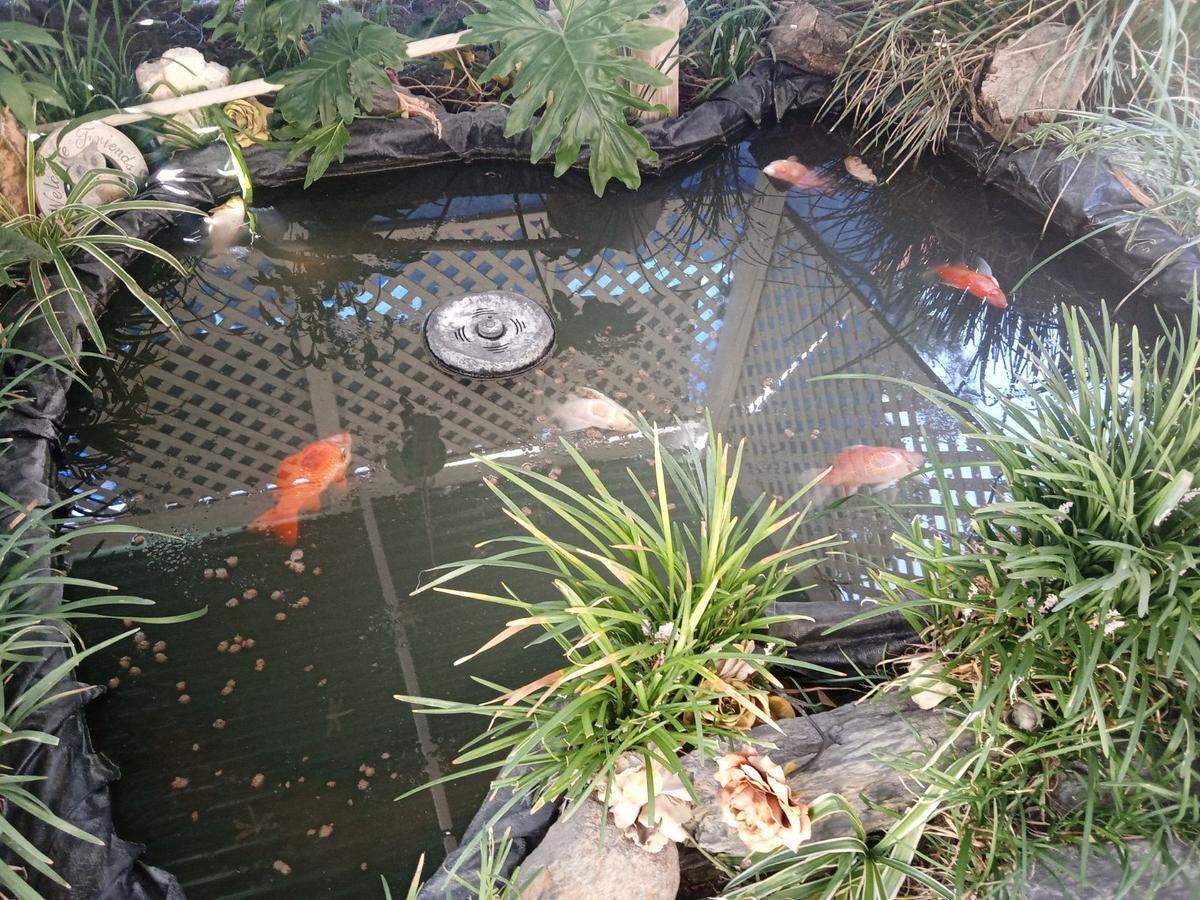
“I went out to feed them and they were floating on their sides,” said Katherine Martinez, who has a fishpond behind her Dry Creek area home in Modesto.
Martinez said she heard the plane overhead the night before but didn’t know what it was. “I was sleeping with the windows open and was inside breathing it all,” she said.
Other Modesto residents said in multiple social media posts that their fish in backyard ponds died after the spraying. “My neighbors’ fish that she has had for 8 years, all died last night,” one post said. “Did anyone have this happen after they sprayed for mosquitoes?”
The East Side Mosquito Abatement District paid a contractor to conduct aerial spraying over northeast Modesto on Aug. 1, northwest Modesto and Salida on Aug. 8, and Empire and east and southwest Modesto on Aug. 16.
Some residents are complaining and raising questions about the insecticide released by aircraft, any health risks and why people didn’t see public notices ahead of time.
East Side, in a news release in late July, announced the aerial spraying would target mosquitoes that carry West Nile virus and another species able to spread dengue fever and Zika, though the latter two viruses have not been detected in the region.
What’s been reported about the insecticide Dibrom
The mosquito abatement districts, which have contended with West Nile for years, have gone away from spraying pyrethrens due to increased resistance in mosquitoes. Dibrom, known for an active ingredient called Naled, was sprayed over Modesto, Salida and Empire in August.
Dibrom sparked debate in Florida during spraying that followed the discovery of locally transmitted cases of Zika in Miami in 2016. It has touched off controversy in other states where it is applied.
According to the Environmental Protection Agency, Dibrom does not pose a risk to people and their pets when applied in low concentrations. The European Union has a different view, however, and doesn’t allow Naled use in agriculture because it breaks down to a toxic chemical called dichlorvos.
Judith Levi-Wood, a neighbor of Martinez’s who keeps a pollinator garden, said the spraying was upsetting to her because she has seen a decline of bumblebees. The insecticide’s deadly affect on bees has been reported in other states.
Levi-Wood said East Side’s notifications have fallen short. She said another neighbor left her small dog outside the same night as the spraying Aug. 16, not knowing about the aerial spraying.
Tiffany Castillo, the neighbor, said the Pomeranian mix was coughing foam and phlegm the next day. Her other small dog had remained inside the house and was fine. A veterinarian diagnosed the sick dog with inflammatory bronchitis, Castillo said.
A Salida resident whose koi died after one aerial spraying pointed to posts on a public Facebook page from four other unhappy residents who lost their fish.
Fish deaths a coincidence?
Wakoli Wekesa, general manager of East Side, said he believes the reported fish fatalities are coincidental. As an example, the Salida resident’s complaint was referred to him and he learned the koi died over several days. An excessive dose of Dibrom, which breaks down rapidly in water, would not have harmed fish days later, he said.
Wekesa, who spoke with Martinez, said he was told she found her lifeless fish the morning before the Aug. 16 spraying. Martinez later countered that she was driving home from work while speaking with Wekesa. She said she discovered what happened the morning after Aug. 16 and showed The Bee a 5:47 p.m. message Aug. 17 telling her neighbor the “aerial spray last night killed all my fish.”
.jpg "5291457981244918414(1).jpg")
“She would still have her fish if she could have covered the pond in her yard,” Levi-Wood said. “That spray smells. It is a very strange odor. It smells like a chemical.”
Wekesa said aerial spraying is a last resort. The district orders it when West Nile-infected mosquitoes persist in high numbers and need to be reduced to protect people from infection.
The airplane releases a very low concentration, 0.75 fluid ounces per acre, creating an aerosol mist that kills mosquitoes on contact. It stays in the air for 10 to 15 minutes, Wekesa said.
Wekesa said the same material is used for mosquito control in Placer, Yolo and Sacramento counties, and has been sprayed in San Joaquin County for three to four years, without the impacts reported in Modesto. Districts in Turlock and Merced also have used it.
“In the general population, there are phobias with pesticides,” Wekesa said. “In reality, the materials we use don’t have the impacts that people have anxiety about.”
Bryn Phillips, a researcher with the UC Davis environmental toxicology department, has studied what happens when Naled is sprayed over water. The material breaks down rapidly and one resulting chemical is dichlorvos, which is toxic to invertebrates in water, such as daphnids and small crustaceans.
“Naled can be toxic to fish, but likely at higher concentrations than those affecting invertebrates,” Phillips said by email. “These concentrations would vary by fish species, and there would need to be measurements of naled concentrations in people’s backyard ponds to demonstrate causality.”
What kinds of notifications are made?
East Side has published press releases on its website the Tuesday before each aerial application, and notices have been posted on the city of Modesto’s Facebook and Instagram accounts. Notices also are sent to Stanislaus County, schools and people on the district’s notification list. East Side doesn’t have a Facebook page due to lack of staffing, the manager said.
In response to recent complaints, the district will increase communication and identify more avenues for reaching the community, Wekesa said. The notices will add that people with a pond on their property may consider covering it before a scheduled aerial application.
Local residents noted that agencies from Tulare to Florida advise people they may choose to bring pets indoors and cover fishponds before Dibrom is sprayed. It’s important to remove covers afterward to prevent oxygen depletion in fishponds.
The Tulare Mosquito Abatement District consulted with the Centers for Disease Control and Prevention, EPA and California Department of Public Health before spraying mosquitoes with Dibrom last year around Tulare Lake, which reemerged as a result of heavy storms.
The insecticide, registered by the EPA since 1959, also is used on crops, in livestock pastures and in greenhouses for control of flies, gnats and other pesky insects.
Levi-Wood said she’s not opposed to spraying as a last resort but other strategies could be taken to reduce mosquitoes. She said the conservation rules to water lawns and gardens after 7 p.m. benefit mosquitoes, which are active in the evening and thrive in moisture. A summer watering time at 5 p.m. would let the sun dry the leaves, she said.
Notifications for aerial spraying could be improved with flyers, more social media advisories and digital signs alongside key roadways, she added.
Wekesa said additional aerial spraying may be considered in the upcoming weeks as the weather warms up and the district monitors mosquitoes and West Nile infection levels.
Various agencies recommend precautions, especially for those with known chemical sensitivities or a heightened sense of concern:
- Stay indoors with windows closed during the spraying.
- Don’t allow children to play outdoors for four hours after the spraying.
- If you come into contact with the chemical, rinse your skin and eyes with water.
- Cover outside furniture and grills before the spraying. Bring pets and items like pet food dishes and children’s toys indoors.
This story was originally published August 23, 2024 at 5:17 PM.