Sewage leaks, power outages, dead body: complaints pile up as Ceres residents sue landlord

Martin Padilla was on his daily afternoon walk around his Ceres neighborhood with his grandson when he noticed the smell. His grandson plugged his nose as they passed the abandoned trailer at the Lazy Wheels mobile home park from which the flies seemed to emanate. Dogs run free around their neighborhood, so Padilla assumed one had died and was decomposing.
Others noticed, too. On Oct. 13, 2020, a Ceres police officer was dispatched to the trailer because of a “bad smell” and “lots of flies.” The officer found the body of a man later identified as Douglas Mitchell Alameda, 53.
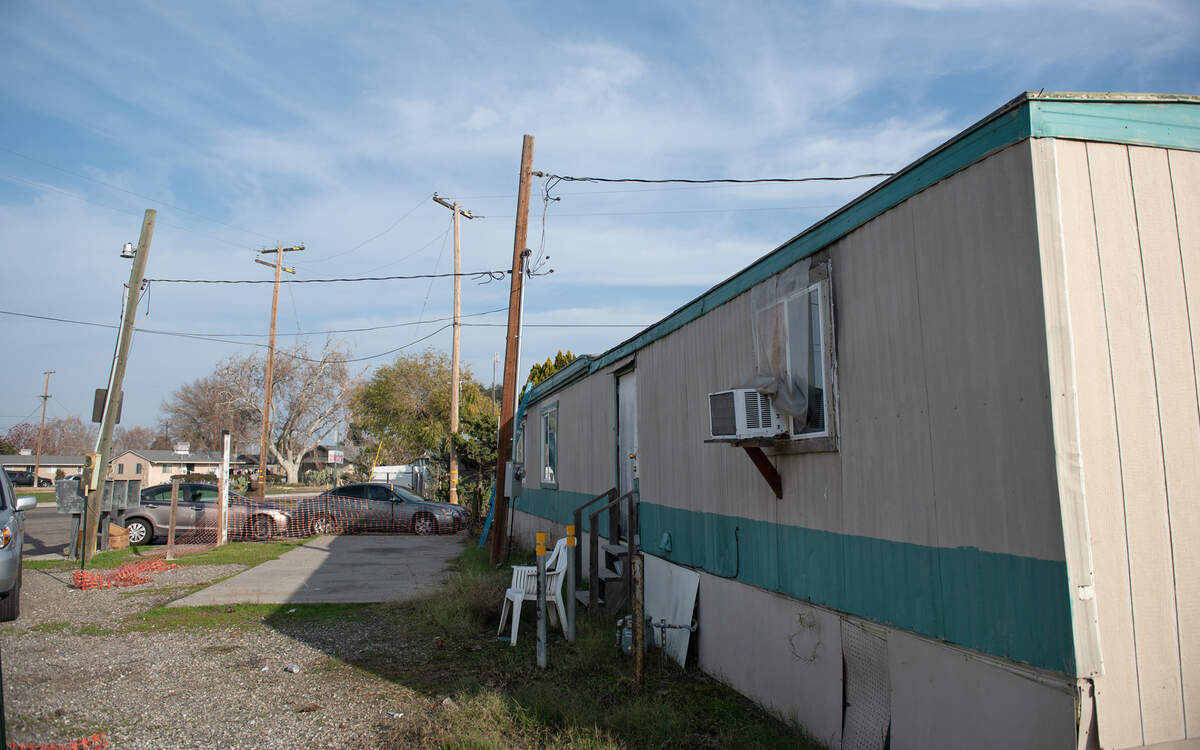
The body left to decompose in the trailer is among a litany of complaints the tenants at Lazy Wheels make against their landlord in a recent lawsuit filed at Stanislaus Superior Court. Sewage that leaks from pipes, electrical fires and days without water or power are all too common, the lawsuit says.
Ironically, the lawsuit is also one of the few things keeping them in their homes. Until it is resolved, the residents – who were supposed to be evicted in 2018 – remain.

Problems ablaze
Padilla has six Chihuahuas he rescued from the street. His dogs commingle with the strays and the neighbors, some of whom are relatives and almost all of whom speak Spanish like him. Of the 27 tenants suing the landlord, the majority have lived at Lazy Wheels for more than 15 years. Padilla moved there 1996.
Now, at 60, he struggles to leave his home when the rain floods the dirt sidewalk, and he subsists on disability checks to manage his diabetes and high blood pressure.
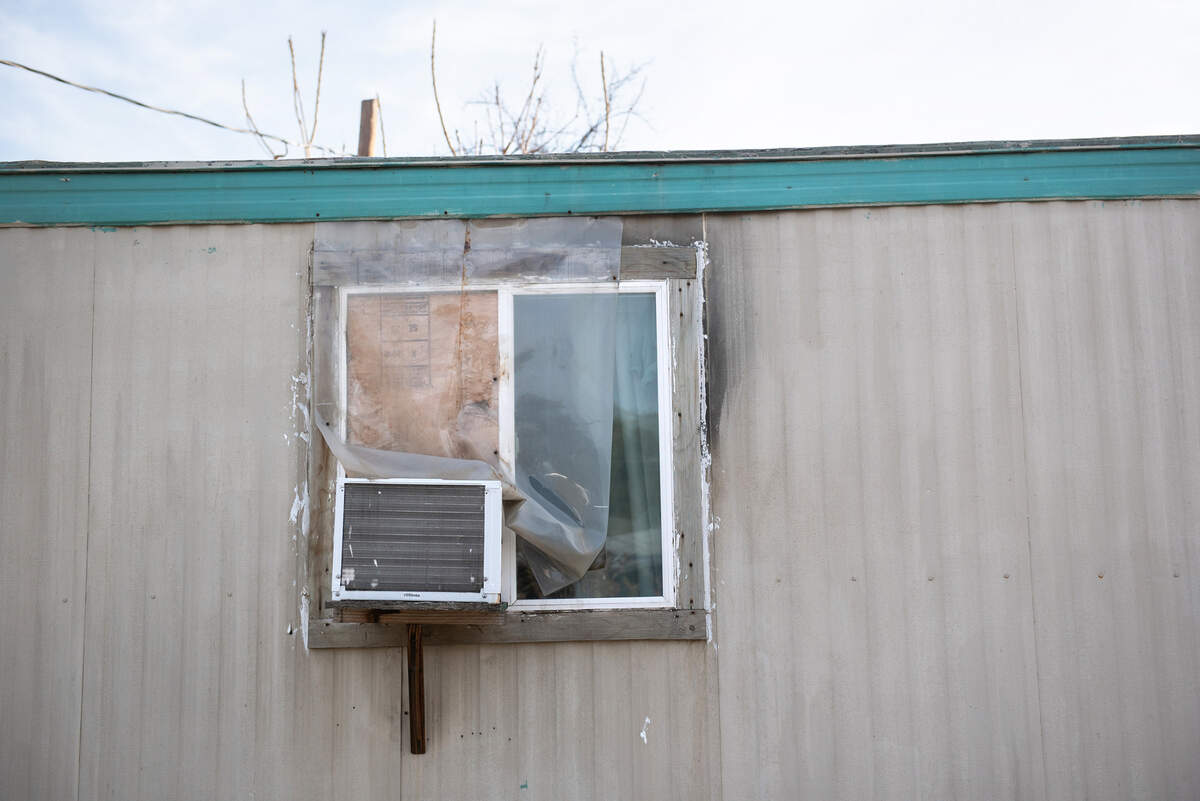
Last summer, an electrical problem gave him a shock when he touched the walls of his home. “The lights would dim and brighten until they created a fire that burned things in my house,” he said in Spanish. The air conditioning was ruined, and he had to move into a hotel to avoid the day’s heat.

In 2018, Padilla’s brother-in-law, Gustavo Lopez, had an electrical fire that destroyed much of his trailer, just a few feet away. “We lost everything. We had to redo the whole mobile home, from the inside and the outside,” he said.
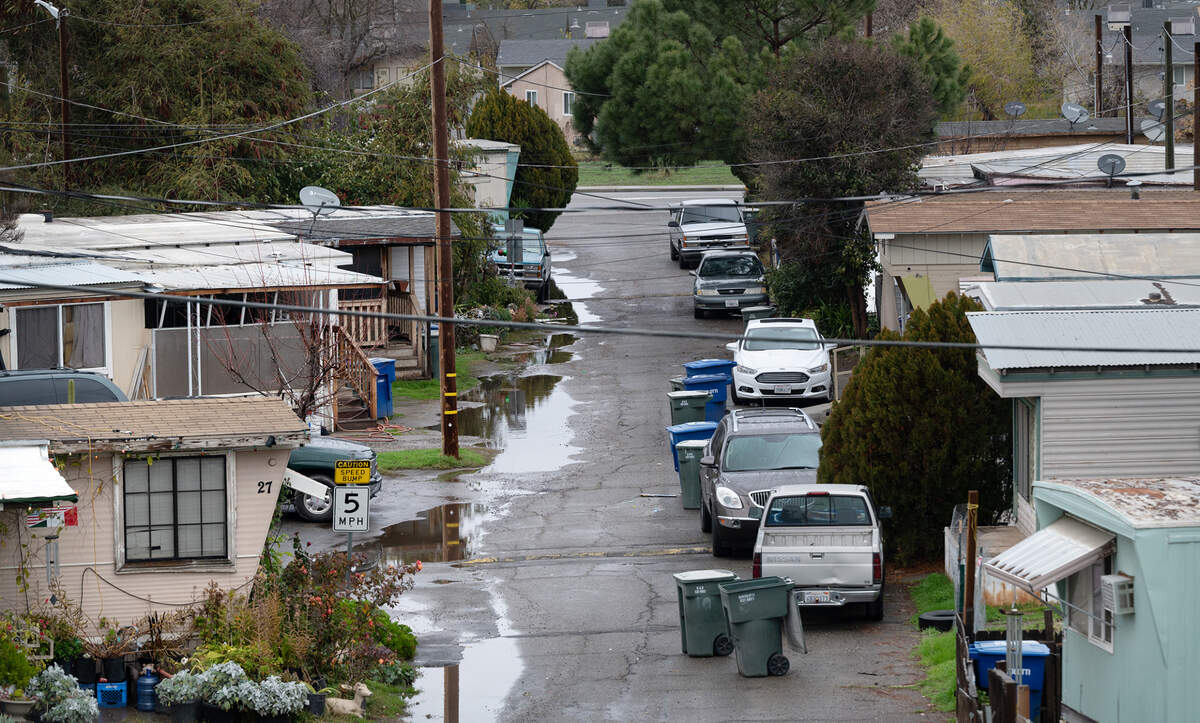
Lopez has spoken out on behalf of his neighbors over the years as the city of Ceres tries, in vain, to remove the mobile homes and make way for a gas station and convenience store or fast-food restaurant. As he walks along the neighborhood’s four streets, he stops by different trailers, where many older residents lack the mobility or the vocabulary to protest the conditions.
Lopez talks quickly, switching between English and Spanish seamlessly and adding his own details into each neighbor’s story. Despite the complaints, Lopez is proud of his home at the entrance to the park, where he has lived since 1996. As another neighbor, Leobardo Padilla, points to the trough under his home where sewage leaks and mosquitoes breed, Lopez interrupts to recall the one time Leobardo Padilla’s son called 911 because the sewage problem had become severe overnight.
That time, the landlord sent someone to intervene soon after, said Lopez, but the problem never went away.
“All they needed to do was clean up the pipes that were blocked up,” Lopez said in Spanish. Leobardo Padilla nodded in agreement. The landlord, Lopez went on, “didn’t want to pay.”
In the lawsuit, Leobardo Padilla and his wife, Enedina, allege the landlord has shut off their water “for weeks at a time” and “without notice” and that they “loses (sic) power frequently.” Like many neighbors in the lawsuit, Leobardo and Enedina Padilla allege the landlord is charging them arbitrary and uncharacteristically high amounts for utilities despite frequent outages.
The lawsuit includes as evidence a utility bill for the entire mobile home park from February 2021 showing a monthly bill of $2,283.42 with $47,945.89 in previous unpaid balances.
The landlords, Sugarman Asset Management, LLC, and Metro Investments Group, Inc, both based in Calabasas, did not respond to comment in time for the publication of this story. Attorney Geoffrey Evers, who represents the two companies, said the lawsuit is “defective.” He has challenged the lawsuit, first filed in January 2022, saying, among other things, that the legal argument is too broad and vague.
On the wrong side of the highway
The lawsuit may take years to resolve, said Evers, but regardless of the outcome, the tenants remain on shaky ground. Ceres planned to evict all the mobile home residents in 2018 due to a zoning violation.
The zoning history of the park stretches back to 1950, when it was built. In 1965, the earliest available city records show that the mobile home park was zoned as a residential area, Ceres community development director Christopher Hoem said in an email. That changed in 1968 when the city designated the land as “highway commercial,” the kind of place where someone today might find an Arco station or a Denny’s, not a tract of mobile homes.
In 2001, Ceres and the California Department of Transportation selected the highway exit adjacent to Lazy Wheels as a prime location for “interchange improvement,” said Rick Brewer, a Caltrans public information officer.
“The idea of the project was to create a new interchange that expanded the overcrossing, the part that goes over the freeway, to four lanes ... and also the road, Whitmore avenue, to four lanes,” said Brewer.
Creating a new overpass and a wider road meant many of the Lazy Wheels tenants needed to move.
In 2010, Caltrans bought the mobile home park for $1 million and offered $30,000 each to 42 households to relocate, Brewer said. Other residents, like Martin Padilla, Gustavo Lopez, and Leobardo Padilla, lived beyond the boundaries of the construction project so they stayed in their homes and Caltrans became their landlord.
When Caltrans notified Ceres in 2013 that it was ready to sell the remaining property, the planning commission passed a resolution about the park, saying the homes are “old, substandard, and have caused blighted conditions.” The resolution said Lazy Wheels was on land zoned as commercial, not residential, and issued a “notice of noncompliance.”
In the next five years, the resolution said, the landlord-to-be would need to evict all tenants and turn the property into a “highway commercial” zone, per earlier zoning laws.
Lazy Wheels tenants showed up to an August 2013 planning commission meeting to express frustration and confusion over the resolution and the ways Caltrans had handled the property. All but one commissioner voted in favor of the resolution.
Despite Caltrans’ intention to sell the property in “the next few months,” the sale took four years. The current landlords, Sugarman Asset Management, LLC, and Metro Investments Group, Inc, purchased the property in March 2017.
While Ceres has made it clear it wants to remove the tenants, the state regulates mobile home parks. State law requires landlords to provide at least one year’s notice to tenants before evicting them over a zoning change.
Lopez and Martin Padilla said they have never received a notice of eviction. Both have lived in the mobile home park for 26 years. Neither the state regulatory agency nor the current landlords responded to comment.
By 2020, temporary laws during the COVID-19 pandemic prevented the landlords from initiating an eviction until 2022, the same year the tenants filed their lawsuit. Evers said an eviction cannot proceed until the lawsuit resolves, which leaves Lazy Wheels to roll on, for now.