‘A 55-gallon bucket of PCE’: How this cancer-causing chemical might affect public health
Modesto has been suing two of the world’s largest chemical companies for the past 24 years over a colorless cleaning chemical that research indicates can cause cancer. Dry cleaners across the city have been using the chemical for decades.
The chemical – tetrachloroethylene, better known as PCE or PERC – has been identified by the California Air Research Board (CARB) as a public health hazard for more than 30 years, and the EPA determines it poses “an unreasonable risk to human health.”
The California Department of Public Health (CDPH) has identified 23 former and current dry cleaners across the city that may pose health risks to residents. While PCE isn’t limited to dry cleaners – it is used in certain adhesives, arts and crafts, car parts and polishes – these old stores left a particularly dangerous trail when they tried to dispose of the chemical.
To make that point clear, Michael Alder, an attorney representing Modesto in the most recent trial involving one site, held up a 5-gallon bottle.
“If you imagine this courthouse, this multistory courthouse, and you sealed it and put a funnel at the top, and you filled it with water, and you put eight of these courthouses together, and filled it all with water and dumped this [bucket] in, it would exceed the legal limit for safe drinking water,” said Alder in an opening statement first reported by Law360.
“Now the evidence is going to show that for 33 years, this dry cleaners used not a five-gallon bucket but a 55-gallon bucket of PCE.”
This trial involved one former dry cleaners, the present-day location of El Chacon Bar at 413 7th St. in Modesto.
In another location on Yosemite Boulevard that is outside the scope of the trial, Modesto has already pumped 200 pounds of PCE from the soil, a 2019 CDPH report said.
From the ground, the chemical can then leach into the city’s water system or filter up through the air, even entering buildings.
Once PCE is in the air or the water, or if it touches a person’s skin, it can pose serious risks to human health, according to a book on pollutants from the World Health Institute. A study from scientists at the International Agency for Research on Cancer of dry cleaner workers showed that PCE created a “significantly elevated risk” for bladder cancer. Some research has tied it to non-Hodgkin lymphoma and kidney disease.
Other symptoms from exposure to the chemical can include memory loss, fatigue, even mood changes, according to a research institute at the University of Massachusetts.
In 1991, the California Air Resource Board (CARB) identified PCE as a toxic substance and began training dry cleaners to use the chemical more safely. An evaluation from CARB found 12 years later that the use of PCE had dropped by 70 percent but that “more could be done.” CARB recommended in 2007 that dry cleaners phase out the use of PCE altogether by January 1, 2023.
Other states have been more proactive. Last year, for example, Minnesota became the first state to ban the chemical as a dry-cleaning solvent.
Meanwhile, the Environmental Protection Agency (EPA) updated a draft report this year to say that PCE poses a risk in all of its applications, including for automotive uses, adhesives and polishes, as well as dry-cleaning. The agency is currently looking into how the chemical travels from soil into air or water.
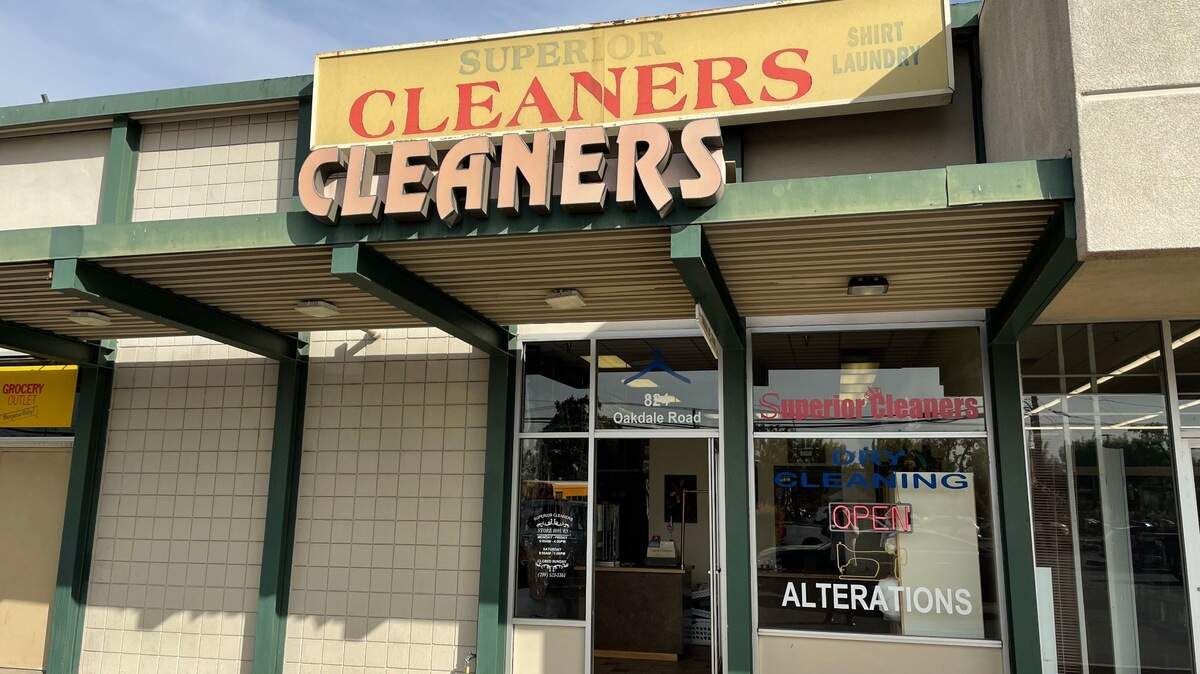
![“This has nothing to do with us,” said Emik Solymanbeyk, owner of Superior Cleaners: “It’s them [Modesto] with Dow Chemical.”](https://www.modbee.com/public/latest-news/5596dx/picture268009007/alternates/FREE_1200/Superior%20Cleaners%202.JPG "Superior Cleaners 2.JPG")
During the trial against Dow Chemical and PPG Industries, Modesto Director of Utilities William Wong testified that “three of four well sites” in Modesto contain PCE, but he assured that his department treats the water so that it is safe to drink.
There is little data about the level of PCE in the air at the former dry cleaner buildings and their vicinity. Numerous reports from the California Department of Health say that it is “likely” or “possible” that the chemical has traveled from the ground and into the air, but there is not enough evidence to prove whether the air has directly harmed the health of Modesto residents.
Emik Solymanbeyk has owned and operated Superior Cleaners on Oakdale Road since 1981, but she isn’t concerned about the impact of PCE. “There’s nothing in here,” she said, opening her hands to show the back of the dry cleaners. They converted the store to a satellite office decades ago and no longer do any cleaning on-site.
She remembers a visit from city officials many years back and received a letter in 2021 from City Attorney Jose Sanchez asking to collect environmental samples. She doesn’t remember whether the city ever showed up and isn’t concerned about the possible health implications.
She said she’s healthy: “I didn’t even get COVID.”
At the trial, jurors found that Modesto could not prove Dow Chemical and PPG Industries harmed human health. However, they did find evidence of “malice” on the part of the companies and charged Dow Chemical with $56.3 million in punitive damages in addition to the $4 million that Modesto won in compensatory damages.
The case pertained only to the location at 413 7th St. and not to the other 23 contaminated sites. The city of Modesto plans to continue the legal case for damages at the other former and current dry cleaners, though Solymanbeyk is holding out hope after so many years.
“This has nothing to do with us,” she said. “It’s them (Modesto) with Dow Chemical.”
This story was originally published October 31, 2022 at 9:00 AM.