Stanislaus County sent no one to ICE last year, but not for lack of trying
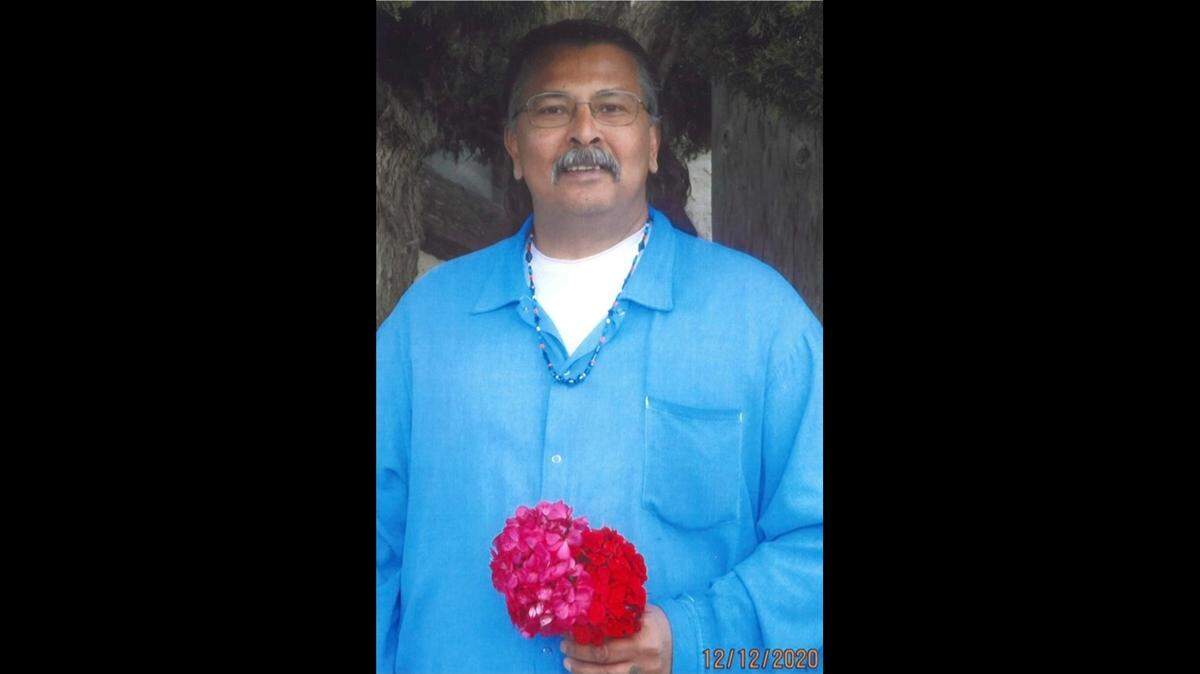
One summer night in 1994, Salesh Prasad got angry. He believed Thomas Ortiz had broken his car windows, so in a heated argument, Prasad shot Ortiz twice in the back of the head outside a market in Modesto. The judge sentenced Prasad to a minimum of 20 years in state prison.
In 2021, the State Board of Parole granted him release after 26 years in prison, citing his good behavior and his long commitment to substance abuse recovery and therapy.
“They said congratulations. I said thank you, and I started crying” said Prasad in a phone interview.
But more than a year later, he is still not free. That’s because Prasad immigrated to the U.S. from Fiji when he was 6 years old, and though he entered the country legally, he was a legal permanent resident, i.e., a green card holder, and not a citizen. Upon his release from prison, Prasad was transferred to an immigration detention center, where he now fights his deportation to a country he can scarcely remember.
His experience is hardly an isolated event. The Stanislaus County Sheriff’s Department transferred 106 people from jail into Immigration and Customs Enforcement (ICE) custody from 2018-20. American Civil Liberties Union senior staff attorney Maria Romani said the Sheriff’s Department numbers may represent an undercount. It’s all part of an ongoing debate across the country about the role of so-called sanctuary cities and counties that limit the ability of ICE to deport immigrants.
On Oct. 18, Sheriff Jeff Dirkse delivered his annual presentation to the Board of Supervisors on ICE. In 2021, the county transferred no one to ICE, he reported. But that was despite 30 attempts to do so.
Values Act lays down the law
The low numbers have little to do with county politics, according to Dirkse. Instead, the drop in ICE transfers comes as a response to a 2018 state law, known as the Values Act, that affects how police and sheriff’s departments cooperate with immigration authorities.
Any person who enters jail is fingerprinted, and the prints are accessible by ICE. But that data set is enormous, so ICE often relies on local authorities to sort through potential cases. The Values Act restricts the way law enforcement agencies communicate with ICE, allowing the Sheriff’s Department to work with ICE only when an inmate has committed certain felonies. All misdemeanors do not qualify.
Examples of the common crimes that could merit both prison and deportation include assault, possession of a weapon, crimes against children, and intent to traffic drugs. A DUI, for example, would be a misdemeanor and not lead to deportation unless another person is harmed.
Since the law went into effect in 2018, ICE has requested and gained access to fewer people in the jail system. “It’s a waste of their time to ask for people we won’t give them,” Dirkse said in an interview.
He also noted that the Sheriff’s Department booked 25% fewer people into jail last year than in the years leading up to the COVID-19 pandemic.
Romani, the ACLU attorney, questioned the sheriff’s data and alleged that 2022 already has seen more ICE activity at the jails than last year.
In a report this spring, the ACLU found that on average, the counties across the San Joaquin Valley transferred three times more people to ICE during 2018-20 than they disclosed to the Attorney General’s Office.
She noted that the Values Act requires the Sheriff’s Department to let people out of jail regardless of whether ICE shows up at their release. The report found that in 2018 and 2019, the Stanislaus Sheriff’s Department illegally held certain immigrants in custody for extra time so ICE could pick them up. Dirkse, who became Sheriff in January 2019, says that much of the department’s behavior predates his leadership.
The ACLU shared one correspondence from 2021 — the year the Sheriff’s Department said it made zero transfers. In the note, the Sheriff’s Department asked ICE what time its officers planned to arrive to pick up a person from jail.
In an interview, Dirkse pointed out that the correspondence doesn’t contradict his report to the Board of Supervisors. He could not comment on the individual case but reiterated that the department did coordinate with ICE last year to transfer 30 people who had committed eligible crimes. It’s just that the ICE officers didn’t show up when those people were released, he explained. “They don’t have the capacity.”
Lawmakers’ VISION fails
On Aug. 18, 2021, guards started preparing Prasad for his release. He was able to change out of his prison uniform and into a new outfit his mother had bought for the occasion. “A pair of shoes, a brand new pair of shorts, socks, everything,” he said.
Standing in his new clothes, he waited for the guards to drive him to the bus station, but instead, an ICE officer appeared and took custody of him. Soon, he was undressing again, this time to put on a red uniform for the Golden State Annex detention center in McFarland. The colors denote whether the immigrant has committed a crime. Red is for formerly convicted felons; orange is for everyone else.
“California should not subject these community members to a second, double punishment, and disregard their record of rehabilitation, stable reentry plans, and community support, purely because they are refugees or immigrants,” wrote Assembly Members Ash Karla (D-San Jose), Wendy Carillo (D- Los Angeles), and Miguel Santiago (D- Los Angeles) in the introduction of a new bill, known as the VISION Act. It would have eliminated the transfers from jails or prison to ICE in all but a few cases, but it failed to pass the California State Senate this August.
“It’s not double jeopardy, they’re two completely different things,” Dirkse said. The first punishment is for the felony the person committed in Stanislaus County, and the second punishment is for violating immigration law, he explained. Though ICE’s actions are beyond his control, he supports deporting undocumented immigrants convicted of “heinous crimes.” In general, he said, he supports “liberal immigration policies” coupled with tougher border security. He didn’t specify what particular immigration policies he would support.
In Prasad’s case, the first punishment was for committing a homicide. The second punishment was for not being a citizen. Romani and Prasad see that as an injustice and look to the VISION Act as a future.
In the meantime, Prasad is applying for humanitarian relief, arguing that as a queer, Indo-Fijian man, he faces torture in his home country. Last month, the Stanislaus County Democratic Central Committee signed a resolution in favor of a pardon, but that decision lies outside Modesto and in the hands of Gov. Gavin Newsom.
This story was originally published October 24, 2022 at 5:00 AM.