Modesto expects sales tax will end years of cuts to public safety, parks, other services
Modesto spent $6.1 million from its $108 million general fund a decade ago for employee pensions. It expects to pay about $30 million from its current general fund of $171.4 million.
That disproportionate jump in cost illustrates the stress the general fund has been under. While revenues — primarily sales and property taxes — are growing, they have not grown as fast as expenses, which primarily are employee wages, health care and pensions.
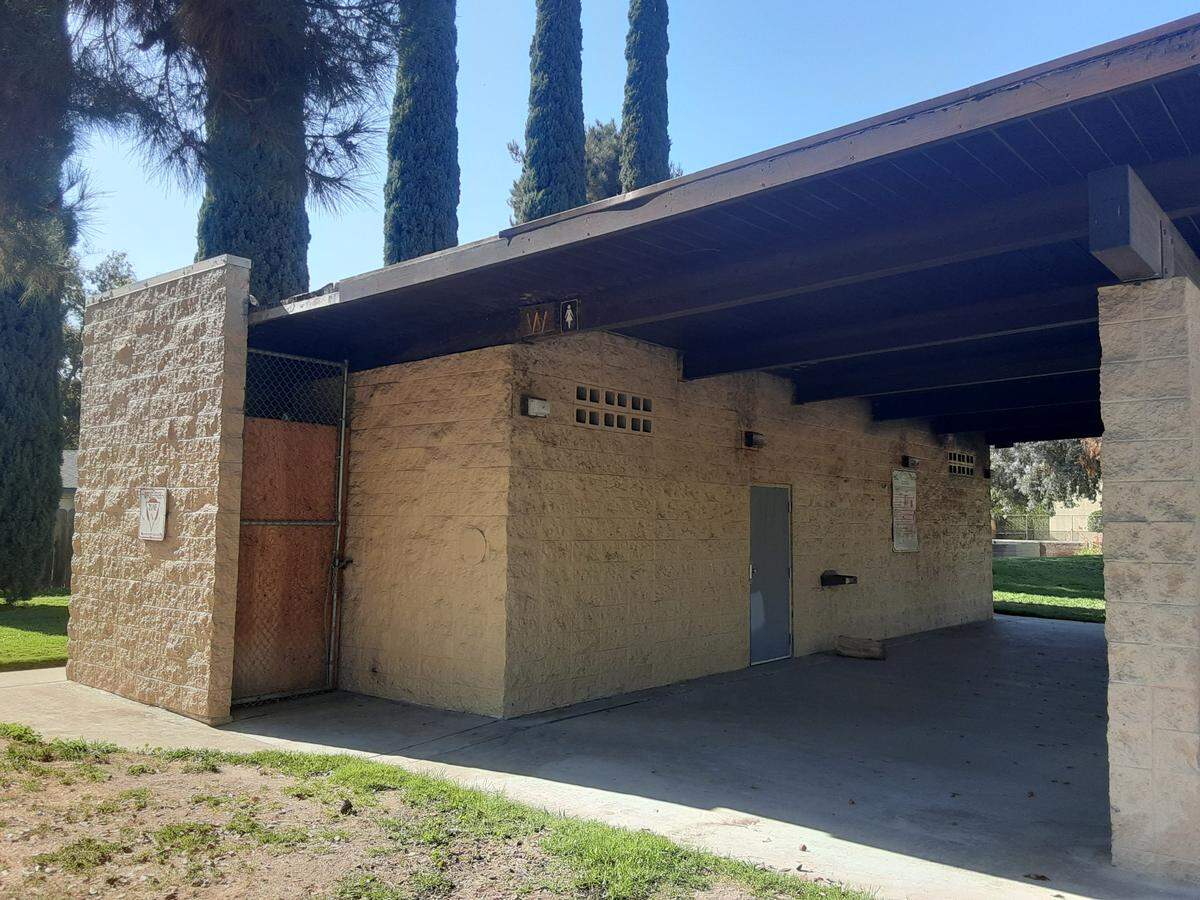
Modesto has balanced the fund over the years by not filling vacant positions, delaying maintenance and reducing services. That has meant fewer police officers, less attention to its parks (the city says it has $74 million in deferred park maintenance) and extra years before city trees are trimmed.
The city hopes to fix these and other service shortfalls with more revenue.
The City Council voted unanimously in June to put a 1% sales tax on the Nov. 8 ballot. City officials say if approved by voters, the tax would bring in $39 million annually to the general fund and pay for more public safety, cleaner and safer parks, addressing homelessness and other quality-of-life concerns.
The revenue growth has not been as robust as the $171.4 million suggests. That figure includes $4.5 million in one-time federal pandemic relief money the city is using to balance the general fund and $12.6 million Modesto is receiving for providing fire protection services in Oakdale and Ceres.
Of all the city’s funds, the general fund gets the most attention. It makes up about a third of the city’s operating budget. It’s the one fund the city has the most discretion in deciding how to spend, and about 80% of it is spent on the police and fire departments. A little more than half of the city’s roughly 1,200 employees, including its police officers and firefighters, are paid from the fund.
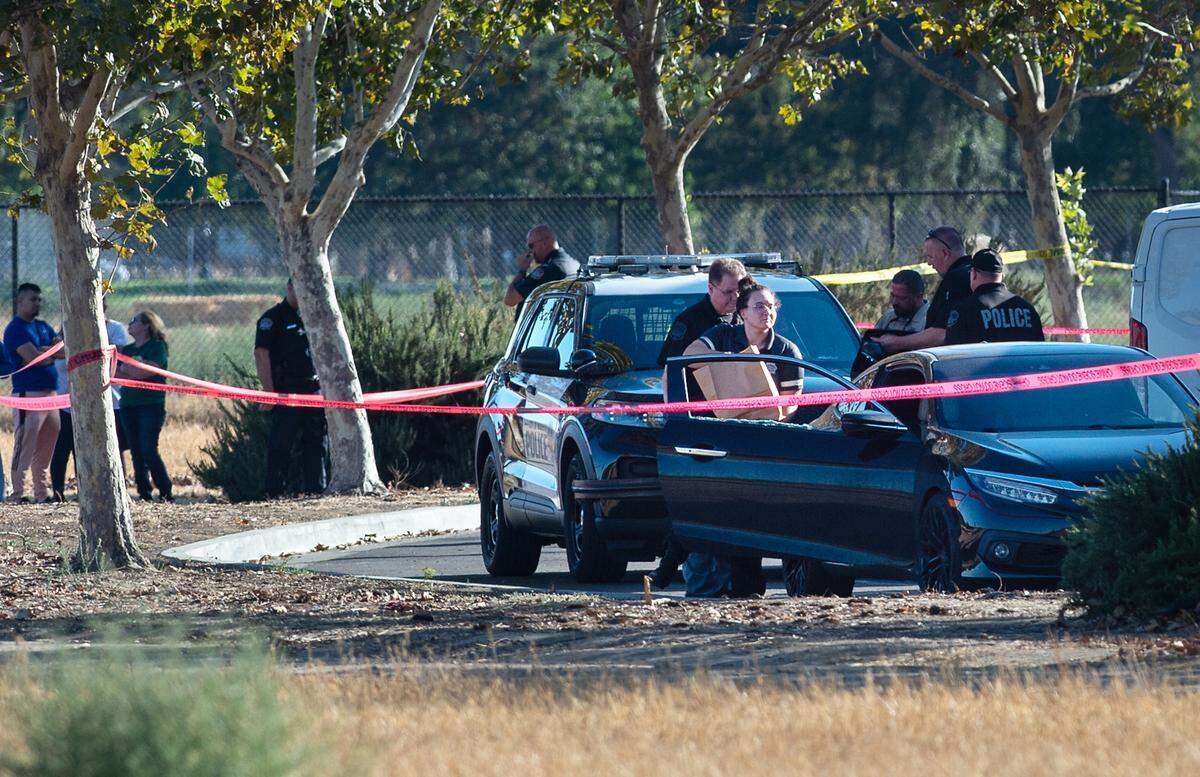
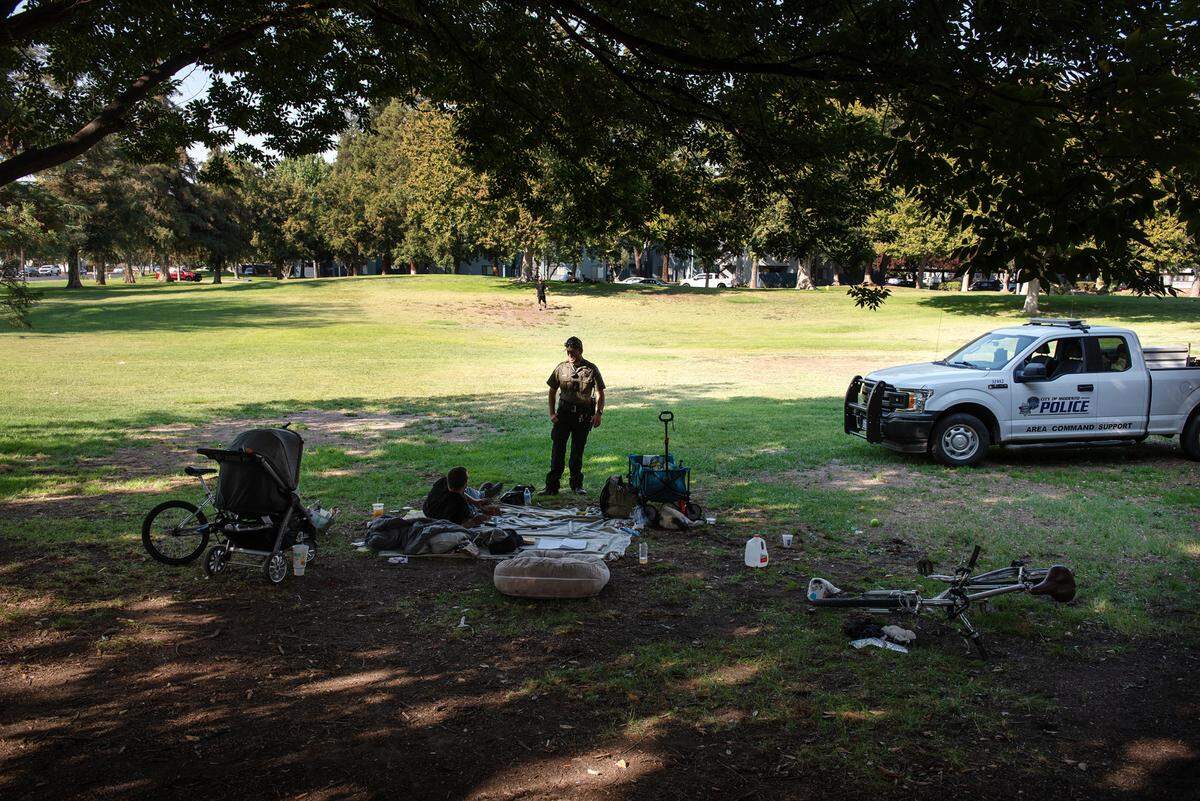
Modesto officials say the city does not have enough police officers. The Police Department has created programs using less-expensive civilian workers — such as park rangers and homeless outreach workers — to handle some lower-level calls to free up officers’ time. But the city says it lacks dedicated funding to keep these programs running in the long term.
The tax has the support of Cecil Russell, who retired as president-CEO of the Modesto Chamber of Commerce in 2019 after eight years there. He came to the chamber after a long career as a Save Mart Supermarkets executive.
Russell, 79, has questioned the city and its spending decisions in the past and did not support the city’s failed efforts to pass a sales tax in 2013 and 2015.
‘It’s a competitive world’
“That’s always our rub from the business community,” Russell said when asked about public employee compensation. “The private sector has not fared as well in pay and pensions. Police officers deserve good pay and a good retirement.
“But I still have difficulties with that. But at some point, you have to get over that. You are not going to hire police officers unless you have good wages and benefits — you’re just not. If we don’t (offer them that), then it will be another community. It’s a competitive world.”
Modesto paid $72 million in total wages to all of its employees from all its funds a decade ago, according to publicpay.ca.gov, the California Sate Controller’s government compensation database. The compensation includes wages, salaries, overtime, cashing in leave time and similar pay.
Modesto paid $114.8 million in 2021, according to the database. The number of city employees is roughly the same between the two periods.
Modesto officials have said the city must pay a competitive wage, especially in pubic safety, to hire and keep good employees, and the city’s wages remain below the median of what Modesto’s peer cities pay. The city also faces competition, especially for public safety employees, from Bay Area communities that pay more.
And Modesto belongs to the California Public Employees’ Retirement System, which determines the city’s pension costs.
But Russell said the sales tax is an investment in a better, safer and cleaner Modesto and supplements recent developments to improve the city, including the current construction of a new downtown courthouse and the coming of ACE commuter trains to Modesto in 2024.
He said he also supports the tax because if voters approve it, the City Council will be required to appoint a nine-member community oversight board to monitor how the city spends the tax.
As a general tax, Modesto can spend Measure H on any service it provides, but city officials say it will be spent on such basics as public safety, parks, blight and homelessness.
The 1% tax is called Measure H on the Nov. 8 ballot. The campaign supporting Measure H, which is called the Committee For a Better Modesto, has reported to the city that it has raised more than $187,000 as of Oct. 13 in its effort to convince voters to pass the tax.
Business supports tax
The campaign has received contributions from the unions representing the city’s police officers and firefighters, as well as from some of Modesto’s most well-known residents and businesses.
For instance, entrepreneur Dan Costa and PMZ Real Estate CEO Mike Zagaris each contributed $5,000. The Beard Land Improvement Co. also donated $5,000. The company owns the Beard Industrial District, a 2,000-acre industrial park that is home to some of Modesto’s biggest companies, including the E.&J. Gallo Winery, Frito-Lay and Del Monte.
Russell gave $1,000. Other contributors include Mayor Sue Zwahlen ($2,500), the Chamber of Commerce ($2,500), the J.S. West Milling Co. ($5,000), the Modesto Police Officers Association ($15,000) and Stanislaus County Supervisor Mani Grewal ($2,500).
Measure H requires a simple majority to pass and would increase Modesto’s sales tax from 7.875% to 8.875%. There is no organized opposition to Measure H.
But it comes as voters also will decide on Measure L, Modesto City Schools’ $198 million bond measure to upgrade its high schools. Measure H proponents also are asking voters to approve a sales tax during a time of $6-a-gallon gasoline, skyrocketing housing costs and soaring food prices.
So how does the campaign convince a voter who may struggle to come up with $500 for an emergency car repair?
Speaking as a resident and not as an elected official, Zwahlen said she is very aware the Measure H campaign is asking more from residents in a difficult economy.
She added that too many residents already were struggling before inflation became part of their lives. She said it helps that any sales tax does not apply to groceries and prescription drugs. (The California Department of Tax and Fee Administration states they are exempt.)
Zwahlen said the sales tax is critical in helping Modesto remain a relatively large city with a small-town heart. She said it is an investment in a cleaner, safer and more hospitable community. “If we are going to thrive economically,” she said, “we are going to need to take care of these quality-of-life situations.”
Zwahlen said the tax increase benefits everyone, from the residents who call 911 and can expect a faster response time to city employees who live here and coach youth sports. “We are all in this together,” she said.
Modesto’s total pension costs for all of its employees across all of its funds was $12.4 million a decade ago, with $6.1 million of that coming from the general fund. The city’s other major funds include its water and waste-water funds, which get their revenue from ratepayers.
Raised retirement ages
The city’s total pension cost in its current budget is estimated at $44.3 million. The city expects it pensions costs to continue to rise for several more years before starting to decline.
The reasons for the decline include increasing numbers of city employees with less generous pensions as a result of state pension reform from about a decade ago that made such changes as raising retirement ages for new employees.
Modesto is among the nearly 2,900 cities, counties and other public agencies that belong to CalPERS. CalPERS has required its members to pay much more in recent years to shore up its finances.
Modesto looked at what it would cost to leave CalPERS about a decade ago. The price tag then was $1.1 billion.
Modesto has taken steps to mitigate its rising costs. For instance, all of its employees pay the full share of the employee contribution, which was not the case several years ago. And the city estimates additional payments from the city’s labor groups will save Modesto about $15.4 million in pension costs over a decade.
The City Council in January approved setting aside $2.3 million for a trust account to help pay for rising pension costs in future years. City officials have said they expect to set aside more money and would use the trust to shave off some of the steepest annual pension costs.
This story was originally published October 20, 2022 at 6:00 AM with the headline "Modesto expects sales tax will end years of cuts to public safety, parks, other services."