Put the wrong thing in your recycling can? Stiff fines ahead in Stanislaus County
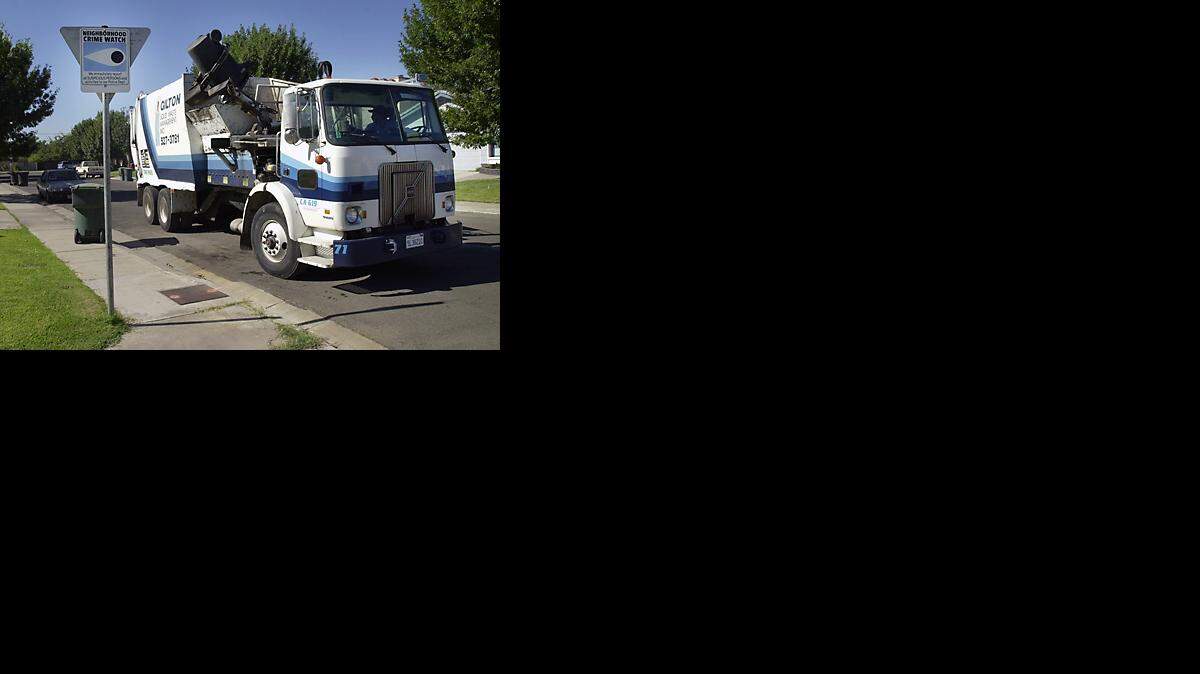
Many residential garbage service customers in Stanislaus County were recently struck with a rate increase between $13 and almost $30 per month to cover costs of recycling to reduce greenhouse emissions from landfills.
A new county ordinance approved Tuesday threatens fines for people who contaminate the color-coded recycling carts with the wrong materials and adds requirements for grocery stores, restaurants and food service providers.
County supervisors, who approved the ordinance, made sure to emphasize they’re under orders from the state to implement the policies designed to battle climate change.
County leaders said they’re getting feedback from people across the spectrum, from those complaining about the sharp garbage-rate increases to people who strongly favor recycling to battle climate change.
Senate Bill 1383, signed by former Gov. Jerry Brown in 2016, has required counties to reduce organic waste that goes to landfills. The statewide goal is 75% reduction by 2025, which is the equivalent of 20 million tons diverted from garbage dumps.
When the yard clippings, wood, food waste, papers and cardboard are buried in landfills, the organics break down and result in methane emissions that warm the planet, according to experts who advise the state.
The recycling push in Stanislaus County began with steep rate increases and conversion to a three-cart collection system for affected residents in January or March. Commercial customers also saw a rate increase.
Affected were Bertolotti Disposal customers in Salida, Keyes, Crows Landing, Grayson and Westley, and Turlock Scavenger customers in Denair, Empire, Hickman, La Grange and county pockets of Turlock. The Gilton Solid Waste service in Knights Ferry and Valley Home began a two-cart system separating green waste and household garbage because the hauler has a facility for separating recyclables.
Some sparsely populated census tracts are exempt from the requirements. The state law is expected to expand areas of the 1,520-square-mile county where garbage service is mandatory.
County residents are advised to watch for notices from their garbage hauler outlining changes.
Under the new county ordinance, food operations in two different tiers are expected to enter agreements to donate edible food — that’s not sold to customers and otherwise would be discarded — to local charities or organizations. The businesses are expected to keep records on donations.
The Tier 1 businesses include food vendors, food services and distributors, grocery stores larger than 10,000 square feet and supermarkets with more than $2 million in annual revenue. Those businesses had a Jan. 1, 2022, deadline for entering agreements.
Tier 2 includes hotels selling food onsite, restaurants, school cafeterias, hospitals and large entertainment venues. They have until Jan. 1, 2024, to enter agreements for donating edible food that would otherwise be discarded.
The revised ordinance gives the county authority to enforce the recycling and food recovery requirements. Violators can be cited and charged escalating fines if affected county residents don’t separate their wastes in containers or don’t sign up for required services.
Haulers serving unincorporated areas will tag recycling carts that have contaminated waste streams, such as lawn clippings mixed with household refuse.
The first tags are for education purposes. Additional violations may result in a $50 to $100 fine for the first offense, $100 to $200 for a second violation and up to $500 for a third offense.
Haulers initially will provide a courtesy pickup of contaminated carts two times before refusing service. On Oct. 1, the policy changes to one courtesy pickup.
Education first, then enforcement
According to a presentation at Tuesday’s Board of Supervisors meeting, county staff members plan an education focus for enforcement activities until strict enforcement goes into effect in January 2024.
County inspectors will distribute fliers with information on SB 1383 food donation requirements when they visit restaurants and food service facilities starting next month.
Board Chairman Terry Withrow said unfortunately the state law puts the county in the role of “garbage police” to ensure compliance with solid waste recycling.
Joyce Parker, who lives in an unincorporated area, told the board there’s not much room in her garage for three 96-gallon carts and no need for large containers. Her household has no yard clippings and only a small amount of trash to throw away, she said.
Parker handed to supervisors a suggested resolution for “the freedom of choice of trash-cart sizes.”
Supervisor Buck Condit predicted the steep garbage-collection rates and new requirements will lead to more illegal dumping along roads, which is already a source of exasperation.
Condit said it’s time to revisit the county’s illegal dumping law to address the problem.
More information for residents and businesses is available at www.stanislausrecycles.org.
This story was originally published March 30, 2022 at 7:21 AM.