Modesto moves toward pairing mental health pros with officers on crisis calls
Modesto is one step closer to having mental health clinicians respond with police officers to calls involving people in crisis.
The City Council’s Safety and Communities Committee on Monday endorsed the proposal on a 3-0 vote and forwarded it to the City Council for approval. Council members Jenny Kenoyer, Chris Ricci and David Wright cast Monday’s votes.
The full seven-member council is expected to consider the proposal in April, according to Police Chief Brandon Gillespie. The proposal calls for two Stanislaus County Behavioral Health and Recovery Services mental health clinicians to be paired with police officers.
The two teams would respond to calls that have what the police call safety concerns. That could include someone armed with a knife threatening to commit suicide or a mentally ill person in crisis engaging in a fistfight with a family member.
Gillespie said the teams would provide 80 hours of coverage seven days a week, and their hours could be adjusted based on the need for this service.
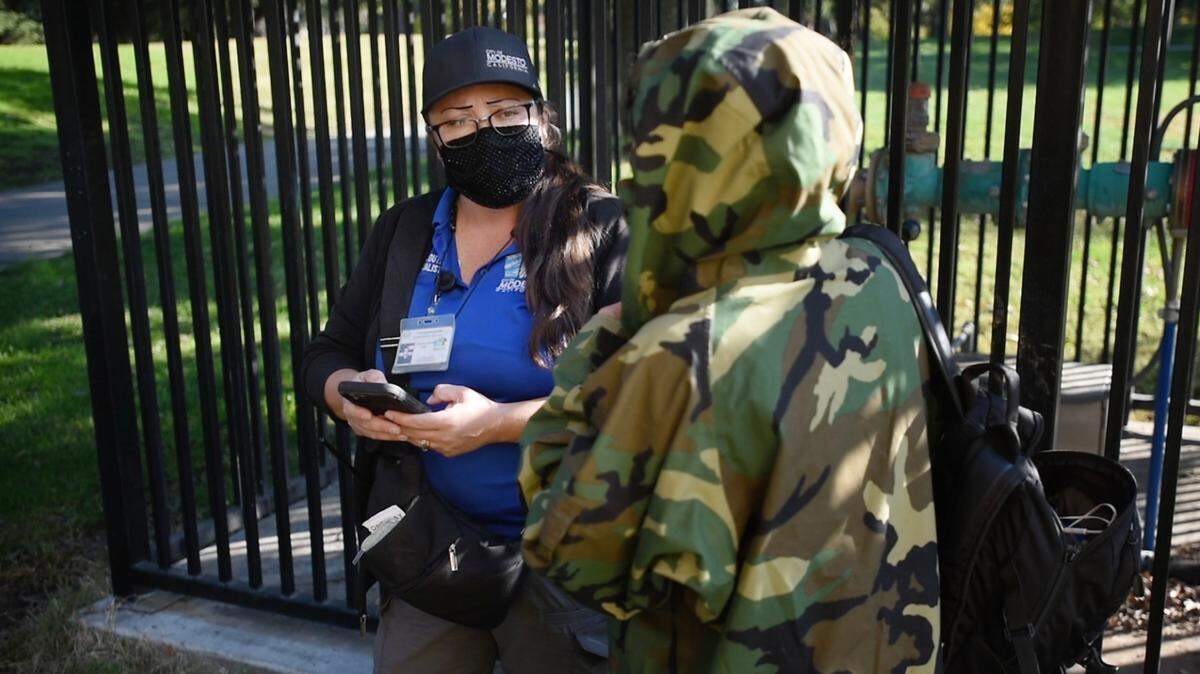
The proposal includes expanding the Police Department’s Community Health and Assistance Team from four to six members. CHAT started last year and its civilian outreach specialists respond to nonviolent quality-of-life calls involving people who are homeless. That can include camping in parks, sleeping in and refusing to leave park bathrooms, trespassing and drinking in public.
Because Modesto is paying for CHAT and the mental health clinicians with grants, it faces finding sustainable funding for both programs.
Gillespie gave committee members a presentation at Monday’s meeting.
He said pairing two mental health clinicians with police officers would essentially restart the Police Department’s Mobile Crisis Emergency Response Team. He said in an interview that MCERT was well-regarded by officers and operated on a smaller scale than what he is proposing.
The chief recalled a mental health clinician being paired with an officer perhaps a couple of times a week under MCERT. The program was discontinued around 2017 because of budget and staffing constraints. It also was a partnership with Behavioral Health and Recovery Services.
A Police Department analysis of its 2020 calls for service identified about 19,000 calls — or 11% of total calls — that involved quality-of-life offenses and-or behavioral health concerns. About 7,000 of the calls could be handled by mental health clinicians and officers and about 12,000 by civilian outreach specialists.
Asked whether two mental health clinicians are enough, Gillespie said it is too early to say and officials would evaluate the program, including staffing, while it was underway.
Gillespie said he has been working with Behavioral Health and Recovery Services Director Ruben Imperial on having mental health professionals work with police officers on crisis calls over the last year. That includes researching what other communities do.
He said the mental health clinicians program complements Modesto’s Forward Together initiative. The City Council last year appointed a broad-based committee to look at how the Police Department can improve how it serves the city. That includes using mental health professionals.
Program can be modified
Forward Together has not yet made any recommendations to the City Council. Gillespie said if the council approves the mental health clinicians program, it can be modified to reflect any Forward Together recommendations the council later adopts.
Modesto is paying for CHAT with $800,000 from the U.S. Department of Housing and Urban Development. That funding ends in December. Gillespie said the city is looking at how it can continue to fund CHAT. He said that could include using Modesto’s next payment in federal pandemic relief funding.
Modesto received nearly $23 million in May of last year from the federal American Rescue Plan Act and expects to receive its final payment of the same amount this May.
Modesto would spend $800,000 from its first round of ARPA funding to pay for this proposal. That breaks down to about $410,000 to hire two more CHAT outreach specialists over two years (that includes their compensation, a vehicle, supplies and equipment) and about $390,000 for two mental health clinicians for one year.
Gillespie said if the City Council approves this proposal, he expects the Police Department could quickly expand CHAT. The city already has a good pool of applicants, he said, because it has recruited for and is close to filling two vacancies among its four CHAT outreach specialists.
Hiring timelines
One of those vacancies was created by the Feb. 2 death of Randy Limburg, a former homeless addict who turned his life around about a dozen years ago. He then helped those struggling with addictions and life on the streets. His most recent work doing that was with CHAT.
Gillespie said it could take a few months to hire the mental health clinicians. And his report to the committee states there may be times when Behavioral Health and Recovery Services may need to fill those two positions with behavioral health specialists. (The county would charge the city less in those instances than what it charges for the clinicians.)
The HUD funding for CHAT is for the four outreach specialists to work with people who are homeless. The ARPA funding the city is proposing to hire two more CHAT specialists does not have that restriction. Gillespie told committee members that will allow those specialists to respond to calls not involving homeless people.