Modesto stadium backers point to other projects as examples of success stories
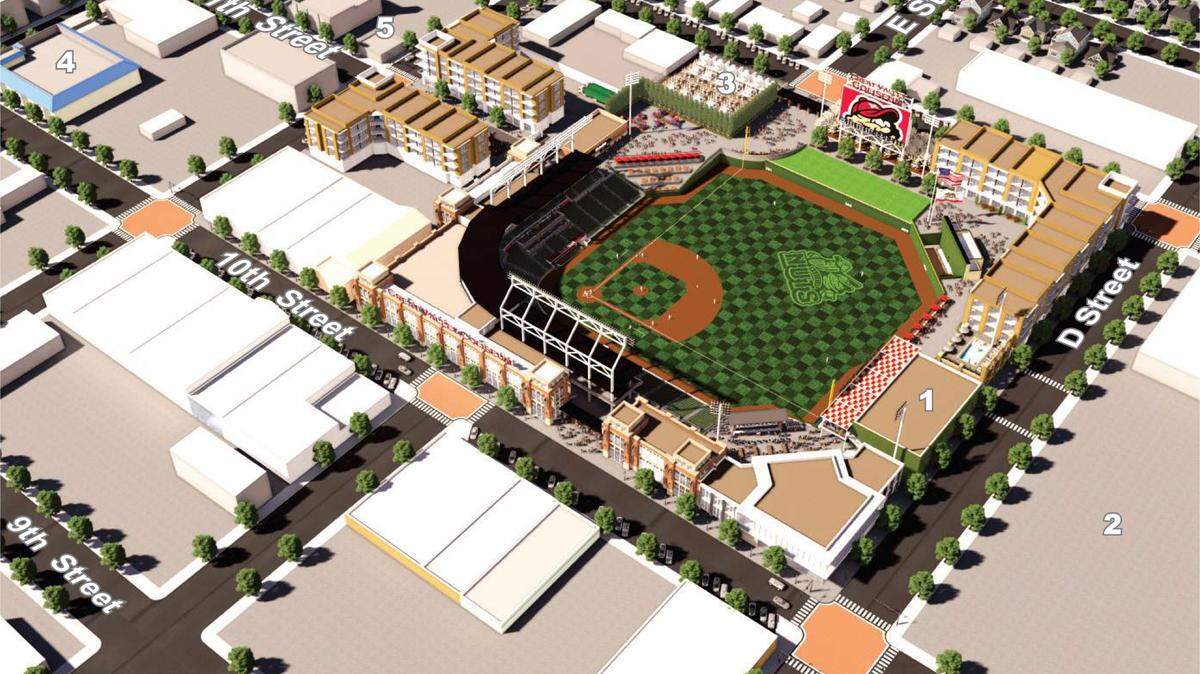
The civic leaders proposing a new Modesto stadium point to other venues across the country as proof that such a facility here will spur economic development and raise the city’s profile.
The stadium is intended as the new home of the Modesto Nuts minor-league baseball team, as well as a venue for concerts, festivals, farmers markets, high school football championships and other events. The stadium proponents hope to land United Soccer League men’s and women’s teams.
The Great Valley Coliseum would be built downtown in a four-block parcel between 10th and 12th and D and F streets. It would replace John Thurman Field, the Nuts’ current home in west Modesto.
The civic leaders make up a 14-person team. Its members include Nuts General Manager Zach Brockman, Boyett Petroleum President Dale Boyett and Evan Porges, president of the Porges Family Foundation and Porges Properties. Former Gallo Center for the Arts CEO Lynn Dickerson also is on the team.
The group started working on this about seven months ago but is under a tight deadline. That is because of Major League Baseball’s new facilities requirements for minor-league teams. Under the new regulations, the Nuts will have to upgrade John Thurman Field, which opened in the mid-1950s, or submit to MLB a plan for a new stadium by the start of the 2023 season.
In its proposal, the team highlights minor-league baseball stadiums in eight midsize cities across the country as success stories: Beloit, Wis.; Tulsa, Okla.; Pensacola, Fla.; Kannapolis, N.C.; Fort Wayne, Ind.; Worcester, Mass.; Lansing, Mich., and Witchita, Kan. Officials from all of the cities except Wichita responded to requests for comment.
The seven stadiums have elements the Modesto proposal so far lacks.
That includes substantial private sector investment, extensive outreach to build community support, and developers who partnered with the cities. The developers built office buildings, housing and hotels that generate the taxes and other revenue the cities need to pay off the debt they issued to build the stadiums.
Dickerson said the local proposal is a work in progress that continues to evolve. That includes team members commissioning a community survey, telling their story to the community and looking for a master developer for the offices, housing and other private development that would accompany the stadium.
“There are still so many unknowns, and we are still at such an early stage of this,” she said. “But I do think this is something that could be a wonderful, positive economic development driver in a community that is badly overdue for such a project.”
Dickerson said the other stadiums are examples of the positive impacts these projects can have on a downtown and its city, rather than models Modesto has to copy.
“For our particular project, we have a vision that we think ties in with the long-term vision of the city of Modesto (for development along 10th Street and connecting downtown to the Tuolumne River Regional Park),” she said. “What we are proposing is concept that we think has great potential. There are still so many details to be worked out.”
The proposal is being reviewed by Modesto and Stanislaus County, and Dickerson said she and her team expect to meet with the city and county in late March or early April to hear back on their analyses.
The proposal has a stadium cost of $85 million to $124 million. Private investment would pay $5 million to $10 million, with the city and county issuing 30-year bonds for the balance.
The proposal states the stadium would spur new development and economic growth in downtown that would generate more than enough taxes and other revenue for the city and county to pay off the bonds and bring in money to their general fund budgets, which pay for basic services. This analysis is based on a preliminary report the team commissioned from Kosmont Companies, a real estate and economic development advisory firm.
Stadium proponents say the project would help Modesto attract companies that employ high-skilled, high-wage workers and build off the recent efforts to revitalize downtown.
Downtown revitalization
The successful stadiums the Modesto group is looking toward for inspiration are often part of a larger-scale downtown revitalization or have benefited from private sector funding.
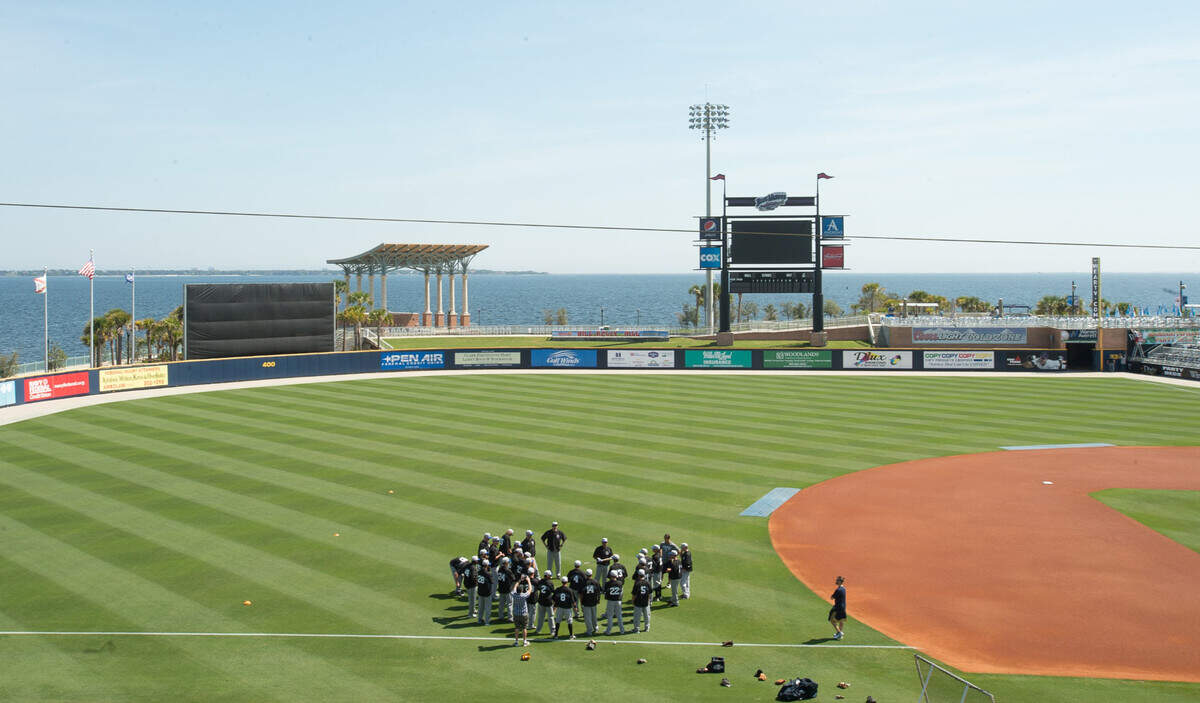
The Blue Wahoos Stadium in Pensacola, which opened in 2012, is part of that city’s larger $56 million Maritime Park project.
Mayor Grover Robinson said the facility has served as a catalyst for a downtown revitalization that has brought new restaurants, bars, offices and apartments. Employers have flocked to the city as well, bringing with them a younger generation of workers.
“Minor-league baseball was a part of it, but what it really did was create vibrancy that then allowed other things to come in,” he said.
The Atrium Health Ballpark in Kannapolis, N.C., had its first season in 2021. The stadium is next to the North Carolina Research Campus — affiliated with the state university system — and is part of a $100 million redevelopment of downtown.
City officials turned to the University of North Carolina, Chapel Hill, to develop a downtown master plan to make it more attractive to professionals and young people. “We had things out near the interstate but not in the core,” city spokeswoman Annette Privette Keller said. “We knew that we had to make downtown a place maker and a destination.”
“We held public meeting after public meeting informing people, showing maps, showing renderings,” she said. “... We went anywhere and everywhere and talked about the project and kept people informed.”
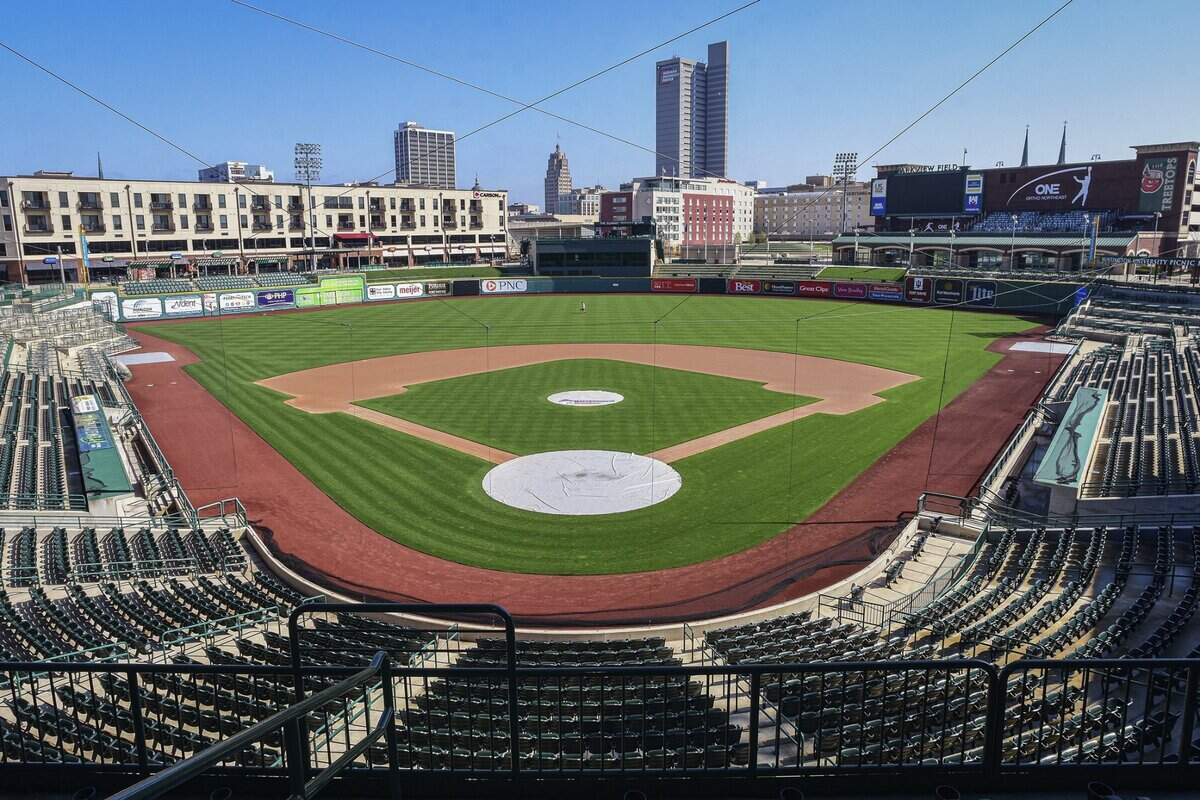
Parkview Field opened in downtown Fort Wayne, Ind., in 2009 as part of the Harrison Square development, a public-private $100 million project that included the stadium, a hotel, parking garage and four-story building featuring apartments, offices and retail.
Nancy Townsend, the city’s redevelopment manager, said community leaders spent 18 to 24 months developing the Harrison Square plan and then a year selling it to the public. “We did an all-out, grass-roots public information plan,” she said. “Slowly, we began to get the community’s interest and trust.”
Townsend said it helped to have lined up developers as partners. She said that provided cover for elected officials because the city needs the tax revenue from private development to pay off the bond debt it issued.
“It’s not us saying, ‘Build it and they will come,’” Townsend said. “It gives credence to the project. ... We were very thoughtful in picking and finding (development) partners. You have to work hard to find partners and let them know what your community is about.”
The Wisconsin city of Beloit has one advantage Modesto doesn’t — a billionaire benefactor.
Diane Hendricks and her late husband founded Beloit-based ABC Supply Co., a roofing supply company in 1982. Forbes magazine in its 2021 ranking of the 400 wealthiest Americans placed Hendricks at No. 64 with an estimated net worth of $11 billion.
“She has spent millions on local economic development, rebuilding entire blocks in Beloit and bringing in several new businesses to the state,” Forbes wrote about Hendricks.
She was the leading contributor to Beloit’s privately financed downtown stadium. The $37 million ABC Supply Stadium opened in August.
Team paying a third
About 45 minutes west of Boston, Worcester opened its roughly $150 million Polar Park in its downtown last summer as the new home of the Boston Red Sox’s AAA minor-league team.
Worcester issued 30-year bonds to cover about two thirds of the stadium’s cost and has a long-term lease with the Worcester Red Sox for the remaining third. The project includes private mixed-use development and was aided by a $38 million grant from the state.
“It’s been a great generator of community excitement,” Worcester City Manager Edward Augustus said. “Because the team is affiliated with the Boston Red Sox, there is a real connection.”
Worcester has eight colleges, including the University of Massachusetts’ medical school, and about 35,000 college students. The city has about 185,000 residents.
Lansing, which is Michigan’s capital, built its own baseball stadium, which opened in 1996. The stadium brought minor-league baseball to the city.
The city built the stadium in a part of downtown that had seen better days, and it’s been a catalyst for private sector, mixed-use development, said Karl Dorshimer, senior vice president of economic development with the Area Economic Partnership.
“The city took the risk to build the stadium,” he said. “It was several years before private sector development. ... The development came, but it was gradual.”
The city nearly a decade ago partnered with the private sector in a development that upgraded the stadium and brought a four-story apartment building overlooking the outfield.
Lansing native Pat Gillespie’s Gillespie Group was the developer and has done multiple projects around the stadium. Dorshimer said a stadium needs private sector investment to succeed.
“He’s really done wonders in that area,” Dorshimer said about Gillespie. “His success has attracted other developments.”
Next steps
In Tulsa, Okla., the success of the ONEOK Field, the city’s $60 million ballpark project, is measured by the development surrounding the stadium. The project, which was financed through a roughly 60/40% split of public and private money, “is more than just a baseball stadium,” former Mayor Kathy Taylor, who led the effort, told TulsaWorld in 2010. “It’s a downtown revitalization project.”
Kian Kamas, the executive director of the Tulsa Authority for Economic Opportunity, told The Bee the ballpark was built in a so-called stadium improvement district, which helped surrounding businesses and developments and provided debt service coverage for outstanding bonds. Through the district, Tulsa has been able to spur a larger-scale downtown revitalization effort in the decade since the stadium opened, and Kamas said the city has seen $404 million in new development.
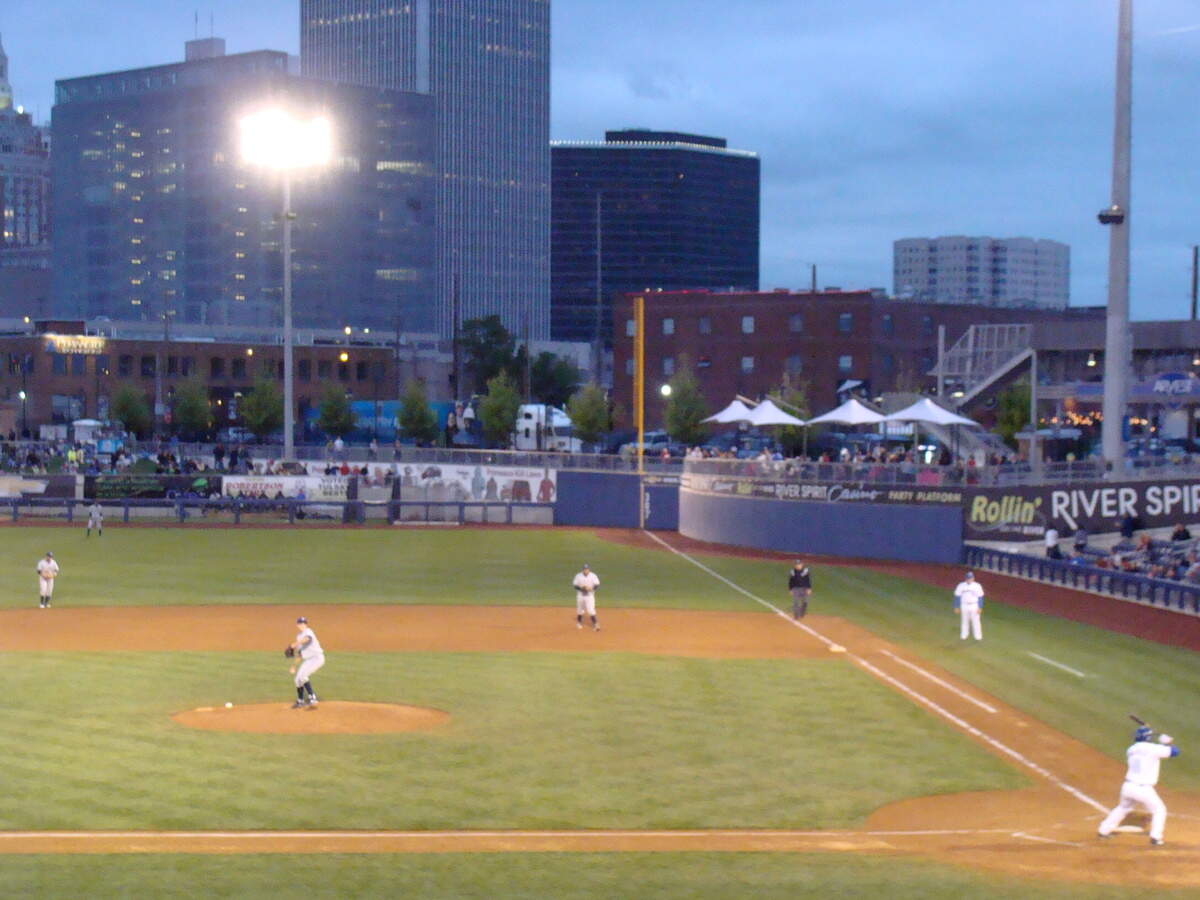
Dickerson said Tulsa’s model is one Modesto project backers are looking to emulate. Though funding differs between the two projects, Dickerson said she and her team see Tulsa as a great example of a successful stadium acting as a catalyst for more development.
But first, Modesto must find a master developer for its project. The local civic leaders are in the early stages of doing that.
“If you have a development partner in lockstep with you,” Dickerson said, “it gives government officials more assurance that the project will happen as you describe it.”
She said Boyett Petroleum and Valley First Credit Union are interested in relocating their Modesto headquarters to downtown offices that would be built as part of the stadium project. But Dickerson said everything comes down to the city and county.
“This is too big of a project, and we don’t have a big philanthropist that’s going to write a check for this,” she said. “We think we can raise significant money to help with it, but we can’t do it without government help. So, yes, if they say no to it, it will probably be the end of it.”
Correction: A previous version of this story incorrectly referred to the president of Boyett Petroleum. His name is Dale Boyett.
This story was produced with financial support from the Stanislaus Community Foundation, along with the GroundTruth Project’s Report for America initiative. The Modesto Bee maintains full editorial control of this work.
To help fund The Bee’s economic development reporter with Report for America, go to https://bit.ly/ModestoBeeRFA
This story was originally published February 17, 2022 at 6:00 AM.