Backers pitch plan for downtown Modesto stadium but need tax dollars to build it
A group of Modesto business and civic leaders is proposing a new stadium for the Modesto Nuts minor league baseball team, men’s and women’s soccer, concerts, festivals and other events.
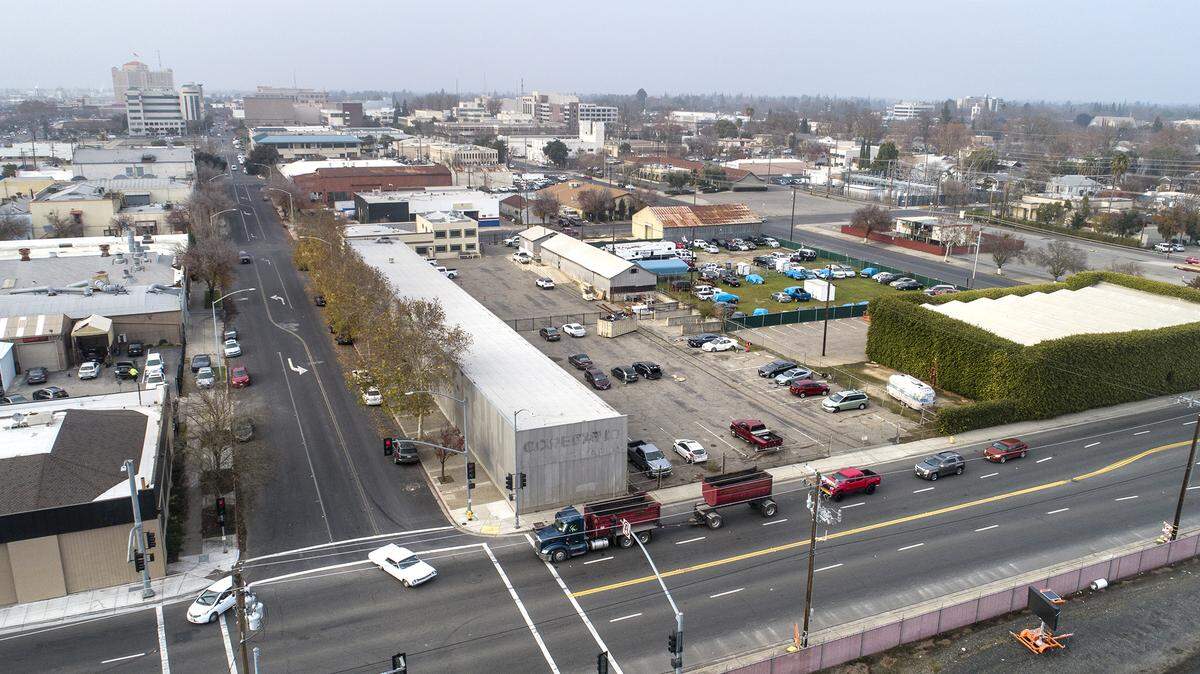
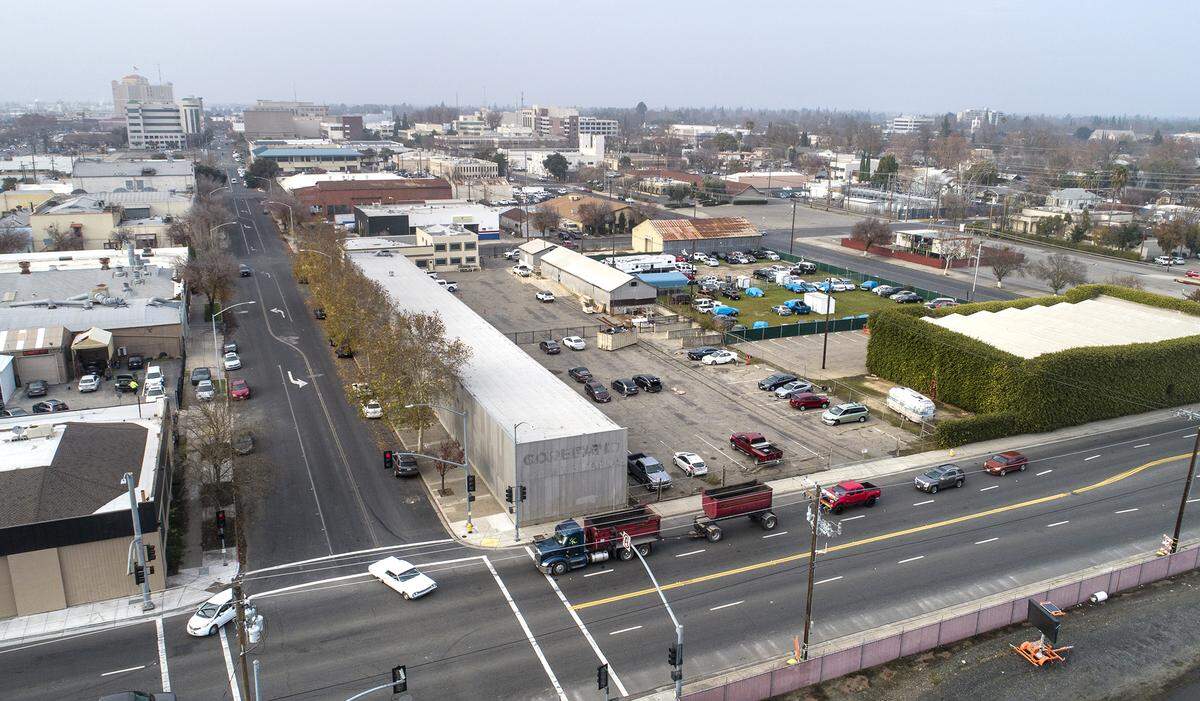
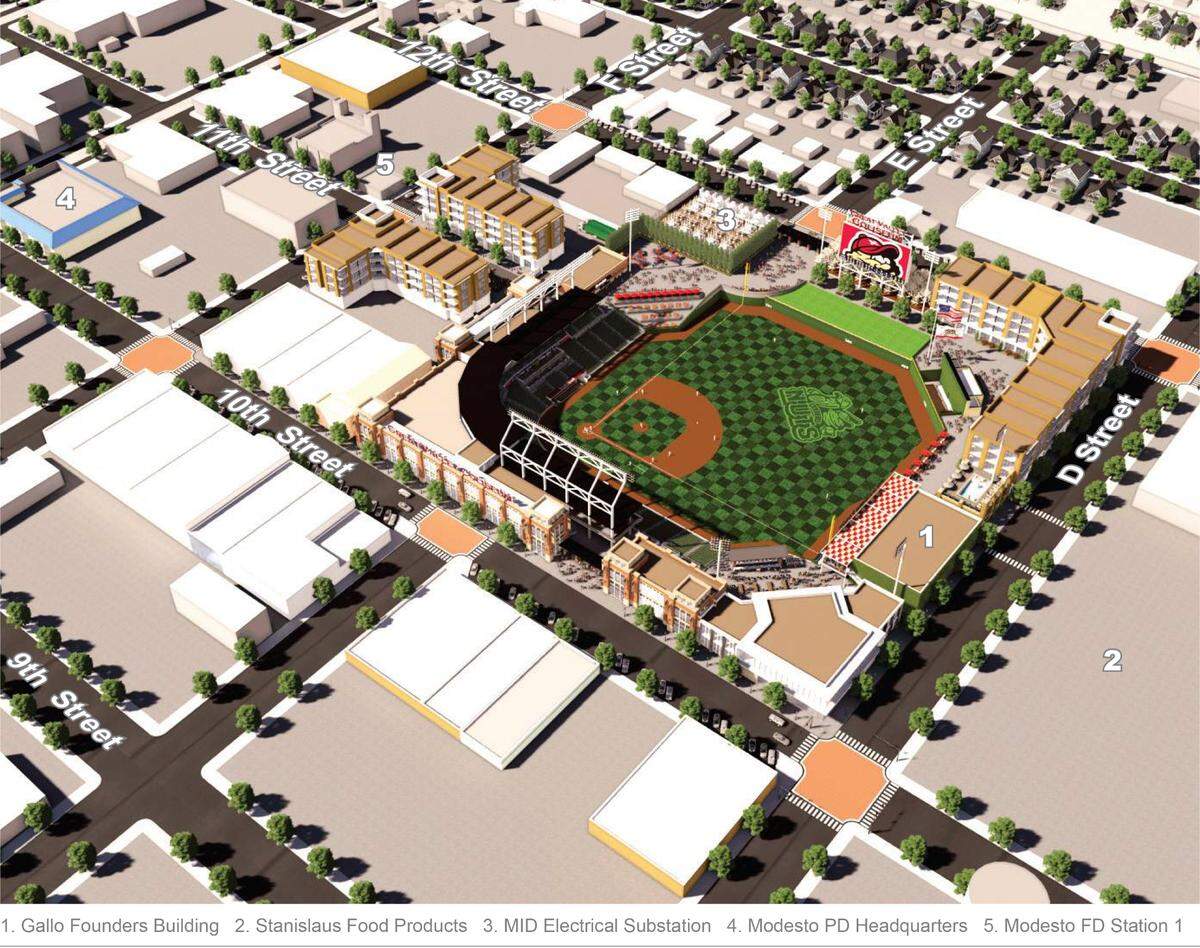
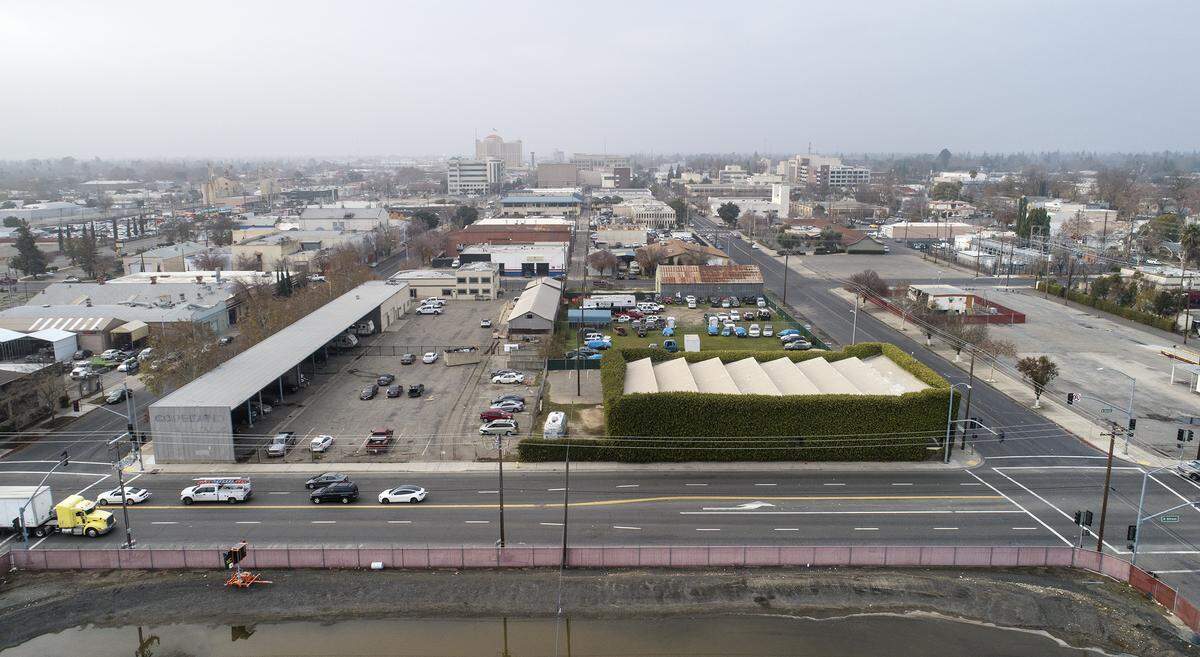
The park, which they plan to call the Great Valley Coliseum, would be built downtown, in a four-block parcel between 10th and 12th and D and F streets. The stadium would replace John Thurman Field, the Nuts’ current home in west Modesto.
Lynn Dickerson, the former Gallo Center for the Arts CEO and a member of the stadium project team, said it would not only provide the Nuts with a new venue but help with the revitalization of downtown and make Modesto a destination for residents from across the Central Valley and the Bay Area.
Stadium proponents say it would help make Modesto a more attractive, desirable city and draw high-skilled, high-wage workers and spur the building of offices, housing and stores in downtown. “It’s much more than building a new ballpark or facility downtown,” Dickerson said. “We want to do this because we think it’s something that will make our community better and stronger.”
The proposal is based on Modesto and Stanislaus County providing the bulk of the funding for the stadium, which has a preliminary estimate of $85 million to $122 million. The proposal calls for private investment of $5 million to $10 million, and the city and county issuing bond debt to cover the balance.
The city and county would repay the debt over 30 years through their share of the revenues generated by the stadium and the increased tax revenues that would come from the development the stadium would bring, according to a preliminary economic analysis of the project.
That analysis says the project would bring in so much revenue and increased taxes that in addition to paying the stadium debt, it would generate funding for the city’s and county’s general fund budgets, which pay for basic services.
‘I’d be cautious,’ economist says
But an economist who specializes in the Northern San Joaquin Valley said these types of projects must be approached carefully. He said the development and job growth that proponents believe a stadium will produce may not materialize.
If that’s the case, the city and county may have to redirect taxes that support parks, public safety and other basics to help pay the stadium debt, said Jeff Michael, director of public policy programs at Pacific McGeorge School of Law.
“I’d be cautious about pursuing a strategy like this,” Michael said. “You need to fully vet what happens if this additional private investment is not catalytic. ... Economists tend to be very skeptical of (publicly) subsidized stadium proposals.”
But the preliminary analysis claims the stadium financing could be structured so the project would not require city and county support if the project does not generate the revenue and increased taxes as expected, though the city and county could face losing the stadium if they could not pay the bond debt.
Dickerson said she and the other stadium project team members understand the risks and say that is why they have been researching successful stadium projects across the country, are using experts to help them develop the proposal, and have asked the city and county to analyze it.
The goal is to have a new stadium open in time for the Nuts’ 2025 season. The stadium proponents also hope to land United Soccer League men’s and women’s teams.
The 14-person project team is made up of community and business leaders representing a variety of industries, from real estate to finance. Among the members are Nuts General Manager Zach Brockman, Opportunity Stanislaus CEO David White, Boyett Petroleum President Dale Boyett and Evan Porges, president of the Porges Family Foundation and Porges Properties.
There has been talk of building a new baseball stadium in Modesto for years, Boyett said, but no concrete planning until recently.
“People said they’ve talked about a downtown stadium for years,” Boyett said. “I mean, I’ve talked about wanting to go to Mars, but somebody’s got to start somewhere.”
John Thurman Field not adequate
To do just that, Boyett and other business leaders — including Porges — sat down with Brockman to talk about the Nuts’ future, and eventually decided to start drawing up plans for a potential new stadium. Now, with $75,000 invested in architectural renderings and an economic impact report, those years-old conversations are beginning to look more concrete.
One reason plans were drawn up so quickly is Major League Baseball’s new facilities requirements for minor league teams. Under the new regulations, the Nuts will have to upgrade John Thurman Field, which opened in the mid-1950s, or submit to the MLB a plan for a new stadium by the start of the 2023 season.
The proponents of the new stadium say failure to do so could result in a fine or the revocation of team rights in Modesto and the end of minor league baseball here.
Most of these improvements would be to the player and staff areas of the field and wouldn’t be visible to the public. Because of this, Boyett, Dickerson and Porges have been in talks with the Nuts — and their owners, the Seattle Mariners — who are interested in the possibility of a new, mixed-use stadium in Modesto. If built, the Mariners would coordinate events in the new stadium, much like they do at their own facility in Seattle.
Porges said the group has met with the Mariners in Seattle and in Modesto, and the owners are “super excited,” about the prospect of a new stadium. “They want to be a part of this in some way,” he added.
Private-public partnership
The project team commissioned Manhattan Beach-based Kosmont Companies, a real estate and economic development advisory firm, to put together a preliminary funding and economic benefit analysis report. Those numbers have been given to city and county staff, the project team told The Bee. The team hopes the city and county can report back by March about the viability of the stadium proposal.
Project team members have met with nearly all of the city’s and county’s elected officials and expect to meet with the rest in January. For the proposal to become a reality, these officials would have to approve it at public meetings.
Dickerson said the project team expects the new stadium to be jointly owned by the city and county and operated by the Mariners on behalf of the Nuts.
In an emailed statement, Deputy City Manager Caluha Barnes told The Bee that Modesto is aware of the proposal, and of the need to upgrade John Thurman Field.
“Improving the economic health of the city and the vitality of downtown is critically important, and the increased interest in the possible development of a sports and entertainment arena in downtown Modesto is interesting,” she said. “We look forward to learning more about the project as the due diligence process continues.”
County CEO Jody Hayes told The Bee in an email that the county “can’t provide any feedback on the potential for the county to participate in this project until that (vetting) process is complete. We can say that it is always exciting to see local community members coming together to put forward a vision for the future. The leadership team clearly put a lot of time and energy into this project.”
While the reviews are being conducted, the project team is continuing its work with a market study and community survey.
The project team took a number of steps before contacting the city and county — finding a suitable lot, checking in with the property owners, drawing up plans, commissioning the economic report — to avoid the project getting bogged down.
“We intentionally did not get government involved in the beginning because we really wanted to see if this was feasible and we wanted to move as fast as we could,” Dickerson said. “We didn’t want to get mired down in bureaucracy so (Boyett and Porges) were generous with their money and put it forward and said ‘Let’s just do it privately and see where it goes.’”
Stadium as regional draw?
Dickerson said the stadium’s selling points are its location and its versatility. It will have 5,000 seats for baseball games and soccer matches, but its capacity can be increased to 11,500 for concerts. The stadium also could hold graduations, state championships for high school sports and other events. Proponents say the stadium could be the home for 300 events each year.
By integrating the stadium into downtown, Dickerson said spectators who come for baseball, soccer or a concert will be more likely to eat in downtown restaurants and spend money elsewhere in Modesto.
The state-of-the art facility also would help make Modesto a “destination” in the Central Valley and draw people from outside of the area. Dickerson said that has been the experience with the Gallo Center. She said the performing arts venue, which opened in 2007, draws patrons from Merced, Tracy, Sacramento, the Bay Area and elsewhere.
Proponents say the stadium builds on the many other efforts in recent years to improve downtown and will raise Modesto’s profile among Bay Area companies looking to open satellite offices and attract high-skilled, well-paid workers who can work from home to Modesto.
Michael, the regional economist, said a new sports stadium and concert venue is a great amenity but questions how successful it would be in attracting high-skilled, well-paid jobs and workers.
While he would need to know more about the kinds of events the stadium would offer, he said, new stadiums often don’t draw patrons from outside of their area but redirect a community’s existing spending. So a Modesto family that might have gone to the movies on Sunday would spend their money at an event at the stadium.
“These are the classic criticisms against publicly financed sports stadiums,” Michael said. “A lot of it is redirected spending in the community. ... They (the stadium proponents) are talking a lot about place making. Will (a stadium) do a better job in attracting and retaining employees? I don’t know. I won’t definitively say the answer is ‘no.’”
Despite the possible risks associated with the project and its price tag, Porges said it’s a chance the city and county should take in order to ensure the region’s vitality for years to come.
“Like all investments, there’s risk,” he said. “But this investment in this community will last for generations.”
Correction: A previous version of this story incorrectly referred to the president of Boyett Petroleum. His name is Dale Boyett.
This story was produced with financial support from the Stanislaus Community Foundation, along with the GroundTruth Project’s Report for America initiative. The Modesto Bee maintains full editorial control of this work.
To help fund The Bee’s economic development reporter with Report for America, go to https://bit.ly/ModestoBeeRFA
This story was originally published December 27, 2021 at 7:00 AM.