Modesto, nonprofit look to convert office building into housing for homeless youth
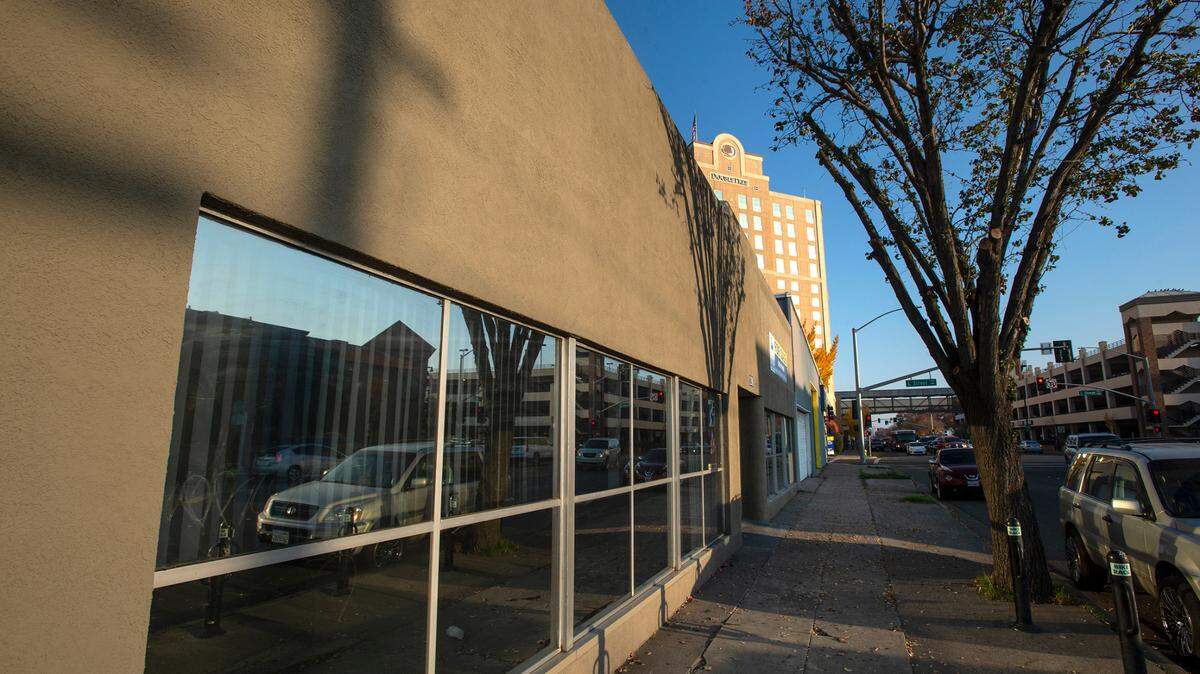
Modesto is working with the Center for Human Services on purchasing a downtown office building and converting it into a 14-unit apartment for young people as part of Project Homekey, the state initiative to house people who are homeless or at risk of homelessness.
The Ninth Street office building is one of four properties the city has identified as potential housing, but so far, the city has directed its efforts on the office building. The projects would include case management and other services for the residents, and the rents would be subsidized to ensure the projects are affordable.
The 7,446-square-foot Ninth Street building would consist of nine studio and five one-bedroom apartments and would be for residents 18 to 25 years of age who are homeless or at risk of being homeless. The apartments would be for a range of tenants, from singles to couples and parents with children. CHS would own the building and provide services, such as counseling and help finding employment, for the tenants.
The city and CHS could submit a grant application to the state in January and would be guaranteed funding as long as they score high enough on their application, which considers such factors as a property’s proximity to services, such as bus lines and grocery stores.
But there is a complication: Former Modesto Councilman Brad Hawn and his wife are one-third owners of the building at 1208 Ninth St.
Hawn — who served on the City Council from 2003 to 2011 — is active in homelessness issues, including serving on the Stanislaus Homeless Alliance and Focus on Prevention, the county’s initiative to address homelessness and other social ills.
He is a civil and structural engineer and has volunteered his services on homelessness projects. For instance, he did the engineering work and the plans at no cost for Naomi’s House, a 20-bed women and children’s shelter, which opened this year in Patterson.
“He saved us a ton of money,” said Geni Boyer, executive director of Cambridge Academies, the parent organization for Naomi’s House. “He’s a wonderful person.”
Hawn and Center for Human Services Executive Director Cindy Duenas serve as co-chairs on Focus on Prevention’s stewardship council and met when they joined Focus on Prevention when the county started it about seven years ago.
Consultant sees no red flags
Hawn, Duenas, and city officials say despite the appearance that Hawn could benefit financially from his involvement in homelessness issues, that is not the case.
“I had to make a choice,” Hawn said. “Is it worth the grief that will come out of this or maybe make a model that can be used in the future by other property owners?”
The consultant the state is providing the city to help it apply for Project Homekey funding said she does not see red flags because the city is getting a third-party independent appraisal for the building, the state funding will cover no more than the property’s appraised value, and Hawn is not the project’s decision maker.
“From my perspective, from where I sit, trying to protect the best interests of the city, ... this seems reasonable,” said Jeree Glasser-Hedrick, director of housing for Focus Strategies, the Southern California consultant providing the city with technical assistance. “Modesto is a small town. This is more common in small towns.”
Glasser-Hedrick said the smaller a community, the more likely it is for people to operate in a variety of roles. So it is not uncommon for a property or business owner also to be involved in civic affairs.
Glasser-Hedrick added that these projects are more common in the Bay Area and Los Angeles because communities there have more of the resources to make them happen than smaller communities.
That includes the technical know-how, nonprofits with the capacity to take on these projects, enough owners willing to sell their properties and developers experienced in affordable housing. But Glasser-Hedrick said the homelessness crisis is just as acute in smaller communities as it is in larger metro areas.
Hawn said he and his then two engineering firm partners bought the Ninth Street building for their office. Public records show that was in 2004 and the purchase price was $400,000. The next year, a competitor bought out the firm, and the building became vacant, Hawn said.
The county’s Behavioral Health & Recovery Services has leased the building from the Hawns and the other owners since May 2006, according to information provided by Amy Carroll, a county spokeswoman.
Building has history with youth
BHRS operated Josie’s Place, a transitional youth drop-in center, in the building until this year, when the Center for Human Services took over the center at its Briggsmore Avenue location near Highway 99 as part of opening a youth navigation center.
The county continues to lease the building at $6,000 per month and operates a Behavioral Health and Wellness Center in it and would relocate the center if the building is sold, according to Carroll.
Duenas, the CHS executive director, said that she knew about the building’s history serving youth and that Project Homekey had set aside funding for projects that help young people.
The Center for Human Services provides a variety of services, including counseling and substance abuse treatment for children and their families. It also operates two emergency shelters for young people.
Duenas said it was her idea to have the Center for Human Services partner with Modesto in applying for Homekey funding for the Ninth Street building. “I know his passion for homelessness.. ... I know his heart,” she said about Hawn. “I approached him on this. This was not his idea. There is no self-interest in this.”
Modesto Deputy City Manager Caluha Barnes said the city is interested in the building not because Hawn owns it but because it checks the boxes needed for a successful grant application.
Duenas said those boxes include the building’s history as a drop-in center, being across the street from the transit center, which serves as the hub for bus services, and being near services. That includes a grocery store, the library and Project Yes, the youth employment center.
Gov. Gavin Newsom announced in September the second round for Project Homekey, which provides $1.45 billion to house people, including grants to local governments to purchase and convert hotels, motels, vacant buildings and other properties into permanent housing with services.
(Modesto did not apply for funding during the first round.)
The state will fund grant applications as long as they score high enough and are submitted timely. The deadline for getting bonus funding for an early submission is Jan. 31.
Modesto Community Development Manager Jessica Hill said she expects city officials will ask the City Council in January for permission to submit a $2.59 million grant application for the Ninth Street property for its acquisition and rehabilitation.
But Hill emphasized the city continues to work out all of the state’s requirements for the project.
The Ninth Street building has been for sale since early March and is listed for $865,000, according to the real estate website where it is listed. Hawn said he and his wife would receive one third of the net proceeds in a sale. Hawn said the building does not have a mortgage or any other debt. A public document filed with the county clerk-recorder’s office confirms that.
In anticipation of Project Homekey’s second round, Modesto in July sent out what is called requests for information to about two dozen motels and hotels in the city to gauge their interest in selling. Nine properties responded that they were interested.
Office building size just right
Modesto has identified the 56-unit Travelers Motel on North Ninth Street and the 26-unit Apex Inn on South Ninth Street as potential Project Homekey projects.
The city also has identified a Sierra Vista Child & Family Services building at 15th and K street in downtown as a potential project. It could provide 11 one-bedroom apartments for young people. The Center for Human Services identified this property and brought it to the city.
But Hill — the city’s community development manager — reiterated the city has not started its due diligence on these three properties, and they are in very early stages. For instance, the city has not yet found a nonprofit or other agency that provides housing for homeless people to partner with on the motel properties.
Hill deferred to Duenas when asked why the city could not pick one of the seven other motels that indicated an interest in selling to provide housing for young people. Hill said Duenas has an expertise in this area that the city does not.
The seven other motels include the 56-room Best Western Townhouse Lodge in downtown. But Duenas said the property is too big. She said the Center for Human Services wants its first youth housing project to be on a smaller scale.
“We think this particular location is ideal,” she said about the Ninth Street office building. “About a dozen or so units is manageable. It’s a more controlled environment and more conducive to independent living. A larger project would have more challenges.”
Duenas said she went through her network of people she knows in identifying potential properties.
“My agenda is to improve the number of housing units for youth,” she said. Duenas said Project Homekey is a once-in-a-lifetime chance to make a difference in Modesto’s affordable housing and homelessness crises.
Deputy City Manager Barnes agreed, saying the city is criticized daily for not doing enough to expand Modesto’s housing stock, but Project Homekey is rare opportunity to do that.