Does a state drought regulation threaten local water rights? MID, TID weigh in
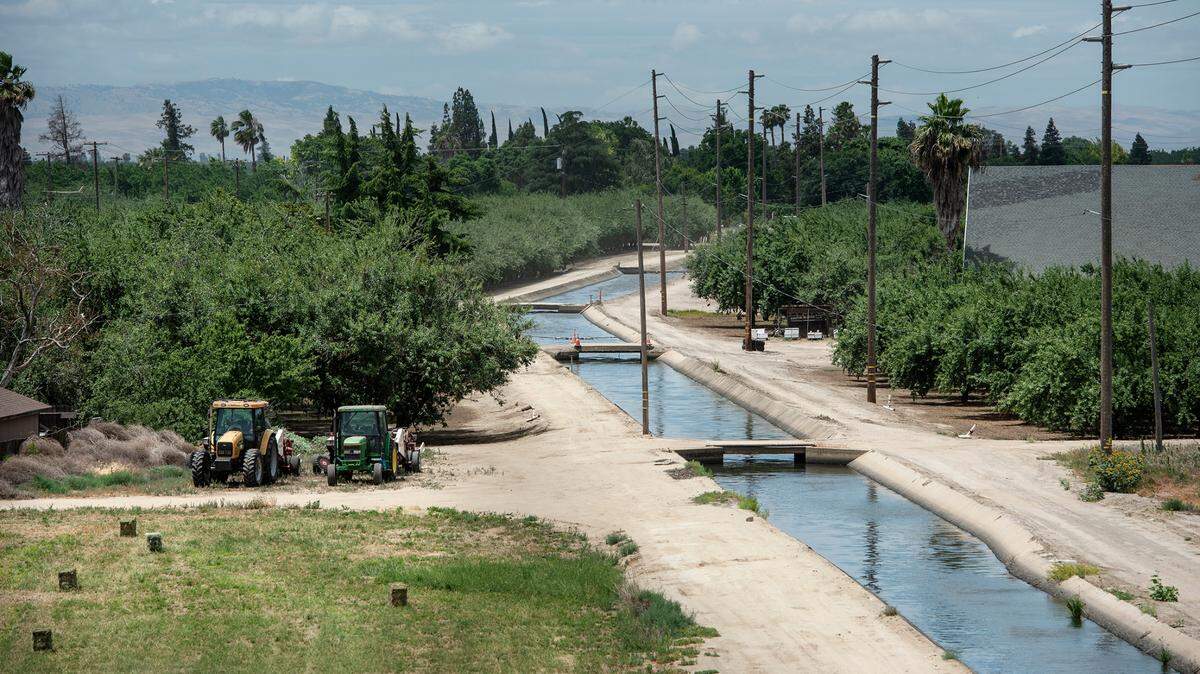
The Modesto and Turlock irrigation districts don’t expect an impact this year from an emergency drought regulation that could stop farmers from diverting water from the state’s major rivers.
But they are concerned about precedent-setting and whether a state agency’s proposed drought orders will shrink the availability of water for Northern San Joaquin Valley farmers in 2022.
The State Water Resources Control Board was considering the extraordinary drought regulation at a meeting Tuesday in Sacramento that was expected to spur many hours of debate. The meeting was being held remotely due to COVID-19 restrictions.
“Our concerns are less about this year and more about the potential precedent of such a state action,” said Michael Frantz, a TID board member.
The water districts and Valley political leaders have mobilized to urge the state water board to reconsider the emergency curtailments or amend the proposal.
Gov. Gavin Newsom’s second drought proclamation, on May 10, directed the state water board to consider curtailment of water diversions because of the serious drought conditions and threat to California’s water supply.
The SWRCB’s executive director told the Sacramento Bee that regulators are trying to protect drinking water supplies and endangered fish in the Sacramento and San Joaquin river watersheds.
Many farmers in the San Joaquin Valley are already faced with drastic cuts to their contracts for water allocations from the Central Valley Project and State Water Project.
In a joint statement last week, the MID and TID said it’s unlikely the drought regulation will affect water deliveries the remainder of this year based on the understanding the state orders to stop diversions won’t apply to water already diverted into storage. The two districts are owners of Don Pedro Reservoir.
District officials are concerned an order to stop diversions from the Tuolumne River could substantially reduce water supplies for agriculture in 2022 and beyond, depending on when the order is lifted.
Authority given to deputy director
According to the proposed regulation, the deputy director of the State Water Resources Control Board will have authority to stop diversions from rivers based on a methodology developed for the Sacramento-San Joaquin River delta.
An agenda report for Tuesday’s meeting says the curtailment orders could be issued when water is needed to control salinity in the delta, protect drinking water supplies and minimize impacts on fish and wildlife. Rivers flowing into the delta supply the water needs of two-thirds of California residents, give life to industry and irrigate millions of acres of farmland, the state water board says.
The state agency says most reservoirs in the state are at historic lows, “creating significant concerns for salinity control, municipal water supplies, temperature management and other environmental needs this year and going into next year.”
The water board’s deputy director would allow diversions to resume when the water outlook improves “or is projected to increase due to precipitation and runoff events or due to reductions in demand,” the proposed regulation states. The deputy director will consider evidence such as water supply forecasts of the state Department of Water Resources and other sources in lifting orders that forbid diversions from a river.
Frantz said the irrigation districts question whether it’s legal to give so much authority to the deputy director over the state board’s water rights division.
Other groups representing public water agencies want to see language making it clear the emergency curtailments do not apply to water currently in storage and also want more certainty on the process of resuming diversions.
Water diversions from the Tuolumne are the life blood of the agricultural industry in Stanislaus County, which contributes $7 billion annually to the local economy.
Some farmers affected by the proposed regulation have water rights dating back before 1914.
Assemblyman takes issue with proposal
“In no other industry would the destruction of billions of dollars in economic productivity and thousands of jobs by a state regulator be tolerated,” Assemblyman Adam Gray, D-Merced, said in a recent news release.
Gray said the state water board is using inaccurate water forecasting in trying to justify the new drought regulation. His press release said state modeling miscalculated the amount of Sierra runoff this year by 800,000 acre feet.
With the proposed regulation, Gray said, people living in rural areas like his Assembly district will bear the economic and social burden of the drought.
Steve Knell, general manager of Oakdale Irrigation District, said the state water board had six years since the last drought to prepare for another dry spell.
“That preparation didn’t occur,” Knell said. “It is because of this lack of preparation that the state water board is now declaring an emergency.”
Knell said water districts were given three days to respond to the draft regulation.
The San Joaquin Tributaries Authority, representing MID, TID and the Oakdale district, is contesting the proposed regulation in written comments, saying its provisions are unlawful and outside the authority of the state board.
The SJTA said the methodology for curtailing water rights is flawed.
Frantz said the TID has a track record for managing limited water supplies in drought years and ensuring water is reserved for the needs of fish.
“We have been good stewards and the watershed is well managed,” he said. “We started preparing for a multiyear drought last year.”
This story was originally published August 3, 2021 at 7:07 AM.