What are your views on Stanislaus County law enforcement? Here’s what survey found
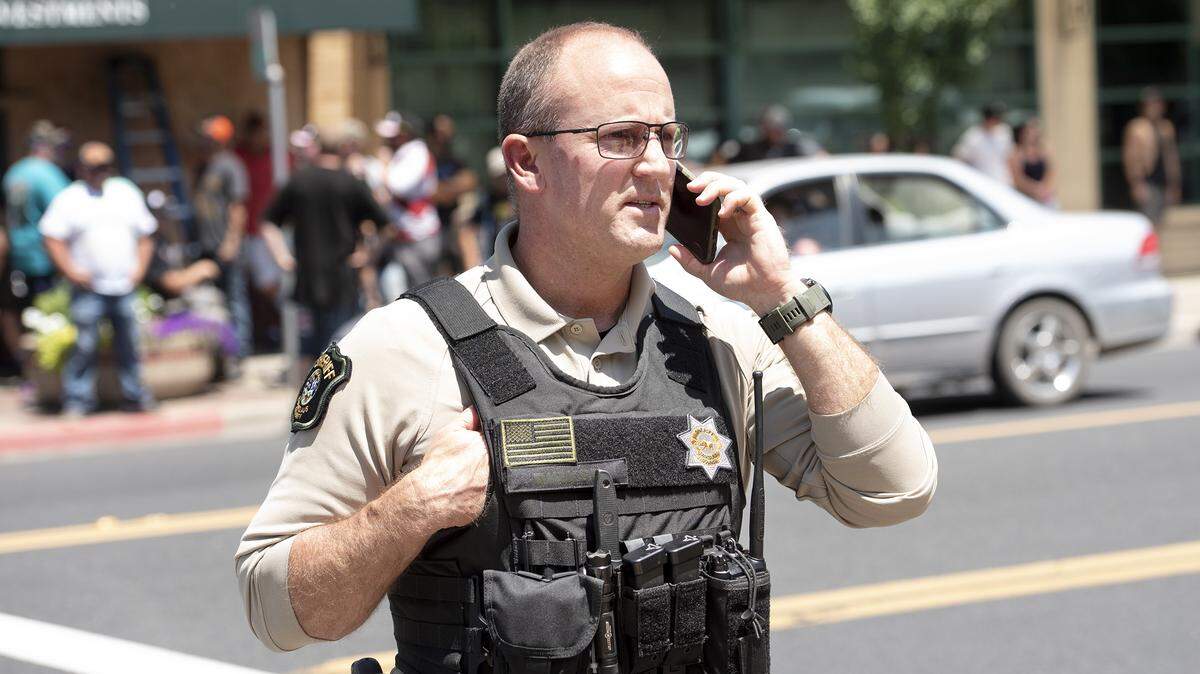
A survey of Stanislaus County residents shows about three-quarters of respondents support local law enforcement, although many are still concerned about police violence and have had negative interactions with police.
The survey was conducted by opinion consulting firm EMC Research for Project Resolve, a group of Stanislaus County law enforcement and community leaders working to identify and address issues with the county’s policing.
Stanislaus County Sheriff Jeff Dirkse, who heads Project Resolve, said the group began meeting in July in response to a variety of building factors, including the national protests against police brutality following the death of George Floyd two months prior in Minneapolis. The trial of Derek Chauvin, one of the officers charged in Floyd’s death, began last month.
While the national conversation continues, Project Resolve aims to find solutions that will work for the county specifically, Dirkse said.
“The name comes from the intent that we resolve in this community to address these issues and do whatever we can in our county to build better relations between the community and law enforcement,” Dirkse said.
Among its more than 30 members, who meet about once monthly to listen and get a better understanding of various aspects of policing, include Stanislaus County District Attorney Birgit Fladager, minister and businessman Jeremiah Williams, Stanislaus Community Foundation CEO Marian Kaanon, Marvin Jacobo of the City Ministry Network and interim Modesto Police Chief Brandon Gillespie.
Dirkse said Project Resolve will soon begin to discuss possible improvements to local law enforcement but did not specify what those changes might look like.
”We are kind of waiting for these last couple of meetings before we really go down that solutioning road,” Dirkse said.
Part of that road to change involved commissioning the new study, giving Dirkse and other project members a chance to understand more about the community’s views. Just over 1,000 residents were polled across ranges of age, race and political belief that reflect the county makeup.
Looking at the results
In the results, 74% of respondents said they supported their local police department, almost equal to the rate of support for individual police officers (73%) and the Stanislaus County Sheriff’s Department (72%).
These similar numbers are in part because many respondents did not distinguish between the Sheriff’s Department and their local police, according to the survey.
Most respondents also believe “county law enforcement treats them with respect (77%) and that local law enforcement is reliable and trustworthy (76%).”
Dirkse said he’s pleased to see the high support for the county’s police reflected in the survey. He said EMC Research told him the numbers are “kind of as good as it gets” for an institution like the police.
“Of course, the goal would be 100%, but in this profession, that’s probably never going to happen,” Dirkse said, “even though we might want it to.”
Despite the overall favorable results, the results reflect how different demographic groups view police differently and show where Stanislaus County residents see shortcomings that would keep local departments from reaching Dirkse’s higher ideal.
The 37% of respondents who strongly favor the sheriff’s department are more likely to be white, conservative and over 50. The 8% who have a strongly unfavorable opinion of the sheriff’s department are more likely to be under 40, Latino and liberal.
Just over half, or 52%, of respondents are “concerned about police violence and use of force in Stanislaus County,” while 72% are concerned with police violence and use of force across other parts of the country.
Additionally, 38% of respondents “have personally had a negative interaction with a police officer,” and 26% feel they have been racially profiled.
“Respondents who have had a negative encounter with a police officer are more likely to be under the age of 65, Hispanic, and are more likely to live in Modesto, particularly in the North Modesto region,” the survey said.
The survey, however, defines north Modesto as the entire city outside of “South Modesto,” which is designated by three zip codes – 95351, 95353 and 95354.
Wendy Byrd, the president of the NAACP Modesto/Stanislaus Branch and member of Project Resolve, said results showing that people of color are less likely to trust law enforcement ring true to what she knows.
Black Americans are incarcerated at a rate five times higher than white Americans, according to the NAACP website.
“Historically, not just in Modesto but all throughout the whole United States, it’s always been a contentious relationship,” Byrd said.
Because of this, Byrd said she was interested in the survey data but also believes in a more holistic approach to determining how well law enforcement is doing.
For example, she said it was important to look at how much money the police spend on lawsuits, such as the wrongful-death lawsuit the Sheriff’s Department settled for $7 million in 2019.
This money, Byrd said, could instead be going toward community-based programming designed to prevent crime from happening in the first place.
“If we do more on the front end supporting families, I believe that it would reduce crime anyway,” Byrd said.
Addressing law enforcement issues in Stanislaus County
Project Resolve is just one community effort to bring more accountability to local law enforcement.
The Turlock Police Department recently launched an 11-member Community Advisory Board to the Chief of Police. So far, it has given feedback on homelessness in Turlock and plans to address other issues, such as use of force.
Byrd said grassroots organizations are proposing that Modesto add a civilian review board and a contracted independent auditor, allowing a venue for police actions to be reviewed outside of the department.
While the board may be able to point out flaws in MPD decisions, Byrd said she believes it could also highlight what MPD is doing right or confirm it made the right call if the public wants to know more about why a certain case turned out the way it did.
“This shouldn’t be perceived as an attack,” Byrd said. “This shouldn’t be perceived as a fearful thing to do. I mean, most businesses have external audits.”
After George Floyd’s death, Byrd saw the same shift in conversations around law enforcement as everyone else, and she believes local departments are taking improvements seriously.
To Byrd, Project Resolve and the new review board discussions are a sign that departments are willing to be proactive in their approach to policing.
“I think the police departments are doing the right thing by getting ahead of it,” she said.
Note: To see the 58-page survey, go to this story at www.modbee.com.