Harder bill expanded VA help for Agent Orange. Vietnam vets thank him in Modesto
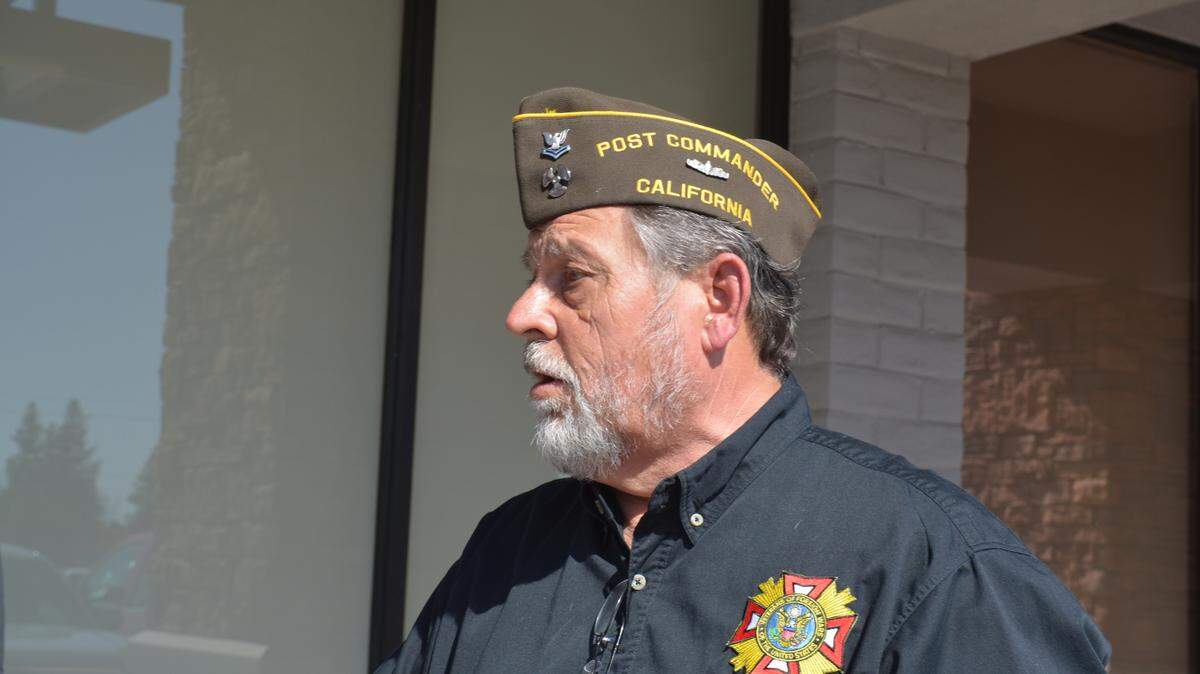
Vietnam War veteran Lyle Ducheneaux traces his bladder cancer to exposure to Agent Orange nearly a half-century ago.
Monday in Modesto, he praised a new federal law that provides disability benefits from the U.S. Department of Veterans Affairs for his disease and two others tied to the herbicide.
Rep. Josh Harder, D-Turlock, sponsored the bill. It was included in an overall defense spending package approved in December.
The measure also added hypothyroidism and Parkinson-like symptoms to the list of conditions presumed to be caused by Agent Orange, sprayed by U.S. forces over a decade to reduce jungle cover for the enemy.
Harder and Ducheneaux spoke at a press conference outside the Stanislaus County Veterans Center. They chose Monday because it was National Vietnam War Veterans Day.
“This is amazing for us,” said Ducheneaux, who served in the Navy and is now commander of Veterans of Foreign Wars Post 5059 in Turlock. “It’s a great step to have this taken care of.”
Harder said an estimated 34,000 veterans could qualify under the bill, which he named the Fair Care for Vietnam Veterans Act. He worked with a bipartisan group of supporters in the House and Senate.
Local people who think they might qualify can contact the Coffee Road center, said Ryan Kegley, veterans service officer for the county. COVID-19 still limits in-person services. The center can be reached at 209-558-7380 or www.veteranservices.info.
Many illnesses linked to Agent Orange
Bladder cancer joined a few other types of cancer linked to Agent Orange, including lung and prostate.
Parkinson’s disease itself was already on the list. The bill added Parkinson’s-like symptoms such as tremors, impaired speech and slow movement.
The third new condition, hypothyroidism, can cause fatigue, weight gain and other symptoms.
The list already included several heart, skin, blood, nerve and other disorders suffered by service members in and just off Vietnam.
Ducheneaux was a machinist mate aboard the USS Blue Ridge when he was exposed in 1975, the tail end of the U.S. involvement. He was diagnosed in 2015.
He noted Monday that Agent Orange was not the only color-coded hazard. The hues were identifying marks on the chemical storage barrels and also included white, purple, blue, pink and green.
And Ducheneaux said the VA must still address hazards from later wars, such as the burn pits in Iraq.
“Once these ailments get put on there, we can finally start winning a little bit,” he said.