Why will this mayoral election have the chance to reflect all of Modesto?
In a city that then had about 91,300 registered voters, Ted Brandvold needed just 15,455 votes to become Modesto’s mayor in a February 2016 runoff election in which he defeated the incumbent.
And to get to that race, he needed only 7,027 votes to finish second among four candidates in the November 2015 election and make the runoff against then Mayor Garrad Marsh. Brandvold’s path to victory was paved by low voter turnout. It was 26 percent — or 23,764 votes — for the mayoral election and 29 percent — or 26,532 votes — for the runoff.
But it will take a lot more votes in the Nov. 3 election to be mayor.
This is the first even-year election for Modesto since city voters approved moving from odd- to even-year elections in 2018 to increase voter turnout. (The seven members of the current City Council, including the mayor, are getting an extra, fifth year in office as the city makes the transition.)
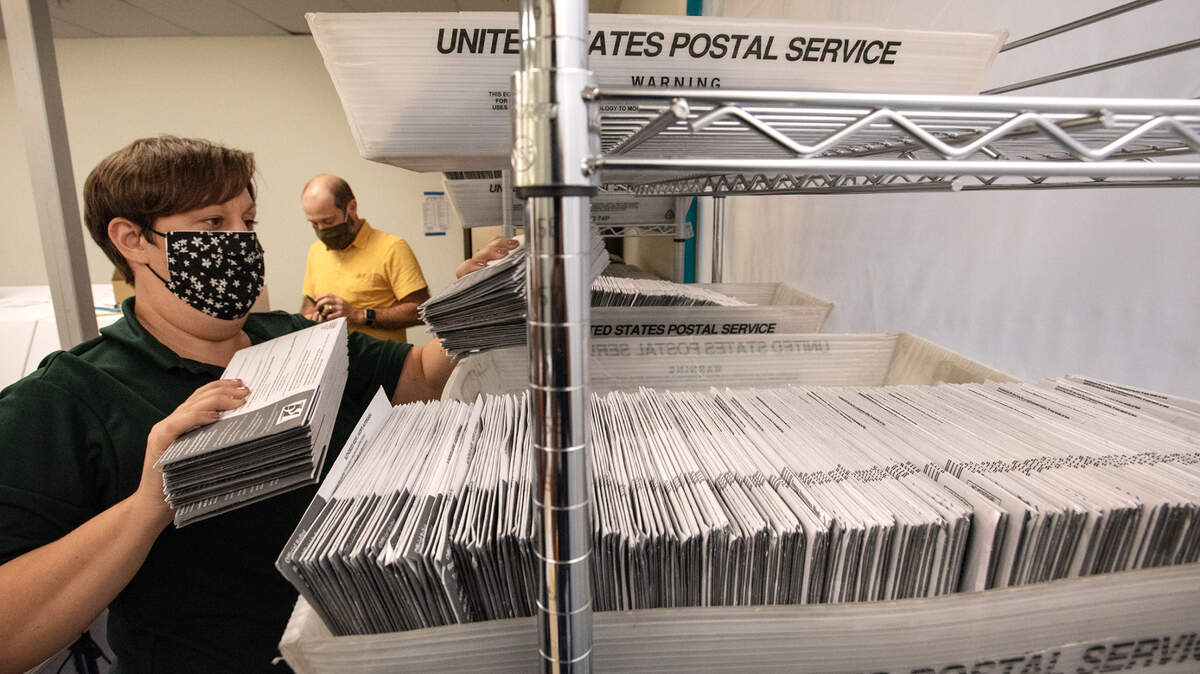
Turnout among Modesto voters for the 2016 presidential election was 72.3 percent — or 73,382 votes — according to the Stanislaus County election office. And even with the pandemic — which has made campaigning difficult and resulted in all-mail voting — turnout for this election is expected to at least reach that because of the intense interest in the presidential race.
To his detractors, President Donald Trump has a been a corrupt and malign influence, but Stanislaus State University political science professor Stephen Routh said he also has been a boon to American democracy.
Trump “shows that election results really matter,” Routh said. “He’s woken up a lot of people in the country. He is polarizing, and he’s animated and energized the electorate. ... Critics call him a cancer. But he shows voting matters an incredible amount. It matters who holds office.”
But moving to even years will not completely fix Modesto’s low voter turnout. That is because a mayoral candidate needs a majority of the vote to win the Nov. 3 election. That is not expected to happen. Instead, as in previous mayoral races, the contest will be decided in a runoff among the top two vote-getters.
The runoff for the Nov. 3 mayoral election is Feb. 2. Mike Lynch, a longtime political consultant, expects turnout will plummet in the runoff. (There also are three City Council races on the Nov. 3 ballot. There is no runoff for council. Whoever gets the most votes wins.)
Lynch said there is a way to ensure better turnout for a mayoral runoff: Hold the election in the March primary and the mayoral runoff, if needed, in the November election. This would require voter approval.
Local races are supposed to be nonpartisan, but that can be hard to remember in an even-year election when there also are Democratic and Republican candidates for state and federal office on the ballot.
The mayoral candidates are Councilwoman Kristi Ah You, Mayor Brandvold, co-Senior Pastor Rick Countryman with Big Valley Grace Community Church, community organizer Naramsen Goriel, Councilman Doug Ridenour, political newcomer Erin Sommer Tenorio, and former Modesto City Schools board member Sue Zwahlen.
Bert Lippert, the city’s building safety program coordinator, also is on the ballot but has dropped out of the mayor’s race.
The Republicans among them are Brandvold, Countryman, Ridenour and Tenorio. Goriel and Zwahlen are Democrats. Ah You has said she was a Republican but recently changed her registration to No Party Preference.
Voters don’t care about politics
Democrats outnumber Republicans among Modesto’s registered voters. The county election office reported that as of Sept. 11, Democrats were 41.1 percent of the city’s 109,836 registered voters, Republicans were 33.3 percent and No Party Preference were 18.9 percent. The remaining voters belonged to other political parties.
Lynch, the campaign consultant and who is advising Zwahlen, said the vast majority of voters in nonpartisan races don’t care about a candidate’s political party. They want someone who can get the roads fixed, the parks mowed, and keep cops on the street.
“Voters are smarter than all the consultants think they are,” Lynch said. “ ’We want someone to work hard, do their best. We don’t want them to steal and be weird in terms of government policy.’ That’s all the public wants (from its elected officials). Partisanship does not weigh as much for local races.”
Lynch said county Supervisor Jim DeMartini is a perfect example. DeMartini is a staunch Republican and represents the county’s most Democratic supervisorial district, and yet its voters kept re-electing him. He has a well-deserved reputation for attending to his constituents’ concerns. DeMartini is not running for re-election in the Nov. 3 election as he completes his final and 16th year in office.
Modesto moved from odd- to even-year elections to comply with the California Voter Participation Rights Act. The Act states if voter participation in odd-year elections is too low, then a local government must move to even-year, statewide elections.
Voter turnout in Modesto council elections was 25.6 percent in 2013 and 26 percent in 2015, according to the city. Turnout also was disappointing in the 2017 elections for three council seats, from 17.7 percent in District 2 and 25.1 percent in District 4 to 27.6 percent in District 5. Turnout was 25.4 percent for the 2011 mayoral election.
Older, whiter, wealthier voters
This is within the range for odd-year or off-cycle elections. “Large American cities average 20 to 25 percent turnout in local elections,” said Routh, the political science professor.
He said political science research has consistently shown the people who vote in these elections tend to be whiter, older and wealthier than the rest of the electorate. They also tend to be well-informed about local candidates and issues.
And while even-year elections draw significantly more voters and the electorate better reflects an entire community, these elections draw more lower-informed voters.
“It comes down to what you value in a democracy,” Routh said about the trade-offs. “Do you make the election more fairly representative (of a community) but with a greater number of lower-informed voters? ... In a perfect world, everyone votes and everyone is informed.”
Routh said that means voters who get their information from a variety of sources and not just from those that serve as an echo chamber for voters’ beliefs.
One of Routh’s colleagues believes even year voting is good for democracy because it increases the likelihood that voters from minority and disadvantaged communities have a say in who represents them on a city council or as mayor.
Advancing democratic values
“If we care about political participation and define democracy in part by voting, then even-year voting advances that,” said Larry Giventer, professor emeritus in Stanislaus State’s department of political science, public administration & leadership studies. “... It can mean a lot to minority communities.”
Giventer also believes turnout will be high because of Trump. “The presidential race is dominating everything,” he said, “and I think that will lead to high participation.”
Odd-year elections are a vestige from the Progressive Era from more than a century ago. Local elections were moved from even years to odd years to make them less political and more focused on local issues. Local elections also became nonpartisan.
Routh said reformers were trying to root out corruption from big city political machines, which were primarily Democratic, but in some cases Republican. That corruption included buying votes and rewarding supporters who got out the vote with government jobs.
The reform effort also gave California the ballot proposition.
There are a dozen propositions on the Nov. 3 ballot, from Proposition 14 regarding the funding of stem cell research to Proposition 25, which asks voters whether they support a 2018 law that replaces money bail with an assessment of defendants’ flight risk and danger to the public if they are released before trial.
Ceres also has moved from odd- to even-year elections in response to the California Voter Participation Rights Act. Stanislaus County’s seven other cities already were holding even-year elections.
This story was originally published October 18, 2020 at 4:00 AM.