A tragic end to a tragic life: Sex trafficking victim dies after defendant sentenced
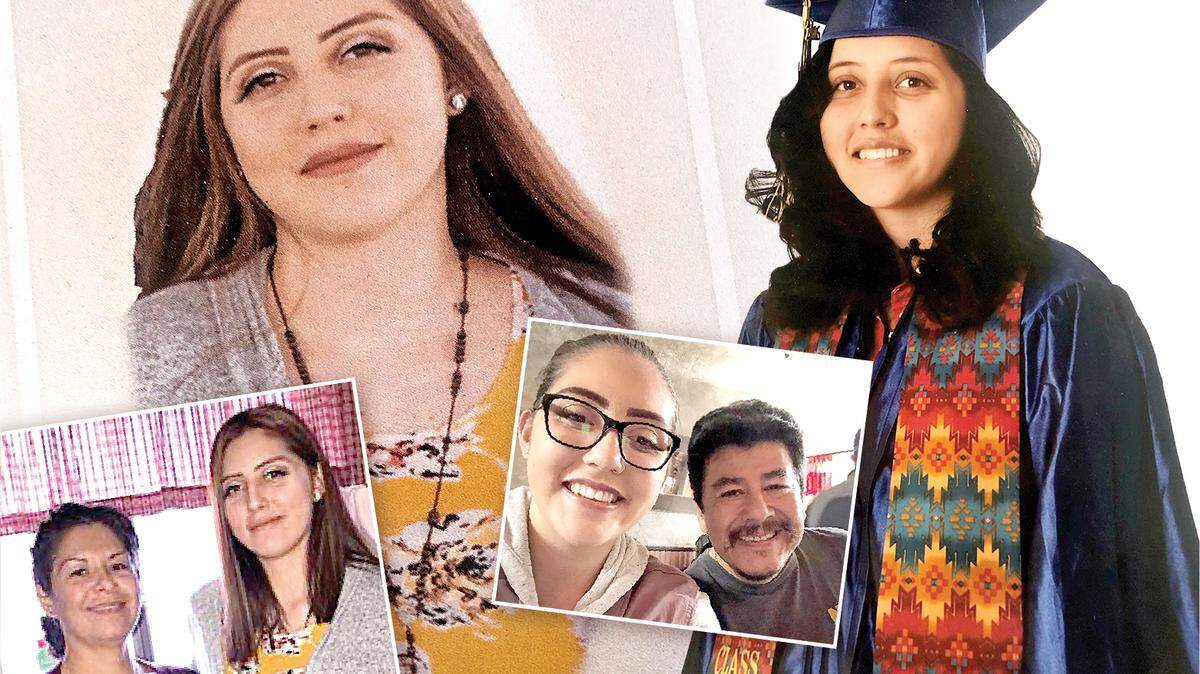
In December, Ayasha Castro stood up to the man who had victimized her.
“You had my life for a small portion of it, you changed it, but did not break me as you wanted to,” she posted on Facebook after testifying against him in Stanislaus County Superior Court.
Ayasha suffered for much of her childhood, enduring physical and sexual abuse for years. She was 16 when she became the victim of sex trafficking.
Still, she had dreams of a better life and was working to achieve that. She moved away from her childhood home, was studying sociology at a community college with the goal of becoming a social worker and getting custody of her younger siblings and found support in a foster mother who eventually adopted her as an adult. She also shared her story and gained the trust of others who opened up to her about their own abuse.
But on Sept. 3, one month after the man who trafficked her pleaded guilty in the case and was freed from jail with a suspended sentence, Ayasha died of an accidental drug overdose. She was 20 years old.
Ayasha represents millions of American women and young girls who are victims of childhood sexual abuse and are at a greater risk of further victimization, depression, Post Traumatic Stress Disorder and suicide, according for the Centers for Disease Control and Prevention.
She made sure to share her story with others in hopes it may one day have impact on girls like her.
Said her friend, Adrienne Maestas: “She encouraged a lot of people to come forward and face what happened to them and try to take back control of her lives.”
Physical and sexual abuse
Ayasha, who was Native American, grew up on a Rancheria in the small Lassen County town of Susanville.
“I have been through everything that a child is not supposed to,” Ayasha wrote in a statement she submitted to a court in February 2018. At the time she was seeking emancipation and custody of her four younger siblings.
Ayasha detailed physical abuse by her mother and several of the men in her life that was fueled by their drug and alcohol abuse.
She and her brothers were beaten; they had matches thrown at them for sport; Ayasha’s leg was cut with a broken beer bottle when she tried to stop one of her brothers from being beaten; they watched their mother knock one boyfriend unconscious with a stereo to the head.
“It got to the point where I locked the kids, as well as myself, in my room and I pushed my dresser in front of it, so no one could get in to hurt us,” she wrote.
According to her statement, Ayasha was first molested by one of her mother’s boyfriends on her sixth birthday.
When she told her mother about it, Ayasha said, the woman slapped her in the face and told her it was her problem.
Ayasha stayed silent about the physical and sexual abuse until she was 14 and entered Lassen Union High School. She was self harming and sought the help of guidance counselor Micah Freeman and School Resource Officer Terra Avilla. She confided in them the abuse she had endured.
The two helped her obtain a restraining order against her mother’s boyfriend and a criminal investigation began.
BEHIND THE STORY
MOREHow we reported this story
The Bee obtained court documents, spoke with official’s at Ayasha’s high school and both of the community college’s she attended, as well as her friends and members of her adopted family. We reached out to her biological mother as well as the Tribal Chairwoman for the Susanville Indian Rancharia. She said no one from Ayasha’s biological family would agree to an interview because, “Culturally this isn’t something we would even consider for the first year after someone passes.” Ayasha’s mother’s name was not used in the story because she was never charged with a crime related to Ayasha. Quotes from Ayasha were pulled from her own writings documenting her struggles. Reporter Erin Tracy also had a phone interview with Ayasha.
Ayasha’s mother, who did not return a call recently seeking comment for the story, was charged with child abuse and endangerment. Her boyfriend, Alfred Willis, was charged with child abuse and endangerment as well as several counts of lewd and lascivious acts on a child related to Ayasha. Lassen County District Attorney Melyssah Rios said the child abuse and endangerment charges were related to another child, not Ayasha.
Avilla said Ayasha’s case was her first as a school resource officer.
She described Ayasha as a beautiful, intelligent girl.
“She was very articulate, she was personable, she was just very thoughtful,” Avilla said. “She listened when you talked to her. When a lot of people are thinking of the next thing to say, she would listen.”
Freeman agreed. “What I appreciated about her is she would look you right in the eyes ...” he said. “You could see that she had a lot of perseverance ... she wanted to say so much but she couldn’t. It took a lot of courage for her to tell us anything. She was stoic.”
After her freshman year, Ayasha transferred to an independent study charter school.
“I felt like we were really helping her,” Freeman said. “Then all of a sudden we couldn’t.”
According to court records, the charges against her mother were dismissed after she completed a diversion program.
Willis was sentenced to four years in jail after he pleaded guilty to inflicting corporal injury on a child. The molestation charges were dismissed. He is in prison serving a five-year sentence for robbery.
Rios, who prosecuted Willis’ case when it first went to court but briefly left the DA’s office and was not there when it was resolved, said she didn’t know if the molestation charges were dismissed as a result of a plea deal or for another reason. She said her office doesn’t keep records that long.
Rios said she was shocked and saddened to hear of Ayasha’s death.
“It is so unnecessary and so unfortunate...,” she said. “What a tragic way to end a tragic life.”
Found at a Modesto motel
Ayasha lived with an aunt for a while after her mother’s boyfriend was arrested but eventually moved back home with her mom. She said in her court statement that her mother repeatedly kicked her out of the home and she would sleep in parks. When her mother kicked her out on August 2016, Ayasha, then 16, ran away to Stockton with a friend.
That is where she met Gabriel Gomez, who was convicted of trafficking Ayasha for an eight-day period in December 2016.
On the eighth day, while being sold for sex at the Motel 6 on Orangeburg Avenue in Modesto, Ayasha contacted her aunt, who notified police.
She told the responding officer 50 men had sex with her in eight days at motels in Modesto and Stockton and she testified in court that she had to earn at least $1,500 a night, and got none of the money.
Officers interviewed her and she was taken to a hospital for injuries she’d sustained.
When Ayasha returned to Susanville, she met Maria Castro, who was fostering her younger siblings.
Castro said she tried to foster Ayasha, too, but the tribe wouldn’t allow it.
Ayasha again stayed with her aunt for a while then with some friends but remained close with Castro.
Castro and her family moved to Flagstaff, Arizona, and Ayasha moved there, too, after turning 18 and finishing the semester at Lassen Community College.
She transferred to a community college there, got a job, made new friends and was supported by her adoptive family.
“She always talked about how much they loved her and how much they protected her and they wanted her to do well; she felt very much like that was her family,” said Maestas, Ayasha’s friend and former co-worker.
When Ayasha testified against Gomez at his preliminary hearing in Stanislaus Superior Court last December, Castro was there with her.
Ayasha was scared to testify but Castro said afterward she was empowered to post about her experience on Facebook.
“I’m sharing this because maybe it will help someone else come out and stand up for themselves,” she wrote. “This isn’t okay, it happens to be generational and most of the girls don’t have a choice.”
Ayasha’s post and just telling her story to other girls she met had a great impact, Maestas said.
“I know a few of the other girls that we worked with had disclosed to her that they had been assaulted,” said Maestas, who supervised Ayasha at a retail store in Flagstaff. “She was there for them and they felt stronger talking about it because of her.”
Human trafficking sentence
The Stanislaus County Probation Department and District Attorney’s Office began contacting Ayasha in April 2020 about providing input on a sentence for Gomez, who was prepared to plead to the count as charged of human trafficking of a minor for a commercial sex act.
Ayasha didn’t respond but Castro said she was aware there was a chance Gomez would get probation.
“She felt she testified and that was closure and she wanted to move forward,” Castro said.
But Ayasha didn’t move forward. The potential of her trafficker getting released from jail brought the events to the forefront.
She also missed her younger siblings whom she was denied custody of and ultimately isolated from by her relatives in Susanville, Castro said. The past she had struggled to forget was closing in on her.
It was around that time that Ayasha began drinking and it was a few months later that the drug use started, Castro said.
“When someone has experienced sexual assault, sexual molestation, sexual abuse – the brain is traumatized and that complex trauma is going to replay itself over and over again,” said Ashlie Bryant, CEO of the anti-human trafficking foundation 3 Strands Global. “Even if that person has been healing, it is a journey for that person’s whole life, it doesn’t just go away.”
Bryant said, “The brain is constantly hearing almost like a fire alarm going off because it is in fight or flight mode constantly.”
People often turn to drugs or alcohol to quiet that blaring alarm, she said.
Before the drug use started, Maestas said she noticed that Ayasha, “needed to be around people to distract her from the pain that she was feeling. She always wanted everyone to be happy and having fun. She was very strong but I think deep down she was hurting.”
On Aug. 7 Gabriel Gomez entered his plea of no contest and received a five-year suspended prison sentence and five years of probation. He was released on the time he served in jail while the case was litigated, 299 days.
“After she found out the length of the sentence Gabriel was going to get it brought her down; she felt (her testimony) was pointless,” Castro said.
Gomez’s attorney argued there were inconsistencies in Ayasha’s testimony and that most of the trafficking was done by Gomez’s girlfriend at the time, an older woman who the attorney said manipulated him into taking part. He pointed to Ayasha’s testimony that it was the girlfriend who threatened to harm her little sister if she didn’t engage in prostitution.
Stanislaus County Deputy District Attorney Larissa Jones told The Bee Ayasha didn’t disclose the girlfriend’s role until she was testifying. At that point, it was too late to charge the girlfriend, she said.
But Jones said in court the girlfriend’s involvement didn’t diminish Gomez’s role. He posted advertisements of Ayasha on the internet, drove her to motels, and collected the money, giving none of it to Ayasha.
Reached by email Friday, Gomez said he has turned his life around, that he was a different person then, and said he was sorry to hear of Ayasha’s death.
Jones asked for a five-year prison term for Gomez and his defense attorney asked for probation.
Judge Ricardo Córdova didn’t say why he handed down the sentence he did but mentioned Gomez’s lack of criminal history and abundance of family support. His mother spoke on his behalf before the sentencing.
The judge stressed to Gomez that he could still serve five years in prison if he violates his probation.
Jones said Gomez will have to register as a sex offender for the rest of his life.
“It is very challenging to prosecute these cases because of the pain and trauma that victims have experienced and Ayasha, she had the strength to testify against Gomez,” Jones said. “It not only made an impact on her case but potentially for any (future) victims.”

Ayasha’s final days
In the month leading up to Ayasha’s death, Maestas noticed the posts on her social media were centered around partying. Five days before her death, Maestas sent Ayasha a message on SnapChat to “Please be safe,” but Ayasha never opened it.
Castro said Ayasha sought therapy over the years but never found someone she felt could help her. She had just made contact with a Native American therapist, who Castro thought was promising. Castro also got her an appointment with a medical doctor to discuss the drug use.
The appointments were scheduled for Sept. 4.
On Sept. 3, police in Glendale, Arizona, found Ayasha, as well as a 24-year-old man, dead at a Motel 6.
Officials would not release details about the man but said both deaths appear to be accidental overdoses. Investigators found pills at the scene that they believe to be counterfeit painkillers laced with fentanyl.
Both deaths were determined to be accidental overdoses.
Ayasha was laid to rest in Flagstaff on Sept. 16. Castro said her service was attended by her adopted family and friends like Maestas.
“She was funny, strong, extremely smart,” Maestas said. “She was loved by a lot of people.”
She and Castro said Ayasha would do anything for the people she loved, especially her siblings, who she never lost hope of earning custody of. Her drive to go to school and become a social worker was with them in mind.
In an essay as part of an application for a scholarship while at Lassen Community College in 2018, she said he was working two jobs, taking 22 units, volunteering at a student mentoring program at the college and volunteering in two of her brothers’ classrooms.
Ayasha endured a lifetime of injustices in her short life but she was brave beyond her years.
“I can’t stop human trafficking, all I can do is make people aware of it and how close it gets to small places,” she wrote. “I hope this helps another girl (who’s) scared to speak up and do something because it isn’t OK and you can move on to help someone else in the same situation as you are in.”
If you or someone you know if the victim of human trafficking call the national human trafficking hot line at 1 (888) 373-7888.
HOW WE REPORTED THIS STORY
The Bee obtained court documents, spoke with official’s at Ayasha’s high school and both of the community college’s she attended, as well as her friends and members of her adopted family. We reached out to her biological mother as well as the Tribal Chairwoman for the Susanville Indian Rancharia. She said no one from Ayasha’s biological family would agree to an interview because, “Culturally this isn’t something we would even consider for the first year after someone passes.” Ayasha’s mother’s name was not used in the story because she was never charged with a crime related to Ayasha. Quotes from Ayasha were pulled from her own writings documenting her struggles. Reporter Erin Tracy also had a phone interview with Ayasha.
This story was originally published October 23, 2020 at 5:00 AM.