Coronavirus infections still rising in Stanislaus County. But officials are not alarmed
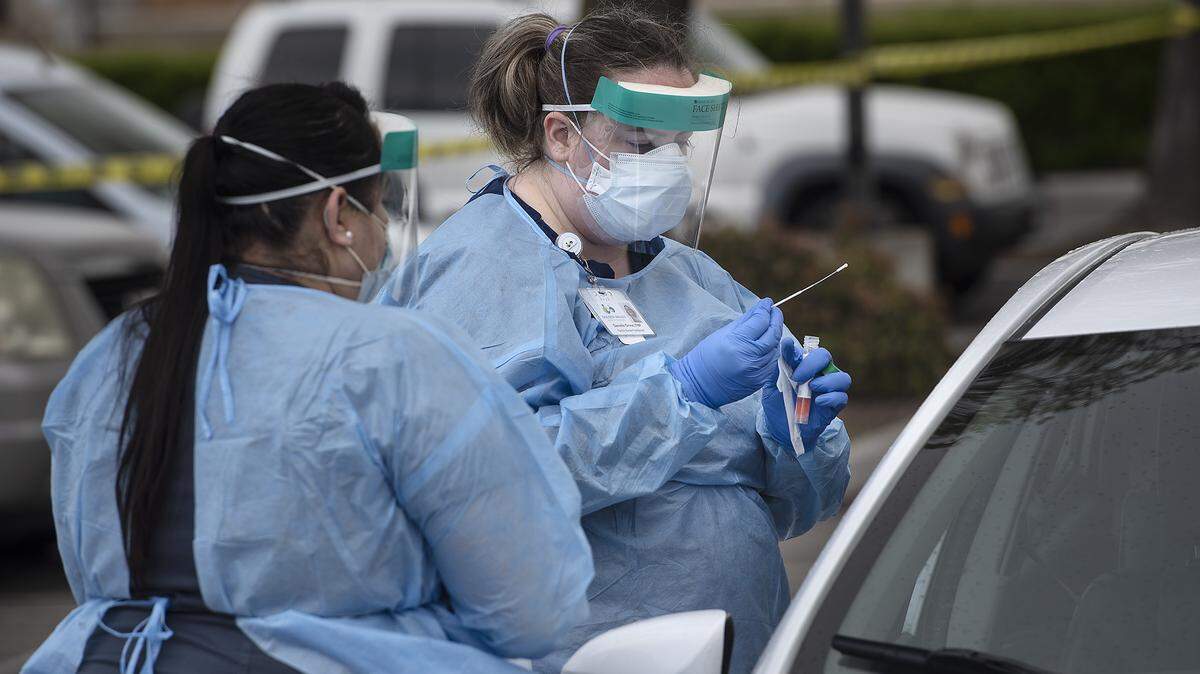
Stanislaus County officials have not seen conclusive evidence of a large surge in coronavirus infections since the county reopened for business last month.
The county has continued to record new cases — a total of 179 since the state approved a variance May 20 for opening expanded Stage 2 businesses such as restaurant dining rooms and shopping centers.
The rate is 12 new cases per day, but it also coincides with an increase in available testing, said Dr. Julie Vaishampayan, county health officer. As of Thursday, the totals were 816 confirmed cases of COVID-19 illness and 31 deaths.
Vaishampayan said early in the week it’s hard to say how well the county is controlling COVID-19 as people released from stay-home orders circulate in retail stores. And concern among county officials seemed to grow as daily updates added to the caseload.
The percentage of coronavirus cases classified as “community transmission” has risen to 30 percent after staying at 25 percent for most of the outbreak in Stanislaus County.
Vaishampayan was encouraged by two indicators that were crucial for getting state approval of the variance: Hospital admissions are stable. And the rate of positive tests is around 5.5 percent, meaning almost 95 percent of people are cleared when tested.
County health officials would not consider new stay-at-home orders unless there’s an upswing in cases filling hospital floors with COVID-19 patients. The county also watches for an elevated rate of positive tests, which could indicate more rapid spread in the community.
In its application for the state variance, the county listed triggers for tightening measures in event the outbreak starts spinning out of control during the opening process.
The 18 different triggers are things like:
▪ 10 percent or higher increase in new cases for three consecutive days.
▪ More than three new chains of transmission in a two-week period.
▪ Steady increases in patients with flu-like symptoms in emergency rooms and clinics.
▪ Increase in health care worker infections for five days.
▪ Strain on health care facilities and shortages of personal protective equipment.
▪ Failure to find contacts for 20 percent of cases or more.
According to the application to the state, the county could respond to a surge in the infectious disease in the next few months or the fall by closing restaurants and other non-essential businesses, banning religious services and other gatherings and closing day cares and schools.
County Supervisor Terry Withrow said Thursday he has not noticed anything alarming since the county reopened two weeks ago.
“We get updates everyday,” Withrow said. “If the information is being tracked daily and we have contact tracing going on. We are in such a better spot than we were when this started. I don’t anticipate us having to shut that down.”
A new source of potential infections are protests over the death of George Floyd, who died as he was restrained by police officers in Minneapolis. Local officials said the more unruly demonstrations are the type of gatherings conducive to the spread of coronavirus.
“There is no social distancing being used,” said Royjindar Singh, spokesman for the county’s emergency operations center. “Some people are wearing masks but most are not. A lot of people are yelling and screaming and that projects air droplets. The opportunity for spread is extremely high in those situations.”
Singh said he was not aware of any specific COVID-19 cases traced to marches or protests held in Modesto or Oakdale.
Nursing homes are vulnerable
In the past, the county has emphasized that clusters account for 40 percent of the COVID-19 case total and it remains true.
Those clusters include a Safeway warehouse in Tracy, where dozens of workers from this county were sickened, a family funeral held indoors and nursing homes.
More than 100 residents and 55 staff members have tested positive for coronavirus at Turlock Nursing and Rehabilitation Center, owned by Covenant Care of Southern California, and 20 residents have died.
A second nursing home outbreak recently surfaced at Vintage Faire Nursing and Rehabilitation Center in Modesto, also owned by Covenant Care, with six residents and one employee testing positive. Two residents who tested positive died.
Congregate care facilities could be a continuous challenge for health officials who have few options for dealing with outbreaks among vulnerable patients, other than attempts by facility operators to control it.
Vaishampayan said the state has a new requirement for testing patients and employees in long-term care facilities. It’s a huge amount of testing that’s bound to reveal more cases.
Modesto has the most cases
Modesto, with 226, has the largest coronavirus infection count in Stanislaus County, once again surpassing Turlock with 210. According to case data by zip code, the largest increases have occurred in west and south Modesto.
Ceres, which had 20 cases in mid-April, now has a total count near 100.
The Latino community has seen the largest impact from COVID-19 illness. Sixty-three percent of cases and half the deaths have occurred among Latinos, who represent 47 percent of the county’s population.
Whites account for 25 percent of cases and 42 percent of coronavirus-related deaths. They represent 41 percent of county population.
County public health officials have looked into antibody testing to establish a baseline estimate of county residents exposed to the novel coronavirus. About 1,000 residents would be selected for testing this month and a second round would be conducted in October.
County staff roughly estimates the antibody testing will begin in mid to late June.
This story was originally published June 5, 2020 at 9:23 AM.