Stanislaus County ERs quiet due to coronavirus fears. What’s cost to people’s health?
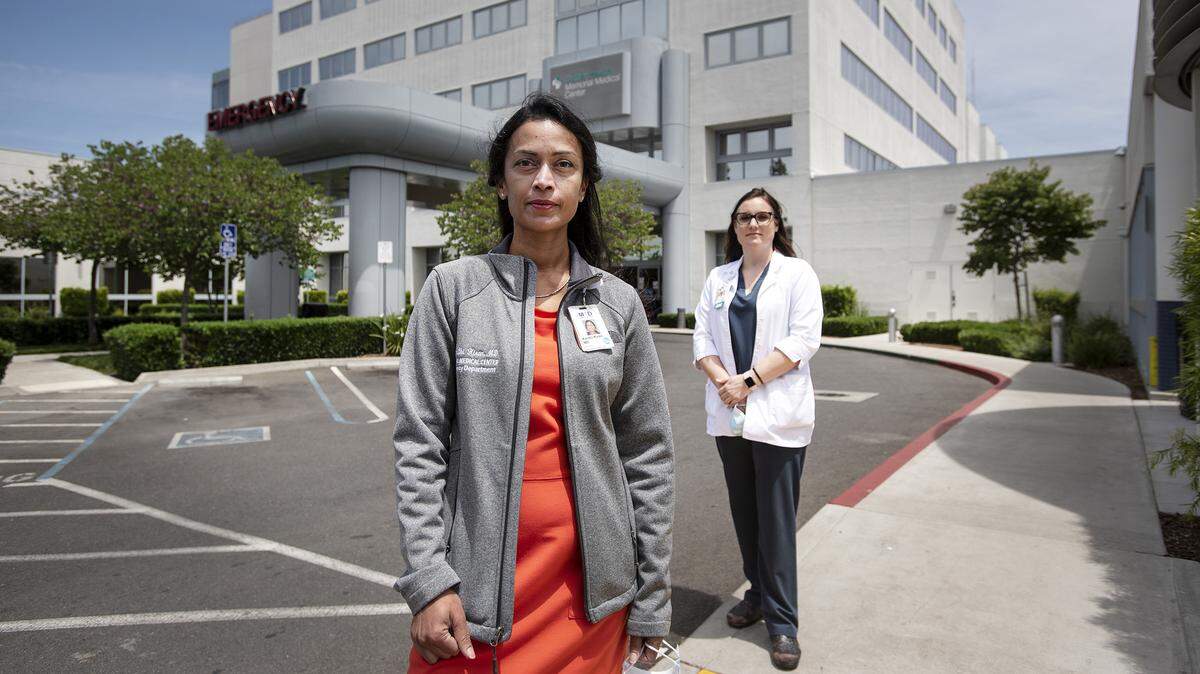
The coronavirus pandemic vacated streets, shopping malls and movie theaters as millions of people stayed sheltered in their homes.
Unless they had a fever or other COVID-19 like symptoms, many also stayed away from hospital emergency departments in Stanislaus County and other parts of California and the nation with potentially serious consequences for their health, according to data reported by hospitals.
Physicians suggest that one byproduct of the pandemic are untreated medical problems of people who delayed a visit to the emergency room when they had telltale signs of a heart attack, stroke or another acute illness but were afraid of catching COVID-19 at the hospital.
“People are waiting too long to come in,” said Dr. Donald Zweig, an assistant medical director at Memorial Medical Center in Modesto. “Very few patients are testing positive (for coronavirus) so the chance to catch it is very low.”
Zweig said he normally sees 20 to 30 people in the ER waiting room, but now there might be two or three in the mid-afternoon.
In April, as the coronavirus outbreak peaked in Stanislaus County, emergency room visits were running 150 to 160 per day at Memorial compared with the normal traffic of 230 a day, a director said.
Hospitals across the country have experienced a 30% to 60% drop in people seeking care for common emergencies like heart attack and stroke, according to estimates released by administrators for news reports in many states.
Sutter Health sees drop in ER visits
Sutter Health, which is affiliated with Memorial, reported that ER visits from January to March dropped by 43 percent at its hospitals in the Central Valley and Bay Area, just one reason for a $1 billion first quarter loss for the Sacramento-based nonprofit.
Dr. Kanthi Kiran, medical director of Memorial’s Emergency Department, cited another significant fact reflecting the harsh consequences for patients who delayed treatment for emergency medical conditions. Typically, about 15 percent of emergency room patients at Memorial are admitted to inpatient beds after evaluation.
The admission rate has doubled, Kiran said. The patients needing emergency care are more seriously ill by the time they come in. The small number of COVID-19 patients is not what’s raising the admission rate.
Kiran stressed there’s no reason to put off a visit to the emergency department. Anyone with COVID-19 like respiratory symptoms is masked and completely separated from other patients. Social distancing is maintained in the lobby and all surfaces are disinfected on a regular basis.
“We will keep you safe,” Kiran assured.
The same decline in emergency room visits is happening at other hospitals in the county and apparently for the same reason.
“Patient visits in the emergency department were down significantly in March and April,” Cheryl Harless, chief nursing officer of Doctors Medical Center, said in an email. “The patients who did visit the ED were higher acuity (sicker). In many cases, patients indicated that they waited as long as they could to come in.”
The Memorial doctors said people with stroke symptoms are coming in too late for staff to use a clot-busting drug to open a blood vessel in the brain. The result may be paralysis, reduced bodily function or death.
Zweig said heart attacks have been diagnosed on electrocardiograms for patients who had chest pain for two days. Another bad outcome of delayed treatment is a patient who’s home for a week with abdominal pain and has a ruptured bowel by the time it’s examined at the hospital.
Such an attack of diverticulitis can be treated early with antibiotics and the patient is discharged, Kiran said.
Other patients are arriving at the emergency department with complications of congestive heart failure that could have been treated earlier by simply adjusting their medication, Zweig pointed out.
For an emergency physician, Kiran said, it’s frustrating to see a patient suffer a life-changing health problem that’s preventable. “Nothing is worse than knowing if you were seen a day earlier I could have prevented this breathing tube or saved this heart muscle,” Kiran said.
The coronavirus impact on hospitals in Stanislaus County has been much lighter than originally feared. Zweig claimed he’s diagnosed one patient with the respiratory illness since the COVID-19 epidemic surfaced here in March.
Kiran said dozens of patients are tested daily in Memorial’s ED and maybe one has COVID-19.
Memorial has extensive safety precautions
Kiran said even before the coronavirus surfaced in Modesto, the hospital made major physical improvements and established protocols to continue with a fully functioning emergency department that takes in car crash victims and people with everything from broken arms to cardiac emergencies, even as it deals with COVID-19.
To prepare for the pandemic, the improvements included systems to manage air quality and filtration and process changes based on best practices learned from other institutions across the country, Kiran said.
As things turned out, the medical center at Briggsmore Avenue and Coffee Road, has received far fewer Covid patients than anticipated. The stay-at-home orders and suspension of elective procedures resulted in a lot of empty beds at Memorial.
Staff puts a mask on everyone arriving at the emergency department in addition to screening and a temperature check.
Kiran said social distancing is maintained in the lobby. Visitors are not permitted unless it’s someone to support an elderly person or a small child.
To separate them from other patients, anyone with respiratory symptoms is placed in a separate area equipped with a negative pressure system. Personal protective equipment is enhanced for anyone who’s coughing.
It takes about an hour to determine if a person with respiratory symptoms tests positive or negative for coronavirus, Kiran said.
At Doctors Medical Center, officials face the same challenge of reassuring people it’s OK to use hospital services. “Every precaution is being taken, combining infection prevention processes, staff training, testing and supply of personal protective equipment,” Harless wrote.
Along with screening and masking of patients, visitors and employees before they enter the hospital, Doctors has a separate route to care for confirmed coronavirus patients or those with COVID-19 like symptoms so other patients are not exposed.
Emanuel Medical Center in Turlock perhaps has the toughest job of alleviating fears stoked by the coronavirus. The hospital is situated across the street from Turlock Nursing and Rehabilitation Center, where 18 residents infected with coronavirus have died and 152 residents or staff have tested positive.
The nursing home is the biggest coronavirus hotspot in the county, which has reported more than 600 cases in all, 109 county residents hospitalized and 28 deaths.
Turlock hospital deals with fear factor
Lani Dickinson, chief executive of Emanuel, did not say how the pandemic has affected ER visits. In a statement, she informed the public the hospital’s emergency department “is safe for you and your loved ones.”
“All patients are screened prior to entering the building,” Dickinson said in the statement. “If there are signs or symptoms of possible COVID-19 or other communicable disease, the patients are seen in a fully contained space.”
At Memorial, Zweig said fears about coronavirus have eliminated unnecessary visits to the ER for minor issues that are routinely handled in primary care offices.
The physician said time will tell whether emergency room visits will return to normal levels as the nation continues to deal with COVID-19. Maintaining safe distancing would seem more of a challenge if ER visits were to climb back to 230 per day.
“We have the people to ramp up if there is more volume,” Kiran said, adding later. “Our goal is to keep our community safe. And we absolutely have the bandwidth for increased volume.”
Zweig stressed that people with a medical emergency should not fear the emergency room. If there’s an urgent need for care, one bonus is the shortest wait times ever seen, he said.
“No one is waiting two to three hours for a room anymore,” Zweig said. “It’s as quiet as it’s ever been in the emergency department.”
This story was originally published May 24, 2020 at 5:00 AM.