No one-size-fits-all approach: Stanislaus County asks state to let local economy reopen
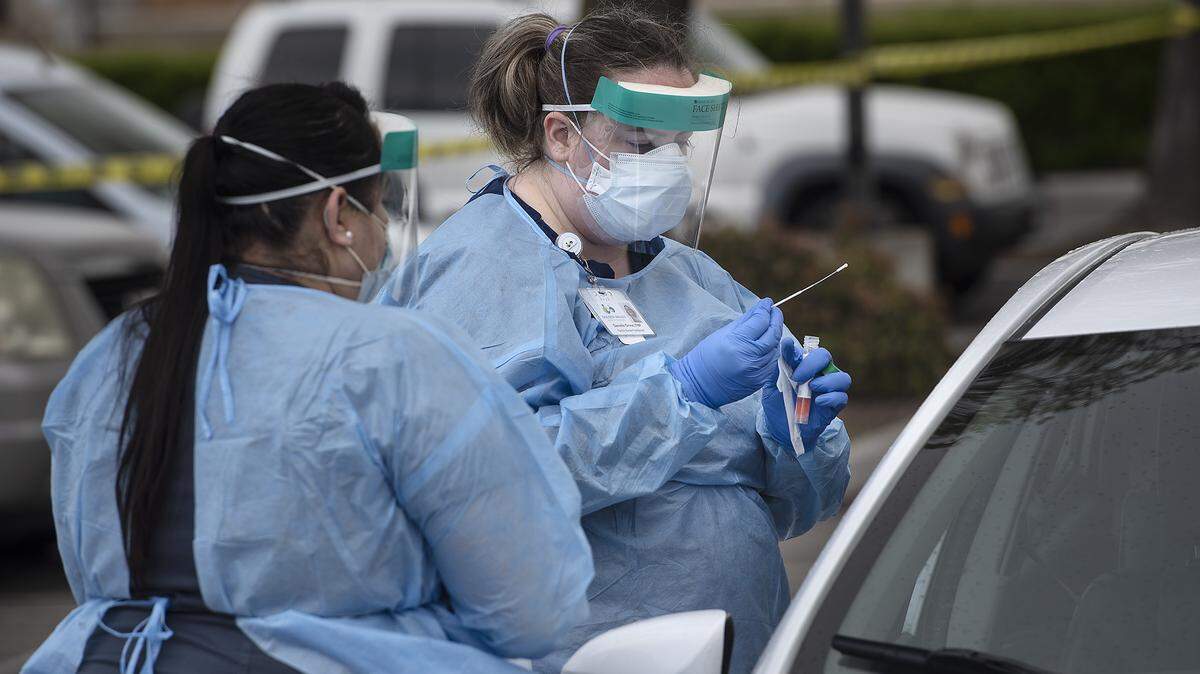
Stanislaus County officials Friday morning sent the state its variance application pointing out reasons why it feels it’s ready to proceed with a safe reopening of the local economy while preventing a new surge in coronavirus cases.
The Board of Supervisors supported the application – authored by the county’s top health officer – by a 5-0 vote at a special meeting Friday. The “attestation” including 135 pages with background documents is being submitted to the California Department of Public Health.
The county will need to convince the state to waive two key requirements – no deaths and nothing more than one new case per 10,000 residents (56 cases) over a two-week period. Local officials are certain those standards can’t be met anytime soon.
The county announced its 24th death on Friday afternoon. In the last 14 days through Friday, positive cases grew by 164 to 544, according to a count it sends out daily in the afternoons.
Health Officer Julie Vaishampayan has said about 40 percent of the cases have occurred in clusters including an outbreak at Turlock Nursing and Rehabilitation Center, a grocery distribution center that employs county residents and a large family funeral held indoors.
The state’s additional criteria for a variance requires counties to demonstrate testing capacity and contact tracing to identify and isolate infected residents and people they’ve been in contact with. There’s potential for cases to increase as residents circulate in public again.
Other criteria are surge capacity for hospitals and health care providers; treatment capacity; the ability to protect vulnerable populations; support for physical distancing in businesses, schools and childcare facilities; and the ability to return to stay-home measures.
In its application to the state, the county argues that counting cases is not a reliable measure of the threat of contagious disease.
Vaishampayan said the no fatalities criteria is impossible because of a nursing home outbreak in Turlock that has accounted for 70 percent of the county’s COVID-19 death toll.
California’s requirements are challenged
In her letter to the state, Vaishampayan said she welcomed the state’s “data-driven metrics.”
“However, upon seeing the requirements for a local variance, I was frankly disheartened by the seemingly one size fits all approach,” she wrote. “I find it confusing that while the local COVID-19 case requirement takes into account county populations, the mortality requirement is based in absolute numbers. Given our differences in population, the requirement that there be zero deaths in a fourteen-day period is effectively 487 times more stringent in Stanislaus County than in Alpine County.”
Many have questioned the logic of holding the smallest and largest counties to the same standard of no deaths in 14 days.
Vaishampayan proposed other metrics to show the decline of coronavirus activity in this county: No significant increase in disease prevalence in the last 14 days. A declining rate of positive tests. And declining hospitalizations.
In the past week, testing results were running about 5 percent positive and 95 percent negative. On average, 28 suspected or confirmed COVID patients were in local hospitals in a two-week period between late April and May 11, whereas hospitalizations were previously in the 30s and 40s.
Hospital patient admissions have declined with or without the effect of infections at Turlock Nursing and Rehabilitation Center, the county’s application says.
In other categories:
Testing. The county can support 1,024 coronavirus tests per day at the state and county sites in Salida, Keyes and Patterson when combined with testing done by hospitals and health providers like Kaiser Permanente, Sutter Gould and Golden Valley Health Centers.
The state’s expectation is for 840 tests per day in Stanislaus County.
Contact tracing. The county is improvising to pull together an 83-member contact tracing team required by the state. Supervisors recently authorized adding 14 new hires to a 35-member team that already included staff repurposed from other county departments.
Additional public health and county health services staff were trained in contact tracing and 20 more employees from other departments received the training May 5.
The county is asking for 15 volunteers from the Medical Reserve Corps and could also recruit additional county and state employees, school nurses and personnel from a medical staffing vendor.
Homeless. To isolate people during an outbreak affecting the homeless, the county has an emergency occupancy agreement for 121 hotel rooms, purchase orders for 20 motel rooms and 21 units of temporary housing.
That apparently meets the state requirement of accommodating 15 percent of the 1,088 unsheltered individuals in the county.
Hospitals. The five hospitals in Stanislaus County have a combined 233 beds to handle a 35 percent surge in COVID-19 patients. The capacity includes 179 intensive care beds and 207 ventilators.
In addition, the former county hospital facility on Scenic Drive in Modesto was equipped with 110 additional surge beds.
Vulnerable populations: The county can protect seniors and other vulnerable residents in nursing homes and assisted living centers by continuing with visitation restrictions, employee screening and provision of personal protective equipment.
The county says it has enough PPE supplies for nursing homes, except for gowns which are on order.
Reopen plans. As the county moves through the Stage 2 reopening process, a guidebook called “Good 2 Go Stanislaus” outlines practices for businesses and institutions. It includes recommendations for physical distancing, hygiene, sanitation of facilities, hand-washing stations and avoiding non-essential travel.
The county has a second plan, called StanOPEN for Stanislaus County Opportunity for Pandemic Economic Normalization.
Vaishampayan said Friday she is not certain that fitness centers should open right away. People exercising on treadmills could be spreading virus with their heavy respirations.
Officials may need to talk about strict operational standards for gyms, the health officer said.
County staff had a telephone conference scheduled with state health officials Friday afternoon to make their case for a variance, which would speed up the pace of reopening businesses under Gov. Gavin Newsom’s Stage 2 roadmap.
The county began last week with the early Stage 2 process of opening outdoor activities, dog-grooming, curbside retail and drive-in movies.
With state approval, it could proceed to a second step possibly including retail stores, libraries, restaurant dining, professional services and offices that have limited contact with the public.
The opening of movie theaters, entertainment venues and religious services is expected much later.
Local business owners would be expected to follow the state or county’s recommendations for partial opening, social distancing, masks, sanitizing and other precautions.
The county’s top officials are hearing from business owners who are eager or desperate to reopen and outspoken residents who think it’s premature.
“I would tell people what we are asking for is not a complete reopening of our economy,” Supervisor Vito Chiesa said at Friday’s board meeting. “It’s incremental. … We have to continually remind people it’s a slow process.”
This story was originally published May 16, 2020 at 10:51 AM.