Stanislaus County businesses among those struggling to pay rent during coronavirus
It’s not just people living in apartments, homes and condos who’ve had a hard time paying the rent in the pandemic. Businesses also are struggling. Two Modesto-based commercial property management firms have the proof.
CoSol Property Management says about 16 percent of the roughly 200 tenants it manages on behalf of property owners have had their rent waived or deferred by the owners. Liberty Property Management says about 18 percent of the roughly 230 tenants it manages have not paid or have partially paid their rent for April and May.
Liberty commercial property manager Kevin MacEgan said in normal circumstances, maybe 2 percent of Liberty’s tenants would not have paid rent or only part of it.
“This is a result of a significant reduction in consumer demand,” he said about the effect of California’s stay-at-home order and other restrictions put in place over the past two months to limit the spread of the new coronavirus, which has hobbled the economy.
“That number would be zero,” said CoSol’s Patrick Zado on how many of his company’s tenants would have missed their rent before the pandemic. “Things were rocking and then March 19 hit and the world changed.” March 19 was the day Gov. Gavin Newsom issued the statewide stay-at-home order.
MacEgan said Liberty’s business tenants represent a wide range of the local economy, from family-owned restaurants and stores to medical and professional offices, national chains, manufacturers and industrial firms. CoSol’s tenants are more concentrated among locally and regionally owned retailers, including grocery stores, hair and nail salons, and restaurants.
About 85 percent of CoSol’s commercial tenants and about 75 percent of Liberty’s are in Stanislaus County.
‘Six weeks of no business’
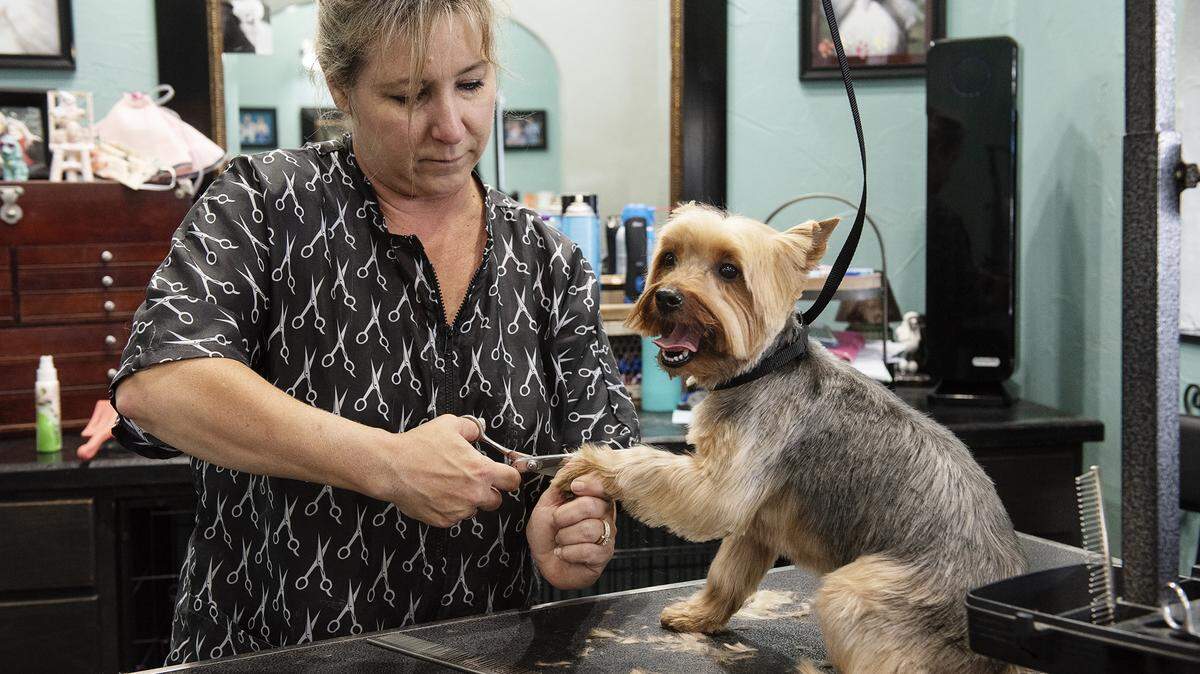
A Yuppy Puppy — a Modesto pet grooming business — was closed for six weeks until reopening May 8 because it was among the businesses allowed to do so as part of the gradual easing of the coronavirus restrictions.
“Six weeks of no business, six weeks of no nothing,” owner Sharon Shimmel said.
Shimmel said she had to furlough her eight employees and spend her “little bit of savings” to get through April and part of May. She deferred as many of her expenses as she could, including rent. (Her building is not managed by CoSol or Liberty.)
Those she owes money, including the two brothers who own her building, have been understanding, Shimmel said. “Everyone was great that I spoke to,” she said.
But Shimmel said it’s not sustainable to have her expenses grow while not bringing in money to pay them, and at some point she will have to pay what she owes. That can be hard for smaller, locally owned businesses that may not have the financial and other resources of a national chain.
Shimmel said she applied for financial help through the Paycheck Protection Program and a Small Business Administration program that are part of the CARES Act, the roughly $2 trillion stimulus passed by Congress in March to ease the pandemic’s economic pain. Shimmel said she has yet to hear anything.
Grant from Stanislaus County
But she did receive a $10,000 grant from Stanislaus County as part of the $3.1 million the county has awarded to 344 small businesses and independent contractors countywide to help them during the pandemic. Shimmel said she spent the grant to pay her rent and catch up on other bills.
Her eight employees are back on the job and business is strong as she follows the precautions to stop the spread of the coronavirus. Shimmel said that includes requiring customers to make appointments, using curbside service and allowing no more than one customer inside at a time.
She said the county grant was a huge help in keeping her business going but worries about other businesses that are not yet able to fully open or still are shuttered. “I hope and pray they open,” she said. “I’m not sure if everyone is going to make it. ... I think it will be a very long road to recovery. That is for sure.”
Jeffrey Solomon with CoSol said the pandemic has pushed many local businesses in one of two directions. “Either they are thriving or barely surviving,” he said. (Solomon and Zado are two of CoSol Property Management’s four partners.)
MacEgan with Liberty Property agreed, saying “some businesses have absolutely thrived in this market.”
He added how businesses have fared also depends on such factors as whether they are national chains, which have access to financial, legal and other resources that family-owned local businesses don’t.
Property owners’ pain
But he, Solomon and Zado said overall, there has been a lot of economic pain, including among those who own the buildings that house businesses. They said how well the property owners have managed depends on their circumstances.
For instance, those who own their buildings without a mortgage are in better shape than those with a mortgage. “Those that don’t have a loan, it’s a little less stressful,” Zado said. “Those with a loan are working with their banks” to get deferrals or relief on their payments.
The three property managers believe the economic recovery will be slow as we enter a new normal that includes more space between tables in restaurants (and fewer customers), the wearing of masks and other measures to keep the virus in check. And they said that recovery assumes the virus does not spike, resulting in a ramping up of restrictions.
Solomon added that even as businesses reopen, it may take time for customers to feel comfortable.
“It will not be a snap of the fingers,” he said. “People will be leery. After weeks and weeks of being told to stay home and now we can go out? It will take time. I think the consumers will be slow to go back to their old ways.”
This story was originally published May 17, 2020 at 6:00 AM.