
Can the GOP reclaim this California district? Its rookie Democrat has a flush campaign account
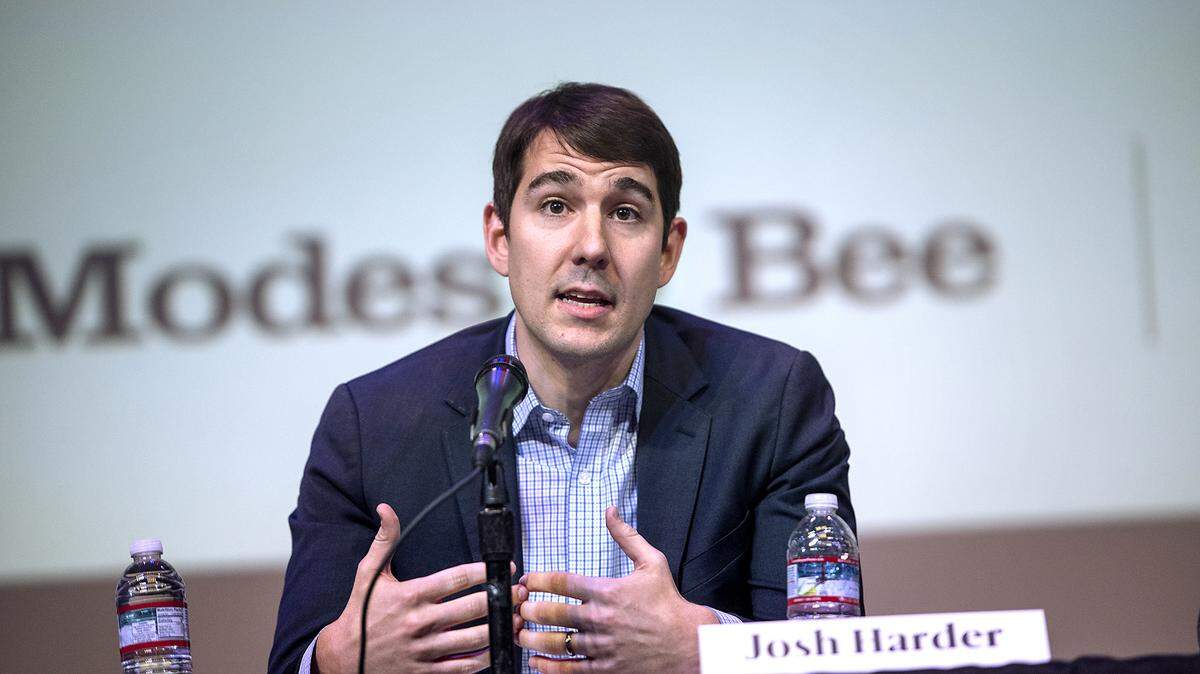
Rep. Josh Harder has consistently blown past his Republican challengers in fundraising and is sitting on millions of dollars in donations while one Republican opponent has more debt than cash on hand and the other has posted underwhelming numbers quarter after quarter.
That’s bad news for Republicans in the typically purple district that Harder just wrestled from Republican control in 2018.
Harder, D-Turlock, at the end of 2019 had $2.6 million in cash on hand, even after spending more than $600,000 on his campaign in the first year.
The National Republican Congressional Committee announced early in the 2020 cycle that Harder’s district would be one of its priorities to take back, one of seven such districts in California.
Torunn Sinclair, a spokeswoman for the NRCC, reiterated in a comment to McClatchy Monday that “our candidate will have the message and resources to compete” in the district.
But the two most prominent GOP challengers, former Turlock City Councilman Ted Howze and San Joaquin County Supervisor Bob Elliott have struggled to catch up to Harder’s numbers.
Howze has largely self-funded, ending 2019 with about $588,000 in cash on hand but owing himself $592,000 in loans. He’s raised about $360,000 in donations, and some of those have come from his family members, such as $4,300 from his adult sons.
“Before Ted Howze asked anyone to put money into his campaign he put his own in first — that was all him, no one else. Since he made that initial investment he’s built nearly 1,000 small dollar contributors and by far the most local support of any candidate in this race,” said Tim Rosales, campaign spokesman for Howze. “Josh Harder is raising hundreds of thousands from DC PAC special interests and party bosses, and thousands more outside the Central Valley — that’s a huge red flag for any local voter.”
Elliott also isn’t close to Harder’s fundraising numbers a month before the primary. He has about $187,000 in cash on hand, after raising about $328,000 total in 2019. He’s spent less than Howze in the campaign so far.
Elliott’s campaign did not return a request for comment. But Sinclair was quick to tie Harder to socialistic policies within the Democratic party, a campaign tactic the NRCC has frequently leveled against Democrats in purple districts.
“Josh Harder is a San Francisco liberal whose focus isn’t the Central Valley,” Sinclair said. “Harder’s spent his time in office propping up his San Francisco donors’ socialist agenda of government-run health care, and defending their impeachment sham.”
About a third of Harder’s 2019 donations came from the San Francisco area, according to an analysis by OpenSecrets. He’s raised more money from within his district than Howze or Elliott, but those candidates have a higher proportion of their total funding from within the district than Harder, due to their lower overall numbers.
Harder has taken some criticism over his pledge not to accept money from corporate political action committees. While Harder has not taken money directly from corporate PACs, there are other fundraising committees that have given him money that bundle money from corporate PACs.
Harder received a total of about $128,000 in PAC donations that were funded at least in part by corporate PAC donations, of about $3.2 million he raised in total in 2019.
“Josh has never taken a penny of corporate PAC money and never will. Period,” a spokesman for Harder’s campaign said. “Political opponents are trying to muddy the water — either because they’re making things up or they don’t understand how this works.”
Most of those PAC donations are from other Democratic House members’ leadership PACS, a common practice among members, especially when the recipient is in a purple district. And campaign finance experts as well as officials with End Citizens United, the group that created the pledge, have said the indirect donation is not the same thing as a direct donation from a corporate PAC, and does not qualify as violating the pledge.
“Corporate lobbyists and c-suite executives decide where corporate PAC contributions go in order to gain access and influence in the halls of power in Washington. Leadership PACs give money to help elect more Democrats or Republicans to Congress and the decision on who to donate to resides solely with the member of Congress affiliated with the leadership PAC,” said Patrick Burgwinkle, a spokesman for End Citizens United. “Josh Harder hasn’t taken a dime of corporate PAC money and his pledge to refuse corporate PAC money is what sets him apart from typical politicians in Washington.”
This story was originally published February 3, 2020 at 3:12 PM.
.jpg)