
MoBand turns 100. How talent, work, love and luck have made it a summertime smash
His imagination’s not good enough to picture what the past 50 years of his life would have been without MoBand, longtime conductor George Gardner said. “I’d be out selling cars,” he joked after pausing a moment to ponder the question.
Fortunately for all of us, Gardner doesn’t have to imagine Modesto without the Modesto Band of Stanislaus County. The beloved institution is celebrating its centennial year with its annual offering of six weeks of free Thursday night concerts in Graceada Park beginning June 6.
Under the direction of W.W. Higgins, the group began as the Modesto Boys’ Band in 1919, making it just seven years younger than the iconic Modesto Arch, which was erected in 1912.
Higgins died only two years later, and the band fell under the direction of Frank “Proof” Mancini. He guided it for four decades, as it changed names to the Stanislaus County Boys’ Band and, in the early 1950s, to the Modesto Band of Stanislaus County.
Gardner, who began playing with MoBand in 1965 as a high school sophomore, later served as band manager and became director in 1979. As he prepared for the first rehearsal of the season — Monday night, June 3 — he sat down for a wide-ranging interview on MoBand’s history and the work (and sometimes just plain luck) that goes into keeping it successful.
The longevity
Considering the phenomenon that MoBand is — hundreds of musicians and thousands of listeners over the six-week season, the early-morning rush to stake out blankets for the Thursday evening shows, the packed lawn and seats at showtime — it’s hard to believe there was a period when its future was shaky.
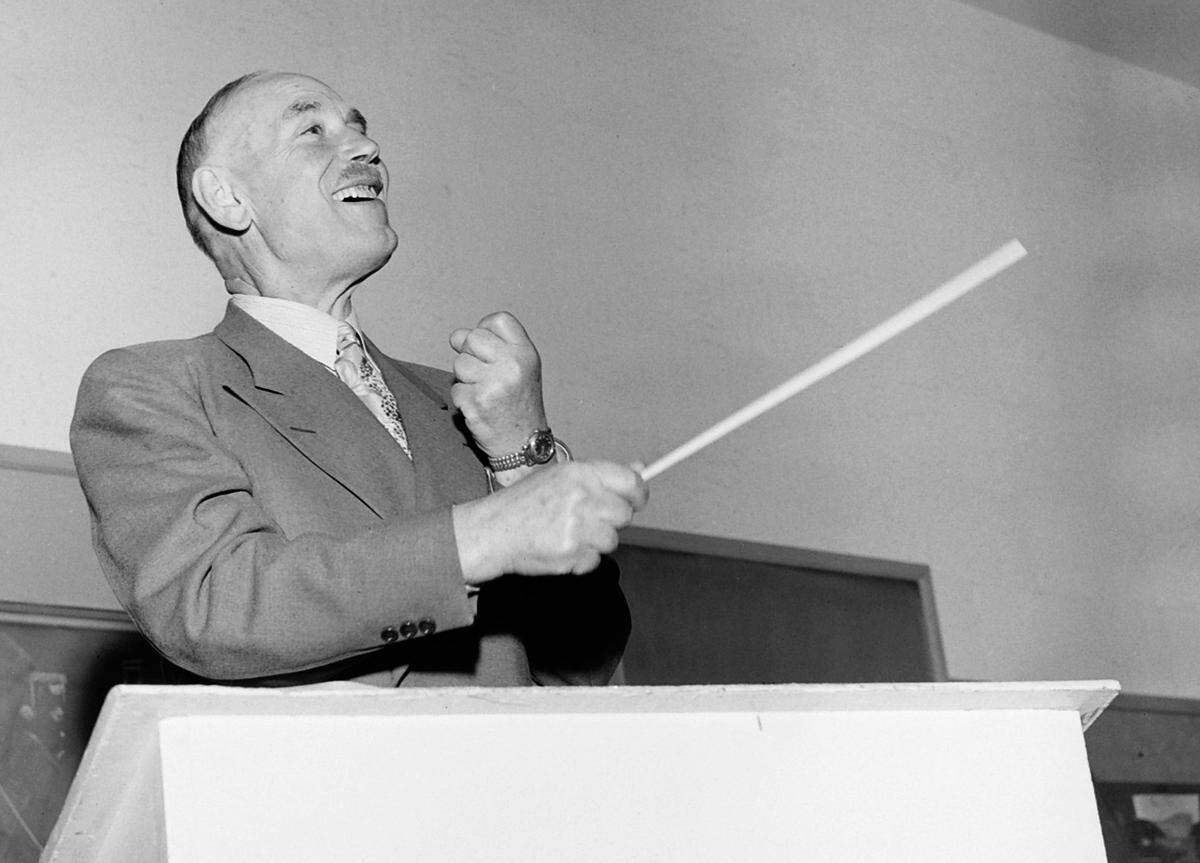
But after Mancini’s death in 1964, that was the situation. (Side note: The bandleader was Italian-born and pronounced his name Man-chee-nee, Gardner said. Different than the soft “c” used when pronouncing famed composer Henry Mancini’s name. “I never heard Man-see-nee until ‘The Pink Panther,’” Gardner added.)
“The problem was here you had the music man of Modesto, who had this band for 40 years, and nobody wanted to follow him,” Gardner said. “Because they knew they weren’t going to be as good as he was.”
In less than a decade, the band had several directors: Clayton Gottschalk for one season, then the Mark Twain Junior High and Davis High music teachers, each for a few years.
About 1965, the band was down to 25 or so musicians, Gardner said, and the audience was about the same size.
“I remember playing with the band and looking out there (from the Graceada Park stage of Mancini Bowl, which was dedicated in 1949) and I could spot my mom and dad just like that,” he said.
The rebuilding began when Ward Stine, who was then the new music director at Mark Twain, became MoBand director in 1972, Gardner said.
“Ward decided this should be a show band, and we needed to do things to get people to want to come out, instead of being just a concert band playing classical type music,” he recalled. “Let’s go out and play pop music; let’s see if we can’t get people involved.”
Stine wanted some numbers to be singalongs. He would bring out his drum set and play along with the band. “We just did whatever we could to make it fun for the audience,” Gardner said.
As for increasing the band’s size, it took Stine and Gardner, who was his band manager, visiting each high school in Stanislaus County to make a pitch for musicians. And it didn’t happen in just a year or two.
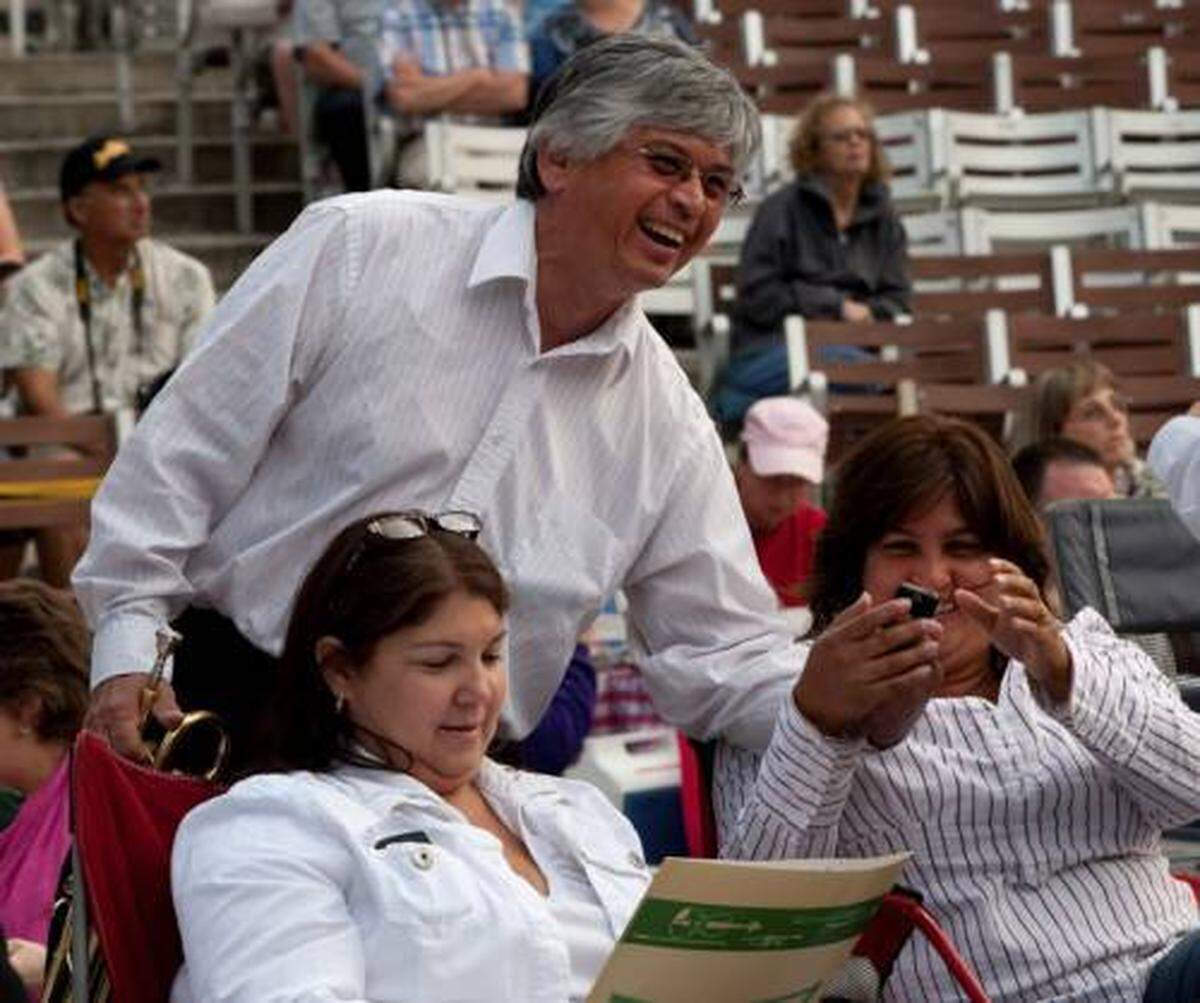
Trumpeter Dolores Ramirez-Welch joined the band in 1977. Her parents attended from day one, she said, and she, too, could easily spot them in the small crowds the band drew. There were six trumpeters in the band then, Ramirez-Welch said, compared to about 30 today.
Looking back at the time, some observers believe the 1978 passage of Proposition 13 was a boon for MoBand, too, the conductor said. A lot of people faced or feared hard financial times, the theory goes, and were looking for inexpensive or free things to do rather than take vacations, said Gardner.
Another change to increase the audience, right before Stine stepped down as director to move to North Dakota, was moving concert nights from Fridays to Thursdays. That got people who might be heading out of town or had other weekend plans.
And when Gardner became director in ’79, he added a summer theme and weekly themes. This summer’s theme, for instance, is “Centennial Summer,” and the weeks’ themes are: June 6, “Graffiti Love”; June 13, “Then and Now”; June 20, “Beach Party”; June 27, “Rock of Ages”; July 3 (a Wednesday), “Patriotic Spectacular”; and July 11, “Centennial Celebration.”
The music
Gardner said he spends nearly a year preparing the music for each MoBand season. He listens to new releases from publishers, but also strives to play a lot of familiar numbers from year to year.
“Audience reaction determines what I keep on a rotating basis,” he said, but he goes through past programs to avoid playing pieces two seasons in a row.
He counts himself fortunate, Gardner said, to have in the band Dan Maas, a trumpeter who joined in 1978. Maas taught music at Hanshaw Middle School and Downey High for years, and for the past several years has helped arrange music for MoBand.
“I’ll go to him and say, ‘I want to do a Fifth Dimension medley with these five songs,’” and Maas gets it done, Gardner said. “That really has opened up the variety we’ve been able to give the audience.”
This 100th-anniversary season, MoBand will play a small selection from the Mancini era. Looking back at the music played in those long-ago decades, Gardner said, he could find very little he was confident would appeal to today’s audience. Some of it simply is too hard for the band to handle, considering there are just two rehearsals for each week’s concert, he said. Some songs really don’t lend themselves to being played outside very well. But all the marches MoBand plays have been staples from the beginning.
“I tell the band every year, for the audience we play for, this is their classical music fix for the year,” Gardner said. “There are some people who go to the Modesto Symphony Orchestra and will hear classical music when it’s available, but I think the majority are people who don’t particularly care for classical music but want to hear some good music.
“So I tell the band, ‘You’ve got to play as professionally as you can because these people think they’re going to a classical music concert.’ At the same time, I have to make sure that the music is going to bring the audience in, that it’s fun music they know. And it’s got to be challenging enough to keep the musicians interested.”

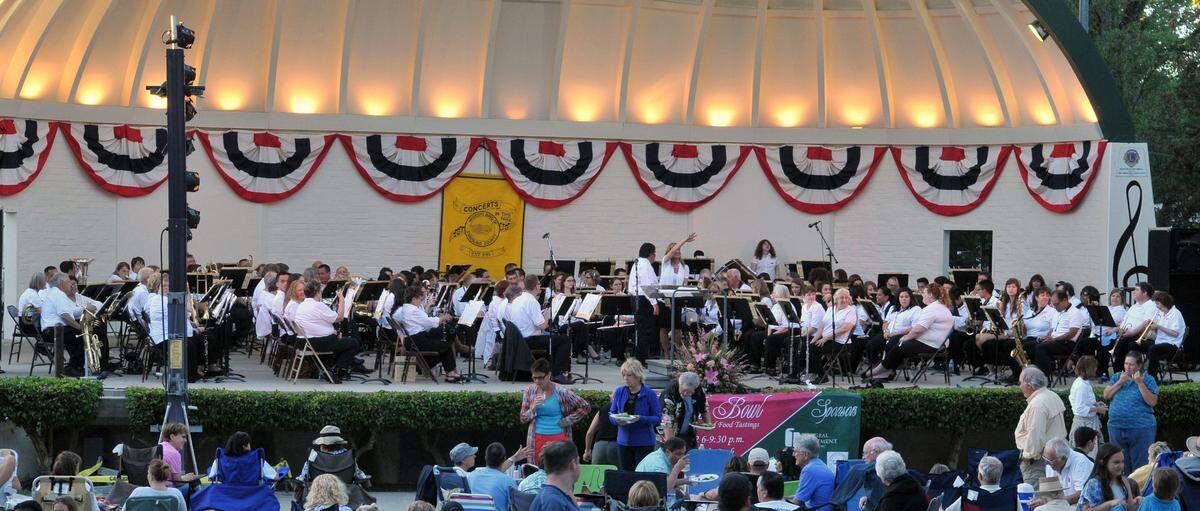
Speaking of interest, keeping all of the audience interested in all of the music probably is impossible, and Gardner knows it. MoBand concerts in Graceada have become about more than the music. A lot of people are there to visit with friends and neighbors, to picnic and enjoy some wine or beer.
“And it’s all fine with me,” Gardner said. “I love to see the people of Modesto come to a spot and be able to take in this community event.”
The musicians get it, too, he said. Sure, a lot of people in the audience aren’t paying them much more mind than they would a pianist tickling the ivories in the corner of a restaurant. But on the other hand, it’s by far the biggest audience nearly all of the musicians will play for, he said.
There’s no way to tell the audience, “OK, nobody talk now,” Ramirez-Welch said. Nor should there be, she added. “It’s a visiting thing,” she said of concert nights, and she’s certainly been out there putting down a blanket for her own family.
The people who come primarily to listen to the music sit in the section of installed seats, Gardner observed. Conversely, people sitting in the grass just feet from the stage will sit there chatting like they’re in their back yards.
“I’ll sometimes think, ‘I’ve got 120 people up here sweating and working to make music for you,’ ” Gardner said, smiling. “But they’re out there having a good time, and they’re appreciative of the band. You can feel the connection between the audience and the band.”
The band
MoBand takes all comers, high school age and up. “Since I’ve been conductor and managed it and played in it, we’ve pretty much always accepted anybody who plays a wind instrument,” Gardner said. “And if you haven’t played in a long time and you want to get back into playing, you can come out and we’ve got you a place to play.”
MoBand includes a group of maybe 40 to 50 people who play almost all the time, and have for as long as he’s been with the band, Gardner said. Last year, 230 people played over the course of the six weeks. The largest turnout at one show was 130 musicians, he said.
On average, perhaps a third of the musicians are college and high school students. The rest are more experienced players. A few play professionally, and there’s a core group that also performs with the Modesto Junior College Community Orchestra, Gardner said. So although MoBand rehearsals run only the six-week season, somewhere between 60 and 80 percent of the band members play for most of the year.
What ensures balance among the instruments? “It’s sheer luck,” Gardner said. “I have observed over the years that if 20 musicians show up for a rehearsal, its going to be fairly well balanced. It’s really odd. I’ve never been in a situation where if I wanted 30 people to come play, I’d have 15 trumpeters and 15 flute players and nobody else. It just somehow works out and I can’t explain it, especially in a group this big.”
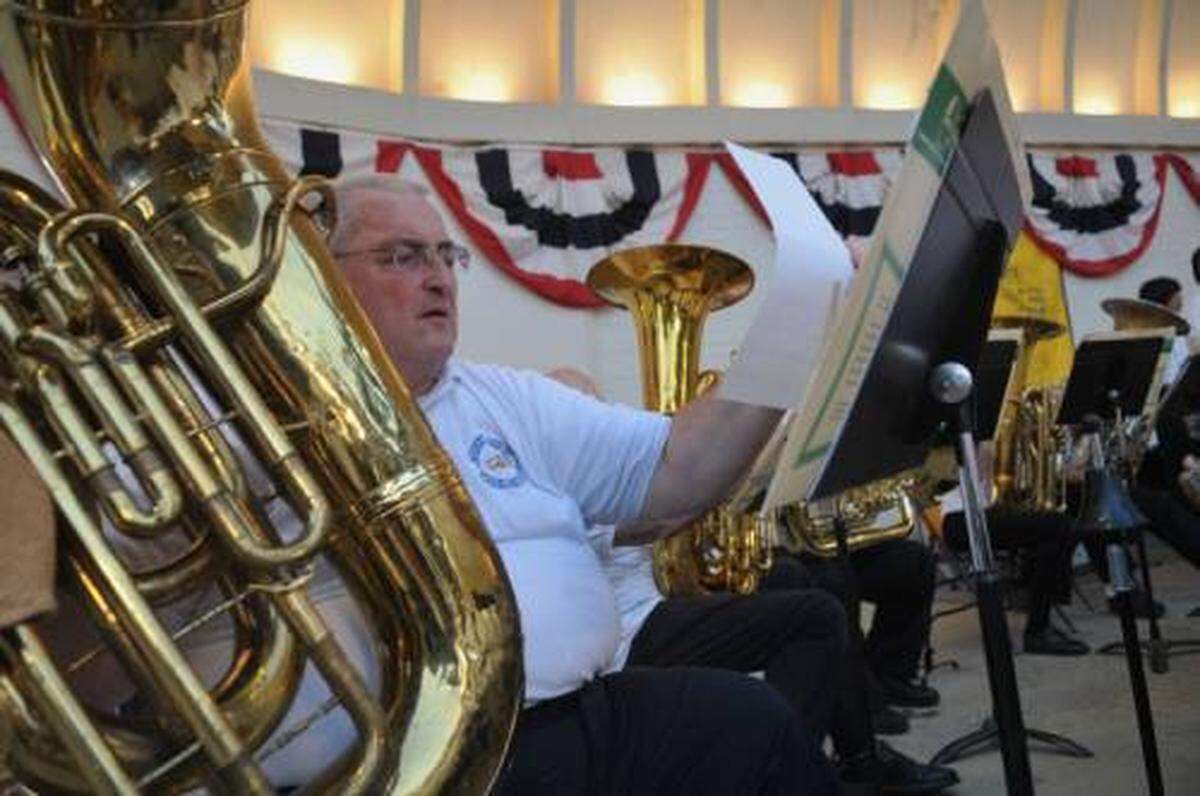
It helps to have musicians who are flexible. When Fred Carpenter joined MoBand in 1965 as a high school freshman, it was as a bassoonist. After a year or two, he switched to tuba, “because when you’re in a band, you play what’s needed.”
He’s stayed with the band for the simple reason that he enjoys it, he said. It’s a good chance to play music with friends, and to invite other friends to enjoy a social evening out. It became a family thing, too, with two of his sons — a drummer and a trumpeter — having played in MoBand when they were younger.
For Ramirez-Welch, MoBand still is a family affair. Her sister and two nephews are in the band with her.
That’s part of what’s kept her involved. “And not just my family, but the music family,” she said. “Some of these people have been playing with me for 40 years.” They’ve played with MoBand, the MJC Community Orchestra and Modesto Performing Arts. “I can’t imagine giving that up.”
Gardner feels the same way. When he started with the band way back in high school, he had no idea he’d still be involved when it turned 100, he said.
“But every year, I get to the end of the season, and my wife, Dawn, will say, ‘Well, what did you think?’ I say, ‘I had a ball.’ It’s heartwarming to be a part of something that’s been around so long, and exciting that it’s going so strong.”
For more on MoBand, go to www.moband.org or www.facebook.com/MoBand1919. MoBand also is the subject of an exhibit that’s just opened at the McHenry Museum.