
Clinics need doctors for 64,000 newly enrolled in Medi-Cal in Stanislaus County
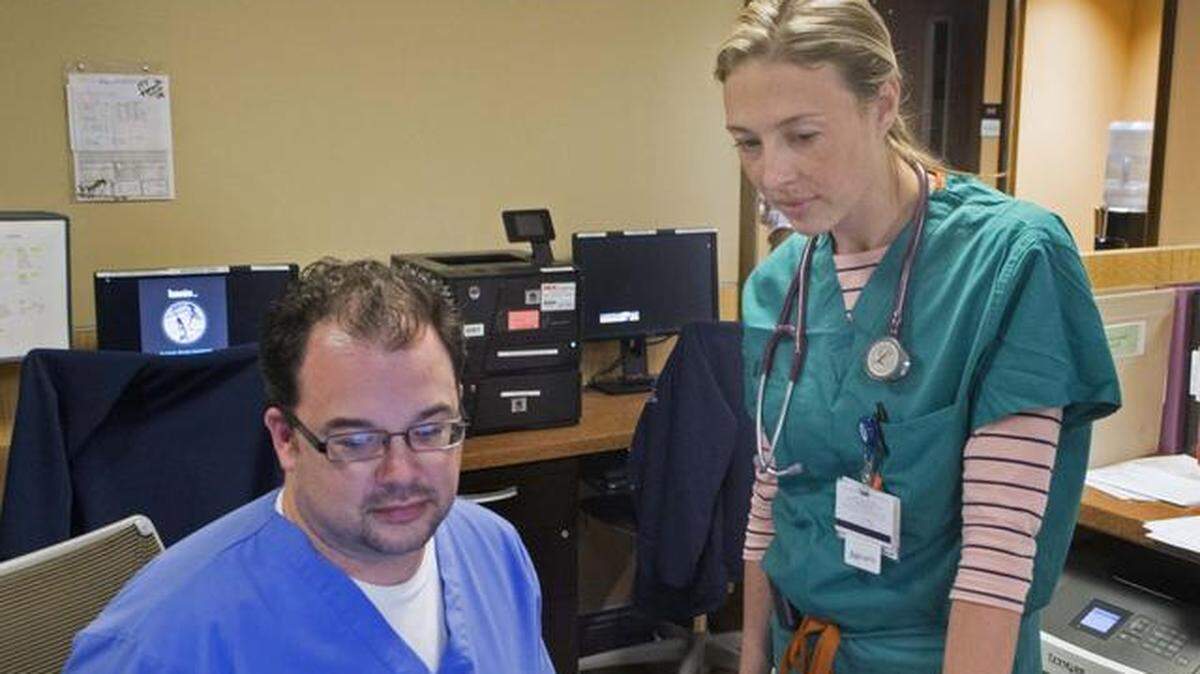
A shortage of primary care physicians created a painful symptom when Emanuel Medical Center said last week it will close its family practice clinics in Turlock and Patterson next month.
Citing a national shortage of primary care doctors, Emanuel said it was unable to replace physicians who have left, and the last remaining doctor is leaving to work in the Bay Area.
Clinic doors need to open, not close, for tens of thousands of Stanislaus County residents who have joined the Medi-Cal program through the Affordable Care Act.
As of December, the county had 160,400 residents in the federal and state health program for single adults, families and children, an increase of almost 64,000 since the federal law raised the income eligibility in October 2013.
Many doctors do not accept Medi-Cal patients because of the low reimbursements and paperwork hassles. County health clinics and safety-net providers such as Golden Valley Health Centers are paid better for serving Medi-Cal patients because of their special federal status. But they need primary care doctors and facilities to serve the wave of new participants.
Dr. Del Morris, medical director of the county’s six health clinics, said much work needs to be done before national reforms improve access to care for people at the lower income levels.
“Right now, there is not an agreement about who should be doing the work,” said Morris, who is president of the California Academy of Family Physicians. “Health reform, in terms of how health care is delivered, has barely started.”
According to an August report of the California Healthcare Foundation, about 42 primary care doctors participate in the Medi-Cal program for every 100,000 enrollees; the ratio should be 60 to 80 doctors per 100,000.
Primary care has attracted fewer medical school graduates because specialties such as orthopedics or cardiology are more lucrative. Some experts believe California will have an unmet need for 8,000 primary care physicians by 2030.
While affluent sections of the Bay Area have a surplus of family doctors and specialists, the San Joaquin Valley historically has trouble attracting doctors of any kind.
Emanuel Family Practice is referring its 3,800 patients to other clinics that accept patients in the Medi-Cal and Medicare programs. The county Health Services Agency is considering whether its clinics can absorb some of those patients, said Kathy Passinnisi, assistant director of health services.
“We think we can accommodate the children and are now looking at the adults,” Passinnisi said. The nearest county health clinics are in Turlock, Hughson and Ceres.
Safety net expands
Golden Valley Health Centers has a Patterson clinic that perhaps could accept up to 500 patients and has capacity for more children, said Mary-Michal Rawling, director of government affairs for the nonprofit clinics. Golden Valley is trying to recruit another physician for the Patterson clinic, although that could take six months to a year, she said.
In Turlock, Golden Valley’s West Main Street clinic could take 400 to 500 adult patients and 100 children, Rawling said.
Health Plan of San Joaquin, the largest Medi-Cal health plan in the region, is talking with the county, Golden Valley and other Medi-Cal providers about absorbing its members displaced by the Emanuel Family Practice closures. The two clinics are set to close May 8.
Golden Valley, which has more than 20 health centers in Stanislaus and Merced counties, has recognized the need to widen access for the larger Medi-Cal population. Last fall, its new chief executive officer, Tony Weber, stirred internal strife when he directed clinics to schedule more patients. Chief Medical Officer Sylvia Diego, who wanted first to expand staff, and a clinic manager were fired, and other providers quit or went on leave. Doctors from contract agencies were used to fill the gaps at considerable expense.
Rawling said Golden Valley has seven projects in the works to broaden access to primary care, dental care and behavioral health services. Expansion of the west Turlock clinic will include a new physician and nurse practitioner before the end of the year, increasing the clinic’s capacity by more than 3,000 patients, Rawling said.
A new clinic on Memorial Avenue in Ceres will have two doctors and two midlevel providers. Golden Valley also plans new or expanded dental clinics.
Rawling could not cite the total volume of patients that could be served by the expansion. The organization will have to compete with other health systems to hire the doctors.
“We are definitely in fierce competition with other (agencies) in the Valley and are doing our best to make sure they know Golden Valley is a good place to work,” Rawling said.
Morris said four of the 12 doctors graduating from the Valley Family Medicine Residency in Modesto this year will fill vacancies in the county’s health clinics. One challenge is that residency graduates are picked up by Kaiser Permanente and higher-paying medical groups in the Bay Area, he said.
“The Central Valley, Imperial Valley and rural counties are some of the most impacted by the shortage of primary care physicians,” Morris said. “It does not help that we live in a county or valley that has economic struggles and large percentages of people who are underinsured. A lot of physicians don’t see Medi-Cal patients and yet Medi-Cal patients are a higher percentage of the patients in the Valley.”
Residency program hit
Some of the funding for primary care residencies is going away at a time when more family doctors, pediatricians and internal medicine physicians are sorely needed. The Affordable Care Act, signed into law in 2010, created Teaching Health Center grants that paid for additional slots for the Valley Family Medicine Residency at Doctors Medical Center, but the funding ends this year.
Faced with the loss of $2 million, the three-year program will have an incoming class of nine residents in July, instead of 12, said Dr. Peter Broderick, who oversees the program. A primary care residency in Fresno decided not to accept any new residents due to loss of funds. The Modesto program, with a $5 million annual budget, won’t be hit as hard because it’s supported by a combined $1.5 million from Doctors, Memorial Medical Center and the county.
A bill before Congress could continue a portion of the Teaching Health Center grant, Broderick said. Another source of program funding is tied to reimbursements for hospital care of Medicare patients. Because Medicare cases are not such a large portion of DMC’s billings, its medical education funding is less than that of other teaching hospitals.
The residents care for underserved patients during the training and about half of the graduates stay to practice medicine, Broderick said.
Broderick said the limited access to primary care is causing newly enrolled Medi-Cal patients to spill over to urgent care centers and emergency rooms. “We need primary care physicians who can provide first-contact care, and we are seeing that emergency rooms are the source of first-contact care for many of these people at huge expense,” he noted.
One proposal for serving more patients with available staff is the patient-centered medical home model. The approach gets away from face-to-face visits with doctors by doing more with email communication and patients checking their lab results online. Patients may be divided between doctors and midlevel providers, with physicians caring for patients with complex medical problems and nurse practitioners managing those who are not that sick.
A consultant is helping develop a pilot program to begin in Stanislaus County’s clinics in July. Morris said he expects the model of care will become part of the training in primary care residencies.
Bee staff writer Ken Carlson can be reached at kcarlson@modbee.com or (209) 578-2321.
This story was originally published April 11, 2015 at 5:35 PM with the headline "Clinics need doctors for 64,000 newly enrolled in Medi-Cal in Stanislaus County."