
Health consultant doubts the need for general anesthesia at Valley dental centers
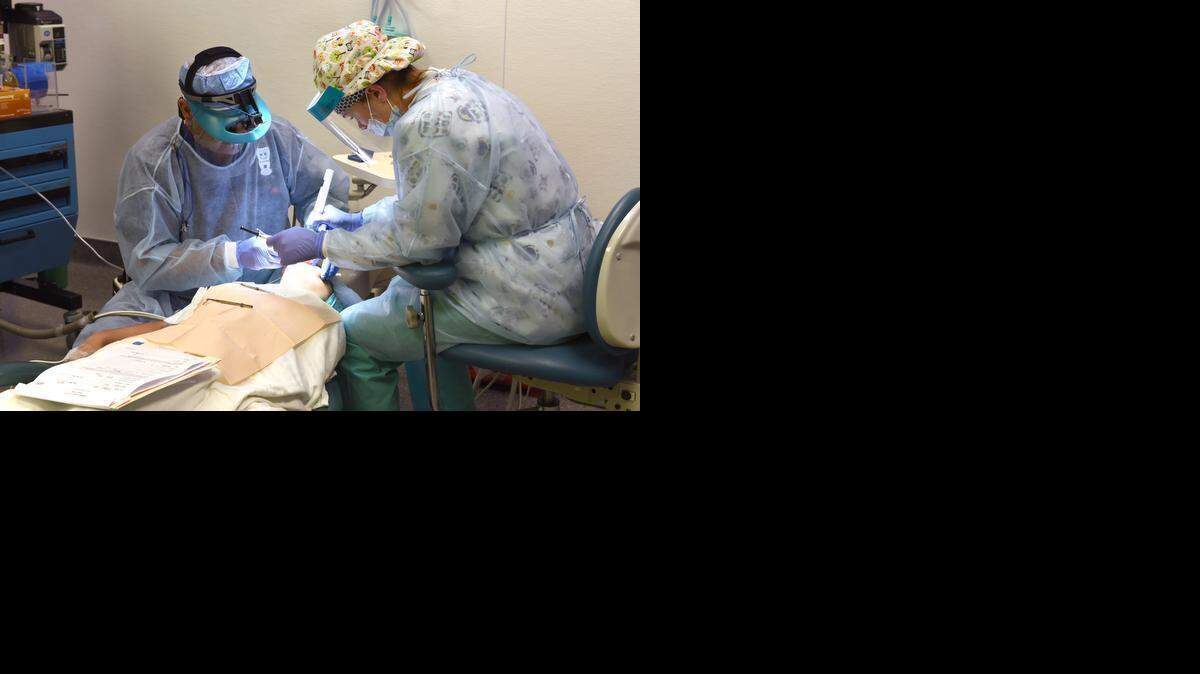
The state has proposed guidelines for the use of general anesthesia for severely disabled adults and low income children with extensive dental decay, who often are referred to surgery centers in the Northern San Joaquin Valley.
The surgery center owners hope the guidelines will break a deadlock with Health Plan of San Joaquin, a Medi-Cal health plan that in September stopped routine approval for treating dental patients under general anesthesia.
The dispute heated up this week when a health plan consultant suggested that Salida Surgery Center was treating patients for less-than-severe dental issues that could be handled in a pediatric dental office.
Some background: State-licensed facilities such as the Salida center, Children’s Dental Surgery Center in Stockton and Central California Surgicenter in Atwater claim the low-income children referred to the centers need to be put to sleep for treatment because of their rampant tooth decay. Children with 10 or more cavities are common, and the patients are unable to cooperate with a dentist and would be traumatized by the multiple procedures if not sedated, the owners say.
Charles Klass, a pediatric dentist and health plan consultant, gave examples of a 13-year-old patient with six or seven cavities, a 3-year-old who needed two fillings and a 10-year-old who needed three fillings and a single tooth extraction. Their names and other identifiers were not disclosed during an interview Thursday.
Klass said the Salida center requested authorizations for treating the children under general anesthesia. Such cases are regularly handled by pediatric dentists without sedation, Klass said, unless the child has developmental delays or behavioral problems. But the surgery center provided no evidence they were special-needs patients and simply noted the children didn’t cooperate, the consultant said.
Klass said there are risks of using general anesthesia with young children, and the surgery centers are not providing information to justify its use. “The safety of the child comes first,” he stressed.
Inadequate documentation
Health plan officials said the centers submit sketchy requests for authorizations, with narratives written by dental assistants and no indication that less potent forms of sedation were attempted with noncompliant patients.
When general anesthesia is appropriate for the patient, a state law requires Medi-Cal managed care plans to pay a facility fee to the surgery centers, plus a reimbursement if a medical anesthesiologist is involved with the procedures. There are about 20 dental surgery centers operating in California.
Officials with Health Plan of San Joaquin said they have reasons for requiring more documentation from the centers. Klass said authorizations for a dentist who treats mentally disabled adults at a Sacramento hospital are approved because of his thorough documentation.
Pankaj Patel, owner of the Salida center, said Health Plan of San Joaquin has turned down all but three of his 1,200 requests since September. Last week, he criticized the plan for rejecting a request for a 2-year-old Ceres girl with decay on virtually every tooth. Rather than delay the care, the center capped her front teeth and did other restorative work without the facility fee.
Patel said he would need to know the patients’ identities to explain why general anesthesia was needed in the cases cited by Klass. He said a child needing one or two fillings may be a candidate for general anesthesia. “It depends on the behavior of the child,” he said. “Try to do an exam if the children won’t open their mouths.”
Klass said pediatric dentists are trained in gentle techniques to get children to cooperate in the dental chair. The risk of adverse reactions to general anesthesia include rare cases of brain damage or death. Studies have reported a higher incidence of learning disabilities in young children whose developing brains are exposed to anesthesia.
Marketing issue raised
David Hurst, vice president of external affairs for the health plan, said the centers are directly marketing their services to consumers, which is another reason to make sure there is medical necessity for the services.
Last month, the Salida Surgery Center advertised its services with a billboard on Highway 99 featuring a dancing tooth and the slogans – “Dental care for kids while they sleep” and “No more fear of the dentist!” It listed the phone number for the center on Pirrone Road.
Hurst said the agency has seen authorization requests for parents who “self-referred” their children to the centers.
Patel countered that Health Plan of San Joaquin uses billboards and other forms of advertising, as does any successful business. “It is a marketing strategy and we are making the consumer aware these services are available,” Patel said. The services are an option for parents of a child who has failed to tolerate dental care and are provided if deemed necessary, he said.
The surgery centers and health plan based in French Camp have hope the state guidelines, intended for government health programs, will settle their disagreements. The centers’ owners contend the health plan requires excessive documentation, including treatment plans, diagnoses records for special-needs children and methods for coaxing cooperation from patients.
The Department of Health Care Services recently released the draft rules for “stakeholder” comments and expects to issue final guidelines this summer. Among them is a call for providers to attempt behavioral modification and local anesthesia before considering sedation. Providers would be expected to try less potent sedation before graduating to “conscious sedation via inhalation or oral anesthetics, IV sedation, then general anesthesia.”
Under a proposed guideline, patients automatically would qualify for general anesthesia if they need extensive dental restoration or surgical treatment or are uncooperative due to physical or mental disorders. Patients also would qualify if local anesthesia fails to control pain, or if conscious sedation, communication techniques or immobilization are not effective.
Support for anesthesia
Michael Cadra, an oral and maxillofacial surgeon in Modesto whose practice is not related to the surgery centers, said the rules would circumvent existing law and result in treatment delays and more restricted access to care.
He said the proposals fail to recognize that conscious sedation is often more risky to the patient than general anesthesia. An anesthesiologist monitors the patient in the operating room and can take action to stop an adverse reaction. But with a sedated patient in a dental office, the dentist’s attention is divided between watching the person and doing the procedures.
David Thompson, who manages the Atwater and Stockton facilities for Bloss Memorial Healthcare District, was hopeful the final guidelines will clarify issues. “Until you have something like this, the health plans have too much liberty in making these decisions,” Thompson said, but added, “Sometimes these draft proposals look good on paper and then in the real world it is different.”
Lakshmi Dhanvanthari, chief medical officer for Health Plan of San Joaquin, said the state continues to work on the guidelines. It’s too early to know if the final rules will change the health plan’s documentation requirements, she said.
The Atwater center, opened in 1999 at the former Castle Air Force Base, was one of the first dental surgery centers in California. Others were spawned in areas with large populations of low-income families with poor access to dental care. Dentists who accept Medi-Cal patients are scarce in many areas of California because the state’s reimbursement rates are among the lowest in the nation.
Surgery in Sonoma
The nonprofit PDI Surgery Center in Sonoma County has been featured on “NBC Nightly News” and was the only center initially exempted from the 10 percent cuts to Medi-Cal payments in 2011. (Other centers later fought for and won the exemption.) It has been a last resort for young patients with dental decay that threatens them with face-swelling infections and a trip to the emergency room.
According to patient stories on its website, 3-year-old Doug had corroded teeth from baby bottle decay and had 11 teeth capped and two incisors removed. Annette, who was 4, needed fillings for 13 cavities and established a regular brushing routine after treatment at the center.
Besides serving its home region, families from Santa Cruz to the Oregon border bring their loved ones to the center for treatment, said Chief Executive Officer Viveka Rydell. While children are treated in the operating rooms, health educators talk with parents in the waiting room about good brushing habits for their kids and not putting the baby to bed with a bottle of juice.
Rydell said demand for the services grows as more families are enrolled in Medi-Cal through the Affordable Care Act. “When we opened in 2008, a child with 10 cavities was a large case, and now it’s a small case,” she said. Patients currently wait two months for an appointment, she said.
The PDI center served 2,100 patients last year and had to raise more than $500,000 in donations to cover expenses, owing to the slim reimbursements for procedures from the Denti-Cal program. Rydell said she’s not concerned about the authorization guidelines because she has good relations with the area’s Medi-Cal health plan. But stronger reimbursements for medical anesthesiologists would help keep the doors open, she said.
The surgery centers are treating tooth decay that is preventable with good oral hygiene at home. The facility fees awarded for the use of anesthesia are a crucial source of revenue, so there is bound to be concerns about patient utilization.
Hurst said authorization requests to Health Plan of San Joaquin, which can trigger those payments, totaled almost 5,200 in 2014. He said officials at other health plans he spoke with had half that number, or even requests in the double digits.
When contacted by The Modesto Bee, health plans in other areas of the state said their numbers would provide an apples-to-oranges comparison because of the different ways services are administered.
Gold Coast Health Plan of Ventura County works with a trusted practitioner at a hospital-based program for members needing general anesthesia dentistry, said Chief Medical Officer C. Albert Reeves. Authorization requests for anesthesia or sedation at a dental center would not come to the plan.
Brad Kieffer, a spokesman for Health Net, which administers services for CalViva Health in Fresno County, said it does not require the authorizations. The Fresno Dental Surgery Center, owned by Allan Vallarine of Turlock, said it served about 3,000 patients in 2013.
Thompson said cases have grown steadily at the Stockton center, from 1,768 patients in 2010 to 3,060 last year. The Salida center has served about 3,000 patients a year, including Health Plan of San Joaquin members, people with fee-for-service Medi-Cal and those with other coverage.
Improve prevention
Health advocates believe that better access to basic dental care would improve matters on the prevention side. Golden Valley Health Centers plans to add eight dentists at new or expanding clinics in Stanislaus County. Thanks to their federally qualified health center status, the clinics can a draw on resources to expand services.
Hopes are to expand the Patterson clinic from one to two dentists in early summer, said Chief Dental Officer Lisa Swenson. Clinics are planned in Ceres, Empire and Turlock, and the dental site destroyed by a September fire at Hanshaw Middle School will be replaced with a larger facility.
The expansion is scheduled to be completed by year’s end, Swenson said. “We have a huge waiting list for adults and children,” she said. “There are not a lot of places that take Medi-Cal or low-income families that can’t afford private dentists.”
Swenson estimated that after the fire destroyed the Hanshaw clinic, the waiting list for dental appointments grew from 640 to more than 2,500 people.
Swenson said the clinics encourage parents to schedule appointments for their children with the first appearance of baby teeth. During that initial visit to the clinic, the parents are given dental education and urged to bring back their kids for regular checkups, she said,
With more families observing good dental hygiene, the clinics will need to refer fewer youngsters with extensive tooth decay to the surgery centers.
Cadra, the oral surgeon from Modesto, said young children need help from their parents to care for their teeth. “Until the child has adequate manual dexterity, it is the responsibility of the parent to brush and floss for them,” he said. “Often, the child is 6 or 7 years old before they can efficiently brush.”
Bee staff writer Ken Carlson can be reached at kcarlson@modbee.com or (209) 578-2321.
This story was originally published March 21, 2015 at 9:13 PM with the headline "Health consultant doubts the need for general anesthesia at Valley dental centers."