
California's walnut boom slows due to several factors
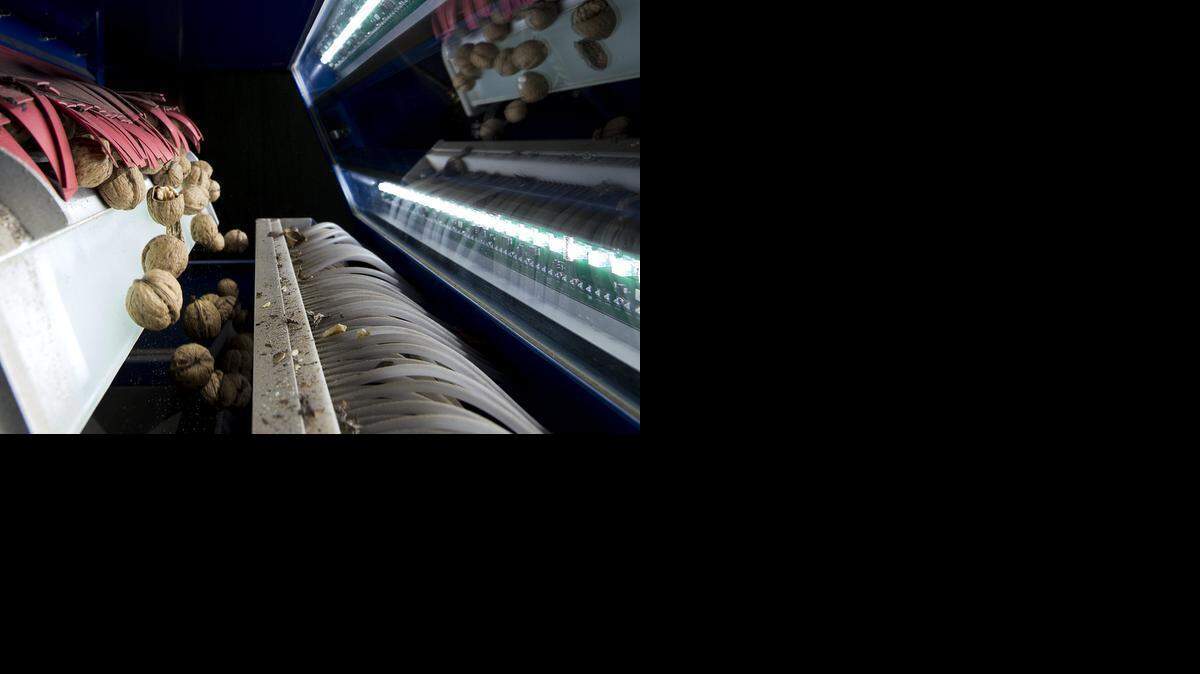
The walnut industry has hit a rough patch, leaders said Thursday near Modesto, but the long-term future looks strong thanks to consumers who see the health benefits.
Growers and processors had to deal with a West Coast port strike that slowed shipments of the 2014 crop to buyers around the world. They also face a strengthening of the dollar against other currencies, which makes exports more expensive.
And walnut inventories have surged, thanks to bumper crops last year in California and China, the top two producers by far.
“Keeping demand ahead of supply is critical to keeping our industry healthy,” said Dennis Balint, executive director of the California Walnut Commission.
He spoke at a meeting hosted by the University of California Cooperative Extension at the Stanislaus County Agricultural Center, off Crows Landing Road. It was the 45th annual gathering for industry people in Merced, Stanislaus, San Joaquin and Contra Costa counties.
Walnuts are among the region’s top crops, though not nearly at the volume of almonds. Both nuts long were considered unhealthy treats, but research suggests that they could help people control weight and fend off cancer, heart disease and other ills.
The California walnut harvest hit a record 568,503 tons last year, up 75 percent from a decade earlier. The industry has been able to the sell the burgeoning crop in recent years thanks to the health research, the increasing number of people with middle-class incomes and the weak dollar.
The softening in the market happened in part because of China. It is the state’s No. 1 export destination, but it also is a major walnut producer itself, and last year’s domestic harvest crowded out some of the California product.
“This has been a real challenge because of the situation in China,” said Jerry Barton, whose family grows and processes walnuts near Riverbank. “We’ll probably experience a higher carryover (inventory) than we have had in a while.”
The port strike has ended, but it has taken a while for backed-up goods to be shipped. Walnuts can be kept in cold storage while they wait, but some processors worried that buyers would cancel the deals.
Most of the state’s walnuts go to companies that make candy, baked goods, cereal and other products. Some are sold in small packages for home cooking and snacks. A fair number go to consumers in the shell.
The commission, funded by assessments on growers, works on health research and export promotion. It is closely tied to the California Walnut Board, which deals with the domestic market and research on farming and processing.
The commission got walnuts featured on a 45-minute segment of Takeshi’s Health Entertainment, a television show in Japan. It helped the Spanish Heart Foundation promote its cause with recipes. A campaign in China talks about how the nuts can boost brain function.
In the U.S. market, readers of Sunset, Cooking Light and other magazines see ads showing walnuts in main dishes, salads, desserts and other foods.
“Our goal, then, is really to make walnuts part of the everyday diet,” said Jennifer Olmstead, domestic marketing director.
Walnuts, like almonds, have seen a sharp jump in the average price per pound for growers. It rose from 58 cents for the 2003 crop to $1.85 in 2013. The average for the 2014 crop is not yet known, but the high inventory could mean the first price drop since 2008.
The rise in walnut inventories comes a few years after the California crop fell short of the growing global demand, prompting higher prices per pound.
“Get back to where we worried about having enough,” Balint said. “That’s a high-class problem.”
Bee staff writer John Holland can be reached at jholland@modbee.com or (209) 578-2385.
WALNUT CROP
(California harvest in tons)
2000: 239,000
2001: 305,000
2002: 282,000
2003: 326,000
2004: 325,000
2005: 355,000
2006: 346,000
2007: 328,000
2008: 436,000
2009: 437,000
2010: 504,000
2011: 461,000
2012: 497,000
2013: 492,000
2014: 569,000
Source: National Agricultural Statistics Service
ABOUT WALNUTS
▪ San Joaquin County led the state in walnut production in 2013 with an estimated $442.7 million in gross income to growers.
▪ Stanislaus County was among the leaders at $247.8 million.
▪ Merced County was at $36.9 million
▪ California grows 99 percent of the U.S. walnut supply and accounts for three-fourths of the world trade.
▪ Studies suggest that moderate consumption of walnuts can help protect people from heart disease, diabetes, cancer and obesity while improving brain function.
▪ Walnut cultivation is believed to have started in southwest Asia in about 7000 B.C. The nuts were popular in ancient Greece and Rome. Spanish missionaries brought the trees to California about 1770. The state’s commercial production started in Santa Barbara County about 1870. The Central Valley dominates today.
▪ On the Net: www.walnuts.org
Sources: California Department of Food and Agriculture, California Walnut Commission, county crop reports
This story was originally published March 12, 2015 at 5:07 PM with the headline "California's walnut boom slows due to several factors."