Thousands of Stanislaus farmworkers in limbo for long-delayed COVID-relief payments
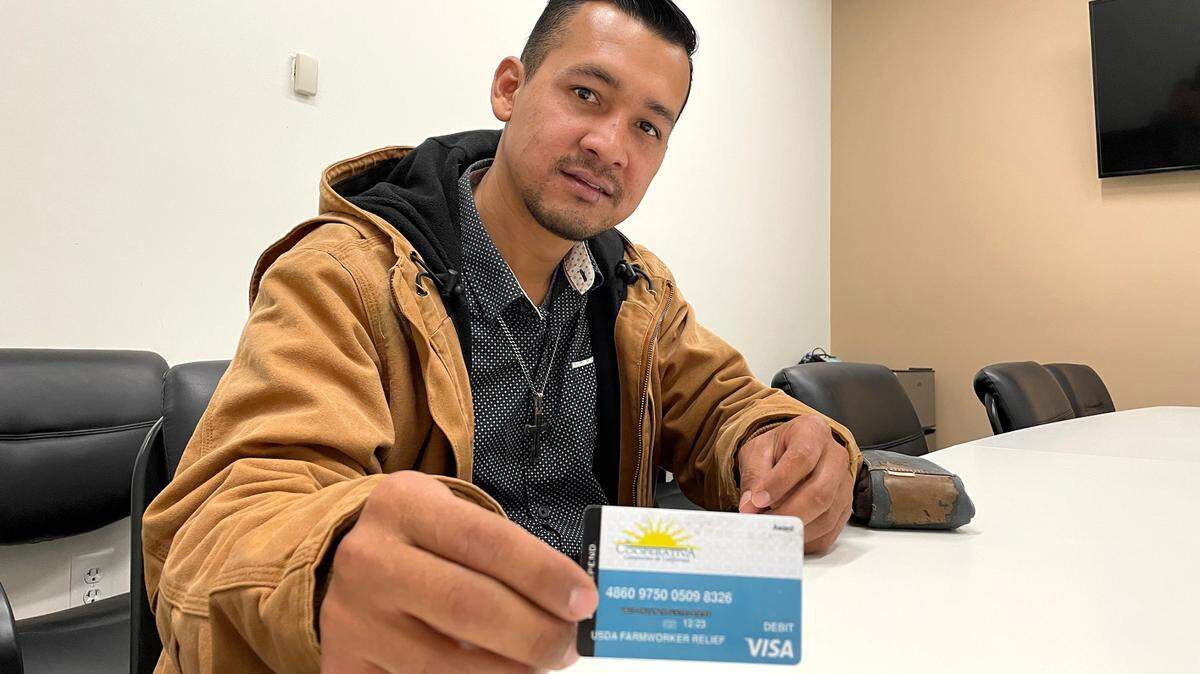
When California declared a public health emergency over COVID-19 in March 2020, Victor Reynaga didn’t want to work in the fields anymore, like he had for over a decade, moving up and down the Central Valley and into Oregon.
“We just didn’t want to be around a lot of people,” he said in Spanish recently.
In July 2020, his mother died of COVID-19. The next month, he was back in the fields, picking grapes and driving a tractor.
For frontline farm and food workers, there was no Zoom alternative.
Now, almost three years after the pandemic began, the U.S. Department of Agriculture is trying to say thank you through a $665 million grant known as the Farm and Food Worker Relief Program. The grant aims to serve over 1 million workers nationally, according to a USDA spokesperson.
But the program has been mired by delays and lack of communication and coordination, leaving many potential recipients with no payments. Further, the money is only enough to serve a fraction of the Stanislaus County’s eligible recipients.
Reynaga is among more than 1,000 Stanislaus farm and food workers who received a one-time payment of $600 from the USDA for “expenses incurred due to the COVID-19 pandemic.”
Unlike other federal stimulus programs, recipients need only prove their employment and their identity. Proof of citizenship is not required.
For Reynaga, the money covered some groceries for his three young daughters last month.
But his case is not the norm. He is a U.S. resident and was eligible for unemployment early in the pandemic. Most farmworkers are undocumented and ineligible.
Despite high demand, most farm and food workers won’t see a dime from agencies like the United Way of California, the United Farm Workers (UFW) Foundation and the Central Valley Opportunity Center (CVOC), which are contracted to deliver the dollars on behalf of the USDA.
Millions of calls and limited dollars
Waitlists already are long. CVOC Executive Director Jorge Denava said his organization has enough money to give out $600 to 1,300 people, the equivalent of $780,000. “That sounds like a lot of money to some people, but it’s not. ... It already is going very fast,” he said.
The organization, which provides workforce training and family support services, already has over 1,000 people on its waitlist.
Reynaga received a referral from a staff member at CVOC. He had to show proof he had worked in the fields during the pandemic, but otherwise the process was quick and easy, he said. Two weeks after he submitted his application, CVOC gave him a Visa gift card with $600.
Patricia Mendoza received her $600 in even less time, after she proved to CVOC that she had continued working at food packing factories throughout 2020.
CVOC’s dollars come from La Cooperativa Campesina, a statewide grantee of the USDA, which had issued 3,590 payments as of mid-February. Executive Director Marco Lizárraga said the organization has received 10,363 applications.
“It’s gotten so overwhelming that the phone lines go down,” he said. His message to prospective applicants is to “be patient.”
The UFW Foundation, which is serving farmworkers across the county, faces the same challenges. It has processed more than 6,000 applications since early January, when the organization opened its application portal.
“This is the first time that we know of that this type of federal disaster relief is being implemented to support farmworkers,” said Leydy Rangel, communications director at the UFW Foundation. “We’ve received over 2 million calls. The phone lines are saturated.”
While the UFW Foundation and the UFW labor union both are delivering money to workers on behalf of the USDA, Rangel said membership in any organization is “definitely not” a requirement to receive payments.
Delays and little data as program launches
Despite the demand from workers, the program’s rollout has been slow and uneven.
In November 2021, the USDA said in a training webinar that it expected to launch the program in “early to mid 2022.” The grants, announced in October 2022, have yet to be finalized in at least one case. The Bee contacted the USDA with a list of questions related to the program, but the agency did not answer.
The United Way of California received $41 million from the USDA but has yet to execute its contract with the USDA or distribute any dollars, said Stanislaus County United Way Executive Director Keristofer Seryani.
While he expressed interest in using United Way to serve people on the waiting lists of other organizations like CVOC and the UFW Foundation when their contract is finalized, there is currently no such system in place. The UFW Foundation received a separate grant to provide technical support to all of the USDA grantees, but Rangel said every organization has its own method of intake and there is no joint waiting list.
Denava estimated that USDA funds would provide $600 to roughly 5,000 farmworkers in Stanislaus County, though the peer organizations he named, like the UFW Foundation and United Way, could not verify the estimate or provide data on the number of farmworkers they planned to serve locally.
Will the county buy in?
Despite the lack of data and coordination, the CVOC, UFW Foundation, United Way and Cooperativa Campesina all agreed the funding was insufficient to meet the need from farm and food workers.
A 2017 study from the USDA census of agriculture estimates that Stanislaus County had 12,713 hired farmworkers, and a 2021 map from the California Development Department shows the number between 10,000 and 20,000. Estimates are difficult in part because many farmworkers move frequently to follow the growing season of different crops.
“To say that $600 for 5,000 farmworkers is adequate for this county, it’s offensive in terms of what farmworkers do for the economy, the taxes that they pay, the labor they put in,” said Maria Arevalo.
Together with Ana Andrade, Arevalo is a member of the Latino Giving Circle, which has been meeting with members of the Board of Supervisors since June 2022 and has spoken publicly to advocate for relief payments to farmworkers and increased legal services for undocumented people in Stanislaus County.

In January, Arevalo and Andrade launched a petition requesting that the county allocate a fraction of the $17 million in its reserves toward their demands. The petition has collected roughly 400 signatures, said Andrade, and is modeled after counties including San Mateo, which used $500,000 of what it got from the American Rescue Plan Act (ARPA) to offer similar relief payments to farmworkers and other low-income employees deemed essential during the pandemic.
There are local examples, too. In 2020, the Stanislaus County Board of Supervisors provided 2,476 households with “financial support of up to $1500” for basic needs through CARES Act funding, though the money did not specifically target farmworkers or essential workers.
Later, the board approved one-time bonus payments for county employees ranging from $750 to $2,250 depending on the person’s prior experience and how many months they worked from April 1, 2020, to June 30, 2021. Remote or in-person work qualify.
Supervisor Mani Grewal, who has met with Andrade and Arevalo repeatedly, expressed sympathy for the challenges that farm and food workers faced during the pandemic but pointed to other funding sources, like the USDA grant, that are helping to alleviate the need for relief payments. He added that the board is reviewing recommendations to allocate $1 million to CVOC from ARPA as part of the effort in Stanislaus 2030 to “upskill and reskill farmworkers.”
Andrade and Arevalo say his answers fail to address their demands.
“Money, it comes and goes”
For Reynaga and Mendoza, it was the training opportunities offered by CVOC — not the $600 payments — that made the greatest difference.
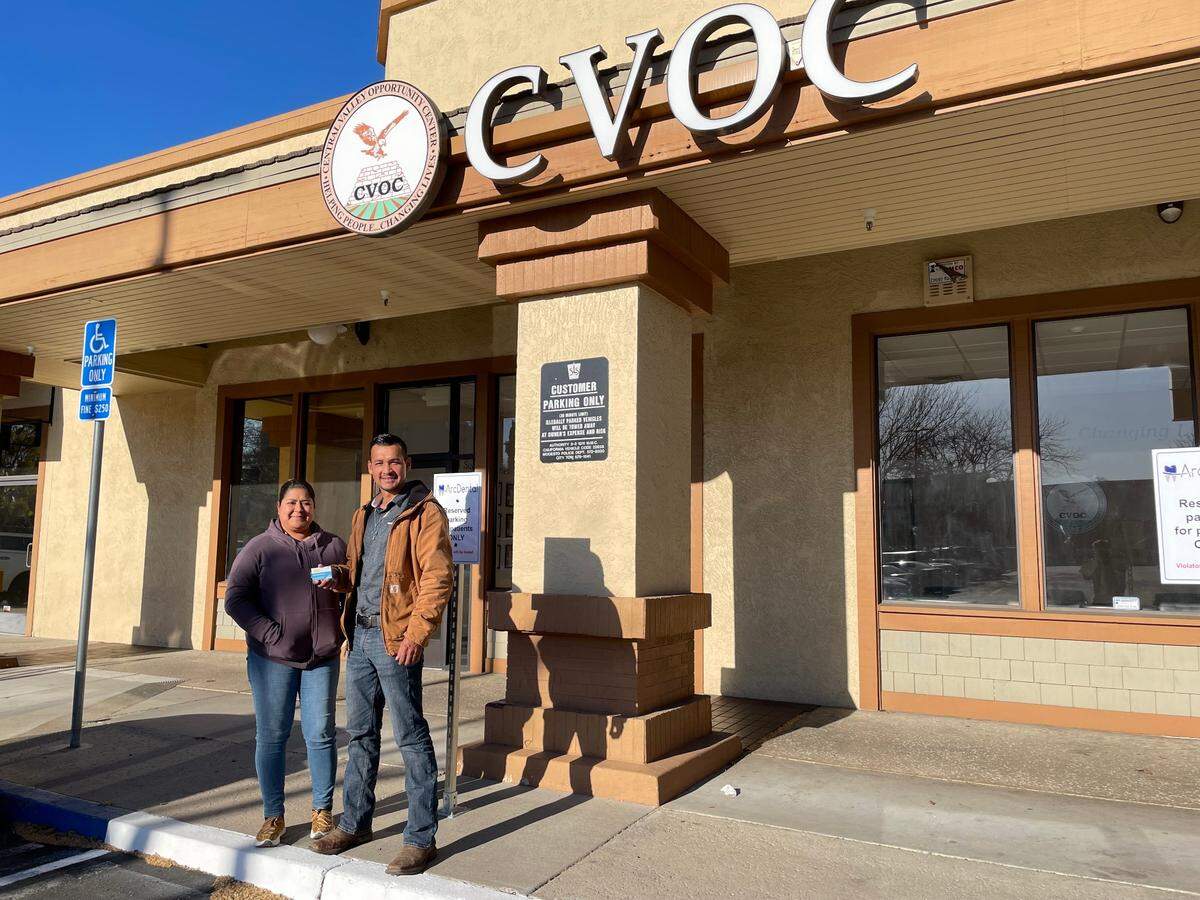
Last year, they both independently decided to leave farm and food work and pursue other jobs in the hopes of attaining better pay and less grueling work. Reynaga took classes to obtain a truck driver’s license and has left farmworking altogether. Mendoza is finishing a 19-week course that will prepare her to become an office receptionist.
“These payments are great. They’ve helped a lot of people, but CVOC is like 10 times more help,” Reynaga said in Spanish. “Money, it comes and it’s gone, but education, that sticks around.”
Mendoza chimed in, also in Spanish: “They’re giving us the option to leave our jobs in the fields and find higher-paying jobs.”
Eligible farm and food workers can call 209-356-7176 to reach CVOC regarding $600 payments or call the UFW Foundation at 877-881-8281. Full eligibility requirements are available here.
This story was originally published February 22, 2023 at 5:00 AM.