Consensus is the enemy, expert tells Modesto audience, and prosperity starts in kindergarten
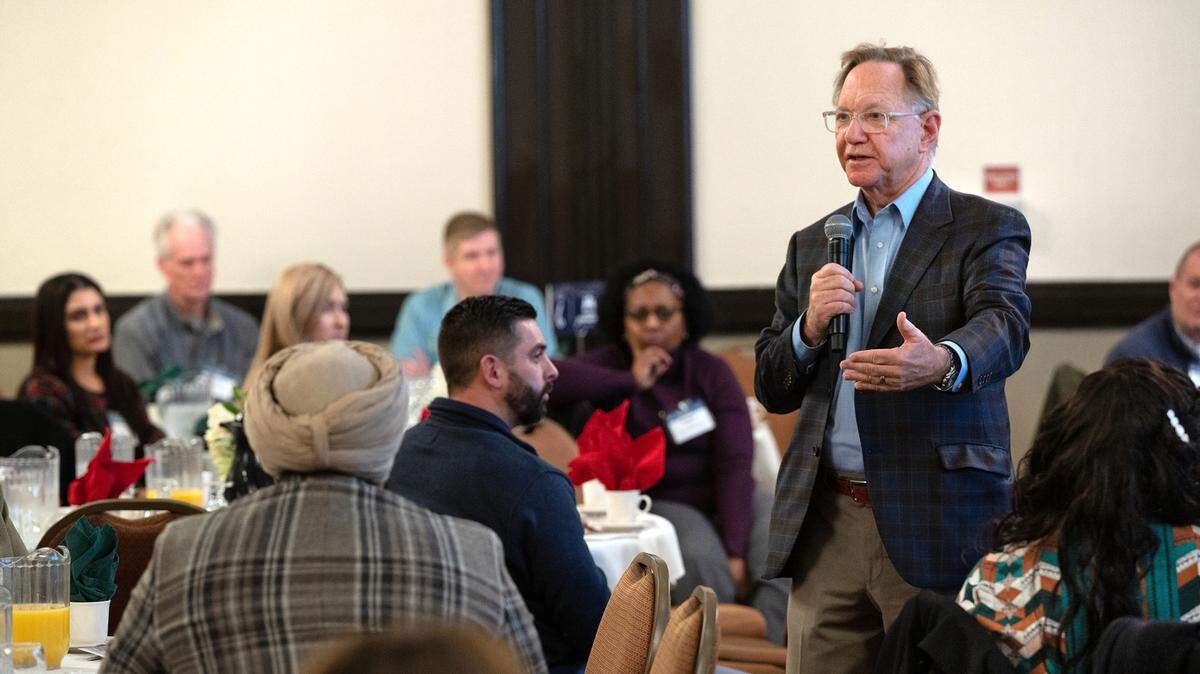
The author of “Building a Vibrant Community” ended his Thursday morning talk before an appreciative audience of about 180 people at the DoubleTree Hotel in downtown Modesto by repeating what residents say about their city.
“One thing that is interesting coming to Modesto,” Quint Studer said, is that “people say, ’No, it’s a great place because you are two hours from everywhere.’ Isn’t that goofy to tell people that? It’s like come live here — you can get out. Come here if you want San Francisco. Yeah! Yeah! You can leave! You can leave! You can leave!”
Those remarks drew laughter from audience members.
Studer then said: “You know what I want? I want to come back here. It’s not about potential. You hear the word ‘potential.’ That means you’re not winning. It’s about progress. You know what you want? You want people in San Francisco to say, ‘Hey you know what’s great about living in San Francisco? We can get to Modesto.’”
Opportunity Stanislaus and the Modesto Downtown Partnership brought Studer to speak at Opportunity Stanislaus’ annual investors meeting. Audience members included Mayor Sue Zwahlen and county Supervisor Mani Grewal, as well as other city and county officials.
Pensacola, Fla.,-based Studer has a varied resume that includes serving as president of two hospitals, founding the Studer Group, which advises hospitals, owning two minor league baseball teams, touring as a public speaker, writing several books and being a Pensacola businessman and philanthropist.
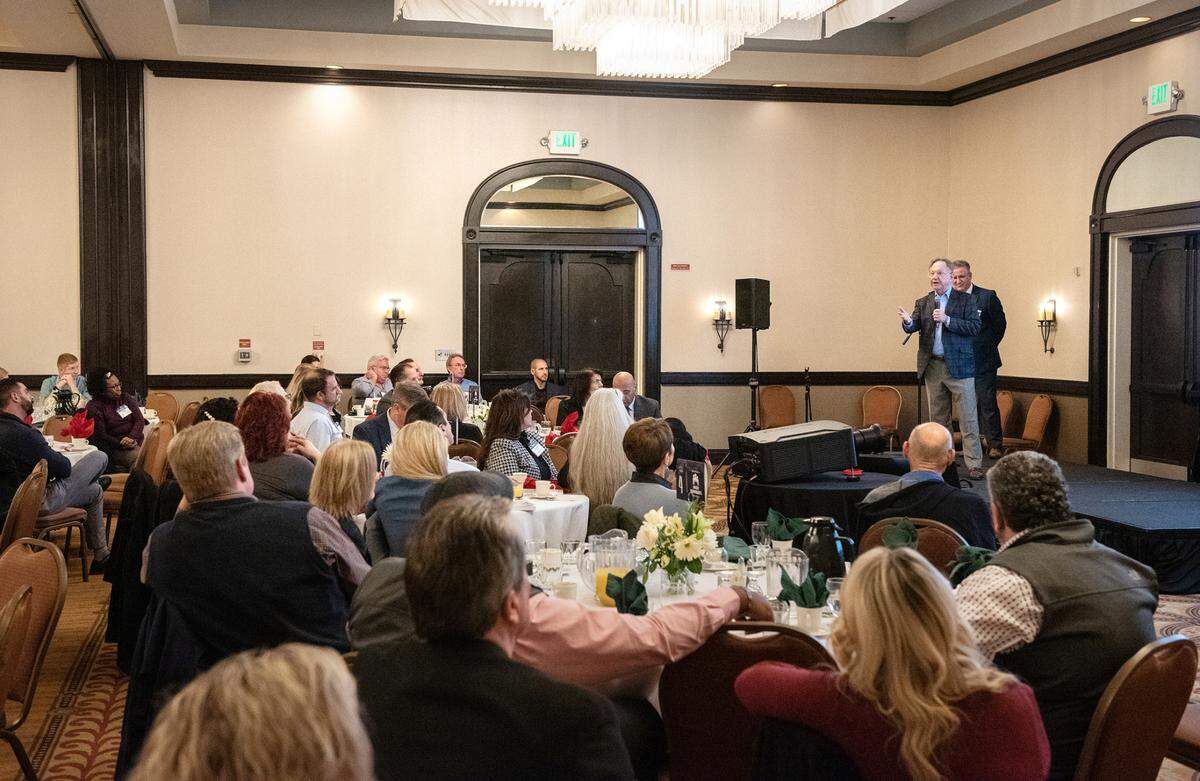
Studer laid out in a nearly one-hour talk how Modesto can become a better city.
Citing the work of Gallup Chairman Jim Clifton, Studer said cities thrive when they keep and support local companies that draw revenue from outside the area, support start-up companies and have a vibrant downtown.
A vibrant downtown draws and keeps people in a city. Using a baseball analogy, Studer said Modesto’s downtown is on second base.
“You have some great stuff downtown,” he said. “You have some retail. You have the Gallo (performing arts center). .... That is why you are on second. What will get you to third and home is more programming (activities) and residential.”
He said playing small ball is the key: Progress is measured by one building, one store and one business at a time.
Consensus does not work
Studer said when cities work to reach consensus on projects, they “end up putting something where it shouldn’t go. So we don’t put it in the best spot. We lower the bar a little bit because we’re looking for consensus.” He said cities should focus on reaching consent.
Communities need to measure their quality of life and create dashboards to measure their progress, Studer said. Pensacola used Mason-Dixon Polling & Strategy to gauge residents’ assessments in such areas as the quality of public schools, public safety and crime, a vision and plan for the city, and a shared vision and plans for economic development and job growth.
Measurement is so important that he told audience members he hoped a local philanthropist would write a check for a quality-of-life survey. Studer said the cost is $25,000, and he offered to pay $5,000 of it.
He faced pushback when he did development projects in Pensacola, Studer said. “Everything we tried to do in our town seemed so hard. There is no such thing as a no-brainer in a community. Someone will be against it.”
Studer said he created a nonprofit to raise Pensacola residents’ civic IQ. That has meant bringing in experts from throughout the nation to talk to the community about such issues as paid downtown parking, trees, police officers serving as guardians and not warriors, as well as diversity, equity and inclusion.
Studer cited the work of University of Chicago economist John List that the No. 1 indicator of a community’s long-term economic well-being is how many of its children are ready to start school. “If you want to have a great community,” Studer said, “you have to get your kids ready for kindergarten.”
Ready for kindergarten
He said children who are not ready then struggle with reading and math in later grades. He asked audience members whether they knew the local kindergarten readiness rate. Retired Gallo Center for the Arts CEO Lynn Dickerson said it was 39%.
“You’re future is bleak,” Studer said.
Dickerson later said in an interview that the kindergarten readiness rate actually is worse. She said it is 30%, according to 2019 data from StanREADS, the Stanislaus Cradle to Career Partnership.
The Studer Community Institute is working with the University of Chicago to increase the number of children who are ready for kindergarten in Escambia County (Pensacola is the county seat). Studer said 80% to 85% of brain development takes place by age 3.
He said nurses at all of Escambia County’s hospitals instruct the mothers of newborns on how to develop their children’s brains. When the moms go home they get text messages on Mondays and Wednesday on what they should be doing, he said.
Opportunity Stanislaus CEO David White said Studer’s fee for coming to Modesto was $15,000, though he reduced it to $10,000 during a dinner Wednesday evening with Opportunity Stanislaus investors. Opportunity Stanislaus is a nonprofit whose focus includes economic development.
White said Opportunity Stanislaus, the Downtown Modesto Partnership and Kaiser Permanente — the title sponsor of Thursday’s event — are each paying one third of Studer’s fee.
This story was originally published December 16, 2022 at 6:00 AM.