Valley has some of the worst pollution in nation. Money for air filters goes to Bay Area
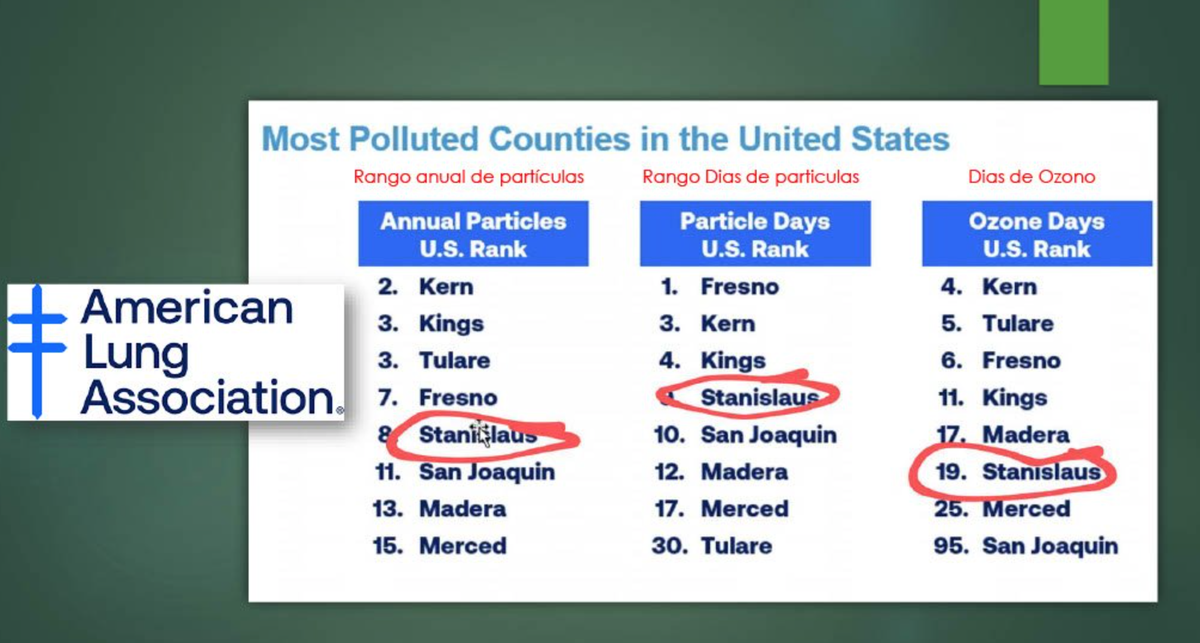
The San Joaquin Valley has some of the worst air quality in the country, according to the Air Quality Life Index at the University of Chicago, and wildfires are making it worse. But in one new state program, most of the money for air filters is headed to the Bay Area instead.
The Wildfire Smoke Clean Air Centers for Vulnerable Populations Incentive Pilot Program provides community centers and public facilities in disadvantaged communities with air filtration equipment in the case of wildfire smoke. It will offer $3 million to Bay Area counties. The San Joaquin Valley, which also has many of the most disadvantaged communities, will receive $700,000. The region representing Los Angeles, which has the highest population in the state, received even less money, just $250,000.
The logic behind the air quality funding was less about population or need and more about perceived capacity for disbursement. That logic is up to debate.
“A key consideration was, since this is a pilot program and we’re trying to get the money out, which district is ready to roll this money out and start this program quickly, and the Bay Area District had already done a lot of groundwork,” said Bonnie Holmes-Gen, health and exposure assessment branch chief with the California Air Resources Board (CARB).
The data suggest the Bay Area’s “groundwork” is paying off. As of last week, the Bay Area agencies responsible for the program already had rolled out more than two-thirds of their funding, a total of $2.2 million. The San Joaquin Valley Air Pollution Control District, by comparison, had received applications for just $50,000, or 10% of its funding pool, in the same time frame. This application round closed Saturday.
The data don’t tell the whole story, though. “I often hear that the Bay Area gets more because the Valley doesn’t have enough organizations to get the money out the door,” said Assemblyman Adam Gray in a statement to The Bee. “That’s just an excuse to reward the haves at the expense of the have-nots.”
Bay Area problems blow east
Gray points out that this program reflects how “the Bay Area has a long history of being greedy at the San Joaquin Valley’s expense.” When California introduced a program to monitor and fine smog-emitting vehicles in 1994, the Bay Area lobbied for an exemption, arguing that its air was cleaner than areas like the Central Valley.
It took years and the work of various Valley politicians to get the Bay Area to comply with state standards. Legislators pointed to research from CARB that had found that 27% of the Valley’s air pollution stemmed from the Bay Area. In one instance, Rep. Gary Condit, D-Ceres, released balloons on the Altamont Pass to show that the air from the Bay Area drifted east.
“But when it comes to allocating funds to clean up air pollution, the Bay Area is the first with its hand out,” said Gray. “They bring in their army of nonprofits and political connections to grab as much for themselves as possible.”
The original bill to provide community centers with air filters was known as the “Bay Area Clean Air Incentive Program” and was sponsored by Assemblywoman Buffy Wicks, D-Oakland. As the bill underwent deliberations in 2019, legislators removed any mention of the Bay Area and instead focused on creating a statewide network of “clean air centers” where residents in disadvantaged communities could go in the event of wildfires. Wicks did not respond to requests for comment.
Despite the bill’s changes, the funding allocations still favor the Bay Area. “We want to get clean air centers set up. We want to have a broad distribution of centers around the state,” said Holmes-Gen. But the Bay Area made a strong argument that it had the track record to succeed at getting community centers to apply for these filters. So, explained Holmes-Gen, “the best way to get them up and running quickly was to allocate more funding to the Bay Area.”
Tom Helme, an environmental activist in Modesto with the Valley Improvement Projects, agrees that the Bay Area has a robust network of nonprofits. He points out that many Bay Area nonprofits have more donors and therefore a greater capacity to reach communities who might benefit from these services. He also noted that many state programs consider population and often grant more to dense urban areas, so he was surprised to hear that the Los Angeles region received even less funding than the Bay Area or the San Joaquin Valley.
Moreover, Helme explained, the Valley air district and CARB “know pretty well that there’s a network of air quality and environmental justice nonprofits in the San Joaquin Valley that are pretty well organized and used to reaching out to communities all through the Valley.” He said the funding decisions for this program seemed “lopsided.”
Signing up for clean air
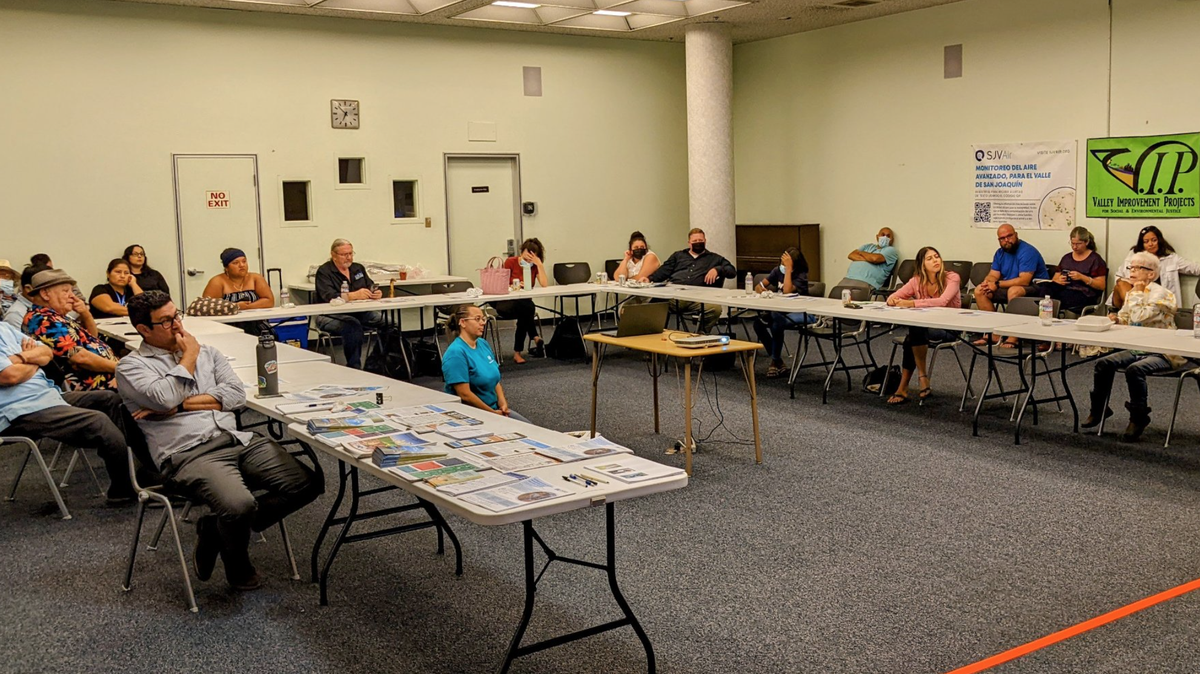
As the state rolled out new programs to combat wildfire smoke this summer, Valley Improvement Projects convened a group of roughly 30 residents and community leaders in the basement of the Stanislaus County Public Library building in downtown Modesto. He explained that the best way to show state leaders the need for resources in the Valley was to go after them. If few people and organizations took advantage of these programs, like the $700,000 for clean air centers, it would give legislators a reason to continue underfunding the Valley, he said.
As of last week, the Valley air district had received applications from five different counties across the Valley but not from Stanislaus County. Over the weekend, Stanislaus County officials developed a plan to apply on behalf of all 17 county library branches and three community centers in Modesto.
County officials also have reached out to Oakdale, Patterson, Ceres, Hughson, Riverbank and Waterford. In total, the county is looking to solicit roughly $50,000 in funds to equip between 20 and 23 locations with air filtration systems, said Royjindar Singh, a spokesman for the county’s emergency operations center.
Diane Ramirez, the Empire Branch Library supervisor, wasn’t sure the program would make a difference in her community. Many residents who use the Empire Library walk there because they don’t have a car or they share one car with many members of their family. In the event of serious wildfire smoke, she explained, residents may choose to stay where they are, even if that home or shelter doesn’t have proper air filtration, rather than walk the 10 or 20 minutes outside to get to the library.
The Valley air district also administers the Clean Air Room Pilot Program, which offers free air filters for low-income residents. Stanislaus is one of only two regions in the eight-county San Joaquin Valley air basin that has not maxed out the number of filters available through the program. Currently, residents have claimed just 38% of the filters available for county residents, says Jamie Holt with the air district.
To publicize the Clean Air Room Pilot Program, the air district has relied on word of mouth and the work of organizations like Helme’s Valley Improvement Projects, said Holt. The other program that provides air filters to community centers is more narrowly focused and has depended primarily on conversations with counties and large organizations in disadvantaged neighborhoods. As final applications roll in, it remains to be seen whether that strategy will work.
Gray, for one, said he sees funding at the root of the outreach problem. “It is worth taking extra time to do the most good by investing in communities like the Valley that don’t have those resources in the first place,” he said.
This story was originally published September 16, 2022 at 6:00 AM.