Stanislaus bus riders say public transportation issues can make employment difficult
Hughson resident Cesar Rubio landed his first job in April since losing his eyesight nearly a decade ago and can’t afford to be unemployed. Yet he worries that an at times unreliable bus system could cost him his job if he’s late to work again.
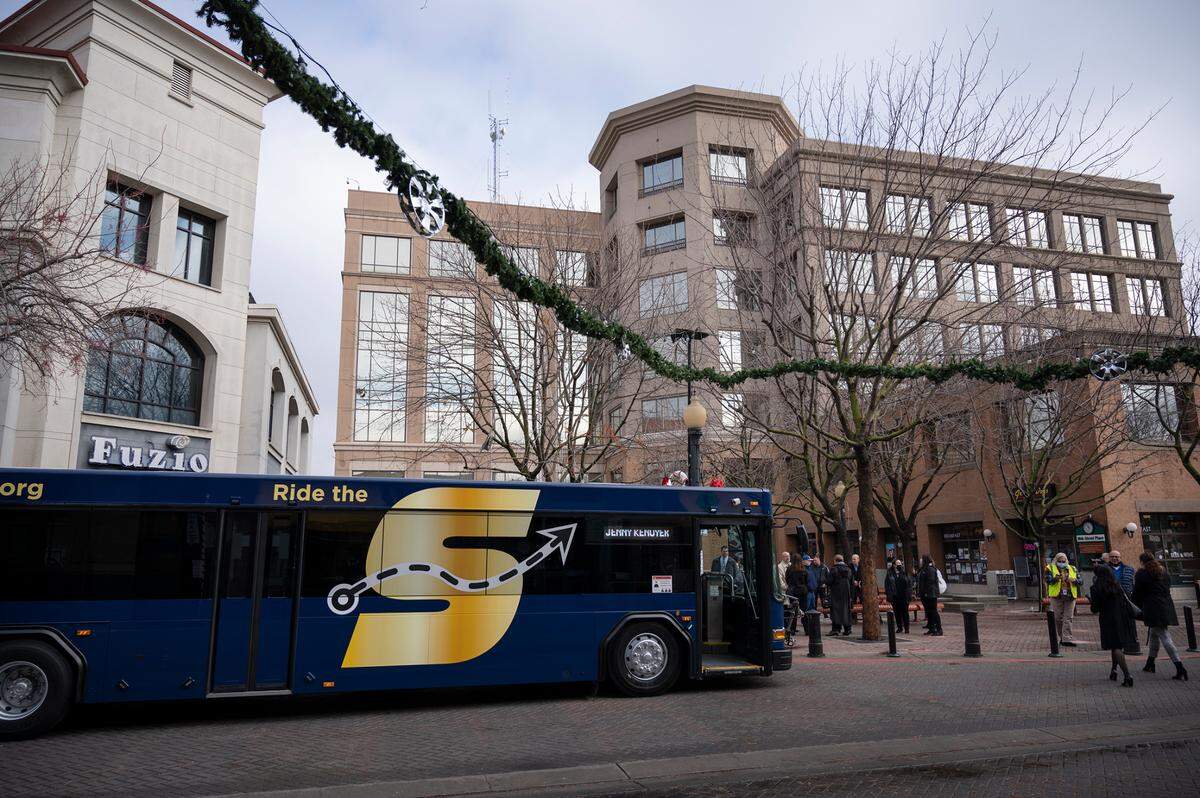
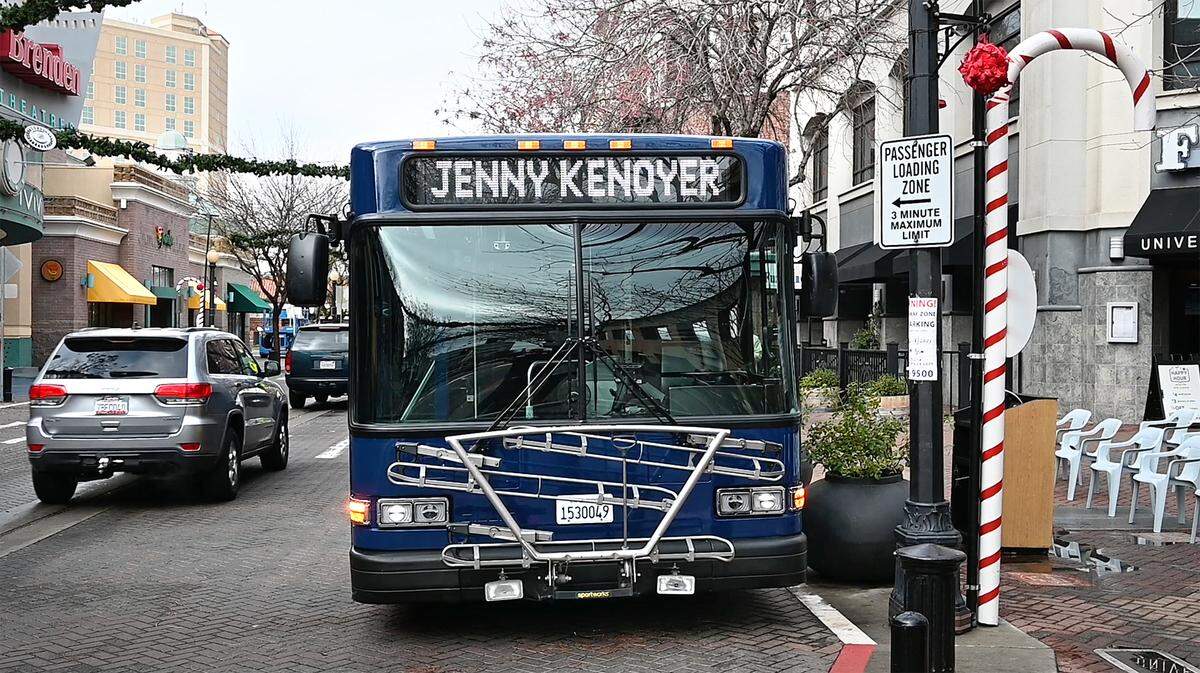
Using public transportation can be a challenge in Stanislaus County, where bus riders face extended wait times, long rides and limited service hours and access. Last July, Modesto Area Express (MAX) and Stanislaus Regional Transit (START) merged to become the Stanislaus Regional Transit Authority, whose staff and board members hope to improve service.
Efforts include reevaluating systems and processes, said Adam Barth, CEO of StanRTA.
Rubio, 45, lost most of his sight after contracting cryptococcal meningitis in 2013. Nearly two years later, once he got out of the hospital, the husband and father of two didn’t let his disability stop him from pursuing his education at Modesto Technical College.
But requesting door-to-door paratransit wasn’t an option then, making it more difficult for Rubio to better his life. His path from home to the North Ninth Street school crossed the service boundaries of two bus systems, he said. “There was a gap in the transportation system. It wouldn’t allow them to take me that close” to the college.
So he would take out his mobility cane and walk about a mile and a half each time he needed to take the bus to go to school and back home. “There were some areas where I definitely didn’t feel safe,” he said about walking with low vision.
About six months before the bus merger, door-to-door paratransit service became available. But the system was very unreliable, getting him to his destination in just 30 minutes some days, two hours other days.
StanRTA CEO Barth said he, too, takes the bus to work and recognizes adjustments are needed. He said StanRTA just finished reviewing the existing conditions and plans to do public outreach this spring to gather input on how things can be improved. Alternatives will be delivered to the board by July, and if approved, would take a few months to be implemented, he said.
“We want to make routes simple and easy to use,” Barth said. “If you make something simple and easy to use, more people will use the system.”
Additional routes, extended bus times needed
In Stanislaus County, the highest bus rider population comes from south and west Modesto, Barth said. Increasing the number of hours that buses are available isn’t hard to do, and has been done before, he said, but the demand and resources need to be there.
Bus service in northeast Modesto isn’t great, Barth said, but there’s never been a “real demand for it.”
Several members of the Downtown Streets Team, though, say that expanded bus times and routes are needed.
Like many members of DTS, an organization that helps homeless individuals with housing and employment, 55-year-old Elizabeth Hill said she’s missed out on many opportunities to work because the bus doesn’t run long enough. The Modesto resident said she used to work the graveyard cleaning shift at Vintage Faire Mall and faced dangerous conditions when she would ride her bike back home.
“I used to ride my bike with a can of mace in my hand,” she said, saying her route was like a battlefield, with people throwing things to scare her as she rode by.
Hill eventually found another job. She said she wants to take on an additional job at night but finds it difficult with the limited bus service hours now that she no longer has a bike.
“It’s kind of a pain,” she said about trying to overcome her situation, knowing she has to work twice as hard because she relies on public transportation.
Fellow DTS member Robbie Plaster, 41, of Modesto, said StanRTA should connect with local warehouse companies to determine how many employees they have, how many take the bus and what their operating hours are. For example, if a company employs 3,000 people and offers various shifts, it may have enough people interested in taking the bus.
“That’s one of those things that can support its own bus line,” Plaster said.
Barth said his team is brainstorming how to provide better service so workers can reach warehouses in Patterson. While StanRTA staff haven’t connected with warehouses, he said, they’ve spoken with the general manager of Vintage Faire Mall and plan to provide better service as they learn of other operators in town that could provide a good supply of riders.
Getting to work on time is crucial
Nearing his December 2021 graduation date, Rubio took on his next challenge: securing a job. Because he can’t drive, one of the first things his employer asked is if he was going to be able to make it to work on time. Rubio said he nervously replied that he was.
“It was very intimidating not knowing if I was going to be able to make it on time,” he said. But he knew how difficult it can be for someone with a disability to be employed, so he was determined to keep his word.
He started his job as a maintenance technician at Willow Pointe Apartments in Riverbank in April 2021. Since then, he said, the experience of transitioning into a new bus system has been rough, causing him to be late to work a handful of times.
“I understand the ADA (Americans with Disabilities Act), the door-to-door service, they’re not taxis,” he said, meaning the service isn’t meant to cater to solely one person. “I understood it was still a responsibility to make it work for me.”
Rubio said he’s grateful his employer has been understanding about the times he’s been late, but he can’t afford to be late again because he fears that understanding will wear thin and he’ll lose his job. That’s why he now takes the bus around 5 a.m., an hour earlier than usual, to ensure he’s on time.
Rubio said he’s still not confident in the punctuality of the bus system and will continue to take precautions. He hopes StanRTA also will be accessible to Spanish speakers by hiring customer service representatives residents can call with questions. Although Rubio speaks English, he’s most comfortable speaking Spanish.
Barth said he plans to talk with the vendor so that recorded announcements on the bus about upcoming stops can be made in both English and Spanish to provide a more inclusive experience.
Since the unfolding of StanRTA, board members have responded to Rubio’s request to place an additional bus stop near his job in Riverbank so he can go get work supplies at Home Depot to do repairs on the 44 apartment units he maintains, allowing him to no longer depend on the property manager to take him. “That makes my performance at work stand out,” he said.
Rubio said board members’ response to his concern makes him feel they’re willing to help and the community just needs to reach out and ask. “It is getting better. I can’t deny that,” he said.
Barth said he’s an advocate for additional buses and increased frequency because he believes it will encourage more people to take public transportation. “Frequency is freedom,” he said.
This story was originally published March 10, 2022 at 6:00 AM.