Stanislaus senior couple worry about food, health insurance as inflation rises
At 68, Grayson resident Antonio Lomeli still works at the barbershop he opened in Patterson in 1994, going in about 45 hours a month. It’s the most he can work without losing Social Security benefits. With 63-year-old wife Yolanda getting ready to retire from her day-care career, he needs to keep cutting.
Living solely off Social Security just isn’t enough, and with the inflation rate at its highest in decades, worry over affordability of food and health insurance is mounting for the couple,who said they’re going through their money faster than ever. Though the two are weary, Antonio said he’s not sure when he will be able to hang up his clippers and retire.
“I never thought that I’d be in this position,” Antonio said in Spanish.
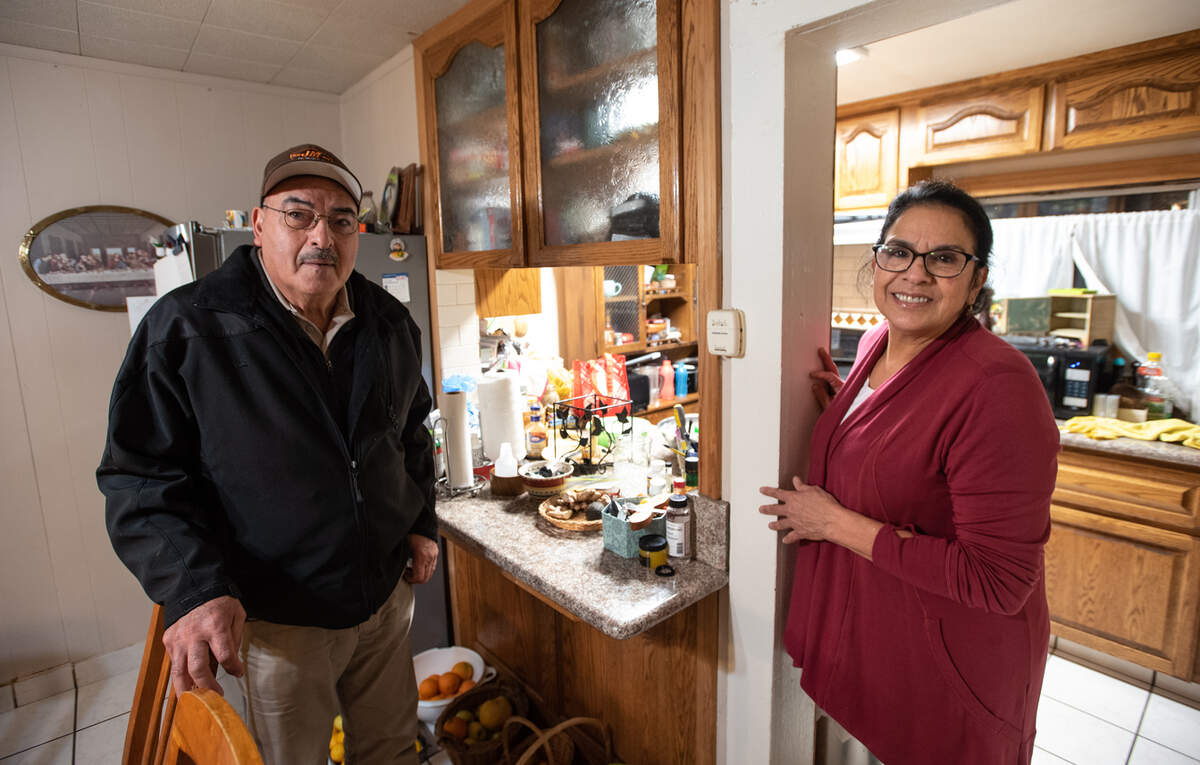
It’s not quite the life he pictured giving Yolanda when they decided to say “I do” as mere teens. Yolanda said she wasn’t interested at first in Antonio, who toiled as a field worker alongside her father. But when he picked up his guitar to play for her, she fell madly in love and had four children with him shortly after tying the knot
Yet, ever since Yolanda was a little girl, she wanted more for herself and her family. “I had big dreams of studying,” she said in Spanish.
So at the age of 30 and while pregnant with her fourth child, the stay-at-home mom enrolled at Modesto Junior College to study child development. About a year later, she graduated with her associate’s degree and landed at her current day care job in Patterson. She makes about $51,000 annually, but that’s all about to change when she retires in January.
Life threw these two a curveball when Antonio got injured on the job and couldn’t return to being a field worker. However, he was retrained as a barber and opened his own shop.
Antonio said he enjoys cutting hair. He’s been at the same location for so long that he’s formed great relationships with the community and his customers are begging him not to retire, he said.
However, business now isn’t even half of what it was prior to the pandemic when he was making about $37,000 annually, not including an estimated $18,000 yearly in Social Security benefits. He’s still open during regular hours but said there have been many days lately where hours go by without a customer in the chair.
Because of the virus, “a lot of people are still scared of going out,” he said.
Antonio thinks the fear of catching the virus while getting a haircut keeps customers away, and the economic impact of the pandemic coupled with inflation is pushing people to cut their own hair at home. With COVID cases rising again, he’s not sure how much longer his business will survive.
The total monthly cost of running his business is about $900, nearly a third of his new income, he said.
“The business is no longer a business,” Antonio said, explaining that expenses are starting to outweigh revenue.
Day care takes hit, too
The day care industry, from which Yolanda is retiring, already was struggling with razor-thin profit margins but experienced an even greater financial challenge when enrollment in July 2020 remained only 52% of prepandemic levels, American Progress shows. An estimated 8,500 day care centers across California have closed, leaving tens of thousands of families — especially those with low incomes — with few options, CalMatters reports.
The Lomelis said they’re thankful they don’t have to worry about housing because they own their home now. Yet the cost of food is eating a big chunk of their income. Antonio said he’s doing his best to save money, like when shopping for groceries.
“I go to the store and I’m scared to see the prices of the meat,” Antonio said. “I try to buy less because if I bought how I did before, I’m not going to have enough (money).”
But amid rising prices and a pandemic that’s pounded the economy, a UCLA economist interviewed by The Bee predicted there could be a silver lining in the coming year.
Why is inflation rising?
There are two major causes for the rise in inflation, said Jerry Nickelsburg, director and professor of economics at UCLA. One reason is the increase in the price of oil and energy.
Electricity allows people to heat their homes and companies to manufacture goods. It’s produced by burning oil to heat water, which causes steam that produces electricity, according to the U.S. Energy Information Administration. But oil prices collapsed around the start of the pandemic, and as a result, the building of drilling rigs needed to extract oil stopped, Nickelsburg said.
However, “they’re being built again … and we’re seeing oil prices coming down,” he said.
Nickelsburg said pricing and supply chain constraints also play a part in the rise of inflation. An example of this can be seen in the demand for automobiles and housing.
Manufacturers were unable to produce vehicles fast enough to keep up with the demand, and the vehicles that they were able to produce weren’t being shipped because of the pandemic. Nickelsburg further explained that the inability to get vehicles to dealerships pushed people to buy the used vehicles that were available, driving up prices of automobiles overall.
With more Americans working from home, the high demand for bigger living spaces isn’t keeping up with the low supply available, he said. In addition, cash investors who have funds easily available to obtain home properties seized the opportunity to do so during this time. These two forces pushed housing prices through the roof.
“When the parts are in the dealership, those prices will go down,” Nickelsburg said, assuring that the situation with the auto industry will soon be resolved. He’s not so sure that he can say that about housing. His forecast, however, is that housing prices in 2022 won’t rise as much as they are now because consumers are starting to push off purchases.
“After 2022, we could see inflation rates that are similar to those we saw in the last decade — fairly low,” he said. He cautioned, though, that the pandemic dragging on means a risk that inflation could worsen.
Woman takes leap of faith into retirement
That’s the risk that makes Yolanda nervous as she steps away from her career, where she’ll go from a yearly income of $51,000 to roughly $18,264 in Social Security once she retires. Her husband already has insurance through Medicare, but she’s worried that with the cost of living going up, she won’t have enough to afford health insurance for herself.
“I’ll have to pay for health insurance out of pocket,” she said, believing that she makes too much to qualify for Medicare.
However, a retiree can qualify for Medicare regardless of income but would need to pay more premium depending on how much that person makes, the official government website shows. So someone who’s paid Medicare taxes while working will be able to bypass paying $499 monthly for hospital coverage, or Part A of Medicare, and would pay $170.10 monthly for medical insurance, or Part B, if that individual makes less than $91,000 or $182,000 for couples.
Coming off 2021, in which she contracted COVID-19 and lost her youngest brother, 42, to cancer, Yolanda said she’s willing to take the retirement risk. She can feel it in her lungs and in her body that her health has declined, so she intends to enjoy the years she has with her parents, who live down the street from her.
On the other hand, Yolanda said her husband has told her that the day he can no longer work, he’d prefer to die. It’s the pressure of wanting to provide his wife with financial security that keeps him working, he said.
Yet, as business declines at the barbershop, he’s beginning to realize his wife may be right. Although they will have to live on a tight budget, it’s better to step away from work while in good health to be able to enjoy the remainder of life, he said.
Yolanda said she’s set to retire in mid-January. For now, Antonio plans to keep working, but is highly considering closing up his shop.
“We will have to be very conscious of our money,” Yolanda said. But, “as long as I can get by … I’d rather enjoy my parents.”
This story was originally published January 7, 2022 at 5:00 AM.