‘In Solidarity’ event encourages Stanislaus residents to talk about systemic racism
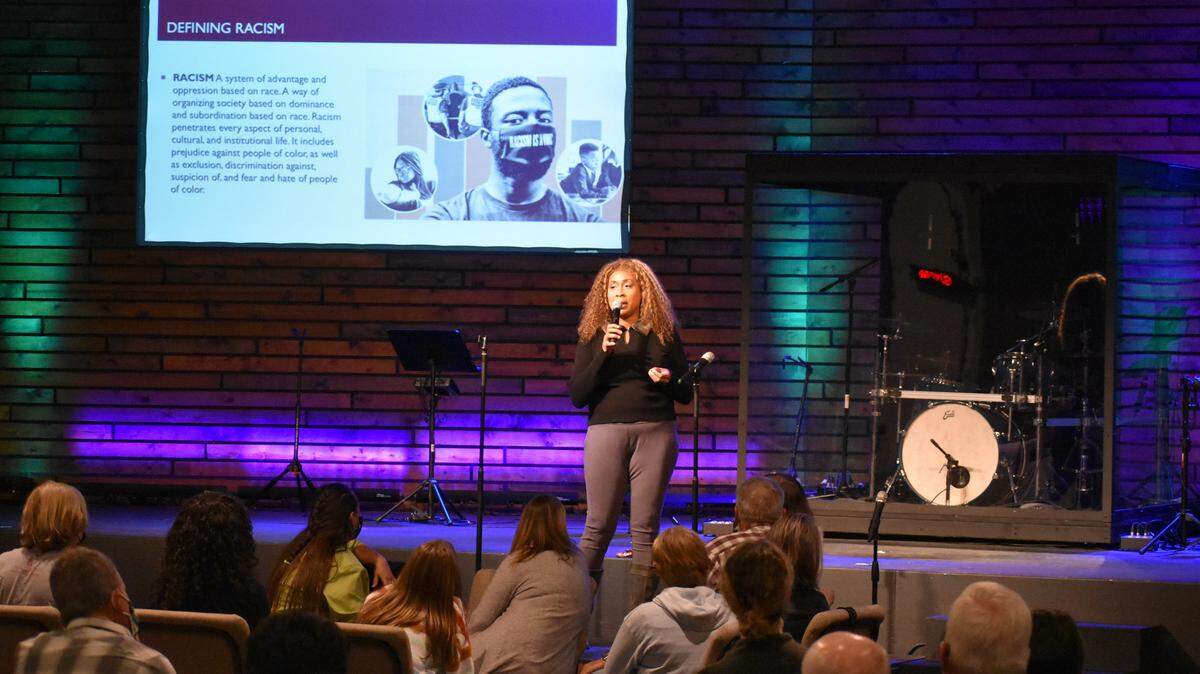
As racism systemically continues to run through the veins of our nation, individuals from different backgrounds gathered in Modesto on Thursday to discuss its impact on local residents.
More than 100 people attended “In Solidarity,” a forum on racism held at the Redeemer Modesto church. For some, it was frustrating to regurgitate issues that stem from systemic racism. For others, it was the first time engaging in the complex conversation.
Reared in Delta, Missouri, where nearly all residents are white, Stanislaus State ethnic studies Professor Mary Roaf said she’s never seen as much racism as she has in this county. She said she believes all people have undergone cultural conditioning, also known as racial and ethnic socialization, meaning our environment has taught us the traits and characteristics deemed desirable and undesirable on the basis of who has the most power.
In America, people have been conditioned to think — even if it’s subcconsciously — that being white is better than being non-white, Psychology Today reports.
It’s not until a person takes conscious note of our culture and how it continues to perpetuate racist beliefs that a person can be enabled to change, an article in the publication further states.
“We have all been conditioned,” Roaf said. “Every single one of us has work to do.”
Racism is much more than acts of violence, Roaf told the audience ahead of a YouTube presentation on systemic racism and small breakout group discussions. While the ancestors of white people were able to build generational wealth through access to bank loans and education, redlining and legal segregation kept Black, Indigenious, People of Color (BIPOC) from doing the same.
Implicit bias affects jobs, wages
But systemic racism doesn’t end there. Implicit bias, or unconscious prejudices, continue to negatively impact BIPOC, especially Black people, who are twice as likely to be unemployed and earn about 25% less than their white counterparts, according to the National Bureau of Economic Research (NBER).
Job applicants with white-sounding names need to submit 10 resumes to get one call back, compared to those with African-American names, who need to send out 15 resumes for the same result. NBER research further shows that a white name produces as many more callbacks as an additional eight years of experience, resulting in a 50% callback gap between white and Black individuals.
Another study shows that of the Black applicants who submitted a resume with a white name, 25% of them got callbacks, compared to 10% of those who provided ethnic details, according to Harvard.
As an individual with a white name but Mexican and Native American ancestry, forum attendee William “Ricky” Knight understands these statistics well. His white name allows him to reap the benefits of multiple callbacks, Knight said. But when the Modesto resident begins to talk or shows up to the interview, things change.
“They see the way I look,” he said, pulling down his mask to show what he believes is a stereotypical Mexican beard. Standing more than 6 feet tall, with a curly mullet known as a sign of spiritual strength in the Native community, Knight said he hopes greater understanding and less ignorance will occur as a result of the forum and those to come.
Hard work still ahead
After several minutes of small group discussions, a few speakers shared testimonies to conclude the night. Beth Applegate, a first-grade teacher in Modesto, shared that her white ignorance bubble didn’t pop until her first race class in college, where she learned to keep her ears open and her mouth shut.
She said she learned the most through open talks about race with her class. She realized that although she didn’t create the policies that contribute to systemic racism, she benefits from the system as a white woman.
“We didn’t build this house, but this is the house we inherited,” she said, adding that there is work to be done to dismantle systemic racism.
A’Kai Walker, program manager at Stanislaus County Youth Empowerment Program, said to participants that she thought she would need to prove to people at the forum that racism is still happening. But to her surprise, there were no objections to this fact.
Jim Applegate, pastor at Redeemer Modesto, said he often hears white people try to discredit people of color when they share their experiences with racism. But, “hearing people’s stories makes it real,” he said, calling for more empathy, compassion and curiosity for others.
This story was originally published November 9, 2021 at 5:00 AM.