New advice for slowing COVID omicron variant amid shortage of tests in Stanislaus County
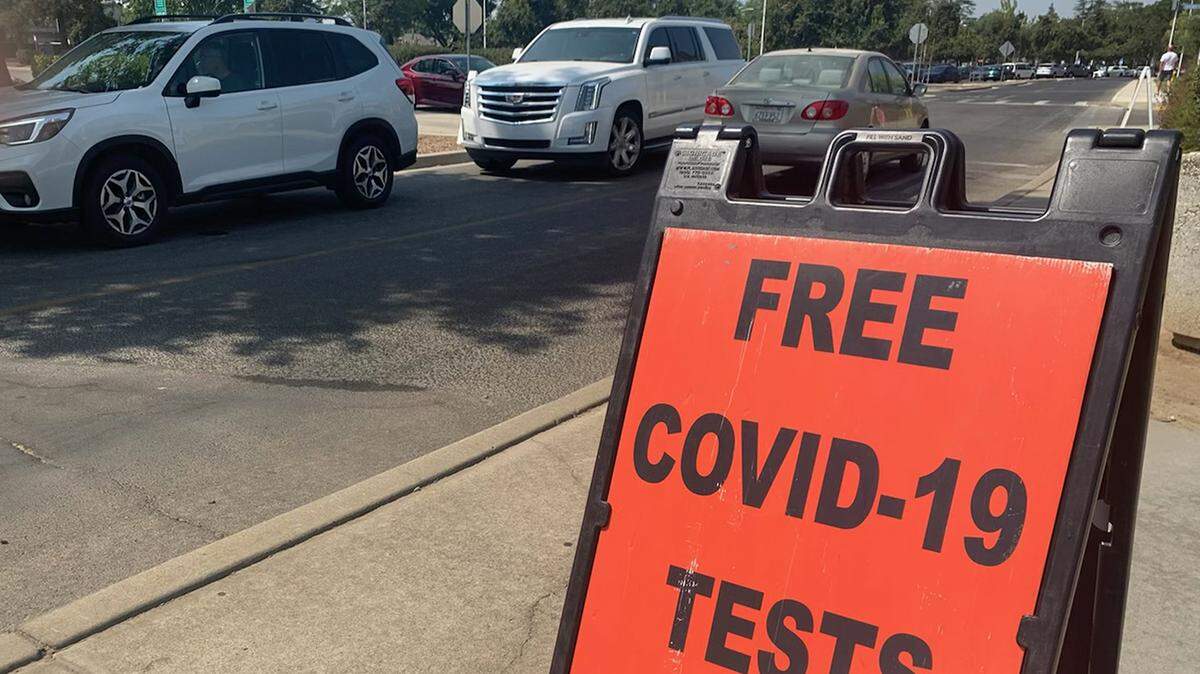
At first, there was no evidence of the COVID-19 omicron variant in Stanislaus County. Now, it seems to be everywhere.
County public health on Wednesday amended a three-step strategy for slowing the spread of the omicron strain, which was wear a mask, get tested and get a booster shot of vaccine.
In a Facebook post Wednesday, the county Health Services Agency recognized that getting tested may be difficult, because so many people are wanting a test.
The county’s post has new advice on what people can do while waiting to get tested.
Stay home and distance yourself
▪ If you were exposed to someone who tested positive or has symptoms, stay home and don’t socialize with others in person. That helps to minimize the spread of COVID infection.
▪Control your symptoms by taking medication and resting. If you don’t have congestion or body aches, it’s still important to take care of yourself and make health a priority.
▪Avoid going out in public and using public transportation.
▪Wear a mask, even at home.
Should you wear a mask in public?
▪ Wear a high quality mask in public.
▪ The state has a face-covering mandate in indoor public settings for all Californians. It applies to people regardless of vaccination status and remains in effect until Feb. 15.
▪ Wearing a mask in public, outdoors and on public transportation can slow the spread of omicron, which is much more contagious than other COVID strains.
Why is testing important?
▪ Getting tested before attending gatherings, events or traveling is another tool and can help the county track the spread of coronavirus.
Do you need a booster shot?
▪ A booster shot is recommended five months or later after the original COVID-19 vaccination because the immunity weakens. The recommendation is two months after the single Johnson & Johnson dose.
▪ Vaccines can protect you and family members against a severe COVID-19 illness.
Who should get tested?
▪ Regardless of vaccination status, a person should get tested as soon as they begin having symptoms or five days after close contact with someone infected with COVID-19.
▪ To help slow the spread of the virus, residents may want to get tested if they live a congregate setting, such as a college dorm or homeless shelter.
Testing may also be advisable for those:
▪ Working in a high-density workplace such as a factory.
▪ Working in close quarters with other people in a restaurant, retail store or public transit.
What to do if you test positive
▪ Stay home from work or college and contact your physician. People may be eligible for new treatments.
▪ The county health department may want you to get a PCR test.
▪ Isolate according to the state guidelines.
What are the isolation procedures?
▪ Stay home and isolate for at least five days.
▪ If symptoms go away, you can leave home in the next five days while wearing a well-fitting mask.
▪ If the symptoms last more than five days, stay home until symptoms resolve, or until symptoms are resolving and a test taken on day 5 comes back negative.
▪ Those free of symptoms after seven or eight days should wear a mask around others until the 10-day isolation is completed.
▪ If symptoms are not resolving, remain in isolation until after the 10th day.
(These recommendations are not for healthcare workers.)
Who is supposed to quarantine?
Quarantine applies to people who are exposed to another person infected with COVID-19 but may not have tested positive yet or developed symptoms. Quarantine procedures depend on the person’s vaccination level:
Those who are unvaccinated, or vaccinated six months ago and no booster yet, should:
▪ Stay home for five days after exposure and get a COVID test on the fifth day.
▪ Wear a mask around others for five additional days if the test is negative.
▪ People not able to test can end the quarantine after the 10th day if they have no symptoms.
Those who are vaccinated and received a booster shot should:
▪ Wear a mask around others for 10 days.
▪ People developing symptoms should be tested and follow the isolation guidelines.
Where are tests available?
▪ School districts and the county have distributed test kits, but there is a shortage right now.
▪ Watch for information about the state sending more test kits to Stanislaus County.
▪ You can schedule an appointment for PCR testing at the Salida library parking lot, 4835 Sisk Road, Monday-Friday, 7 a.m.-7 p.m.; Rube Boesch Center, 275 N. Orange St., Turlock, Sunday-Friday, 7 a.m.-7 p.m.; Ceres Unified School District, 2491 Lawrence St., Ceres, Sunday-Thursday, 7 a.m.-7 p.m.
The sites are closed daily from 11 a.m. - 12 p.m. and 4 p.m. - 5 p.m. Call (888) 634-1123 or go to lhi.care/covidtesting.
▪ Register for the drive-thru test service at Stanislaus State University, open Monday-Friday, 9 a.m.-4 p.m. Register at avellinocov.2.com.
▪ Make an appointment for the mobile testing van offering service in Modesto, Riverbank, Oakdale, Patterson and Newman. Locations and hours may vary. Call (888) 702-9042 or go to https://book.curative.com.
▪ Walkup testing is available at the Community Services Agency building, 251 E. Hackett Road, Monday-Friday, 8:30 a.m.-4 p.m. Book an appointment at https://book.curative.com.
The Stanislaus County Health Services Agency has information about testing and vaccinations at www.schsa.org.
This story was originally published January 13, 2022 at 8:01 AM.