‘Nothing but struggle, failure and death.’ Modesto nurse describes emotional toll of ICU
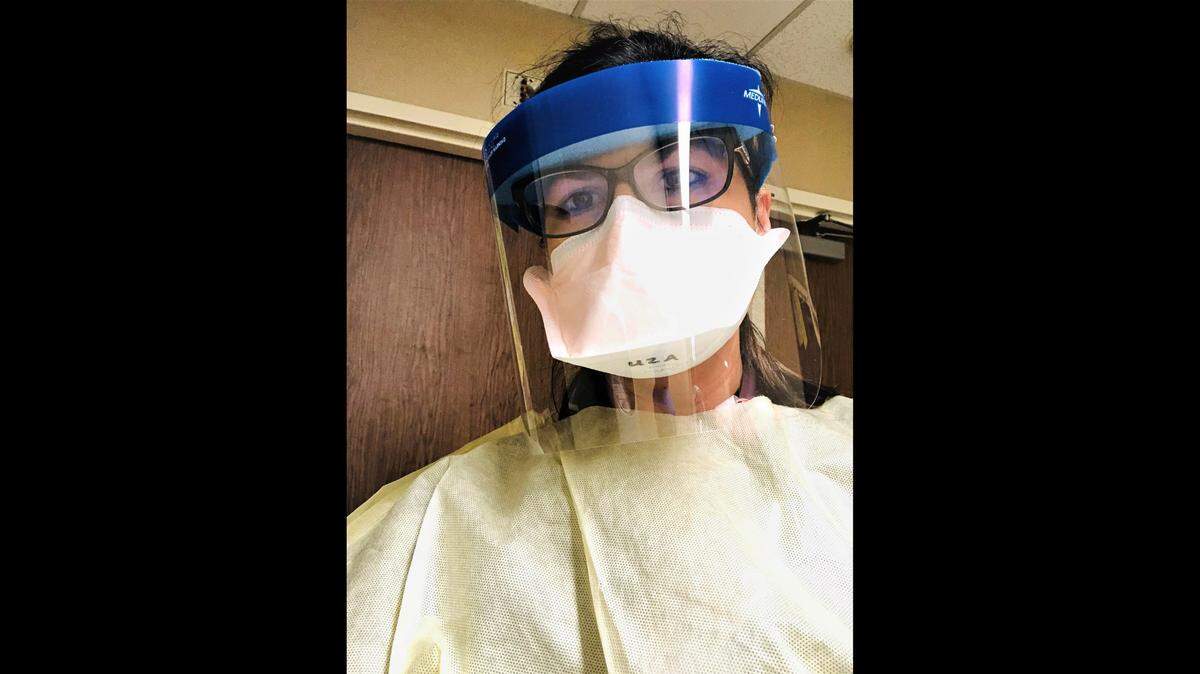
Intensive care nurse Kelly Borges said she works one disheartening shift after another, splitting a 48-hour work week between Memorial Medical Center and Kaiser Permanente’s Modesto hospital.
She wants the public to know of the growing pressures on local hospitals and overworked staff caused by a COVID-19 outbreak that won’t slow down.
Borges has spoken out as deaths have sharply increased and as overburdened hospitals in Stanislaus County have sought emergency staffing support from the state. The coronavirus has now killed more than 10,000 people in California, and this county is one of the hot spots.
Last week, Borges aired her frustrations on Facebook, a platform she prefers for sharing feelings and getting an instant response. “How do you cope with being surrounded by the sickest people that have an infection for which there is no proven treatment? No cure. Nothing but struggle, failure and death,” she wrote.
“Death in numbers occur almost daily,” said another nurse at a Modesto hospital in a recent text. “Yesterday it was 3. This morning 1, last week 5 in three days. There is so much pain, sadness and loss.”
Borges isn’t complaining about hospital management. She just wants people to know hospital staffs are stretched to the limit and COVID-19 is a virulent disease striking adults of all ages.
“What I am seeing in the hospital is younger adults and normal everyday people,” Borges said. “It could be anyone. Why they are doing so poorly, I don’t know.”
The nurse has seen patients in their 20s and 30s who are stricken by COVID-19 and have been in the hospital ICU for two or three weeks or more. Many other patients are in their 40s, 50s and early 60s.
That’s in contrast to the start of the outbreak in March, when most of the hospital patients were people in their 70s who had caught the virus on the Grand Princess cruises from San Francisco to Mexico and Hawaii in February and early March, she said.
Patients admitted to ICUs, where Borges works, have respiratory failure and usually are placed on ventilators. Local nurses like Borges say a common thread is that the condition of the sedated patients — the low blood pressure and poor oxygen saturation — stays the same and they remain longer than regular ICU patients.
Borges still hears from people who claim the coronavirus has lightly affected hospitals in Stanislaus County. It was true in May, when maybe 15 to 30 COVID patients were in the five hospitals. But the county saw an explosion of cases in June and July and hospital ICUs are now full.
Oftentimes, the hospitals are laden with 275 patients confirmed or suspected of COVID-19 illness, along with the regular assortment of hospitalized patients.
The county recently saw 72 coronavirus deaths over a 17-day period and reported 37 deaths in the past week alone. Local health officials have said the 9,400 cases confirmed since March may represent a fraction of the contagion in Stanislaus County.
“I just want people to know how serious it is,” Borges said. “There is not one person who could say ‘I am immune to this. I am just going to have a mild case’ and not one that puts you on a ventilator and fighting for your life.”
While hospital administrations have kept a tight lid on information, Borges’ Facebook page is a place where nurses and other health care workers share about the local outbreak. Some of the posts are a window into the impacted hospitals.
“Whole units are filled with nothing but positive COVID, sick patients,” wrote a nurse at the Kaiser hospital in Modesto. “We have reached a local surge and nobody knows how bad it may get or when it will get better. Some young people otherwise healthy are in respiratory failure from this virus.”
The hospital on Dale Road admits patient after patient with the same symptoms and diagnosis, the July 9 post said, adding that decisions are made about which patient has the most need for an ICU bed that opens.
“The respiratory status sometimes deteriorates quickly,” the nurse wrote. “Patients breathe rapidly and shallow as they fight it. We tell them ‘lay on your stomach’ because it helps some patients avoid being put on a vent as they max out on high flow supplemental oxygen. Some get better and live. Some get worse and die.”
FaceTiming with patients’ families
Borges shared some words from a co-worker who’s starting a nursing career in the middle of the outbreak. “I’ve FaceTimed families to let them see their loved ones who are intubated and sedated, because they aren’t physically allowed to see them. I’ve tried to the best of my ability to explain to families the multiple IV pumps we have running and every medication we are using to keep their loved one alive.
“I’ve let (family members) know their mother, sister, or father is minutes from passing away and I’ve picked a family member off the ground after watching us do CPR on their loved one. I see things on a daily basis that people go their whole lifetime without witnessing.”
Another co-worker wrote: “I can still remember one patient whom we intubated emergently who never got to say goodbye to his wife. He died a week after that night. That thought haunts me often. I now make the effort, if it’s safe enough, to have patients call their families before they’re intubated, because it’s likely they’ll never speak to them again.”
A Kaiser Modesto nurse said there is so much stress in the ICU, she doesn’t know where to begin. To prepare to enter a COVID room, she sanitizes her hands, dons gloves, an N95 mask, gown, face shield, hair bonnet and shoe covers. “You perform your task burning up (because) it’s so hot to wear all that gear,” she said in a text.
The protective gear is removed and the routine is repeated when the nurse moves to another patient room. “Once you are out of a room in the nursing station, all the nurses in the COVID rooms are asking you to get them this and get them that. I feel I’m being pulled in all directions while I’m trying to take care of my two patients.”
Borges said she’s heard of nurses who tested positive but there’s no significant outbreak among employees at either hospital where she works. Even though they’re covered in gowns and protective gear, the nurses are exposed to the virus and risk getting infected.
Statewide, more than 25,000 health care workers have tested positive for coronavirus and 130 have died, according to the California Department of Public Health.
Notes written backwards on windows
To limit the number of staff inside patient rooms and conserve protective gear, a nurse inside the room asks for needed items by writing notes on the window backwards, so they’re read by the nurse outside.
To deal with the grind and intense emotions, Borges said, the staff members eat, joke, cry, talk things out or listen to music.
“As ICU nurses, we see the worst cases of COVID-19; we see all the suffering and death. It is very emotionally draining to work in that environment day after day,” said Borges, an Memorial employee since 2003.
Borges said on a couple of occasions staff was called downstairs to form a high-five lane for a patient who survived a long stay and was wheeled from the hospital.
Dr. Roger Elias, medical director of critical care at Memorial, said physicians don’t know why it takes longer for coronavirus patients to recover and leave intensive care. The majority of ICU patients do get better, he said.
“Most of the people who come to the hospital will make it,” Elias said. “But I think you have to be ready for a longer stay. The patients are very anxious. I tell them to be patient.”
Elias added the pandemic is stressful for everyone at the hospital — doctors, nurses, respiratory therapists, patients and families.
Borges isn’t the only nurse in Modesto who’s been verbally attacked over social media posts by COVID doubters, and she believes the people working in hospitals deserve better.
“It is a lot of stress and heartbreak,” Borges said. “It is just a difficult time.”
This story was originally published August 9, 2020 at 5:00 AM.