Uranium, nitrate pollute drinking water in homes near Tuolumne River. From what?
AI-generated summary reviewed by our newsroom.
- State-funded water bottles aid 250 Riverview residents facing toxic groundwater.
- Wells regularly exceed safe limits for nitrate and uranium, posing health risks.
- Proposed $12M municipal connection delayed; Hughson’s water also flagged unsafe.
Lined up alongside many of the homes inside the Riverview Mobile Home Estates are five-gallon jugs of water, some full, some empty. They started piling up in November 2022 when many of the around 250 residents of the Hughson-area park became eligible to receive free state-funded water.
The mobile home park, previously known as Pinewood Meadows, is considered a severely disadvantaged community located near Fox Grove Park, between a walnut orchard, a honey farm and a defunct landfill.
Alan Yates has been living in the mobile home park since 2009. He said other residents warned him about the water. At the time, he hadn’t heard anything from the park management, so he used a filtered water pitcher for years until he realized the type of contamination from his tap was something it couldn’t clear out.
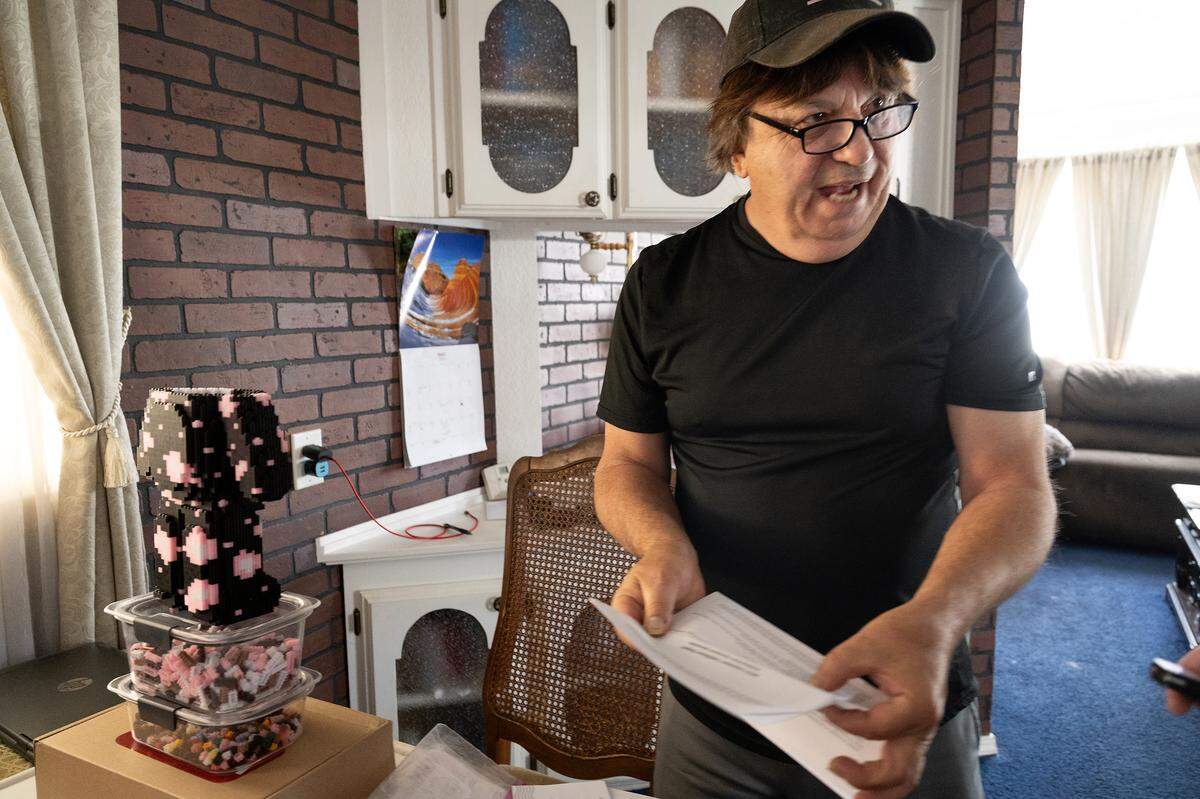
“I’ve been using these things because I didn’t know,” Yates said. “My stomach started hurting, and the people started saying, ‘Do not drink the water.’”
The park is failing the State Water Control Board’s “SAFER status,” meaning it routinely falls short of meeting drinking water standards. SAFER refers to the Safe and Affordable Funding for Equity and Resilience program.
The tap water at the park comes from two wells; one regularly exceeds safe water standards for both uranium and nitrate.
All residents now receive monthly notices written in English and Spanish warning them about the water’s nitrate levels. Yates said his notices are either posted on his door or mailed, and he saves them in a pile on his living room desk.
The notices state residents should not drink the water if they are pregnant or let infants under 6 months consume it. It also adds if residents have health conditions, they should contact their physician.
Nitrate contamination can cause ‘blue baby syndrome’
The park violated the state’s drinking water limits for nitrate in 2023.
Nitrate is a drinking water contaminant that can cause “blue baby syndrome,” a condition that prevents oxygen from circulating in the blood and can kill infants.
Mariana Rivas lives in the park with her husband and newborn daughter. Due to the contamination issues, she uses free, state-funded water bottles for drinking, cooking and washing her baby bottles.
“I’m always using my water bottles,” she said.
The water bottle service is implemented through Self Help Enterprises. Residents said they were asked to fill out a form to prove they meet the financial need to qualify for assistance.
Elida Retana has been living in the park since 2017 and has nieces and nephews who come to visit. In the past, the children drank from the tap, but she’s stopped that. She’s received free water through the service for about a year.
Before, she used a Brita filter over her tap, but removed it because the filter couldn’t address the contamination. “Even if you boil it, it says it’s still contaminated.”
Residents with water contaminated with nitrate should not boil their water because it concentrates it, making it more dangerous.
Alma Vasquez, another resident of the park, said when her grandkids come over, she has a handle on her bathroom tap that prevents them from using it. She’s taught them to use a dispenser for the water bottles with sippy cups.
“We monitor them with the water,” she said.
Nitrate is one of the most prevalent groundwater issues in Stanislaus County, mostly associated with agricultural runoff from fertilizer, manure and sewage from septic tanks. The park is adjacent to an orchard and also has a “high density” septic system.
Incidents of blue baby syndrome due to nitrate seeping into groundwater are not tracked by the county or state public health system.
Carissa Lucas, a spokesperson for the county, responded that the list of reportable conditions is set by the state.
“Why the state of California omitted methemoglobinemia [known as blue baby syndrome] cannot be answered on the local level,” she said.
A spokesperson from the California Department of Public Health did not respond directly to the question about why it does not track cases of blue baby syndrome, but did provide a list of current reportable diseases and conditions and stated that new ones can be added to the California Code of Regulations.

Uranium contamination notices are on bulletin board
Sabrina Cesena said that when she came to the park, the property manager told her the water sometimes tests high for certain contaminants including uranium but that the manager would send out a notice. Cesena said she never got one.
“It has been above, I found out, for a long time,” she said. “So they didn’t even bother to tell us? You know, let us make our own choice?”
In 2016, a compliance order was issued to the park for exceeding the maximum contamination level for uranium. Since then, the uranium levels have hovered around the maximum level, sometimes under and sometimes above, with one well having an average that exceeds safe drinking water standards.
When Cesena started receiving water, she said she was told it was because she was low income.
The park meets the requirements for public notice of its uranium contamination by posting on a community bulletin board along with many other mandated notices.
The current notice, posted in December 2024, reads in part: “This is not an immediate risk. If it had been, you would have been notified immediately.”
The county said in a response that uranium levels do not require an alternative water source be provided. “This is because uranium’s health risks are classified as ‘chronic’ rather than ‘acute.’”
Uranium can cause kidney damage over time. It also is a known carcinogen, meaning it can increase the risk of cancer over extended periods.
There are filtration methods approved to reduce nitrate and uranium, such as reverse osmosis and ion exchange. However, there is no treatment of any kind done on the wells at the mobile home park.
Both nitrate and uranium are odorless and tasteless and invisible to the naked eye, so without the notices, residents would be unaware.
The notice on the bulletin board states that the park is working with the county’s environmental resources department to find a solution for municipal water.
Proposed solution is not without complications
The state water control board estimated over $12 million would be necessary to help the mobile home park connect with Hughson, but that plan may also have complications.
The park’s Consumer Confidence Report from 2022 states that the consolidation with Hughson started as a way to meet the compliance order triggered by the uranium exceedance in 2016. The process for funding the consolidation started in 2019 but by 2022 still was projected to need many years to complete.
At that point, the county’s regulatory agency recommended residents get an alternative drinking water source through the state. But the state’s SAFER project dashboard says: “It appears that the City of Hughson is their only option.”
“I’ve also heard that Hughson’s water is not too good, so I wouldn’t want it,” Rivas said.
Hughson is out of compliance with the State Water Control Board as it relates to lead and copper rule violations and average contamination levels of arsenic. It also has wells that tested above the maximum contamination level for 1,2,3 TCP, which is associated with industrial processes, hazardous waste and legacy pesticide use.
The Bee was referred to the director of Hughson’s community development department, who did not respond after multiple attempts to reach the person.
Across the Geer Road Bridge near the mobile home park is a surface water treatment facility run by the Turlock Irrigation District, but none of that treated water is currently accessible to the park.
Maintenance issues include crack in well
In 2021, Riverview Mobile Home Estates was cited for caulking that appeared to be wearing off around the wellhead of the South Well — one of two wells serving the community. Three years later, it was cited again for the same issue.
The South Well also had a substantial crack, which could allow other contaminants to enter the system.
Lucas said the caulking issues were resolved in April, but the Department Environmental Resources at the county followed up with the park about the “potentially inadequate correction” of the wellhead pedestal block cracks.
In 2024, the park was not in compliance with a Bacteriological Sample Site Plan required by the county. Lucas said the park is testing monthly for bacteria and now is in compliance.
Cesena and and her husband, Robert Roach, filed complaints to the California Department of Housing and Community Development in 2021 and 2022, stating issues with the water that they believed had to do with parasites. Both complaints were closed after the division of codes and standards determined that the county was not responsible for testing for parasites and that the issue was civil.
Cesena had her water checked for bacteria and parasites herself in 2022. The test showed a high amount of aerobic bacteria – a type of bacteria that needs oxygen to survive. Though it did not indicate an immediate health risk, it did indicate there may be issues with maintenance of the water system at some point in the line between the well and her tap.
Roach reached out to Modesto Junior College and asked for a tapwater sample to be tested in 2024. The results showed algae. The couple’s contact at MJC, a professor of biology, referred the issue to the county’s environmental research division to look into.
Multiple residents noted a claylike substance would come out of the faucets or pool into the streets after maintenance flushed the lines.
“It’s like concrete mud,” Yates said. “It’s like taking concrete and pouring it in there.”
The park has high levels of iron, almost five times the maximum contaminant level according to their 2023 consumer confidence report. It may affect the odor, taste or appearance of the water, but it is not considered a major health risk.
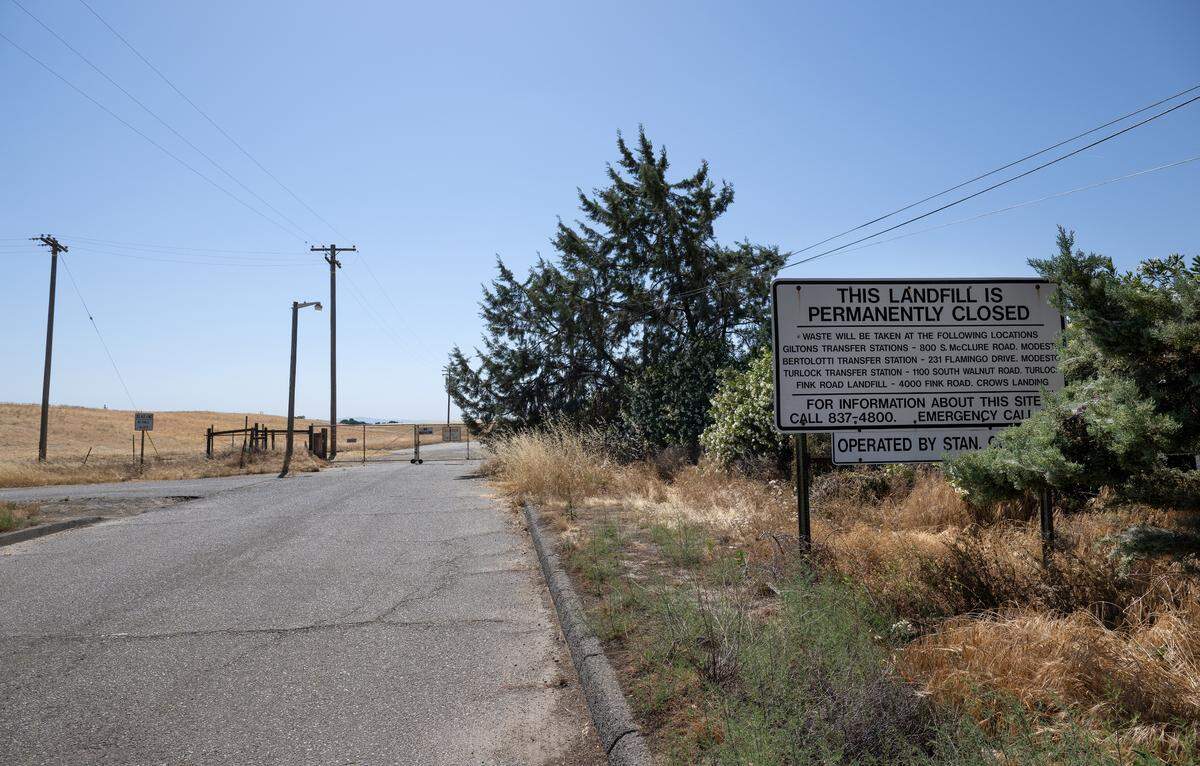
The defunct landfill next to the mobile home park holds about 4.5 million tons of waste and was closed in the 1990s. According to a consumer confidence report in 2022, the landfill was considered a vulnerability to groundwater, but as of 2023, that no longer shows up in the report or the 2024 sanitary survey.
John Murphy, the land disposal program manager at the Central Valley Water Board, said that despite the proximity, it’s unlikely that the closed landfill is responsible for the contamination since the park is uphill. The state did check on it since the landfill was leeching back in 2009, but found no related contamination such as aerosols and solvents.
Park changed water charge from flat rate to usage-based
Some of the residents noted a spike in their water bills from management after they started getting the free water bottles from the state.
“It’s more expensive, which doesn’t make sense because we’re using it less now,” Retana said.
Yates said his bill skyrocketed after he started receiving the free bottles provided through Self-help Enterprises. In a show of defiance, he stopped watering his small front lawn.
The notice he provided to The Bee showed that in March 2023, Riverview switched from a per-month service charge of $5.80 for his unit to a $35.80 charge based on usage. The bill also stated the park was increasing the cost to be in line with other local municipalities in lieu of a rent increase.
“I go, ‘Are you kidding me?” Yates said, recalling a conversation he had with management. “We can’t drink this water– we can’t even give it to the dogs.”
Riverview Mobile Home Estates did not respond to The Bee’s request for comment.
This story was originally published June 4, 2025 at 6:00 AM.