Fire managers sounded confident Creek Fire was under control. They were mistaken
When the Creek Fire broke out on the Friday evening before Labor Day weekend, fire managers from the U.S. Forest Service seemed to think they had the blaze well in hand.
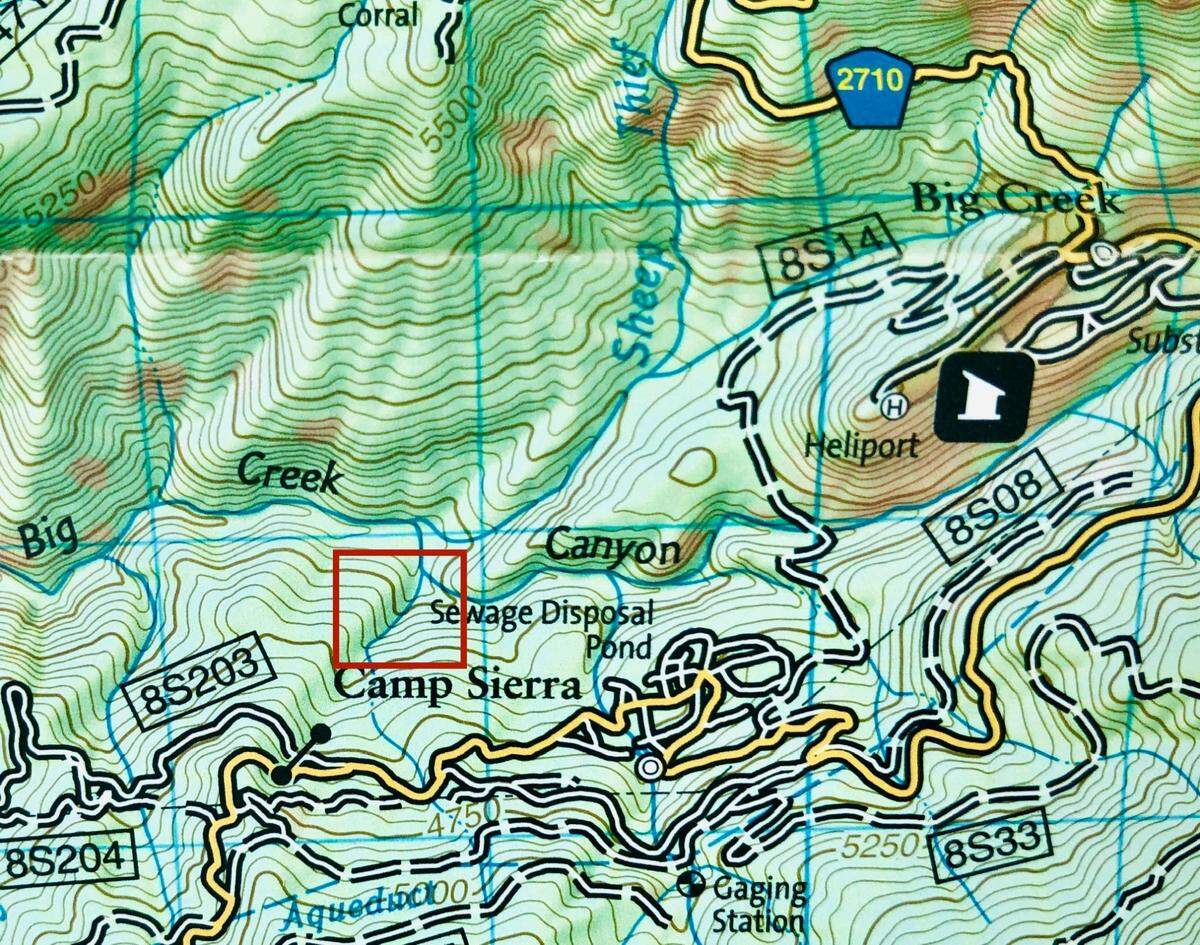
Some 45 minutes after initial reports regarding “a column of smoke in the Big Creek drainage,” a fixed-wing air tanker based in Fresno dropped a load of retardant on the blaze. Meanwhile, more than a dozen fire engines and crews from the Sierra National Forest, Cal Fire, the city of Fresno and local volunteer departments had already arrived at Camp Sierra (which had the closest road access to the fire’s origin) or were making their way there.
Listening to archived emergency radio traffic from the night the Creek Fire started, fire managers sound confident the situation was under control. The fire, though accessible only by foot, was small and not behaving aggressively. Responding units were instructed to “bed down” nearby. Evacuations of Camp Sierra and Big Creek residents were deemed unnecessary — at first.
“At this time the incident is holding at a little over an acre (in size),” the Creek Fire incident commander said at 8:32 p.m. — two hours after the fire was first reported. “No growth at this time, and I’ll update if anything changes.”
For the next 3½ hours, radio traffic is scant. But by the next update, it’s obvious something has changed. Despite the efforts of hand crews and a bulldozer team, the flames were rapidly spreading.
“Due to fire activity we had to pull all our resources off the fire proper,” the incident commander said at 11:58 p.m. That ominous news was followed by a request for containment lines around Camp Sierra and to work with Fresno County Sheriff’s deputies to evacuate residents.
By 12:20 a.m. on the morning of Sept. 5, the fire had burned up the slope of Big Creek Canyon to the point where it jumped Huntington Lake Road. A hard road closure was enforced at Shaver Lake. From then on, the only ingress and egress for responding units and evacuating residents was via Huntington Lake.
As most anyone reading this already knows, the Creek Fire was just getting started. By the time 100% containment was declared four months later, the blaze had consumed nearly 380,000 acres of the San Joaquin River drainage northeast of Fresno. More than 850 structures were destroyed, most of them homes. Total costs, including damage to property and infrastructure, will exceed $500 million.
And through it all, the Sierra National Forest remains silent about its ongoing investigation into the fire’s cause — despite a bevy of theories and rumors spouted by myself and others.
Emergency radio traffic, obtained through Public Records Act requests and archived at broadcastify.com, does not give any further clues as to what caused the Creek Fire. But the recordings do lend a sense of the difficulties faced by fire managers and crews. They also illuminate decisions and mishaps that perhaps thwarted their initial efforts.
Sierra NF hotshot crews deployed elsewhere
Some context is also necessary. When the Creek Fire ignited, California was well on its way toward the largest, most destructive wildfire season in recorded history. Nearly two dozen wildland fires were already burning across the state.
As a result, the three interagency hotshot crews based in the Sierra National Forest — firefighting personnel with the most experience and training suppressing fires in rugged, mountainous terrain — were deployed elsewhere.
“It was really unfortunate,” said Capt. Gabe Flores, whose Kings River Hotshots were battling the Dolan Fire near Big Sur in late August and early September. “I had people whose homes and property were under threat. You can imagine how we felt not being able to be there when the (Creek) fire broke out.”
Despite the lack of hotshot crews, officials mobilized a sizable number of resources. Curiously, though, not all of them went to work fighting the blaze.
In a video posted on the Sierra National Forest’s Facebook page, Capt. Juan Ybarra of Forest Service Engine 331 said his unit was given orders to “bed down” that Friday night because the fire was small.
“When we got there we listened to what air (support) was saying, 1 to 3 acres, but it was hard to get access,” Ybarra said. “It was getting dark already. We were told to go back to Big Creek and bed down for a couple hours.
“Bed down,” Ybarra added while making finger quotes, “because we were actually listening to traffic and I was being called by the IC to check on stuff for him up there. And the next day we started taking action.”
By the next day, more than 40 homes in the nearby town of Big Creek had burned down, the marina at Shaver Lake was under threat and visitors to Mammoth Pool were trapped by flames and in need of rescue.
Would an extra engine crew on the fire line in the initial hours have made a difference (assuming it’s only one)? That’s impossible to say.
Ineffective retardant drop & broken bulldozer
Recall that it took only 45 minutes to dump a load of retardant on the blaze. That’s the good news. The bad news is that it didn’t work. Shortly after the air tanker headed back to Fresno, the following exchange took place:
Creek Fire incident command: “Has retardant been effective there?”
Response from Big Creek Fire Station Heliport with direct view of blaze: “Negative.”
Creek Fire IC: “Copy.”
Video of the retardant drop shows the aircraft soaring well above the forest canopy — far too high in the estimation of one local pilot with vast experience in such missions. During my February hike into Big Creek Canyon, a pinkish hue was visible on several boulders located below the Creek Fire origin zone.
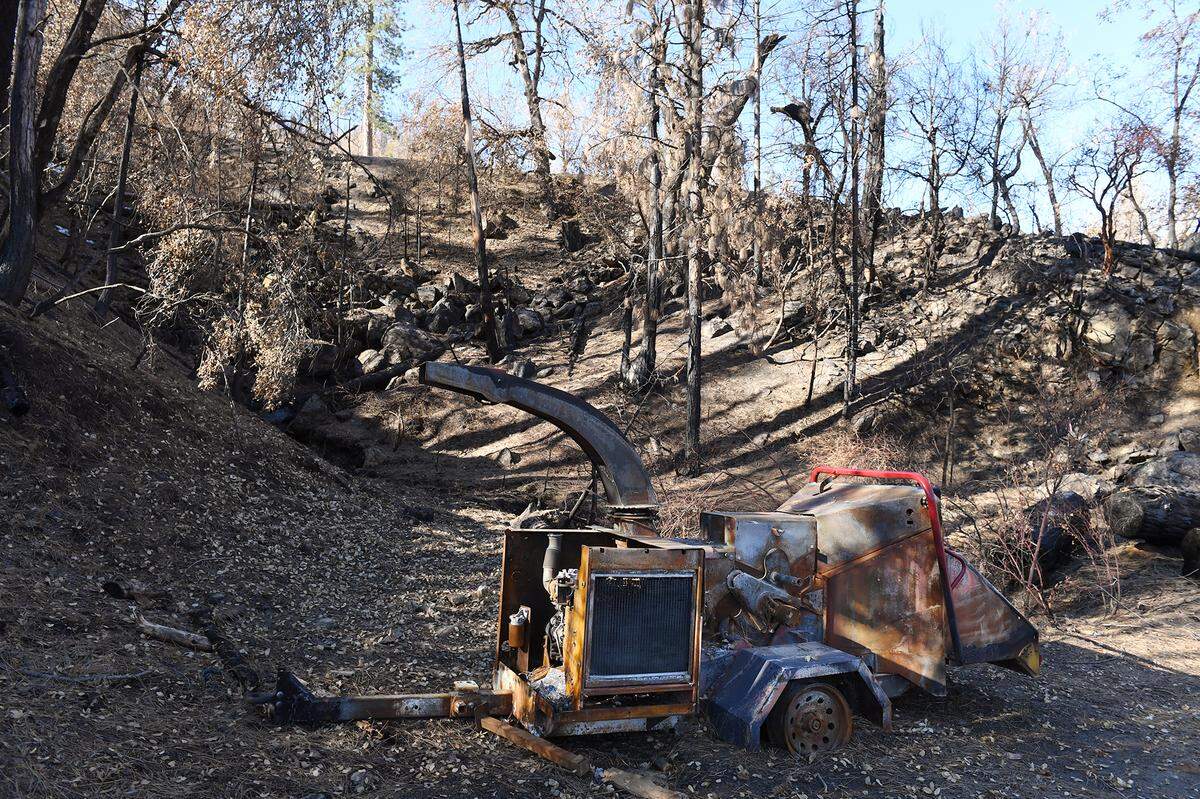
The origin zone also contained obvious bulldozer activity. The Sierra National Forest’s “Dozer 2” unit, based in Auberry, arrived at the staging area near Camp Sierra about 90 minutes after the initial call.
Unfortunately, the bulldozer broke down shortly after beginning its vital work (the cause was a ruptured water line, according to radio traffic), and another had to be brought in from Coarsegold.
By the time the second bulldozer crew arrived, after 3:30 a.m., flames had overrun containment lines and were burning through forest owned by utility company Southern California Edison between Camp Sierra and Shaver Lake.
From a column of smoke in Big Creek Canyon, a small blaze thought to be under control was on its way to becoming the largest single-incident wildfire in California history.
This story was originally published March 17, 2021 at 7:30 AM with the headline "Fire managers sounded confident Creek Fire was under control. They were mistaken."