
‘It’s gut wrenching.’ California’s Glass Fire ravages hard-hit Napa-Sonoma wine country
Wildfire is taking aim once again at the heart of California’s multibillion-dollar wine industry, destroying high-end wineries, coating vineyards with potentially devastating smoke and ash, and wiping out much of a tourist season that was just starting to recover from the coronavirus pandemic.
As the Glass Fire continued burning Tuesday through portions of Napa and Sonoma counties, damage reports were still trickling in. The Chateau Boswell winery in St. Helena was destroyed, along with portions of the Burgess Cellars in Deer Park. Newton Vineyard winery, on nearby Spring Mountain, also suffered significant damage.
Also damaged: Hourglass Winery and Castello di Amarosa and Fairwinds Estate Winery, all in Calistoga, according to The Mercury News in San Jose. “We hope to get creative and find ways to show you our wines in some other way on the property soon,” Fairwinds wrote in a message posted on its website, adding that its tasting room suffered serious harm.
Steven Burgess, whose family sold Burgess Cellars just two weeks ago, said the winery lost its production room and historic cellar. He said the new owners — the Lawrence family, owners of the nearby Heitz Cellars — are likely to rebuild.
“The brand is alive, the vineyards are alive,” said Burgess, who still lives on the Burgess property. “The most important thing in the wine business is the vineyards, and the vineyards are fine.”
A volunteer firefighter, Burgess said most vineyards can withstand wildfires unless the area between the vines is covered in grass.
But even though most of the region’s vineyards have survived the Glass Fire, and as much as 90% of this year’s grapes have been harvested, problems abound.
Anita Oberholster, a UC Davis professor who studies the delicate chemistry of wine grapes, said the Glass Fire puts more of the region’s grapes at risk from smoke damage — a problem that’s been building since the LNU Lightning Complex fires struck in August.
“There’s still a lot of grapes on the vines,” Oberholster said. “It’s gut-wrenching. ... When I heard of this newest fire, I felt like crying.”
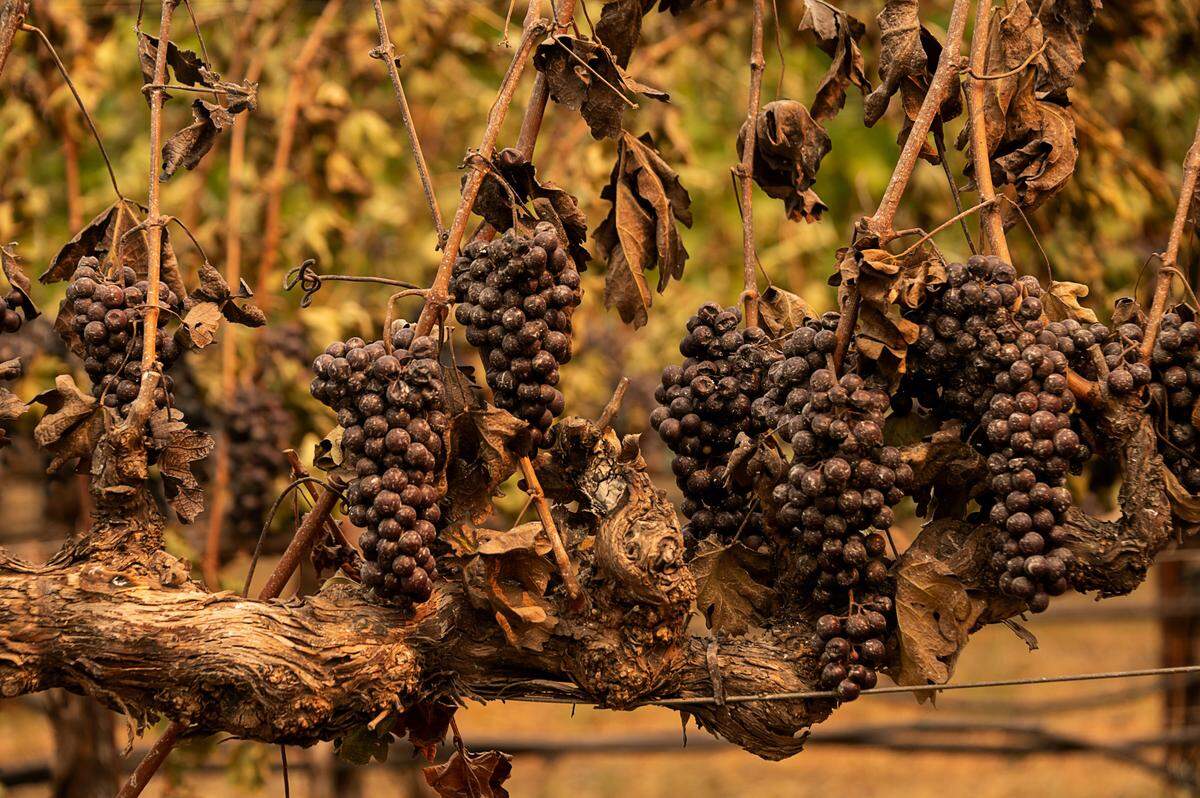
Oberholster said makers of lower-end wines can treat grapes for smoke damage. At the upper end — where most Napa and Sonoma wine grapes are grown — treatment isn’t an option because it can significantly affect the taste and quality of wine. As a result, some wineries might forego bottling some of this year’s grapes rather than risk their reputations on substandard wines.
“Nobody wants to have a customer pick up a bottle of wine, pay a lot of money, and not have the quality they expect,” she said. “You’re going to see some of the high-end wineries not making a 2020 vintage.”
Adding to their woes, Oberholster said growers and vintners probably won’t know for another month how much damage their vineyards suffered because the testing labs in the area are swamped. “The labs are totally backlogged,” she said.
Napa Valley Vintners, an industry association, said it couldn’t yet make an estimate of the damage. “The Glass Fire in Napa County continues to be an evolving situation,” the organization said.
Leaning so heavily on high-end grapes makes Napa and Sonoma particularly vulnerable to the effects of smoke. While wine grapes from California sold for a statewide average of $805 a ton last year, grapes from Napa Valley commanded a stunning premium: $7,941 for cabernet savignon, $2,773 for pinot noir and $5,797 for all grapes grown in the valley.
The Napa and Sonoma wine industry is worth billions of dollars a year — including tourism, wages and production costs. Now, for the third time in four years, those industries are being clobbered by wildfires, following the complex of fires that ripped through the region in October 2017 and last fall’s Kincade Fire.
The hundreds of boutique wineries that dot the region are likely to get hit hardest. Unlike the national brands with extensive supermarket presence, they rely almost exclusively on sales made from their tasting rooms — venues that were closed for months by the COVID-19 pandemic and were struggling to get back on their feet with the gradual reopening of the economy.
The region’s tasting rooms have been drawing just 20% to 30% of their pre-coronavirus traffic, said Paul Wagner, a Napa Valley College professor who studies wine tourism and marketing.
Ordinarily, September is prime season for tourism to wine country, he said. “Normally it would have been bumper-to-bumper traffic,” he said. Lately there’s been “no traffic at all,” he said.
And the Glass Fire will simply make things worse.
“Obviously, right now there are no tourists,” he said. “Nobody is here.”
Some of the area’s top resorts have been damaged by fire. Two restaurants and the golf shop at the luxurious Meadowood resort, in St. Helena, were destroyed by the fire. The Calistoga Ranch resort, in Calistoga, also suffered extensive damage.
Wagner said the area’s tourism tends to rebound from wildfires and other disasters, but not right away.
“It usually takes a few months for things to perk back up again,” he said.
This story was originally published September 29, 2020 at 1:47 PM with the headline "‘It’s gut wrenching.’ California’s Glass Fire ravages hard-hit Napa-Sonoma wine country."