A puppy died from a toxic mushroom. Which CA fungi are poisonous for pets?
In May, Grover Beach resident Regina Carlos attended a co-worker’s birthday party with her partner and their new puppy.
As Beanz, a 5-month-old maltipoo, played with another dog in the front yard, he snuck something into his mouth.
“Things went south when my puppy got a hold of a mushroom” during the May 15 party, Carlos wrote in an email to The Tribune. “It was taken out of his mouth immediately but that didn’t stop him from getting sick ...”
Later that night, Beanz started vomiting.
After the pup stopped eating and drinking, Carlos and her partner rushed Beanz to Cerro Alto Veterinary Specialty and Emergency Hospital in San Luis Obispo.
Meanwhile, they posted a picture of the mushroom Beanz had eaten on the Facebook group Poisons Help; Emergency Identification for Mushrooms & Plants.
Commenters quickly identified it as a death cap mushroom — the same fungi that’s sickened scores of Californians.
On May 18, after spending thousands of dollars on medical care, Carlos and her partner said goodbye to Beanz.
Since November, 50 people had been hospitalized in California after accidentally picking and eating poisonous wild mushrooms, according to the California Department of Public Health. That includes 17 reported mushroom poisonings in 2026 alone.
Four people have died in California as a result of the amatoxin poisoning outbreak.
In addition to being harmful to humans, certain types of mushrooms can be poisonous to pets if consumed.
Here’s what to know:
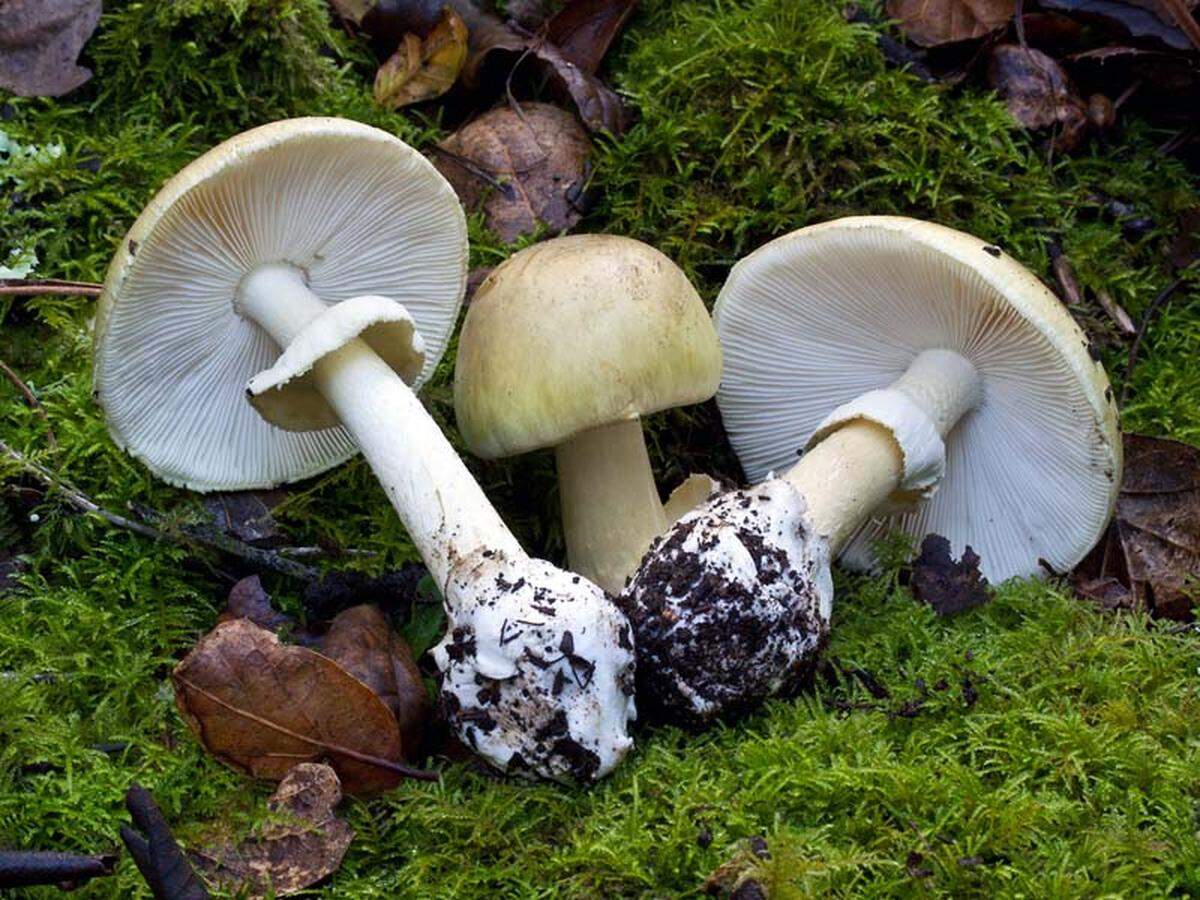
What are dangers of death cap mushrooms?
Death cap mushrooms — scientific name Amanita phalloides — can cause severe liver damage leading to death, experts said.
With their yellowish caps and off-white stems, the mushrooms are “easily confused for safe-to-eat, lookalike mushrooms,” experts said, and can be found growing among them.
The deadly fungi are found in California, Oregon and Washington state.
“Death cap mushrooms are still poisonous even after cooking, boiling, freezing or drying,” the California Public Health Department said.
Even a single bite can be toxic.
Experts advise against foraging for wild mushrooms because of the health risks.
Are mushrooms harmful for pets?
“Store-bought mushrooms used for food for humans won’t cause issues for pets,” the American Society for the Prevention of Cruelty to Animals said on its website.
The majority of wild mushrooms are non-toxic as well, the nonprofit organization said.
However, 1% of mushroom species are “highly toxic and can cause life-threatening problems for pets” if ingested, the ASPCA said.
Which toxic species can poison dogs and cats?
In the United States, the “most fatal” types of mushrooms belong to the Amantina, Galerina and Lepiota genuses, veterinarian Veronica Higgs wrote in a PetMD article in 2023.
Death cap mushrooms are part of the Amanita genus. So are Western destroying angel mushroom, which have creamy white caps and white gills.
Both mushrooms grow near oak trees and look like edible mushroom species but are highly toxic, the California Department of Public Health said.
Together, these Amanita mushrooms are responsible for most human cases of mushroom poisoning.
There are poisonous mushrooms across California, according to the Midpeninsula Regional Open Space District in Los Altos.
The environmental preservation organization said Galerina and Lepiota mushrooms also have toxic traits.
Galerina mushrooms have the same toxins as death cap mushrooms. The small, brown fungi have rounded caps and can be found on rotted damp logs, the Fungus Federation of Santa Cruz said.
Yellow-gilled Lepiota mushrooms typically grow near Monterey cypress trees, the Global Fungal Red List Initiative said, calling the species “a very rare fungus with specific habitat requirement.”
What are signs my pet ate a toxic mushroom?
VCA Animal Hospitals said the “severity of mushroom-induced illness” depends on the type and number of mushrooms you pet ingested.
“Sometimes a pet may have mild gastrointestinal upset” such as vomiting or diarrhea, the veterinary care network said. “Other times, a pet becomes extremely sick and requires hospitalization.”
Ingesting poisonous mushrooms can lead to liver failure, kidney damage and neurological issues.
Symptoms can show up in 30 minutes or be delayed for up to 12 hours.
Signs that your pet ingested a toxic mushroom include:
- Nausea
- Vomiting
- Increased drinking and urination
- Dehydration
- Lack of coordination
- Weakness
- Disorientation
- Agitation
- Drooling
- Seizures
What should I do if my dog ate a mushroom?
If you suspect your dog has ingested a mushroom, GuideDogs.com said you should follow these steps:
- Remove any remaining pieces from your dog’s mouth if it is safe to do so.
- Take a photo of the mushroom, if possible.
- Contact your veterinarian immediately.
- Call ASPCA Poison Control or Pet Poison Helpline for additional guidance.
- Do not wait for symptoms to appear. Early treatment significantly improves outcomes
You can reach ASPCA Poison Control toll-free at 888-426-4435.
Call the Pet Poison Helpline at 855-764-7661.
This story was originally published June 1, 2026 at 7:40 AM with the headline "A puppy died from a toxic mushroom. Which CA fungi are poisonous for pets?."