Kristin Smart search reveals ‘very strong’ evidence of human remains. What’s next?
Scientists who spent last week taking soil samples from an Arroyo Grande yard as part of the ongoing Kristin Smart investigation said results indicating evidence of decomposing human remains were “very strong” in one specific area of the property.
San Luis Obispo County was thrown into a frenzy last week when the Sheriff’s Office served a search warrant for the home of Susan Flores on Wednesday morning, 30 years after her son, Paul Flores, murdered Kristin Smart.
Paul Flores was convicted in 2022 of killing Smart when she was a first-year student at Cal Poly. She went missing on Memorial Day weekend of 1996, but her body was never found.
For days, community members and reporters stood outside the home as sheriff’s deputies, investigators and a team of soil scientists swarmed the property with ground-penetrating radar and testing probes in search of Smart’s body, or evidence that she was once buried there.
Then, as suddenly as it started, investigators cleared the site Saturday as the Sheriff’s Office announced the search was over.
“We did not recover Kristin Smart,” the agency said in a news release that afternoon.
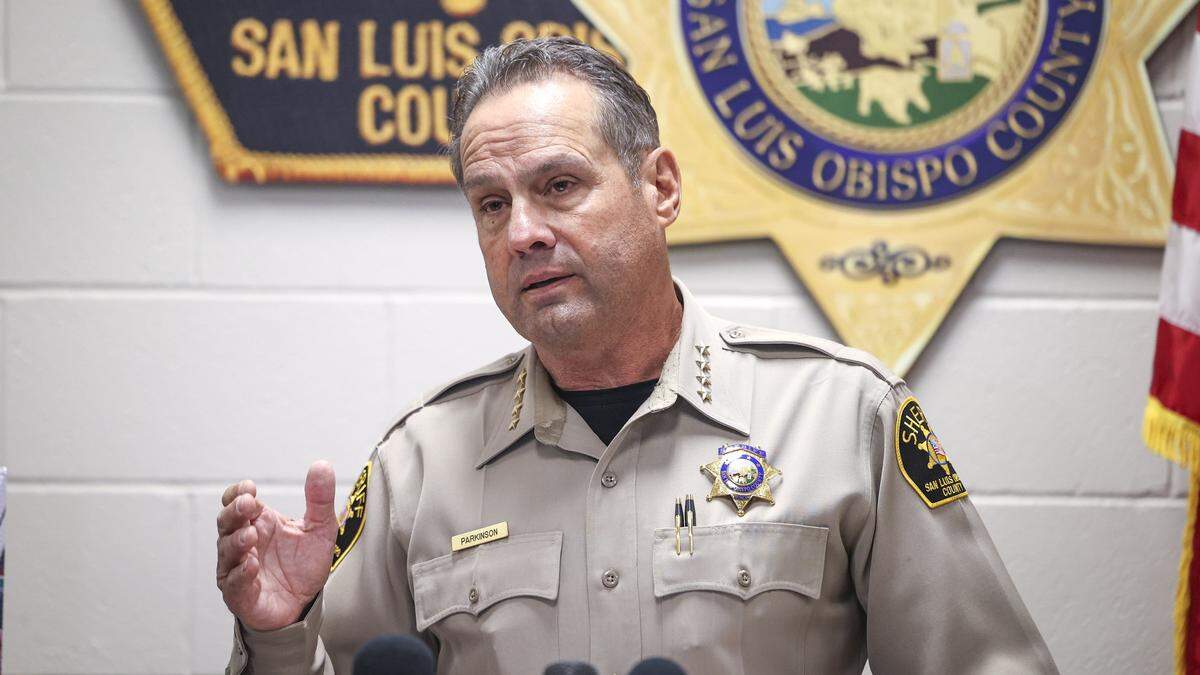
Sheriff Ian Parkinson had previously said investigators found evidence of human remains during a press conference Friday.
However, that evidence was not as conclusive as bones or body parts. Rather, it was a specific array of gas compounds found in the soil that are consistent with the process of human decomposition.
Environmental chemist Steve Hoyt is part of a team of scientists who conduct “vapor intrusion testing,” a relatively new method that tests for gas molecules in soil known as “volatile organic compounds” that are emitted from the natural decomposition process of living organisms — including human bodies.
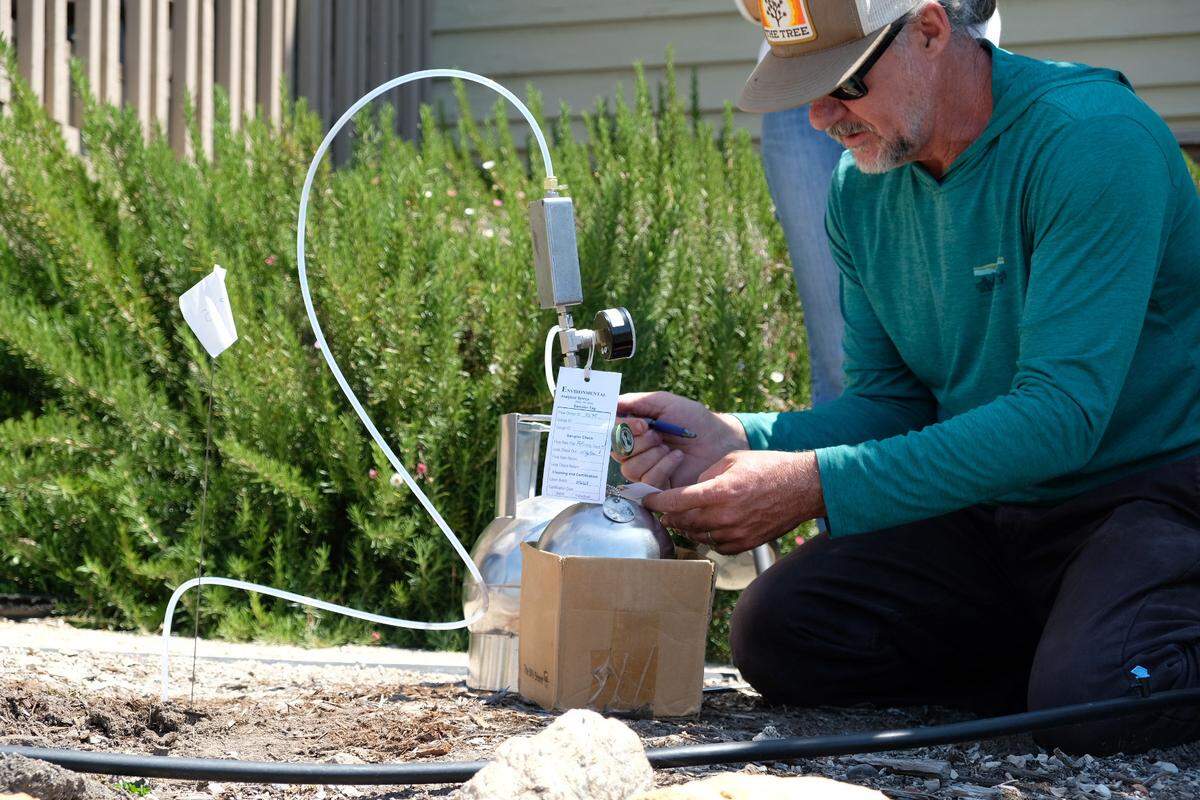
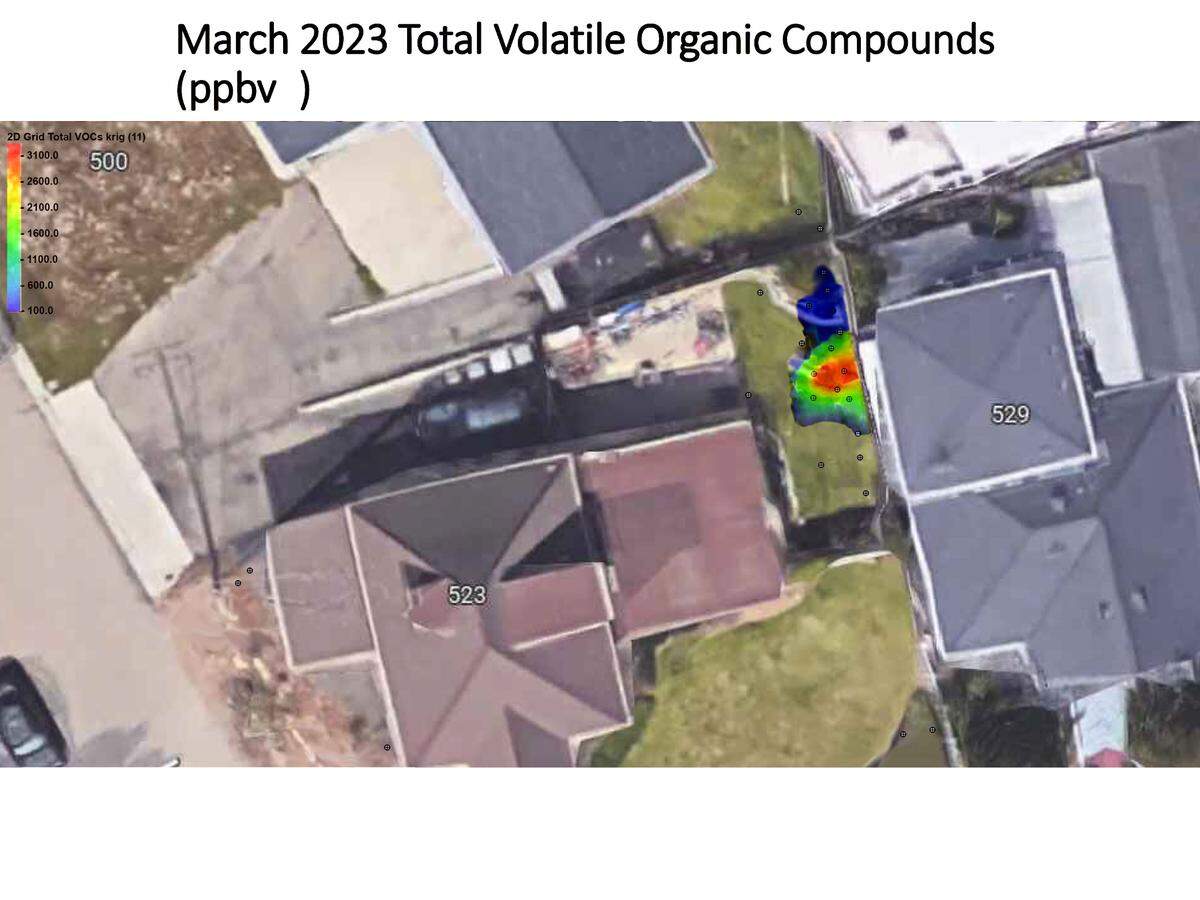
This week’s search was not the first time the team — also including environmental engineer Timothy Nelligan, his son Jacob Nelligan, former FBI chemist Brian Eckenrode and George Mason University postdoctoral forensic science research fellow Edward Bentil — has tested the area. They previously tested the soil in the neighboring property near the fence with Susan Flores’ house in December 2020, August 2021 and March 2023, which at the time showed positive but inconclusive results for evidence of human remains.
However, the science has only gotten better since then, Hoyt said.
Now, the scientists can show with a greater accuracy that the gas compounds they are looking at are — or were — from a human body instead of a dead animal or another decomposition process.
“We’re finding organic compounds that are characteristic of decomposing bodies, not any specific body,” Hoyt told The Tribune on Monday. “We’ve narrowed it down enough that we believe that there’s a very, very high probability we’re looking at the decomposition of human bodies.”
Hoyt said the team has a forthcoming study currently under peer-review that demonstrates the improved accuracy of the testing.
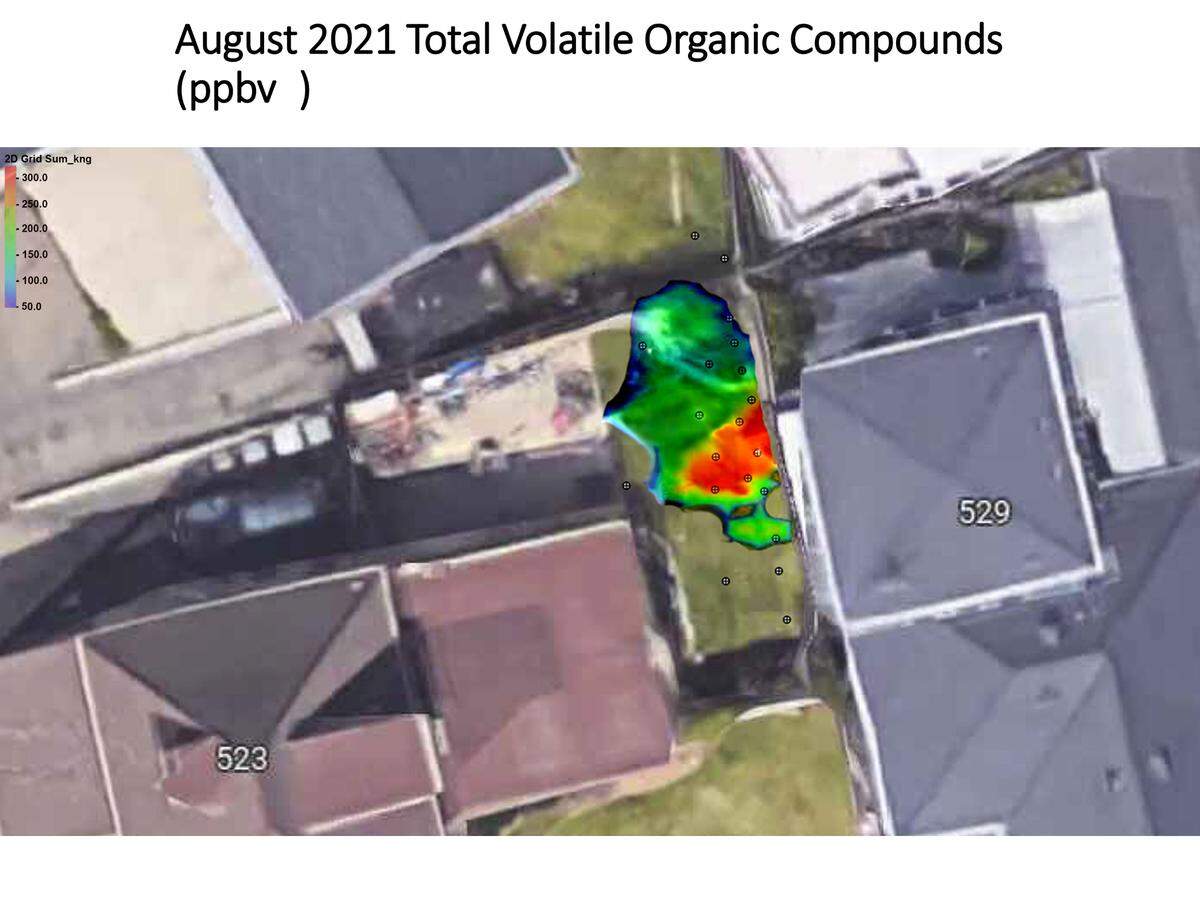
This time, their testing showed “very strong” evidence of human remains compounds in the soil in a narrow walkway on the west side of Flores’ house, between the two properties, he said.
The new results allow the team to extend the plume they previously mapped from the neighboring yard across the walkway to underneath Susan Flores’ home, he said. On Saturday, a forensic investigator in a head-to-toe suit, surgical gloves and a headlamp was working in the crawlspace under the house with a gardening trowel, apparently collecting evidence in buckets.
The walkway is an area of the property that has been of high interest among those who have followed case over the years, largely due to early reports from a previous tenant of Susan Flores’, Mary Lassiter, who said she could hear what sounded like a beeping watch every morning at 4:20 a.m. outside her bedroom window when she rented the house in October 1996 until she moved out in March 1997.
The area also had not previously been looked at, let alone excavated, according to Chris Lambert, the host of the “Your Own Backyard” podcast about the Smart case.
“This side yard, to my knowledge, was not able to be searched with ground-penetrating radar in previous searches because it was too narrow for the machines,” he told The Tribune on Monday.
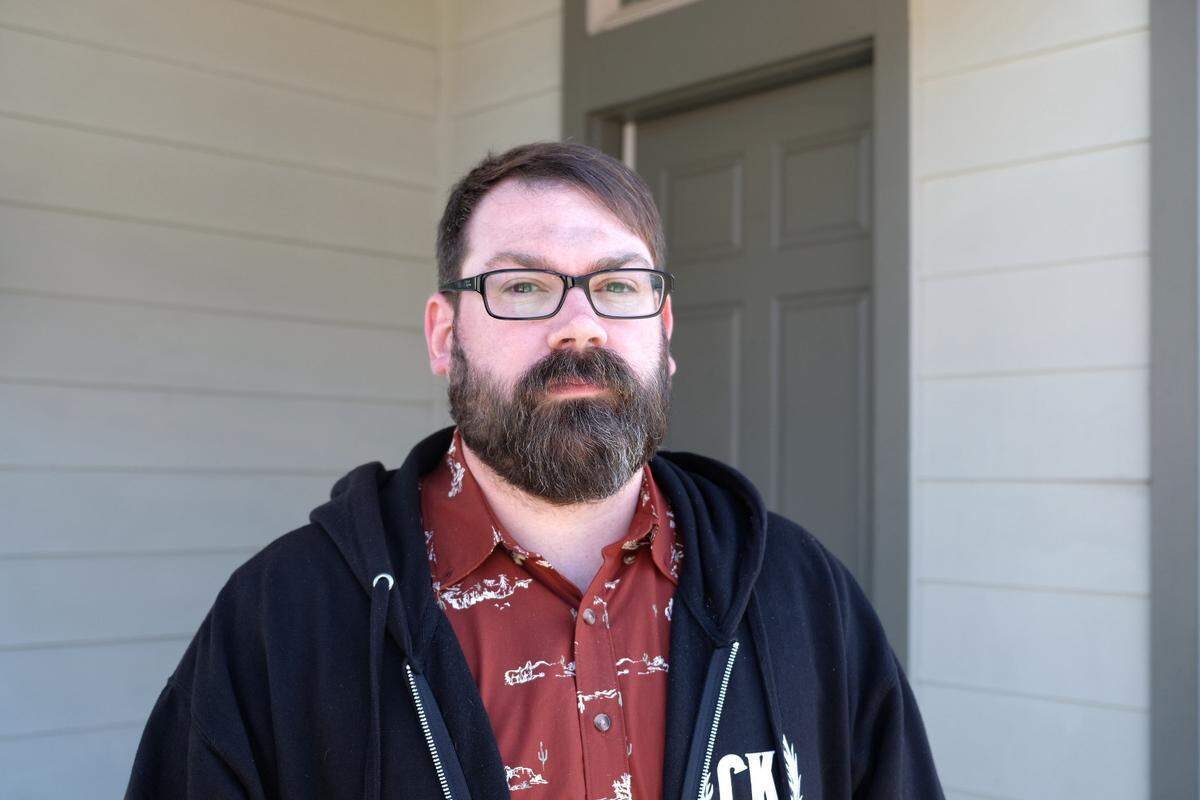
Lambert had originally connected Lassiter’s observation about the watch alarm to the fact that Kristin woke up every morning around 4:30 a.m. for her 5 a.m. lifeguard shift.
“It was coming out of the master bedroom window, is where she was sleeping and heard it, and so that would have been the back west corner of the backyard,” Lambert said.
Lassiter had also found an earring in Flores’ driveway on Jan. 23, 1997, that looked to have a red mark that resembled blood on it, Lambert said, but the evidence was misplaced by the Sheriff’s Office at the time.
Calls to dig up the yard also came after a neighbor said during a Jan. 24, 1997, deposition that she observed Paul Flores and his father, Ruben Flores, doing construction work in the backyard, including “newly constructed concrete planter boxes cut into the existing cement,” according to a 2000 Sheriff’s Office search warrant.
During an interview with SLO County District Attorney’s Office investigators on June 19, 1996, Paul Flores said he had to leave “to clean up some stuff, some concrete” at “my mom’s house,” the warrant said.
The same 2000 search warrant notes observations from Gary Mann, a ground-penetrating radar operator who used the technology to search Susan Flores’ house at the time. He noted what he initially felt was a “man-made excavation” site “about 6 feet long and 5-1/2 feet deep” on the east side of the house.
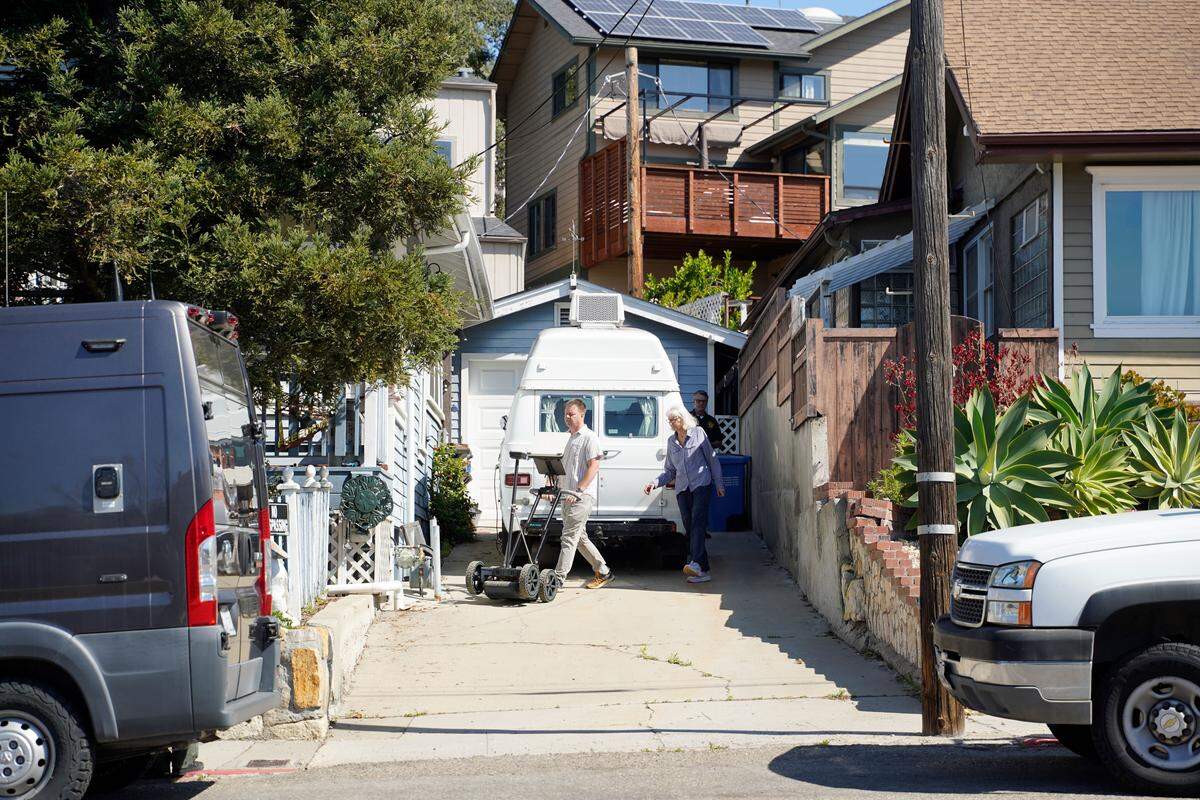
He later revised his findings because he did not have the ideal equipment to search for a grave site, but he also found “anomalies” on the west side of the backyard, “broken pieces of concrete,” “stains” on the west side of the home that showed dirt had once been piled there and “splatters of dirt” on the fence, according to the warrant.
Traces of human blood were also found at Ruben Flores’ house in 2021 in what investigators thought to be a crude grave, leading to his arrest and prosecution for accessory to murder.
Ruben was acquitted, but Paul Flores was convicted on the theory that Kristin’s body was moved from Ruben’s house at some point.
“I think the timeline of when she was moved is very fluid,” Lambert said. “There’s so many possibilities.”
Susan Flores has never been charged with a crime associated with Smart’s murder.
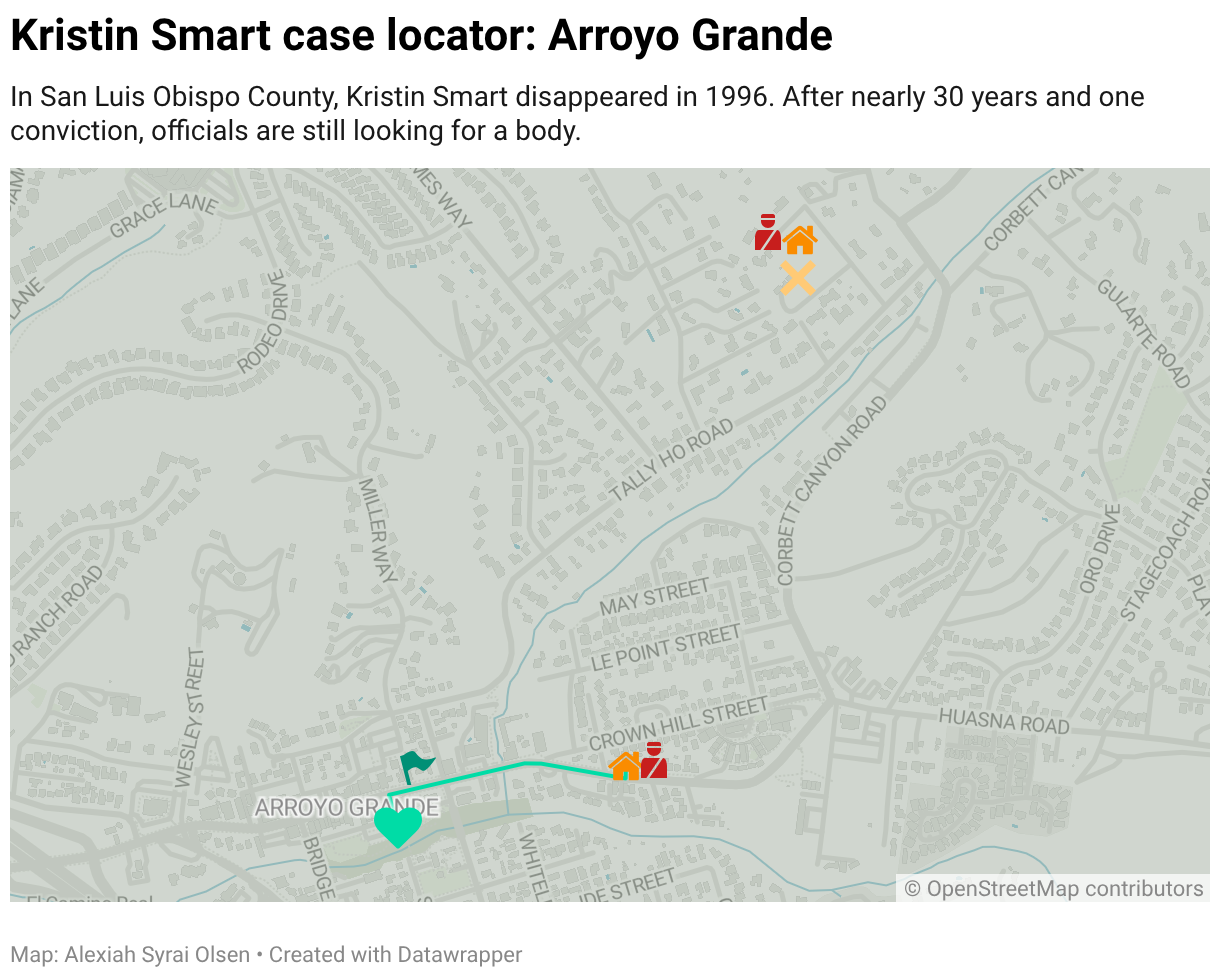
Susan Flores’ yard was searched in 2000 under the warrant, but the soil was never sampled.
During the most recent search of her home, the scientists collected seven samples from the neighbor’s yard, about 20 from Flores’ property and a few control samples from the front yards, Hoyt said.
Around six or seven of those samples showed evidence of human decomposition in the walkway, while the rest of other samples scattered around Flores’ yard came back negative, he said.
The samples from the neighbor’s property were consistent with what they’d previously found, which “indicated that there were compounds of human decomposition that originated on the Flores property and migrated over” to the neighboring property, Hoyt said. He said migration of the volatile organic compounds was normal.
The Sheriff’s Office release on Saturday also said “detectives will be evaluating any evidence we have recovered to aid in the investigation,” but Hoyt said as far as soil evidence goes, all the samples his team collected have been analyzed in the lab.
Most of the science team’s samples were collected on Wednesday and Thursday, with only a couple additional samples taken on Friday, Hoyt said. He said they were thinking of doing more sampling Monday if the search hadn’t been shut down.
“We’re OK with it, because we, you know, we kind of trust they know what they’re doing,” Hoyt said, but added that no matter the results of the search, this is not the end of the line for the soil team.
“We’re still moving forward on this as a method that can be used for locating buried bodies,” Hoyt said.
It is unknown at this time what other evidence may have been collected by the Sheriff’s Office.
Agency spokesperson Tony Cipolla declined to comment on the results of the search on Monday.
Why did the search suddenly end? Will the Sheriff’s Office go back?
Many questions remain after the sudden end to the Sheriff’s Office search, including whether investigators plan on returning to excavate the walkway.
The short answer: It’s unclear.
At Friday’s press conference, the sheriff said if the agency found reason to dig at the site, it would need to seek a “piggyback warrant” to allow it to do so.
“A judge is giving you permission to do certain things,” Parkinson said. “You have to find probable cause to do the next step.”
He said to expect delays in this case “possibly like you did with Ruben’s.”
The Smart family made one public statement during the search and hasn’t officially spoken again since it ended, but Denise Smart has been active on Facebook sharing news reports and a few thoughts.
In one public post, she shared a social media comment from Lambert, noting that she was “going to hang on to this.”
“Here’s a gentle reminder that the search of Ruben Flores’ house abruptly ended on March 16, 2021, and after laboratory testing, he and Paul were arrested on April 13,” Lambert’s comment said. “That’s all for my coverage until I learn more information. Thank you everyone.”
This story was originally published May 12, 2026 at 9:00 AM with the headline "Kristin Smart search reveals ‘very strong’ evidence of human remains. What’s next?."