
Sacramento immigration raid violated court order, ACLU and UFW tell federal judge
Border Patrol agents did not properly document their arrests of 12 people at a south Sacramento Home Depot store last summer and wrongly claimed the detentions were warranted because the targets tried to flee, lawyers for the ACLU and the United Farmworkers Union argued in court on Thursday.
The two organizations, which represent immigrants detained in a series of January 2025 raids in Kern County, said the Sacramento operation violated a court order issued last April by Fresno federal Judge Jennifer Thurston that required improved training materials for Border Patrol officers throughout the Central Valley and barred them from arresting people without specific reasons to believe they were in the country illegally.
Citing declarations made by three Sacramento detainees who said agents did not have reasonable suspicion to stop them, the groups appeared in federal court in Fresno on Thursday to ask Thurston to issue a new injunction, this time requiring the agency to comply with her previous order.
“I don’t know why the agents arrested me,” Filiberto de Jesus Rivera-Molina said in a declaration filed with the court. “I have no criminal history. I think the agents arrested me because I was looking for work in front of Home Depot. I think it was because of racism, because I appear Latino.”
Another man said he was on his way to work that morning when he stopped to chat with an acquaintance who was a day laborer looking for work at the Home Depot on Florin Road.
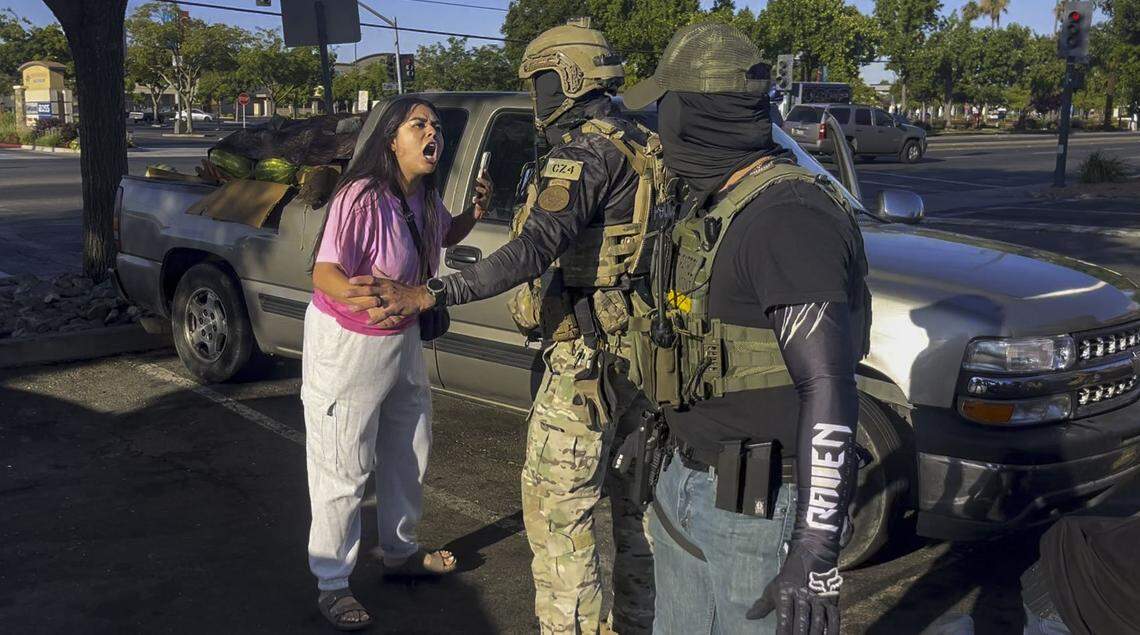
“Suddenly, I felt a man grab my arm and push me hard trying to knock me down,” said Isael Lopez Mazariegos, 50. “I thought I was being assaulted. I looked around and saw two masked men. I had no idea who they were, and I was struggling to get away.”
Mazariegos, who had lived in Sacramento for 12 years and has two grown children and a grandchild in the United States, was quickly deported to Guatemala, his statement said.
The Sacramento raids were part of an escalation of immigration enforcement activity that targeted California starting in June of last year, when agents descended on Latino communities and places where day laborers gather in Los Angeles. The sweeps prompted violent protests that led the Trump administration to take control of the California National Guard over the objections of Gov. Gavin Newsom and set off months of litigation between the state and the federal government.
The July operation in south Sacramento led to the arrests of 11 immigrants and one U.S. citizen, who was there as a witness to the arrests for the group NorCal Resists.
Another person who was arrested was a high school student who was on his way to buy a shirt and shoes at a nearby Ross Dress for Less store.
“They didn’t ask about my immigration status or whether I was a day laborer,” the youth, Selvin Osbeli Mejia Diaz, said in a declaration filed with the court. “I wasn’t even arrested near the Home Depot.”
Attorneys argue over what video shows
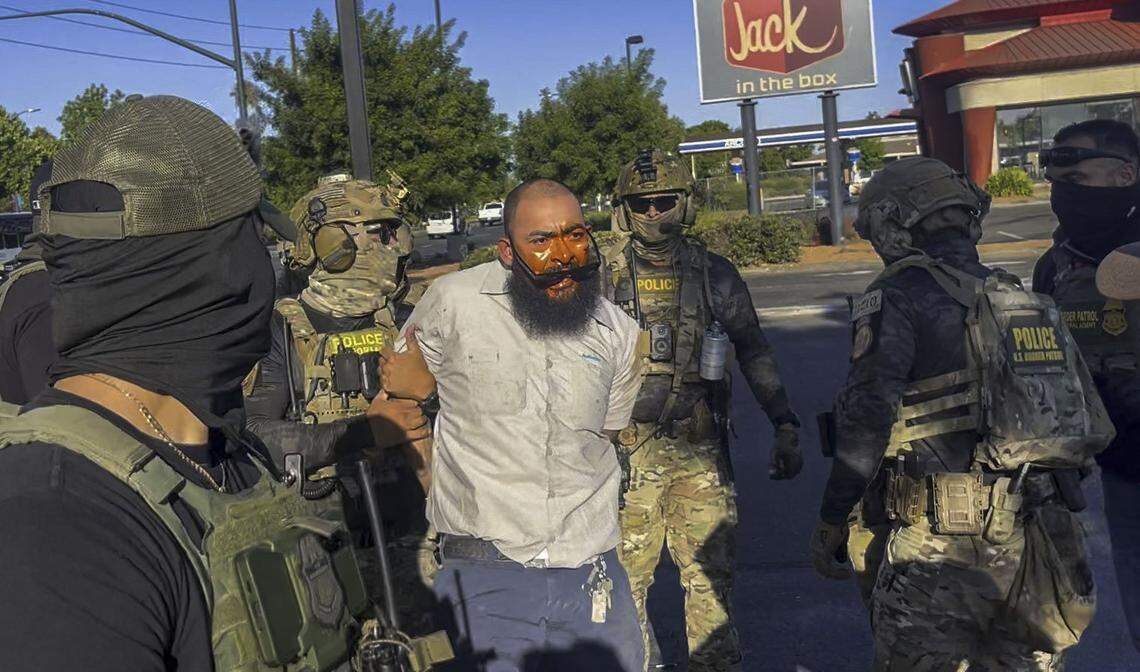
Attorney Jason George, who represented the Kern County detainees and the UFW in court, said that the declarations contradicted the Border Patrol’s reports claiming that it was legal to chase and apprehend the people at the Home Depot because they had fled from law enforcement, leading to what is known in legal terms as “reasonable suspicion.”
He said that a video showed that not all of the people arrested that day fled, and that others had no way of knowing that the masked men in unmarked cars who approached them were agents of the law.
In addition, he said, agents may in some circumstances detain people suspected of being in the country illegally based on their appearance or the language they are speaking, but that does not apply in places where much of the population has a similar appearance or speaks that language.
But Tim Ramnitz, a senior litigation counsel for the U.S. Department of Justice, said that the video clearly showed people running from officers, establishing a legal reason to detain them. While some of the reports filed with the agency were not detailed, they still met legal requirements, he said.
“We believe the forms are in compliance with the injunction,” Ramnitz told the judge. “They document legal suspicion. They document likelihood of escape.”
Ramnitz also said that because portions of the case, including a challenge to a federal training document known as a “muster,” were being considered by the 9th Circuit Court of Appeals, the organizations’ request should be denied.
Judge weighs in
Thurston, who did not issue a ruling in the case on Thursday, pushed back against both sides’ arguments, but was particularly sharp in her questioning of the government.
“Isn’t it a falsehood to say that the officer was wearing ... their uniform showing all the insignia,” she asked, referencing boilerplate language in the arrest reports that claimed the officers were in uniform. The video, she said, showed that they were not all in uniform. “That’s not true, then, right?”
She repeatedly asked whether the agents had specific reasons to believe that people at the Home Depot were in the U.S. illegally, comparing the situation to that of police officers who might go into a high-crime area but still can’t generally arrest people without a warrant unless they see a crime being committed.
“When an actual law enforcement officer, federal or local, goes to what is a high crime area — one that has a lot of drug activity — they don’t just drive up and go, ‘We’ve busted some people here before, so we’re just going to jump out and see what we can find,’” she said.
Thurston said she would rule on the request for an injunction in the class action case after considering the arguments made by both sides.
This story was originally published February 5, 2026 at 6:03 PM with the headline "Sacramento immigration raid violated court order, ACLU and UFW tell federal judge."
