New tactics replace immigration court arrests as DHS seeks to end asylum cases
AI-generated summary reviewed by our newsroom.
- Visible courthouse arrests in NorCal have largely ceased after Pitts’ Dec. 24, 2025 order.
- Agency shifted tactics: pretermission motions, home detentions and ankle monitors rising.
- Fear of arrests drives missed hearings for many asylum seekers.
Five weeks after a federal judge ordered the Trump administration to stop detaining migrants at Northern California immigration courts, officials seem to be complying, relying instead on tactics aimed at dismissing asylum claims outright before hearings can be held.
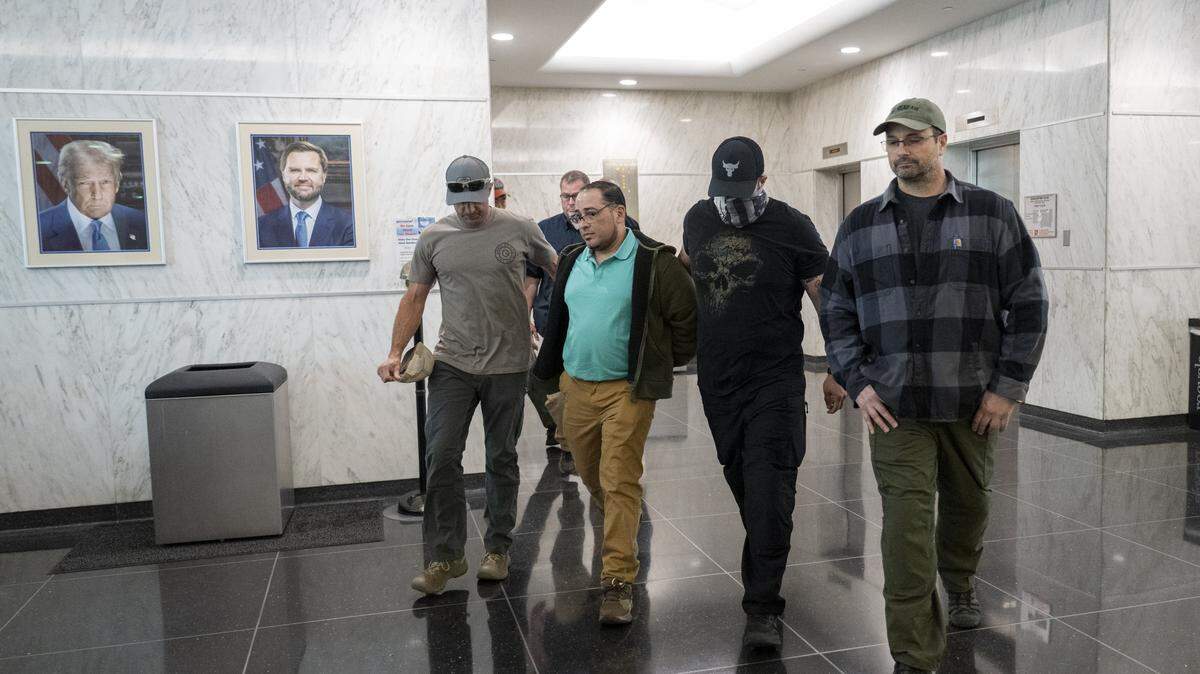
Immigration and Customs Enforcement officers who previously roamed the halls and staked out hearings at the John Moss Federal Building in downtown Sacramento were nowhere in sight during two recent visits by The Bee, even though the agency has an office in the same structure. Lawyers and activists who monitor courthouse arrests say they have seen very few in the past few months, and none since U.S. District Judge P. Casey Pitts in San Jose banned the practice in an order on Christmas Eve.
“There are still reports of them doing it around the country,” said Jordan Wells, an attorney on the case that prompted Pitts’ ruling. “But here it has dropped off dramatically.”
The quiet halls at Sacramento’s immigration court stand in sharp contrast to the highly visible and violent arrests this month in the streets of Minneapolis, but experts say that doesn’t mean detentions and deportations here have stopped — they are just being carried out more discreetly.
In some cases, courthouse arrests have been replaced by detentions at homes or places of work, immigration attorneys said. Some migrants have been ordered to wear ankle monitors.
And in court, lawyers for the Department of Homeland Security are increasingly making use of motions that demand immediate dismissal of asylum cases, arguing that someone who is afraid to return to their home country could simply be deported to a different place.
“It’s essentially happening now through the legal arm of DHS,” said Giselle Garcia, an attorney who is head of programming for the group NorCal Resists. “Now people are being doomed in front of a judge.”
New policy sparks fear, leads to ruling
The federal government did not routinely conduct arrests at immigration court until January of last year, when the Trump administration issued new rules governing how and where such actions could take place. In the past, such actions were generally limited to criminal courts, and even then, permitted only against specific targets who had committed crimes, were fleeing agents who were in “hot pursuit” and similar situations.
The new policy caused an uproar in immigration court in Sacramento and elsewhere, as armed agents sought to make arrests and immigration advocates and lawyers tried to stop them. It has had repercussions throughout the immigration system, including by deterring many immigrants from attending their court hearings, leading to dire consequences for their cases.
Several judges who testified in the ongoing case before Pitts said they had not seen any arrests of migrants who were simply attending regularly scheduled hearings regarding their asylum claims until last May, when the new rules became permanent.
In Sacramento, 39 people were detained after attending routine immigration hearings from May 27 through late September, some pulled weeping from family members and some violently thrown against walls by masked agents who did not identify themselves, according to previous Bee reporting and court documents.
Similar incidents played out across the country, leading to what attorneys, activists and migrants say is a climate of fear causing many people to skip their hearings altogether, increasing their risk of deportation by failing to appear in court.
In September, lawyers for a woman who was detained at immigration court in San Francisco filed a complaint alleging poor conditions at ICE’s detention center there and also contesting the courthouse arrest policy throughout Northern California, including Sacramento.
On Dec. 24, 2025, Pitts issued a stay of the courthouse arrest policy, saying it had not been properly vetted. The policy, he said, could not be enforced until the question of its legality fully played out in court. He also certified the case as a class action, representing all people who had been detained at courthouses in Northern California.
Determining how many courthouse arrests are still taking place nationally is difficult, said Chris Opila, staff attorney for the American Immigration Council. News reports showed at least one arrest this month in Utah, and ICE agents are still present at immigration courts in New York, Opila said.
But Joseph Gunther, an immigration data analyst who has collaborated with the New York legal research blog Bklg.org, said that courthouse arrests nationwide have declined dramatically since their highly visible peak last summer. During the first half of October, the most recent weeks for which he has data, Gunther said he could not identify any courthouse arrests in Sacramento. In San Francisco, they continued into November, with at least one arrest at the immigration court there, he said.
Pitts’ order could be extended to immigration courts nationwide under a motion that attorneys for the immigrants, including the ACLU and the Lawyers Committee for Civil Rights Under Law filed late Thursday in federal court in San Jose.
In reply to questions about the case , DHS spokeswoman Tricia McLaughlin criticized Pitts as an “activist judge.”
“This is yet another ruling from an activist judge appointed by Joe Biden that attempts to stop us from delivering on the American people’s mandate for mass deportations,” McLaughlin said. Arresting people at courthouses was safer for agents, she said, because people attending hearings have already been screened for weapons. And it conserves resources because agents “already know where a target will be,” she said.
Neither McLaughlin nor other representatives of DHS, ICE or the Border Patrol responded to repeated inquiries asking whether the administration was complying with the ruling.
However, immigration attorneys in Sacramento, San Francisco and elsewhere in the region say they have not seen courthouse arrests since the order was issued, and the administration has not yet appealed it.
New tactics to end asylum claims
Even before Pitts’ order, the administration seemed to be scaling back courthouse arrests in Northern California and other parts of the country, replacing them with other tactics.
One key new tactic is known as a “pretermission” motion, which involves asking judges to halt asylum proceedings outright, based on a novel argument that people afraid to return to their home countries could simply be sent somewhere else.
Since last fall, the number of such motions has ballooned nationally in immigration courts, statistics compiled by Gunther and Brandon Marrow for Bklg.org show. They have increased from about 1,900 in October to 5,500 in November and 12,000 in December. Sixty-six such motions were filed in immigration court in Sacramento, the vast majority during the last six weeks of 2025.
The motions cite agreements under which the governments of Ecuador, Honduras, Guatemala and at times Uganda say they will accept asylum-seekers from the United States.
In immigration court in Sacramento earlier this month, a woman from Mexico sat nervously before Judge Susan Phan. Alone except for the property manager at the North Highlands apartment complex where she lived, who agreed to come with her, she listened to the judge’s question about whether she needed time to engage an attorney.
But before the interpreter could translate the judge’s question into Spanish, the government’s attorney stepped in to say that the administration was filing a pretermission motion in the case. Citing agreements with Ecuador, Honduras and Guatemala, he argued that the woman could go there without fear of any threats or violence she may have fled in Mexico.
Phan gave the woman 45 days to provide a written response to the government’s motion, and set a hearing on the matter for July.
Another tactic replacing courthouse arrests is the use of ankle monitors to keep track of immigrants’ whereabouts at all times, said Garcia of NorCal Resist. Among the agency’s clients, dozens have been fitted with such monitors in recent months, Garcia said. Some are being detained or ordered to wear monitors at meetings in ICE offices, which are also located in the Moss federal building she said.
Agents are also detaining people at their homes and businesses, sometimes armed with deportations that are a decade or more old, said Alyssa Eckels, supervising attorney for the refugee and immigrant advocacy group Opening Doors.
“One of my clients who had a removal order from 2010 was approached at his home,” Eckels said. The man was arrested even though he is now married to an American and pursuing a family-based petition to remain in the country, she said.
During the first nine months of last year, 8,250 people were deported from California, the numbers surging as the year went on, according to previous Bee reporting.
New tactic is hard to fight in court
The Trump administration in April pressed immigration judges, who work for the Justice Department, to move cases more quickly through the system. Officials issued guidance to the judges saying that the law only requires them to hold hearings when the facts of a case are in dispute.
When the facts are not in dispute, cases can be “preterminated,” or essentially ended before they start, the guidance memo says. In court, the government simply must show that the asylum seeker has not indicated a fear of going to one of the third-party countries. That is enough, government lawyers say in court, to indicate that the facts regarding such fear are not in dispute.
The tactic is hard to fight for several reasons, immigration advocates say. It presents what lawyers call a novel argument, which means there are not a lot of precedents or legal examples to draw on when analyzing it. And alleging that immigrants are being deprived of due process is difficult because they do stand before a judge and can attempt to argue against the removals in court.
Moreover, most migrants do not know when they apply for asylum that they will need to show why they should not be sent to third-party countries.
NorCal Resist this month started a clinic for immigrants who do not have lawyers that aims to train people to respond to pretermission requests from the government. Volunteers work with asylum-seekers to fill out their responses to the motions and take them to the court, Garcia said.
Fear of courthouse arrests makes deportations easier
Ironically, perhaps, another driver of arrests and deportations derives from the courthouse arrest policy itself, even though it appears to have been paused by Casey’s order. That’s because fear of detention has led many immigrants to skip their hearings. And failing to appear for a hearing makes people immediately eligible for deportation.
Of 10 people scheduled for in-person immigration hearings on Jan. 9 when The Bee was in attendance, just four showed up. The six who stayed away were immediately issued orders of removal, meaning their cases will be denied, and they can be detained and deported at any time.
“Individuals are incredibly incredible scared to attend court,” said Jessie Mabry, chief executive officer of Opening Doors, which provides volunteer lawyers to immigrants. “It feels like there is no safe option for them.”
This story was originally published February 3, 2026 at 5:00 AM with the headline "New tactics replace immigration court arrests as DHS seeks to end asylum cases."