
Senate may require Congress’ approval for Trump’s military strikes in Venezuela
AI-generated summary reviewed by our newsroom.
- Senate prepares vote on Schiff measure to require Congress approve foreign strikes
- Maduro capture lacked congressional signoff; lawmakers dispute lawfulness and authority
- Vote unlikely to pass GOP; outcome could force debate on U.S. plans for Venezuela
The Senate is expected to vote this week on Sen. Adam Schiff’s bid to require congressional approval before President Donald Trump takes military action against another country.
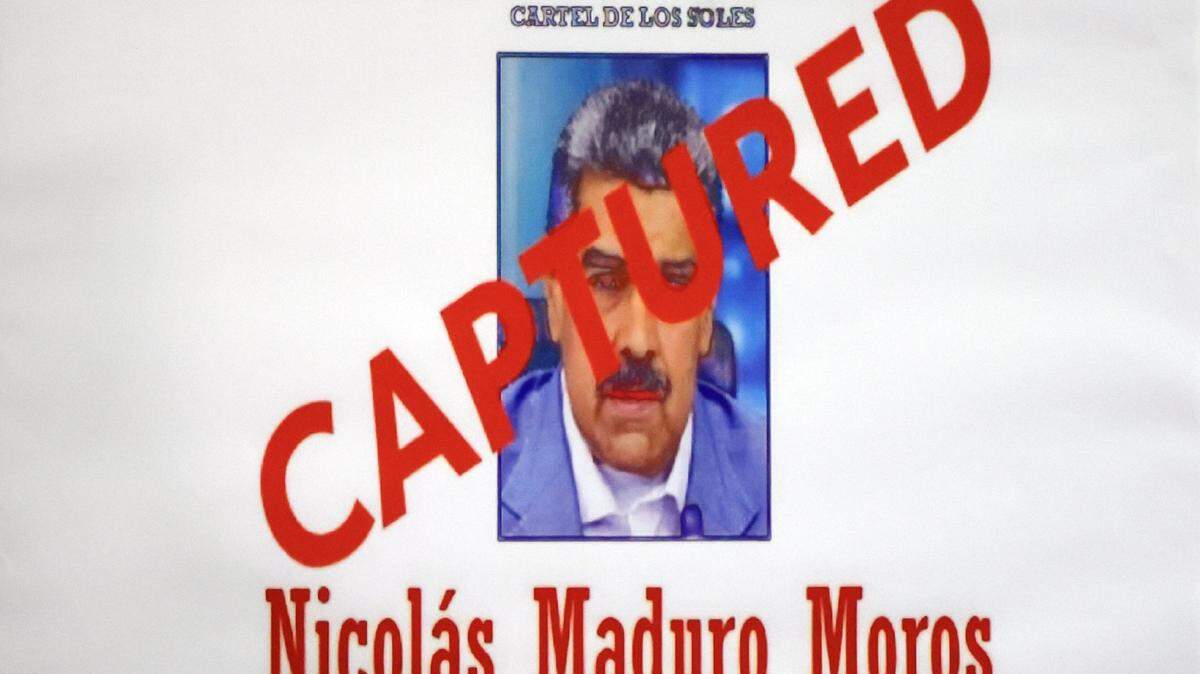
The U.S. military strike that captured Venezuelan President Nicolas Maduro and his wife Saturday came without congressional consent.
Secretary of State Marco Rubio has called the attack a law enforcement operation, since the Maduros are facing drug-related charges in New York, and said that it therefore does not require congressional approval..
But Democrats and some Republicans see the strike as a military operation, an attack that under the 1973 War Powers Resolution requires Congress to give its approval.
“Donald Trump is clear: He launched this war to remove a foreign leader and now he claims the U.S. will ‘run the country,’’’ said Schiff, D-Calif., in a tweet. ‘In other words, Donald Trump wants the U.S. to be an occupying power and control the oil.”
The California Senator’s efforts to involve Congress in weighing in on administration military action, co-sponsored with Sens. Tim Kaine, D-Va., and Rand Paul, R-Ky., have failed to advance twice in recent months. A November bid to block the use of military force in Venezuela got 51 votes, short of the 60 needed to advance the bill.
An October measure to stop U.S. strikes against boats in the Caribbean allegedly carrying illegal drugs also failed to get 60 votes. In both cases, almost every Republican opposed the bills.
Can Trump be stopped?
Schiff and his allies want to invoke the 1973 War Powers Resolution, which largely requires the president to consult Congress before taking military action.
The president could strike in an emergency and notify Congress within 48 hours. He can proceed with the military action for 60 days, plus a 30-day withdrawal period, unless Congress agrees otherwise.
As the Senate returned Monday from a holiday recess, there was little evidence that many Republicans were ready to defy Trump.
Paul and Sen. Lisa Murkowski, R-Alaska, were the only GOP senators to back the Schiff measures last year. After the weekend Maduro raid, Murkowski tweeted that in the fall “I believed the administration failed to provide Congress with the information necessary to fully evaluate the legal basis for these escalating actions. That was true then, and it remains true today.”
Now, she said, while she was hopeful Saturday’s strike has “made the world a safer place, the manner in which the United States conducts military operations, as well as the authority under which these operations take place, is important.” She ended the tweet saying there will be briefings this week.
Republicans back Trump
Most Republicans supported Trump. Rep. Ken Calvert, R-Corona, chairs the House defense appropriations subcommittee, which writes legislation on military spending.
He said he would “work with my colleagues to provide the resources, oversight, and coordination with our nat sec leaders to ensure when our military carries out a mission, they have everything they need to achieve the objective and return safely.”
Rep. Darrell Issa, R-Escondido, a senior member of the House Foreign Affairs Committee, saw the strike as an important patriotic moment. “Let’s unite to support President Trump’s strong foreign policy and America’s regional and national interests,” he said.
A congressional vote obviously can’t reverse the Saturday attack, but could be significant in other ways. It could be a way for lawmakers to express their concerns about the action, and if passed–and the odds aren’t good–it would require Trump to get Congress’ consent before taking further military action.
It also is a way for Congress to openly debate what’s next in Venezuela.
Schiff had a lot of questions.
“What is the Trump Administration’s actual plan to “run” Venezuela? Will President Trump deploy American troops to Venezuela? If so, how many and at what cost?” he asked. “What happens next if Venezuela’s remaining government leadership refuses to defer to and cooperate with Trump? How does the Trump Administration plan to control Venezuela’s oil? Will Trump deploy military assets to do so?”
To most Republicans, the answers are clear.
“The president has inherent authority under our Constitution to protect American national interests and ensure that indicted drug traffickers face justice. I’m glad President Trump took decisive, necessary action against the illegitimate Maduro regime,” said Sen. Tom Cotton, R-Ark., Senate Intelligence Committee chairman.
The debate is expected to become a forum for considering the U.S. role in Venezuela’s future.
“This is not the end of the Venezuelan crisis but the middle. The president, the Secretary of Defense, and the Secretary of State have rightly celebrated the precision and success of the military operation,” said Mark Cancian, a senior adviser with the Defense and Security Department at the Center for Strategic and International Studies in Washington.
But, he added, “the military operation is not an end in itself. It is the means to a political end. That political end is unachievable as the administration has described in its plans.”
This story was originally published January 5, 2026 at 1:13 PM with the headline "Senate may require Congress’ approval for Trump’s military strikes in Venezuela."
.jpg)