

Republicans blame Rep. Adam Gray for higher gasoline prices. Is that true?
Is Rep. Adam Gray the “proud architect of California’s pain at the pump” as Republicans claim?
No. No one person or single factor has had a dramatic impact on gasoline prices.
“California’s got a lot of layers that lead to the nation’s most expensive gas prices. Taxes are just one of them,” said Patrick De Haan, head of petroleum analysis for GasBuddy, which tracks gasoline prices.
About 10% to 15% of the increase in gasoline prices can be attributed to California’s automatic annual gasoline tax increases in today’s environment, said Gokce Soydemir, Foster Farms endowed professor of business economics at California State University, Stanislaus.
Republicans cite Gray’s vote for the automatic increases as a state assemblyman nine years ago. They also highlight his 2022 bid to suspend the gas tax. The GOP calls such efforts a flip-flop. Gray’s office cites that as evidence he’s flexible and notes the proposed gas tax suspension had Republican support.
While the state gasoline tax has gone up each year, there are a host of other reasons California’s gasoline prices are the nation’s highest, including the unpredictable international situation.
“We saw an escalation of regional conflicts in the Middle East and possible closure of the Hormuz Strait leading to disruptions, congestion and some ships waiting, or diverting due to increased military presence,” Soydemir said. “Rather than immediate, we are seeing the impact on oil prices just now as many analysts expected.”
Republicans vs. Adam Gray
The National Republican Congressional Committee has been blasting away all year at Gray, who won his House seat last year by 187 votes.
In a July 1 statement, the committee said “Adam Gray proudly voted for the 2017 gas tax hike that raised the gas tax by 12 cents a gallon and let it grow year after year with inflation to 60 cents per gallon.”
Six days later, it issued a statement that Gray is “saddling Californians with the highest gas prices in the nation.” It also criticized him for voting against the Republican-authored “Big Beautiful Bill,” which extended federal income tax rates due to expire at the end of the year. Gray’s vote, the GOP said, was an endorsement of higher taxes.
The state’s gasoline tax has been at or near the nation’s highest level for years. It increased July 1, as it does every summer, thanks to the 2017 legislation designed to help fund transportation and infrastructure projects. The state tax went up 1.6 cents a gallon this year to 61.2 cents.
Gray’s Assembly vote
As an assemblyman in 2017, Gray voted for Senate Bill 1, the legislation with the annual gasoline tax increases. The money has gone to transportation and infrastructure projects.
Before the vote, Gray and then-Sen. Anthony Cannella, R-Ceres, negotiated with Gov. Jerry Brown for additional aid to their districts.
The Modesto Bee reported at the time that Gray said “I don’t need a perfect deal, but I don’t need a deal that ignores us, either.”
The bill wound up providing $1 billion to Central Valley and Inland Empire projects.
Cannella and Gray were crucial votes, as the measures barely got the needed majorities to pass.
Gray told the Modesto Bee at the time that he and Cannella “stood together and made it known we would not support a transportation plan that failed to invest in our underserved region.”
Gray said, “We would not support new taxes only to watch those dollars leave our community to build infrastructure somewhere else. We would not be forgotten again.”
The Modesto Bee reported at the time that “along with ACE (Altamont Corridor Express Extension) service for Merced County, a trailer bill carves out $100 million in state highway funds for Campus Parkway between UC Merced and Highway 99.”
The bill also included a rail plan calling for expansion of ACE from Lathrop to Modesto and Ceres by no later than 2023.
An extension to Merced by 2027 would include stations in Turlock, Livingston or Atwater and ultimately Merced, said Dan Leavitt, manager of regional initiatives for the rail commission.
The outcome: The ACE extension was funded in 2017 and construction began last summer. Trains are expected to run through Ceres by next year.
The Merced University Parkway Project was funded and completed in 2022. Gray spoke at the groundbreaking ceremony.
The Stanislaus North County Corridor was funded and construction begins this summer. Projections are for Phase 1 to be completed in 2028.
Why are prices so high?
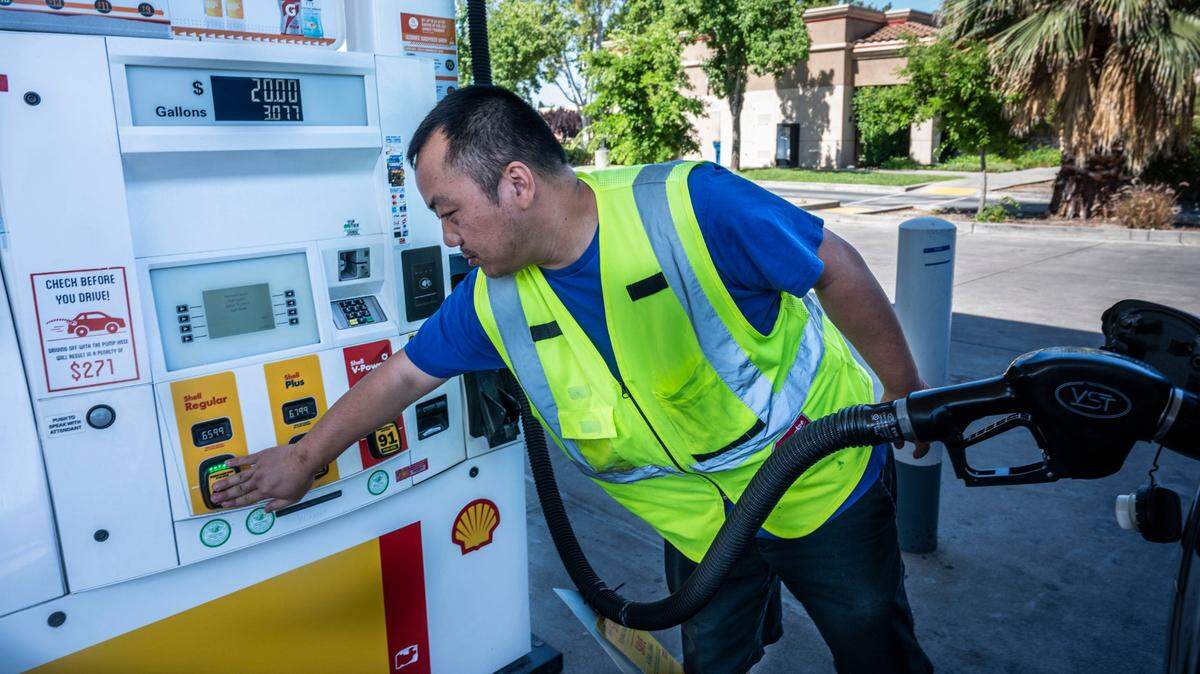
The average price of a gallon of regular gasoline in California on Friday was $4.53, according to AAA. The national average was $3.17.
The price of gasoline in California has been the nation’s highest for years, for a variety of reasons.
The state requires refiners to produce a different blend of gasoline in the summer months for environmental reasons. That blend is often more expensive to produce.
Refinery shutdowns can also have more influence on prices in California, since its refineries generally operate at or near full capacity because of high demand. Also a factor is a lack of interstate pipelines that can send the cleaner product into California.
A June 20 analysis by the federal Energy Information Administration put it this way: “When unplanned refinery outages occur, the lack of CaRFG (California reformulated gasoline) deliveries available from interstate pipelines means replacement supplies of CaRFG come in by marine tanker from out-of-state U.S. refineries or from other countries, such as India or South Korea...
“It can take several weeks to find and bring replacement motor gasoline from overseas that meets California’s unique specification,” it said.
Add to that the uncertainties regarding tariffs that President Donald Trump has and could impose, as well as the levels of supplies from other countries.
This story was originally published July 14, 2025 at 5:00 AM with the headline "Republicans blame Rep. Adam Gray for higher gasoline prices. Is that true?."
.jpg)