
Newsom said California would offer EV rebates if Trump cut them. Where would the money come from?
Editor’s Note: After publishing this story, The Bee learned that it includes unattributed passages from The New York Times story “Newsom Challenges Trump on Electric Vehicle Tax Credits.” This is a journalistic breach and a violation of our standards. We apologize to our readers and to The New York Times.
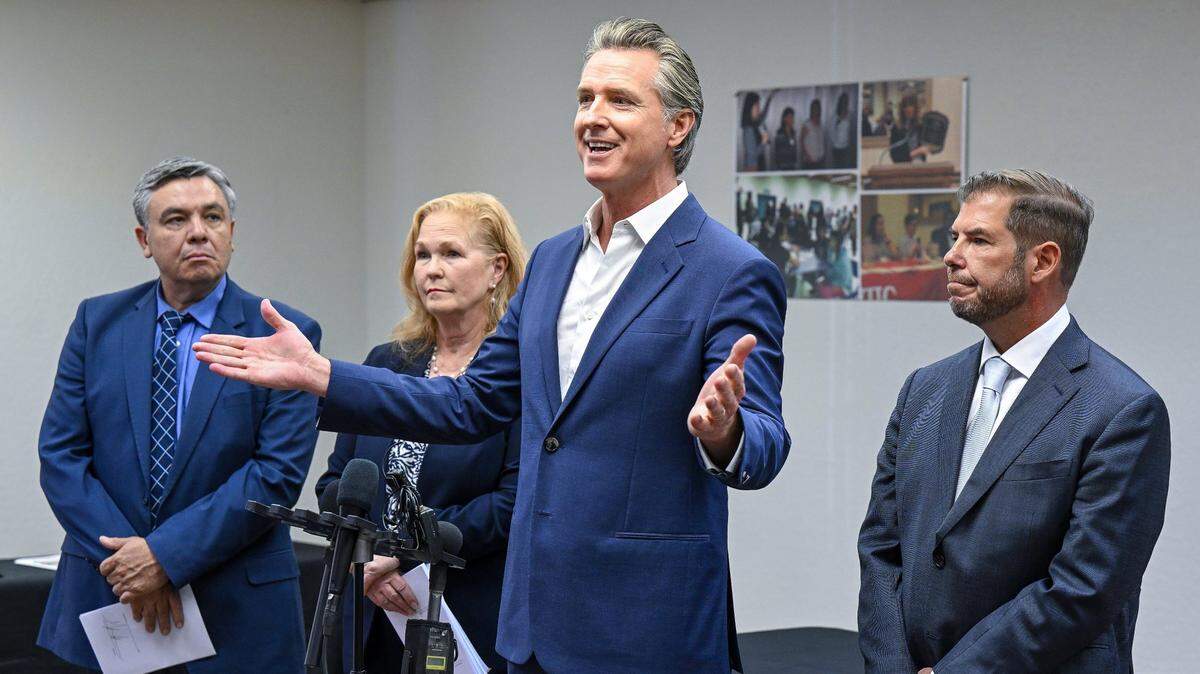
Gov. Gavin Newsom said Monday that California will provide rebates for electric vehicle buyers if Donald Trump eliminates the federal $7,500 tax credit when he enters the White House.
These rebates would likely be funded by the Greenhouse Gas Reduction Fund, which is supported by revenue from the state’s leading climate program, cap-and-trade. Costs incurred by fossil fuel producers from the program are often passed on to consumers.
“We will intervene if the Trump Administration eliminates the federal tax credit, doubling down on our commitment to clean air and green jobs in California,” Newsom said in a statement. “We’re not turning back on a clean transportation future — we’re going to make it more affordable for people to drive vehicles that don’t pollute.”
The governor’s proposal comes not only as California officials gear up for a battle with the incoming Trump administration over environmental policy, but also amid growing concerns about rising energy costs in the state.
From electricity to gasoline and natural gas, the cost of energy is rising in California. Major factors include climate program costs and infrastructure investments passed to consumers, increasing carbon prices, and growing consumer demand.
Electric vehicle adoption is also on the rise. The top five cities in the nation with the highest numbers of registered electric vehicles have all been in California. In the third quarter of 2024, EVs accounted for 26.4% of new car registrations in the state, according to the governor’s office.
Those numbers are set to grow, with California requiring all new cars and light trucks sold by 2035 to be zero-emission vehicles. By the same year, half of all new heavy trucks sold in the state must be electric.
Ownership in California typically skews towards higher-income individuals in urban centers, with many EV purchasers owners reporting household incomes above $100,000. Federal tax credits can make purchasing an EV more affordable.
Affordable Lower cost EV options, like the Chevrolet Bolt, start around $27,000, while premium vehicles such as Tesla models range from $40,000 to over $100,000.
The EV rebate promise is only Newsom’s latest move against the incoming Trump administration.
The governor has called a special session of the California Legislature for December, partly to discuss increased funding for litigation. The state sued the Trump administration over 120 times during his first term.
Former President Trump cannot unilaterally eliminate electric vehicle tax credits from the Inflation Reduction Act of 2022 without congressional action, but his transition team has signaled his intent to remove them.
Under the law, consumers can lower the purchase price of an electric or plug-in hybrid vehicle by up to $7,500 for a new car or $4,000 for a used one. Not all California residents qualify based on their income.
Gil Tal, director of the Electric Vehicle Research Center at UC Davis, said he and other experts expect the Trump administration to reform, rather than eliminate the tax credit under the Inflation Reduction Act.
The governor, he said, is smart to revive state assistance for EV buyers but lessons should be learned from the last program. In a statement, Newsom proposed a “new version” of the old one phased out in 2023 but did not include details.
Under the state’s previous Clean Vehicle Rebate Project, California provided electric car rebates of up to $2,500. The program also relied heavily on the Greenhouse Gas Reduction Fund, but it ran into significant funding problems.
Because the cap-and-trade program often sees unpredictable and volatile revenue, EV buyers often faced months-long waits to receive their rebates. Newsom’s statement also said the new version “would include changes to promote innovation and competition.”
“They know it’s going to be very expensive, and we already ran into that issue,” said Tal at UC Davis. “You can’t give people an incentive and then have them receive a check in the mail months after they purchased a vehicle. You want to give them incentives immediately.”
The legislature, which is concerned with trying to balance a frequently unstable state budget, would have to agree to restart the rebate program. In a recent analysis, the state legislative analyst warned that the state has little capacity for new spending commitments.
Lawmakers also have to decide whether rebates should take priority in the Greenhouse Gas Reduction Fund, which climate policy expert Danny Cullenward said is overloaded with a variety of other state projects.
The Air Resources Board would likely set the terms of a new rebate program, whatever form it takes. That could include the amount of the rebate, which vehicles it applies to and whether there would be income restrictions on the assistance.
Cullenward warned against backlash from consumer impacts of climate programs. The Air Board recently approved changes to a climate fuels climate program expected to raise gas prices, but he said reforms could have created better opportunities to fund EVs.
“If the governor wants to fund EV rebates, he should reform the Low Carbon Fuel Standard program,” said Cullenward. “Under that program in 2021, California drivers paid $2.9 billion for out-of-state biofuels instead of 390,000 EV rebates.”
This story was originally published November 25, 2024 at 11:23 AM with the headline "Newsom said California would offer EV rebates if Trump cut them. Where would the money come from?."