
Proposition 32 explained: What California’s minimum wage ballot measure is asking you
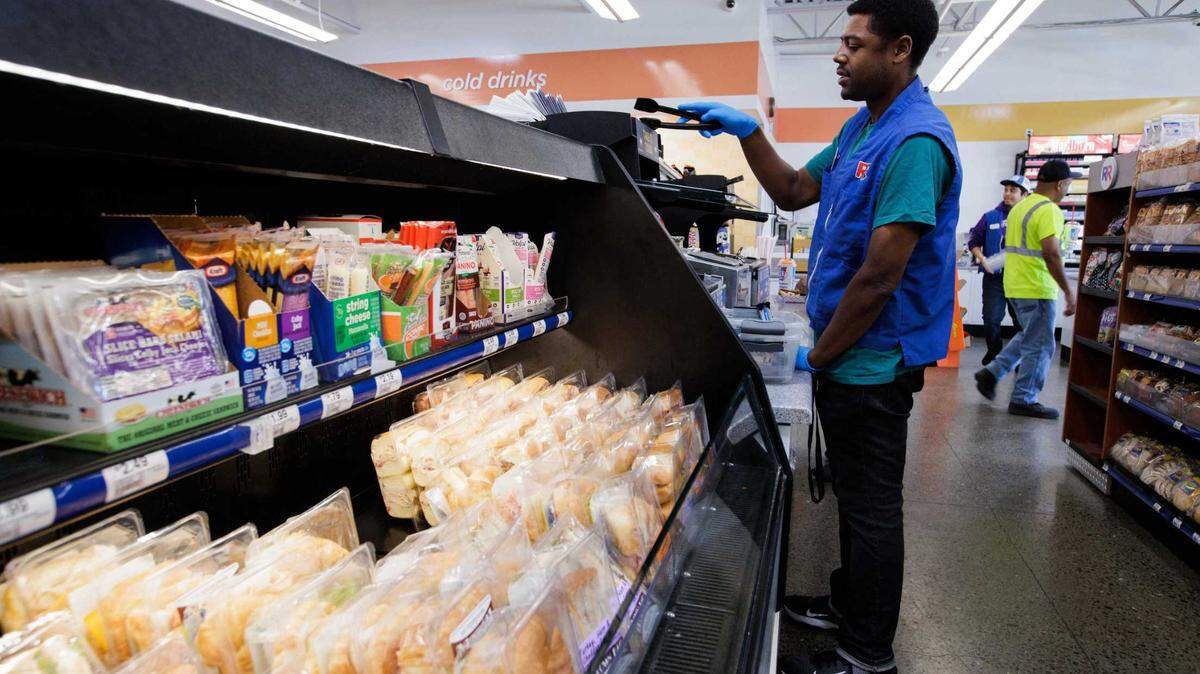
California’s Proposition 32 asks voters whether to increase the state’s minimum wage to $18 per hour.
The base wage in California currently sits at $16 and is adjusted for inflation.
If approved, Prop. 32 would bring the minimum wage to $18 for all workers by 2026. The adjustment system, which calls for an automatic increase if annual inflation is 3.5% or higher, would remain the same.
Prop. 32 would give more time to businesses with 25 employees or fewer to increase wages. It would also exempt contract and self-employed workers.
In recent years, labor groups have won higher minimum wages in specific industries: fast food workers start at $20 per hour and state lawmakers approved graduated increases to eventually bring health care workers to $25 per hour.
What a ‘yes’ vote means
A yes vote on Prop. 32 is a vote in support of raising the minimum wage to $18 by Jan. 1, 2026.
Businesses with more than 25 employees would have to comply sooner: they would immediately have to raise wages to $17 if the measure is approved, and would have to bump minimum pay to $18 on January 1, 2025.
Small businesses with 25 or fewer workers would have to pay a $17 minimum wage on January 1, 2025 and increase pay to $18 at the beginning of 2026.
What a ‘no’ vote means
A no vote would keep the minimum wage structure as it currently is, at $16 per hour. Minimum wage could still increase if annual inflation is 3.5% or higher.
Supporters of Prop. 32
The main author and proponent of Prop. 32 is Joe Sandberg, a Blue Apron investor and anti-poverty advocate.
“Many working Californians, including essential workers, parents and seniors, have full-time jobs yet struggle to make ends meet. The minimum wage has not kept pace with the cost of living and is worth less today than it was 50 years ago,” Sandberg wrote in the official ballot argument.
He argued Prop. 32 “will bring a much-needed raise to 2 million California workers and create a more prosperous system.”
Embattled Los Angeles City Council member Kevin de León created a ballot committee to support Prop. 32 and two other measures. He has so far donated $600,000 for all three.
Opponents of Prop. 32
Business groups including the California Chamber of Commerce, California Restaurant Association and California Grocers Association oppose Prop. 32, citing California’s high cost of living.
They argue an increasing minimum wage would continue to drive up inflation in the state.
“Prop. 32 brings these record-setting price increases to small restaurants, grocery stores, convenience stores, small retail shops, farmers and more, so we’re going to see the same sticker shock everywhere,” the groups’ ballot arguments read.
The groups argue Prop. 32 could cost jobs and would be especially burdensome for small businesses.
“When a worker loses a job, or the company goes out of business, the wage is zero dollars per hour,” they wrote.
Fiscal impacts of Prop. 32
Prices would likely go up if Prop. 32 is approved, according to the nonpartisan Legislative Analyst’s Office. An analysis by the office says “the overall price increase from Proposition 32 likely would be smaller than one-half of 1 percent.”
It’s unclear what the fiscal impact of Prop. 32 would be on the state budget, according to the LAO. Costs could either increase or decrease depending on job creation, health care eligibility, and other factors.
Any impacts would likely be less than $1 billion, the LAO estimated.
This story was originally published August 28, 2024 at 11:03 AM with the headline "Proposition 32 explained: What California’s minimum wage ballot measure is asking you."