
California plan proposes billions to protect Central Valley from mega flooding
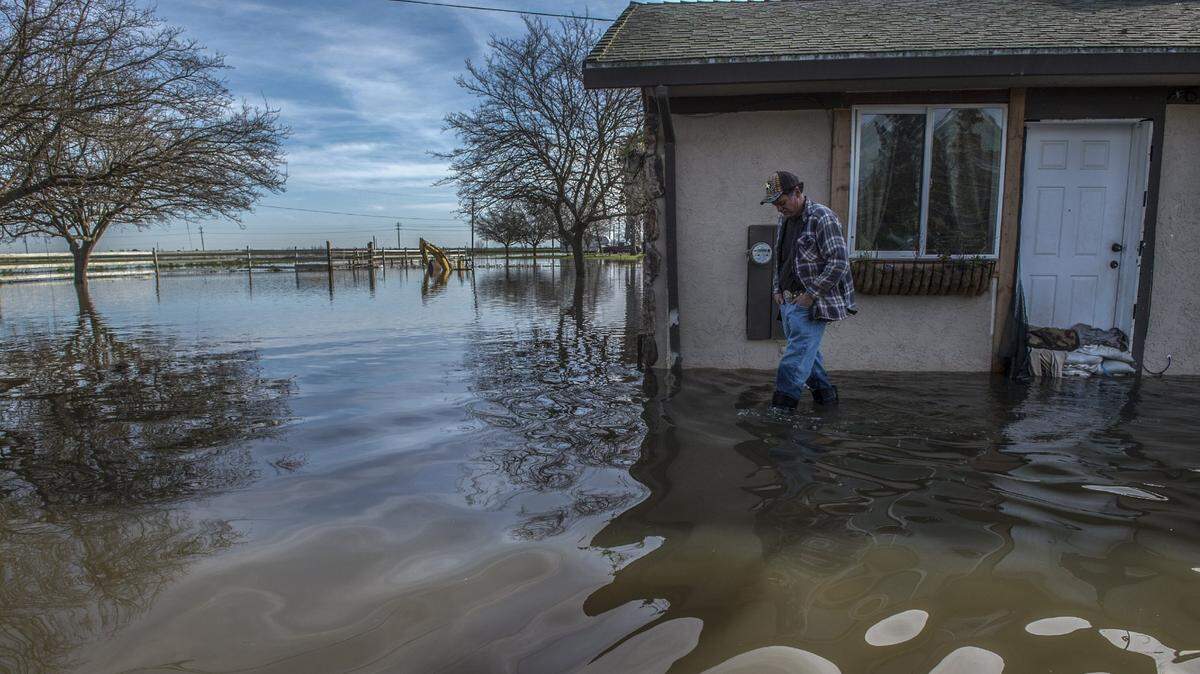
The Central Valley Flood Protection Board approved a blueprint to fortify the region against catastrophic flooding, which scientists predict will be a consequence of climate change in California.
A mega-flood could result in $1 trillion dollars in damage, the agency estimates. The plan calls for more than $3 billion in the next five years and $35 billion over the next 30 years for infrastructure upgrades, emergency preparation and floodplain restoration.
“Climate change is causing great impacts but we have the tools,” said Gary Lippner, deputy director for flood management at the Department of Water Resources. “I’m just hoping we can get there a little quicker than climate change is going to impact us.”
Californians have become familiar with the wildfires, drought, and extreme heat brought on by a worsening climate — billions in state funds have followed. But mega floods are also expected as atmospheric warming changes the way water falls in the state.
Climate scientists have forecast a doomsday flood scenario in the Central Valley, particularly in cities of Sacramento, Modesto, Stockton, and Fresno as a result of rising temperatures. They predict a single event could kill untold numbers of people, displace millions, devastate infrastructure, and close major highways for weeks.
A UCLA study this year found that climate change already doubled the likelihood of devastating floods, and powerful atmospheric rivers could produce up to four times as much rain than any storm ever recorded in California.
“In California I think we’re kind of where we were 15 or 20 years ago from a wildfire perspective, when we knew these risks existed but there was still public and even institutional denial,” said Daniel Swain, a co-author of the study.
The proposed investment may seem large, but is relatively modest to someone who has spent years thinking about the economic risks of these catastrophic flooding events, he said. The plan identifies funding gaps in deferred maintenance to the tune of over $150 million per year.
“I think this report is being pretty straightforward about the facts as they are,” said Swain, commending the board for its emphasis on measures that rely on the natural environment rather than construction of higher levees and dams. “The Central Valley would be in much better shape to weather an extreme flood scenario if all of these measures were put into place.”
California has seen disastrous flooding in its past. A month of nonstop rain in 1862 turned the Central Valley into a massive inland sea. The state responded by constructing billions of dollars worth of levees, dams and river bypasses to safeguard cities.
Researchers are in agreement that climate change is reducing the amount of snow that falls in California, shrinking a key part of our water supply and bringing more rain instead. Snow gradually melts, but extreme rain rushing into the state’s rivers will make floodwaters harder to control.
The Flood Board’s plan calls for improvements to aging flood control infrastructure across the Valley and emergency preparedness bolstering, particularly for San Joaquin Valley’s disadvantaged communities.
Among the actions highlighted by the plan is restoration of tens of thousands of acres of floodplains along Central Valley rivers. Expanding flood plains allows rivers to spread out, slow, down and sink into the ground, the thinking goes, reducing flood risk without expensive and damaging infrastructure.
Julie Rentner, president of River Partners, an organization that collaborates with flood management engineers to restore river ecosystems, said the plan incorporated ecological restoration of California’s rivers far more than its previous iterations.
As California projects budget shortfalls next year, she hopes investment in Central Valley flood protection ceases to be overlooked. Flood system improvement received less than $1 billion in the last two budget cycles despite the enormous risks.
“This is a game changer for a lot of communities in the Valley that have to compete for public dollars to improve their flood risk, ecosystems, and public access to natural spaces,” said Rentner. “It’s hard to see it when we’re in the middle of a long drought, but the next flood emergency is around the corner. “
This story was originally published December 16, 2022 at 3:47 PM with the headline "California plan proposes billions to protect Central Valley from mega flooding."