
Gavin Newsom pledged to end chronic homelessness as SF mayor. It remains his biggest challenge
Just a few months after Gavin Newsom was sworn in as mayor of San Francisco in 2004, he announced a plan to get all of the city’s chronically homeless residents off the streets within 10 years.
More than a decade later, as he campaigned for governor, he made a similar pledge, putting the eradication of chronic homelessness at the top of his agenda. Walking through San Francisco’s Tenderloin district in the summer of 2018, Newsom exclaimed that the problem had “never been worse.”
“Never in my life,” he said.
Homelessness has cast a long shadow across Newsom’s quarter-century in California politics. Throughout his rise from San Francisco supervisor to the state’s highest office, he has overseen the spending of billions in tax dollars, along with his own political capital, in attempts to show progress.
As he coasts to a second gubernatorial term and into the first tier of his party’s possible presidential prospects for 2024 and beyond, Newsom will be called to account for his record on this intractable issue.
“Homelessness might be the easiest argument for even a Democratic opponent running against him in another state,” said Dan Schnur, a professor at USC and former GOP political consultant. “Whether it’s fair or not, the ads against him almost write themselves. Thirty seconds of black and white footage of the Mission or Skid Row with scary music and a narrative simply saying ‘This is Gavin Newsom’s California.’”
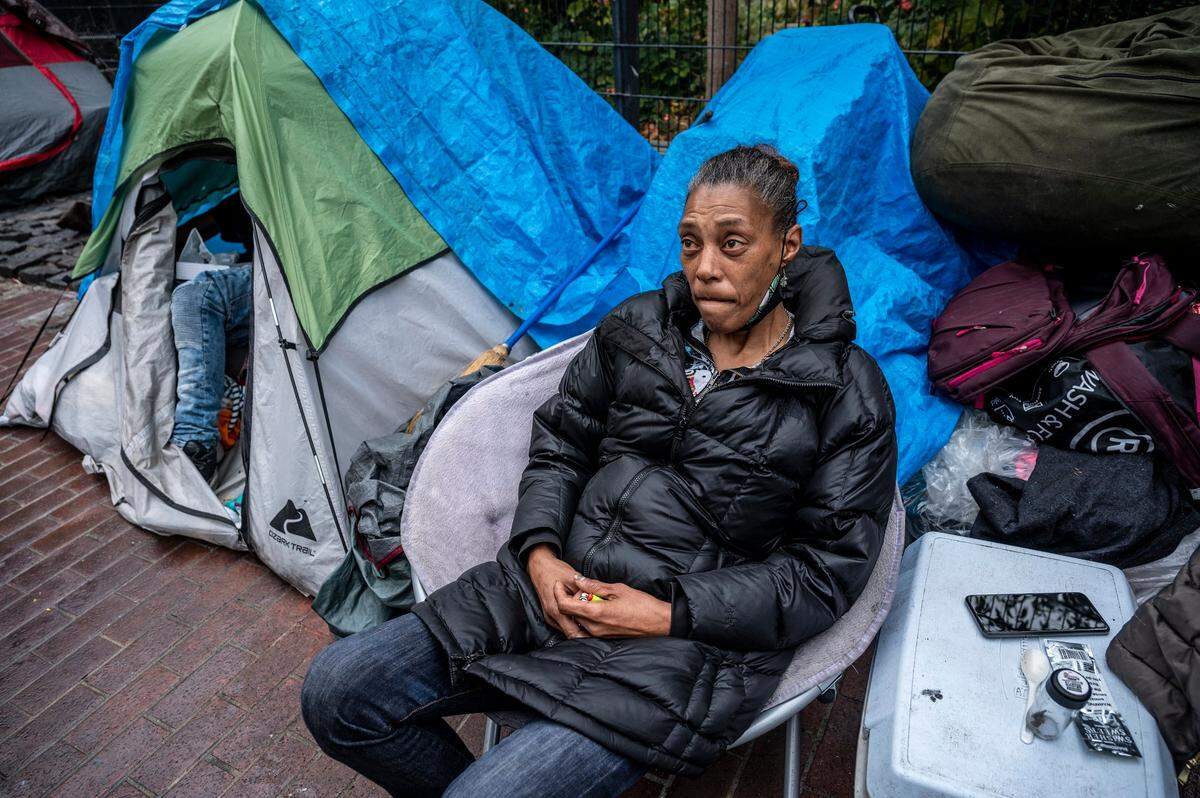
The sidewalks around San Francisco’s Civic Center are a testament to his mixed legacy. Like many areas of California, the city still faces a long road to provide its most vulnerable residents with the care and housing they need.
“When I was coming up, this was a place for opportunity,” said Vernell Bullock, 70, as he sat in his electric scooter on a street corner with his dogs, Zoey and Max. “But now you’ve got women and children and a bunch of young people out here on the streets. It’s not the same.”
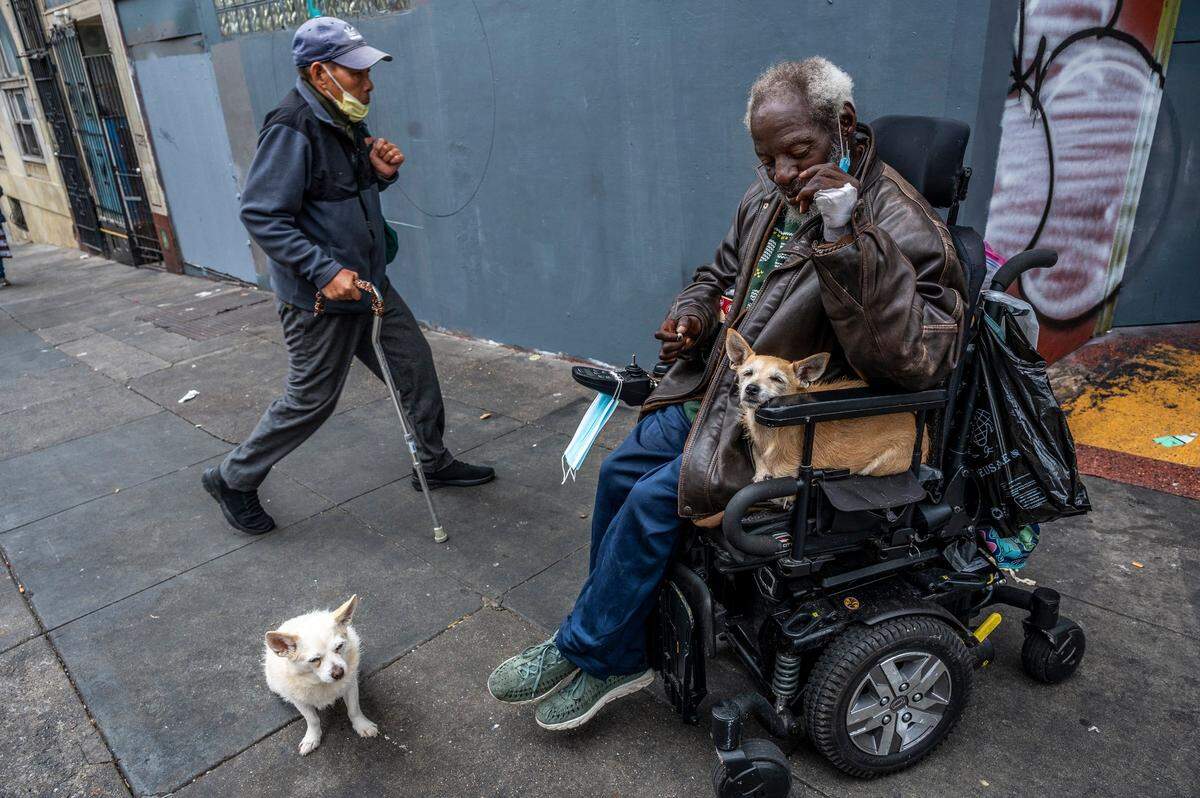
Bullock, who once worked at the San Francisco Shipyard, said he has been homeless off and on since 2003, when he could no longer afford his rent. He now lives in a small, residential hotel room, but spends most days on the streets of the Tenderloin talking with friends and trying to help others who might need assistance. That includes telling them about Project Homeless Connect, a program started by Newsom when he was mayor.
“It’s not something you can run into everyday. It’s really like a blessing,” Bullock said about the program, which provides unhoused residents with a one-stop shop for food, clothing and healthcare services.
Despite Newsom’s efforts, city data indicates that San Francisco’s homeless population barely budged from 2005 to 2011, the year after he left office, according to city estimates. Since becoming governor in 2018, rents have climbed and the state’s housing shortage has worsened. And, in turn, more people have fallen into homelessness.
The number of Californians living on streets, in shelters or in cars has risen from about 130,000 in 2018 to more than nearly 174,000 last year, according to federal data and a recent analysis by CalMatters. Chronic homelessness has surged 58%. While some parts of the state this year reported incremental improvements, with fewer people seeking housing assistance, the number of those entering homelessness each year continues to outpace those who secure housing.
As governor, Newsom has invested more money in homelessness and affordable housing than any of his predecessors. But so far, it seems to have done little to quell the public’s mounting frustration. In poll after poll, homelessness ranks as the number one concern for Californians.
An examination of Newsom’s record on homelessness illustrates a willingness to challenge liberal orthodoxies — in particular the advocacy community’s opposition to coercing the unhoused into treatment and other policies they saw penalize the state’s poorest residents. It is also a history of reaching out broadly for new ideas and unveiling them with a splash, at times turning new initiatives into national models.
“When I got here there was no homeless plan, no homeless strategy. There was no accountability. There was no marshaling of resources,” Newsom said during a Sept. 15 Sacramento Bee editorial board interview. “That has radically changed.”
But for critics, Newsom’s record is also one of a candidate and elected official who pandered to public fears about homelessness, trading in harmful tropes and stigmatizing a vulnerable population.
“He never stopped criminalizing people for being unhoused. He just set up a separate court system so they’d stop overwhelming us,” Paul Boden, executive director of the Western Regional Advocacy Project, said about the governor’s recent homeless initiative, CARE Court. “And that’s just brutal public policy.”
Paving his way with Care Not Cash in San Francisco
Newsom, the son of an appellate judge, made his name as a restaurateur and winery owner — with early help from oil heir Gordon Getty, a family friend — before beginning his political career in 1996. Then-San Francisco mayor Willie Brown, for whom Newsom raised money, appointed him to the city’s Parking and Traffic Commission and then a year later to fill a vacated seat on the Board of Supervisors. He was 29 years old.
Representing the city’s most affluent district, including the neighborhoods of Pacific Heights and the Marina, Newsom set himself apart from other board members by taking more moderate— and often unpopular — stances.
As a young supervisor in the early 2000s, Newsom introduced a proposal to slash city-funded cash assistance to unhoused individuals from a maximum of $410 to about $60 a month. The money would go instead toward housing and services for the homeless.
The program, called Care Not Cash, was applauded by some residents for its fresh approach. But it drew serious backlash from homeless advocates and even some supervisors who argued that it missed the mark and fed into stereotypes of the city’s unhoused.
An ad for the initiative featured disheveled men who speak directly into the camera. One man states: “I take your cash and I buy drugs.” Other men follow with the confessions of using the money to buy crack, heroin and alcohol.
“There were much better ways to do it that didn’t create a bunch of harm,” Jennifer Friedenbach, executive director of the city’s Coalition on Homelessness, said about the program. Not only was the campaign problematic, she said, but the program took shelter beds from others who needed them.
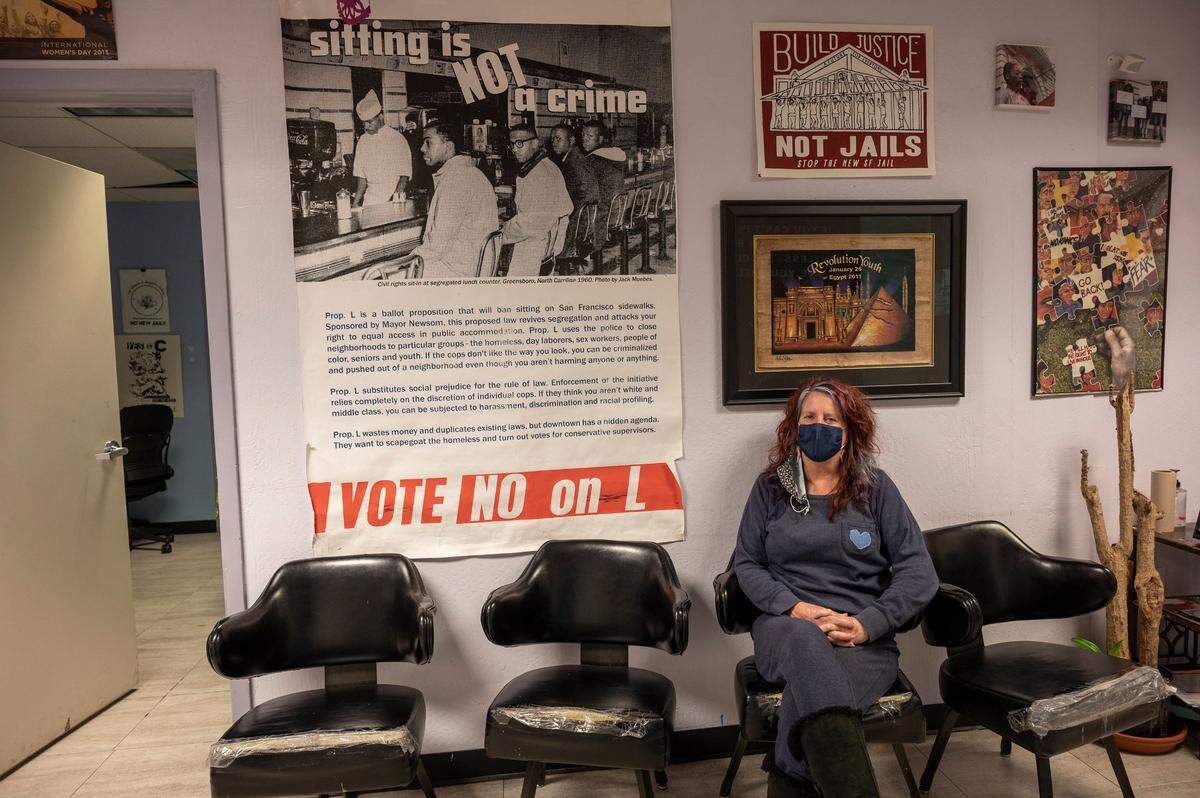
Even so, in November 2002, the measure was approved by 60% of voters – a victory that would help propel Newsom to the mayor’s office in 2004.
According to Trent Rhorer, director of the city’s Human Services Agency and who worked with Newsom to craft the program, Care Not Cash proved to be a “colossal success” for San Francisco. The number of homeless individuals enrolled in the city’s cash assistance program dropped by more than 80%, and the program continued to run until 2020, when it was paused due to the COVID-19 pandemic.
“Care Not Cash was never purported to solve homelessness in San Francisco,” Rhorer said. “It was a reform of the cash assistance or welfare system in San Francisco that would lead to more people being housed, fewer people using their cash to support addiction and fewer people coming from other counties to get a higher cash aid — and based on those goals, it was a wildly successful initiative.”
A 2008 city audit echoed Rhorer’s assessment, declaring that the program was serving its target population and shifting large sums of money from cash payments into mental health and substance abuse services. But advocates like Boden and Friedenbach, argue that the audit failed to evaluate associated consequences of the program, including longer lines at food banks and competition over limited shelter beds.
A 10-year plan to end chronic homelessness
One of Newsom’s first moves as mayor was to draw a blueprint for ending chronic homelessness in San Francisco within 10 years. By June 2004 — six months after he took office — the city had adopted a plan that called for an additional 3,000 units of supportive housing, which brings health and social services to the chronically homeless along with a subsidized place to live.
He also launched new programs like Project Homeless Connect and Homeward Bound, which gave unhoused residents one-way bus tickets to reunite with family members elsewhere.
Although his plan to eradicate chronic homelessness didn’t pan out, it did make strides. Over the course of the 10 years, the city placed more than 11,000 residents into permanent supportive housing and built more than 2,600 new supportive housing units, according to a report from the city’s Human Services Agency.
In a recent interview, former San Francisco Supervisor Angela Alioto credited Newsom for putting the city on the right track, though she says the plan was derailed soon when the city’s next mayor, Ed Lee, decided to place a greater focus on the tech industry and creating new jobs. San Francisco’s unhoused population has spiked 37% since 2011, according to city estimates.
“I don’t think that there’s a politician in the United States of America who can hold a candle to Gavin Newsom in terms of his knowledge on homelessness and the remedies to it,” Alioto said. “He’s been in the trenches for 20 years.”
Not all of Newsom’s policies around San Francisco homelessness, however, received glowing reviews.
Leading the city through the Great Recession, Newsom cut tens of millions of dollars in funding for public health, including outpatient and residential treatment programs for substance abuse and mental health — a devastating hit that the city is still recovering from, according to homeless advocates.
He also led two separate initiatives that advocates said fed into harmful tropes and criminalized the city’s unhoused residents: expanding the city’s aggressive panhandling ban and citing people for sitting or lying on city sidewalks during the day.
“It really perpetuated institutional racism and racial disparities and stereotypes about impoverished people,” Friedenbach said. “It was one of those things where they were able to use a very demonized population to feed on people’s fears and prejudices and biases and then get a lot of attention at the same time because it was controversial.”
But just like Care Not Cash, the majority of San Francisco voters sided with Newsom, passing both his anti-panhandling proposal in November 2003 and the sit/lie ordinance in November 2010.
A 2016 report from the San Francisco Budget and Legislative Analyst Office found that quality of life laws like the city’s sit/lie ordinance and aggressive panhandling ban “adversely impacted the homeless” while costing the city an estimated $20.6 million annually.
California’s new approach for mental health treatment
Although Newsom did not play a key role advancing the state’s policies around homelessness while serving as lieutenant governor, he vowed to make it a top priority if elected to the state’s highest office — and even criticized then-Gov. Jerry Brown for the neglecting the issue.
During his first State of the State speech as governor in 2019, Newsom called the homeless crisis an “urgent moral issue that we must confront” and promised to work alongside local governments and service providers to tackle it.
“When we were in San Francisco, the state was nowhere to be found on these issues,” said Jason Elliott, a senior advisor to Newsom who previously worked with him as a mayoral aide. “We were left to our own devices. But when Newsom arrived in the governor’s chair, he didn’t accept it as the way it has to be.”
His latest big idea is a new program to compel residents struggling with schizophrenia or other psychotic disorders into court-ordered treatment. A new civil court system — the Community Assistance, Recovery and Empowerment Court, or CARE Court — will allow health care workers, first responders or friends of a severely mentally ill person to petition a judge to place them in treatment programs and mandate that counties make services available.
Newsom is seeking with CARE Court to transform the state’s mental health system and provide counties with funding in order to offer the level of care that some of the state’s unhoused residents desperately need.
Up to this point, Newsom said local agencies and health providers didn’t have the adequate capacity or resources to treat the thousands of individuals dealing with psychotic disorders. He’s calling this a “paradigm shift.”
“The fact is, we were willing to take that on,” Newsom said during the recent Sacramento Bee editorial board interview. “No previous administration has taken that on. They’ve sat there and they assigned blame.”
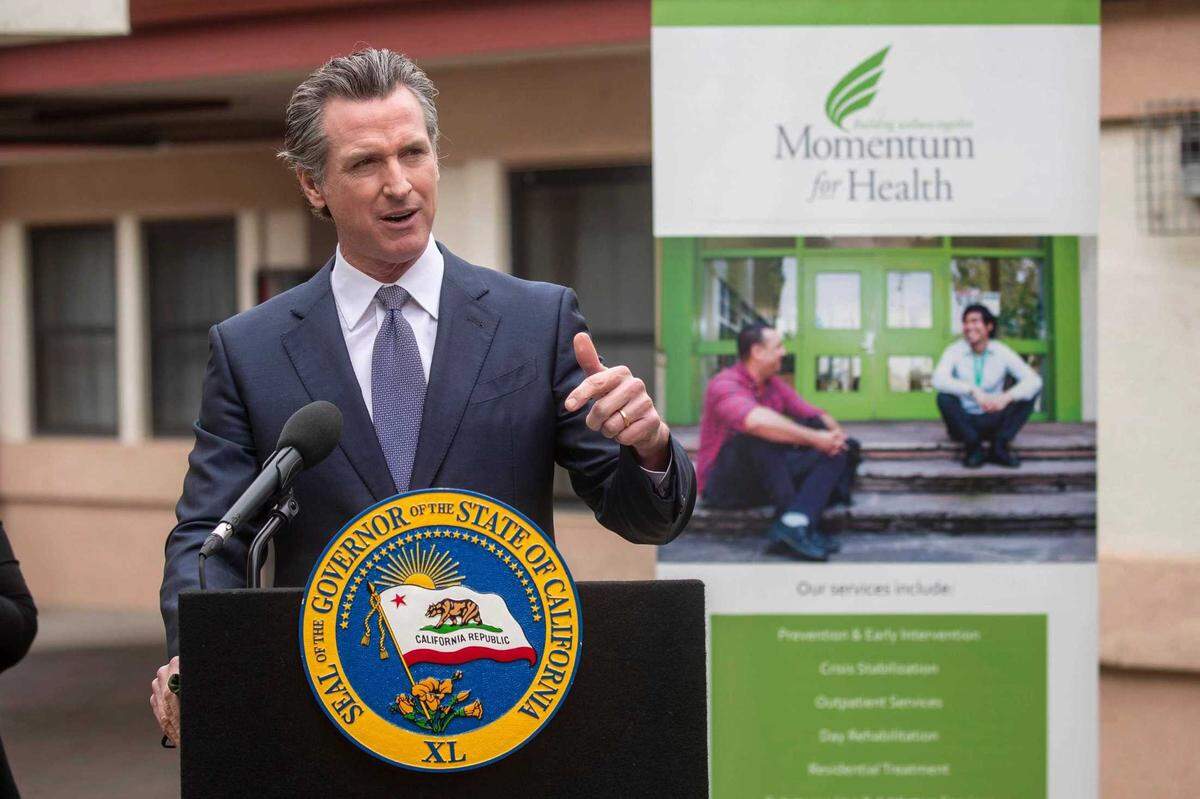
The governor’s proposal received resounding support in the Capitol. Only two of the state’s 120 legislators voted against it, and a recent poll from the UC Berkeley Institute of Governmental Studies found that California voters endorsed the new law by a five-to-one margin.
“We can’t fix it (homelessness) all at once, but what is created with CARE Court is a new on-ramp,” Senator Susan Talamantes Eggman, the bill’s author, said at the Sept. 14 event where Newsom signed the program into law.
Homeless advocates, on the other hand, see the model as another initiative that masks punishment under the framing of “care” and argue that it will only help a small portion of the people experiencing homelessness in the Golden State.
Many also worry that the new court system will disproportionately affect Black and Latino Californians, who already deal with homelessness more than their White counterparts. While Black Californians are only 5.5% of the state’s population, they comprised over 1 in 4 of the unhoused people who made contact with a service provider in the 2020-21 fiscal year, according to state figures.
“We as a nation have a long history of maintaining racialized homelessness,” said Saba Mwine, managing director of the Homelessness Policy Research Institute. “And I think we need to think more consciously about how policies like this could bring the force of our government on black and brown bodies and further criminalize them.”
But backlash from some advocates doesn’t phase the governor. In fact, Newsom says he’s heard the same opposition for years and his response is simple: “prove us wrong, don’t assume us wrong.”
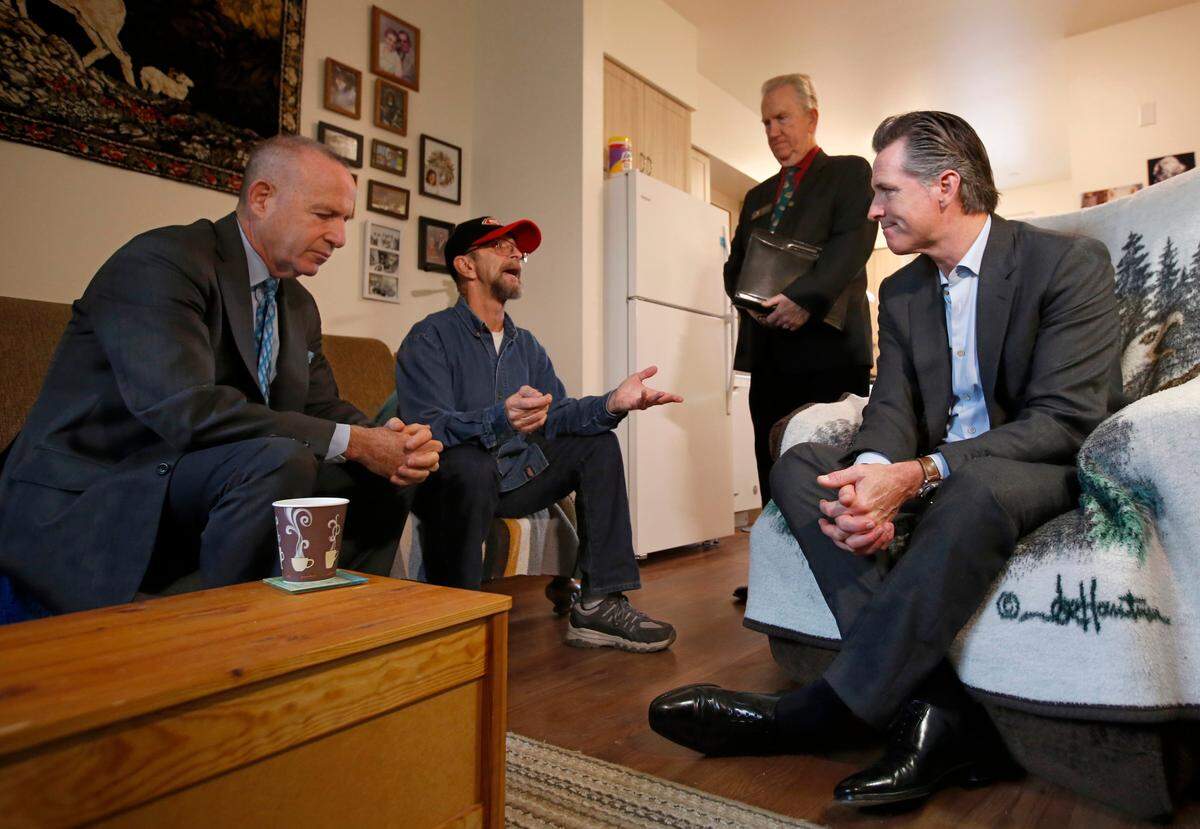
Gavin Newsom’s ‘legacy around homelessness’
The one-time federal cash infusion and historic budget surpluses triggered by the COVID-19 pandemic provided Newsom with a unique opportunity: to reimagine and scale housing for the homeless across California with elevated urgency.
He created thousands of new homeless housing units through programs like Project Roomkey and Homekey, which convert motels into permanent housing, and waived some of the bureaucratic red tape to speed up the conversion process.
Over the past two years, Newsom has dedicated $15.3 billion to address California homelessness. That unprecedented allocation included flexible aid for local governments and funding for the development of “tiny homes,” other temporary shelters and an expansion of Project Homekey.
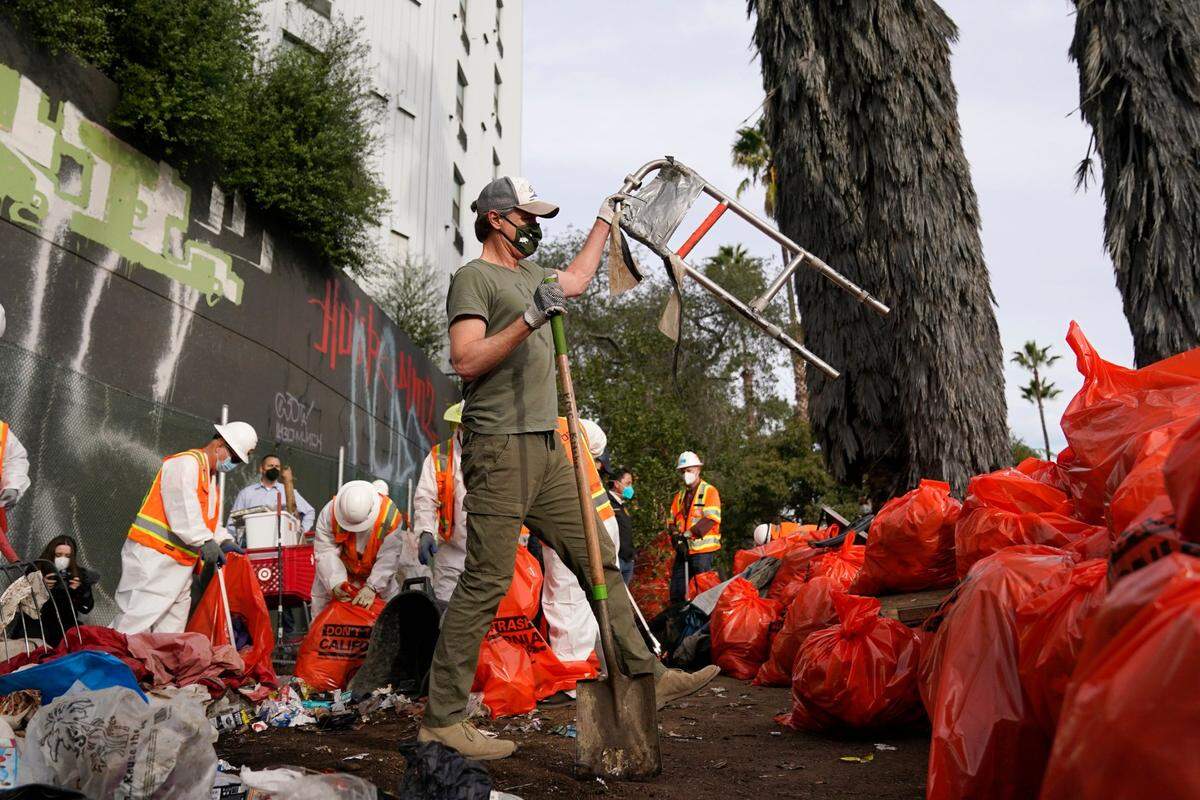
In addition to funding more housing, he has also invested state dollars to assist Caltrans and local governments in clearing encampments.
Local elected officials, housing advocates and even some of Newsom’s critics credit the governor for his historic investments, noting that it will take some time to see the full results.
“I mean that’s his legacy around homelessness – not only the state investment in terms of dollars but the understanding and acceptance that the state has a critical role to play in addressing homelessness,” Rhorer said.
But despite the influx of funding and California’s housing first policy, which focuses on providing people access to stable housing and then following up with services like mental health treatment and job training, the reality is that not everyone who needs a home will get one.
Housing officials announced earlier this year that the state would need to build 2.5 million homes by 2030 to address its shortage. That would require California to more than double its average annual output.
Addressing the housing component of homelessness also requires keeping those teetering on the verge from losing their homes.
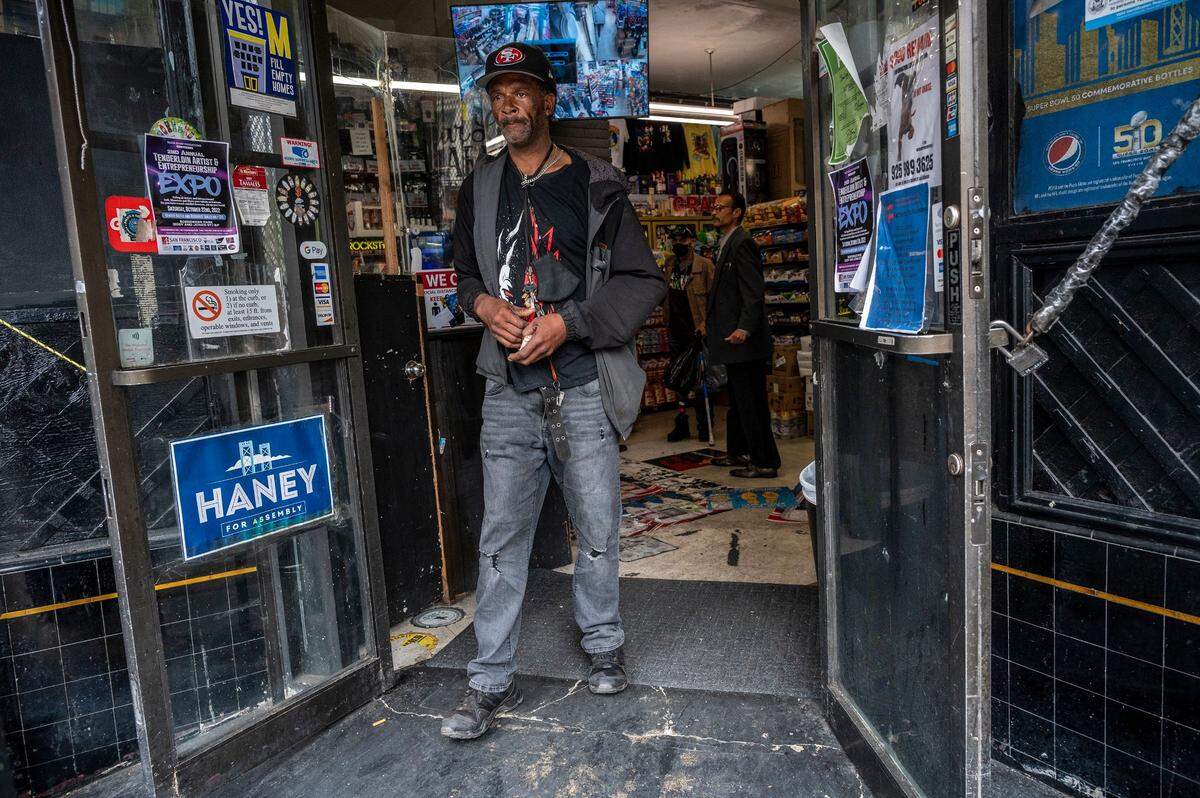
Across California, 44% of residents live in homes that are rented, according to the latest U.S. Census data. And for those living in poverty, one missed paycheck or an unexpected financial hardship could mean the difference between making a rent payment or not.
As such, policy analysts and advocates argue that the state must identify an ongoing source of money for homeless services and affordable housing.
“You can’t solve homelessness without housing,” said Sara Kimberlin, a senior policy fellow at the California Budget and Policy Center. “And what’s really needed is investment at the scale that meets the need, and making sure there’s adequate ongoing funding to support the operations of the programs that are out there and are doing effective work.”
A recent estimate from Housing California and California Housing Partnership found that the state would need $17.9 billion a year —similar to the state’s investment in higher education — in order to create enough affordable housing and end homelessness over the next 10 years.
But there aren’t plans for a new pot of money or an ongoing funding source from the state coming on line anytime in the immediate future.
For now, Newsom said he’s focused on making the funds the state does have available as effective as possible, which means keeping local government agencies accountable for results. And while that likely won’t erase chronic homelessness here in the Golden State anytime soon, it’s another approach that he says once again proves he “means business on this.”
“The one thing I’ve learned more than anything else, is that unless you’re driving accountability on this issue, people are going to gravitate to less challenging, much easier issues to solve,” Newsom told The Bee’s editorial board. “... No excuses anymore.”
This story was originally published October 20, 2022 at 6:00 AM with the headline "Gavin Newsom pledged to end chronic homelessness as SF mayor. It remains his biggest challenge."