
California school district sues Dow and Shell over cancer-causing chemical in water
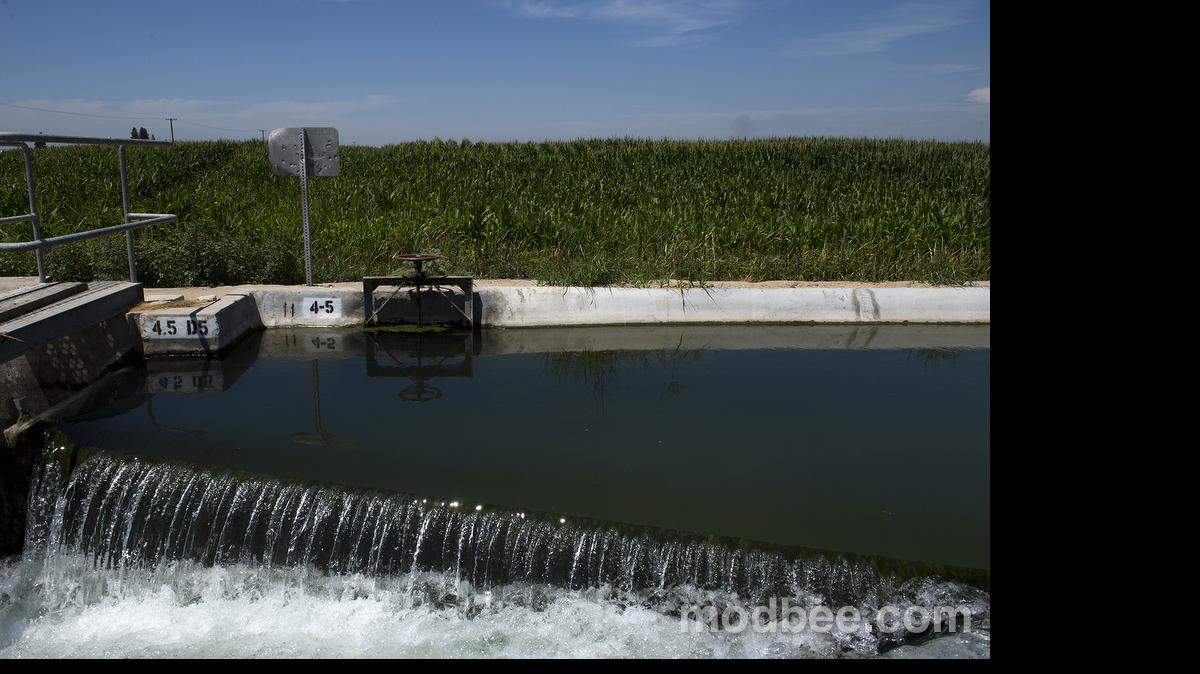
The Ballico-Cressey School District, a small school district in a rural stretch of northern Merced County, is suing corporate giants Dow Chemical and Shell Oil.
The lawsuit, filed on March 30 in Merced County Superior Court, alleges that the big companies manufactured and sold agricultural fumigants containing the toxic chemical 1,2,3-TCP, or 1,2,3-Trichloropropane, that were sprayed on nearby fields surrounding the school district, polluting Cressey Elementary School’s water supply.
“This is an effort to hold these companies accountable,” said Kenneth Sansone, attorney at SL Environmental Law Group who is representing the school district. “We want to make sure the companies who created the mess and profited from it are the ones who pay to clean it up.”
The Ballico-Cressey School District is seeking damages and other relief associated with the dangerous chemical found in Shell Oil’s and Dow Chemical’s agricultural sprays, according to the complaint. The complaint also asks for Dow and Shell to pay “an amount sufficient to punish manufacturer defendants and to deter them from ever committing the same or similar acts.”
According to a press release issued on April 5 about the lawsuit, more than 70 communities, utility providers and water service agencies have sued Dow, Shell and other companies that made or sold pesticides containing TCP. In the last year, three other school districts in the San Joaquin Valley sued Shell and Dow, including the McSwain Unified Elementary School District, the Selma Unified School District and Manteca Unified School District.
“The taxpayers of the Ballico-Cressey School District should not be forced to pay to clean up water pollution caused by defective products that made Dow and Shell millions and millions of dollars,” said Bliss Propes, the superintendent of the Ballico-Cressey School District. “This lawsuit will help to hold these corporations accountable for the damage their TCP-contaminated pesticides have caused to one of the community’s most precious resources.”
The press release goes on to allege that TCP was a waste product of other chemicals manufactured by Dow and Shell. Products containing TCP were marketed and sold as pesticides until the 1980s and used throughout the state to control nematodes, or microscopic worms that infest the roots of plants. These pesticides were injected into the soil, and the TCP would make its way through the soil to the water table below, contaminating water supplies.
The Ballico-Cressey complaint also goes on to say that the companies that manufactured the dangerous chemical and the pesticides that contained it knew how dangerous 1,2,3-TCP was, or at least should have known. The Ballico-Cressey School District also alleges that the manufacturers of the chemical should have known how dangerous TCP would be to drinking water supplies, specifically. Representatives of Shell and Dow could not be reached for comment.
The state’s TCP woes
The chemical was designated an unregulated contaminant after it was discovered at a hazardous waste site in Burbank in the 1990s, according to the State Water Resources Control Board. Studies showed that 1,2,3-TCP causes cancer in lab animals and is a carcinogen, or cancer-causing chemical, in humans, as well.
1,2,3-TCP is also known to cause blood disorders and liver and kidney damage, according to the civil complaint. The state water board subsequently started to require a drinking water notification level of .005 micrograms per liter for 1,2,3-TCP in 1999, according to the State Water Resources Control Board.
The state also started to require monitoring of the chemical in drinking water sources once it was found to have polluted multiple drinking water sources across the state. The civil complaint states the California Office of Environmental Health limit for 1,2,3-TCP is 7 parts per trillion, although the state water board set the maximum contaminant level at 5 parts per trillion. At 5-9 parts per trillion, the well tested near Cressey Elementary School has more than the allowable amount of the chemical by these measures.
“The manufacturers of TCP products had a duty – and breached their duty – to evaluate and test such products adequately and thoroughly to determine their environmental fate and potential human health and environmental impacts before they produced and sold such products,” the complaint reads. “As a result of these failures, TCP contaminated, and continues to contaminate, the drinking water supply of the plaintiff’s water system.”
TCP’s effect on other valley towns
This isn’t the first time the San Joaquin Valley pushed back on TCP in pesticides made and sold by the corporate behemoths. Atwater city officials found 1,2,3-TCP in some of the city’s wells in 2019, and cleanup efforts started almost immediately.
That was also the year Atwater won $63 million in net settlement proceeds from Shell and Dow because the two companies didn’t disclose that TCP was contained in nematicide, the pesticide used to kill nematodes. Nematicide was often used on agricultural fields near Atwater. New systems to filter out the chemical were completed in August 2021.
Livingston, too, got a windfall in 2011 from a $9 million settlement from Dow Chemical, Dow AgroSciences, Shell Oil Co. and Wilbur Ellis Co. That lawsuit was filed in 2005 after it was discovered that Livingston’s wells were contaminated with TCP. The city later installed a $2.3 million filtration system.
What Ballico-Cressey is doing now
The Ballico-Cressey School District owns and operates its own water system, and after school officials started testing for 1,2,3-TCP in their wells, found 5-9 parts per trillion of the chemical in one of their wells – what amounts to a few grains of sand in an Olympic-sized pool, the district’s lawyer said.
However, such a seemingly small amount can do a lot of damage.
“The problem with contaminants in drinking water in a well is that generally, people are going to be drinking large quantities of water from that well over time,” Sansone said. “So aggregate amounts of contaminants in those people is a concern.”
This chemical doesn’t just go away, either, Sansone said. TCP doesn’t deteriorate or dissipate quickly over time, even in water.
“Once TCP gets into the groundwater, it would be expected to stay there for a very long time,” Sansone said. “The only way it will come out or be diminished is if it is pumped out of the water supply. We’ve seen cases that can take as many as 30 or 40 years just for TCP to reach the water table after application.”
To filter out the carcinogen after the 2018 testing, Ballico-Cressey school officials installed drinking water filters in the water fountains at Cressey Elementary School, which is located near the well where 1,2,3-TCP was found – what Sansone calls a short-term solution.
“The district plans on installing a specialized water treatment system to remove TCP from the entire water supply at the school,” Sansone told the Sun-Star.
The water treatment system is the district’s long-term solution, Sansone said. It is estimated to cost $1 million, and the district is already working with an engineering firm on the design of the system. However, full implementation is still “far down the road,” Sansone said.
Sansone added one of the best resolutions for the district and the companies in the case would be to settle, although whether or not that will happen remains to be seen.
“At this point, it’s difficult to say,” Sansone said. “We’re just getting started.”