‘Moving toward extremes’: California drought outlook is bleak after dry start to 2022
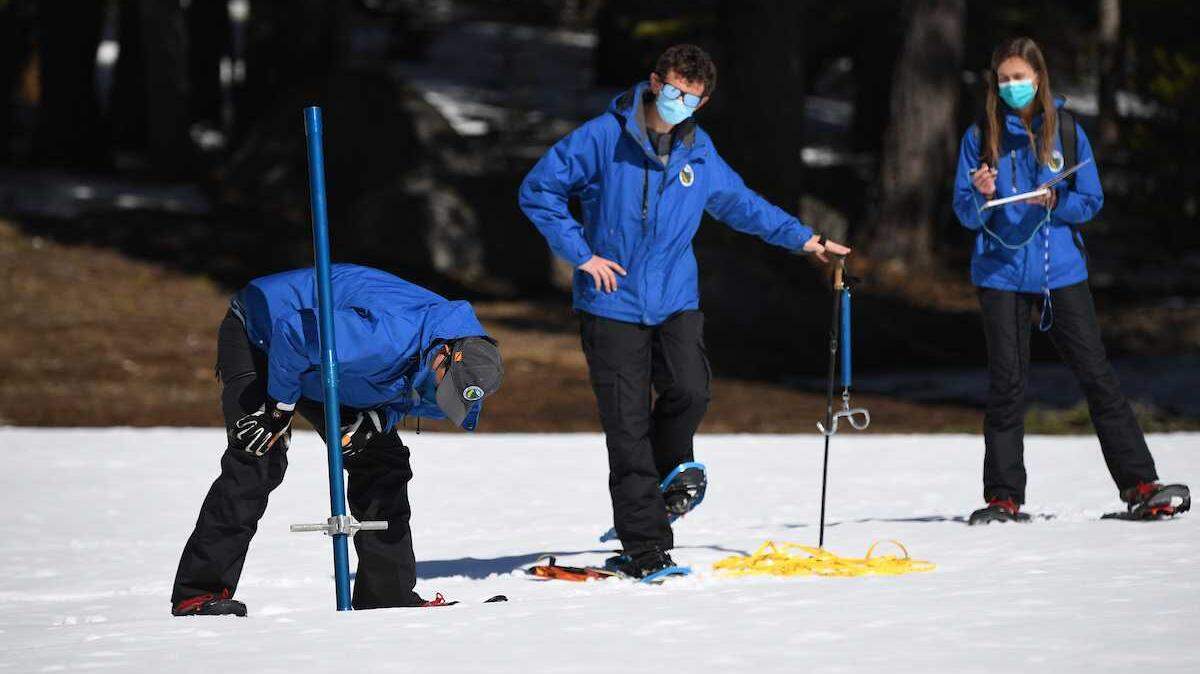
Despite mammoth snowstorms in the Sierra Nevada mountains during December, state water officials spoke with very little optimism about California’s snowpack and reservoir levels following a bone-dry January and underwhelming February.
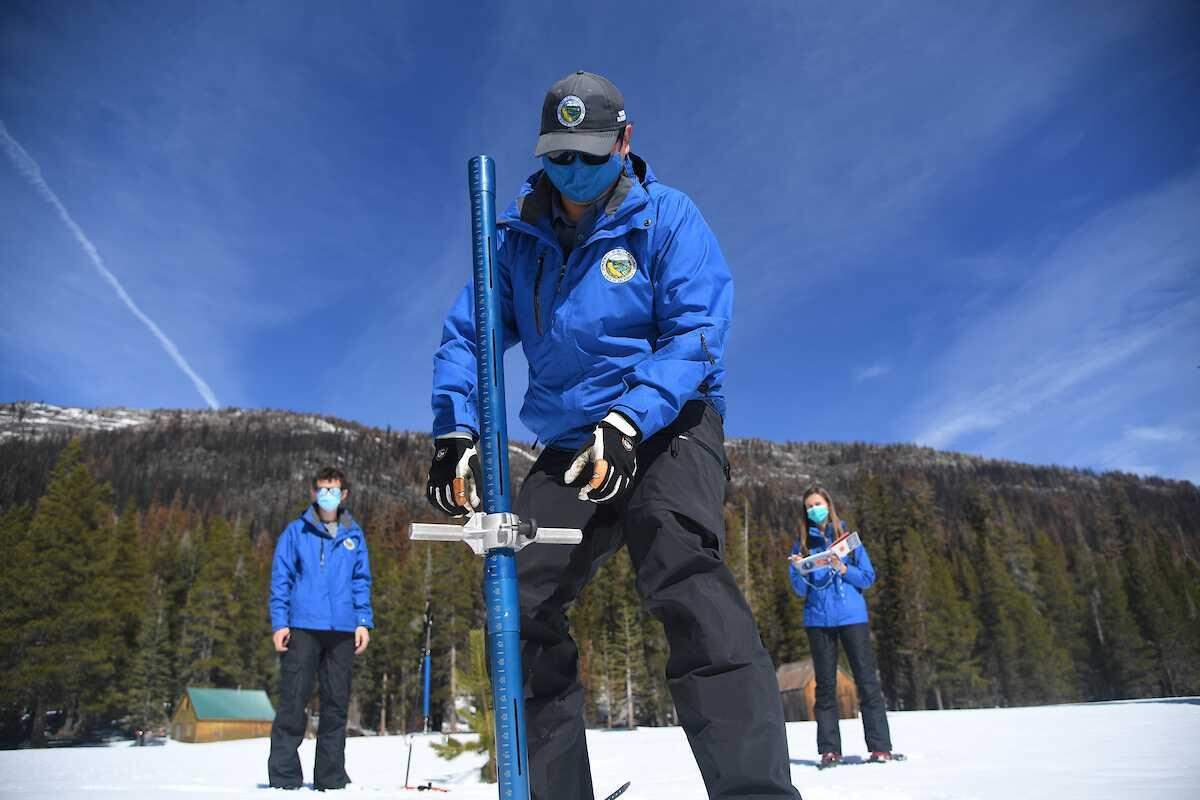
“Without any significant storms on the horizon, it’s safe to say we’ll end this year dry and continue on into the third year of this ongoing drought,” said Sean de Guzman, snow survey manager with the California Department of Water Resources, after Tuesday’s manual survey at Phillips Station near Echo Summit.
The snow-water reading of 16 inches at Phillips marked only 68% of the March 1 average, de Guzman said, and the statewide snowpack level is only 63% of average.
The survey results, streamed live on Facebook, revealed a snow depth of 35 inches at Phillips, down from 48.5 inches Feb. 1 and 78.5 inches Jan. 1.
December 2021 marked the snowiest December in recorded history for the central Sierra, beating a record set in 1970 by a wide margin, according to UC Berkeley’s Central Sierra Snow Lab.
But the central Sierra then went an unprecedented 37-day stretch of winter without measurable snowfall at the Donner Summit station.
“The majority of the snowpack that we’re standing on right here today is basically the same snow that fell during December,” de Guzman said.
Reservoirs throughout the state are only at 73% of their capacity this time of year, according to de Guzman. California’s largest reservoir, Lake Shasta, was just 37% full, which is 52% of its average level on March 1.
“This winter has demonstrated that as the world continues to warm, we’re seeing average conditions become more rare. Precipitation is moving toward extremes,” Jeremy Hill, a hydrology and flood operations manager with the department, said after Tuesday’s survey.
“Even when we get large storms and heavy snowfall early in the season, after a few dry weeks … things go back below normal.”
Hill said this emphasizes the importance of Californians conserving water and preparing for ongoing drought.
It also presents challenges to water and climate scientists trying to predict future conditions.
“Our past forecasting efforts have relied on historical patterns that no longer apply based on our current climate conditions,” Hill said.
There is some light snow in the forecast later this week, but it very likely won’t be enough to offset low totals from the first two months of 2022.
“We are well below normal conditions,” de Guzman said. “Bearing any unforeseen miracle March, which we don’t actually see coming, we’ll end this year below average.”
A final snowpack measurement for the year will take place April 1.
This story was originally published March 1, 2022 at 12:33 PM with the headline "‘Moving toward extremes’: California drought outlook is bleak after dry start to 2022."