
California artists lost work in the pandemic. This state law aims to pay them a living wage
Tucked behind a front yard full of tall trees and shrubs, longtime Fresno artist Margaret Hudson’s Earth Arts Studio boasts a large array of clay sculptures depicting whimsical versions of animals native to California, including quails, owls and bears. Often, they’re smiling.
The Fresno native died last February, but her family has kept her studio near Ashlan and Blackstone avenues operating by continuing to recreate her works made from Hans Sumpf clay, a locally sourced adobe brick.
But keeping up with the demand for her art has been especially challenging throughout the pandemic, her grandson Soren Hudson-Rasmussen told The Bee in an Oct. 14 interview. That’s because many local arts businesses like Earth Arts Studios are struggling to find the funds to hire and train new employees, he said.
“We really need to bring in some young talent and pass on what’s been a local tradition, but with all the economic uncertainty, it’s difficult to hire new people,” he said.
A new state law meant to boost California’s arts and cultural industries aims to change that. It intends to provide more artists and creative workers with stable employment opportunities to help them recover from the pandemic. Signed by Gov. Gavin Newsom last month, the California Creative Workforce Act, or SB 628, is the first legislation of its kind designed to create new arts and culture jobs and help diversify the industry by providing opportunities to workers from various backgrounds.
The state-sponsored grant program, facilitated by the California Workforce Development Board and the California Arts Council, establishes a one- to two-year “earn and learn” job training opportunity for creative workers throughout the state.
The program gives workers the opportunity to gain experience and develop new skills in a workplace setting while earning a wage of about $19 an hour. For students, this kind of program can also combine classroom instruction with paid on-the-job training, according to the law.
It aims to address a huge gap: Before the pandemic, California’s creative economy generated at least 764,000 new jobs and about $230.3 billion in revenue a year. But the state lost $140.6 billion in revenue and 507,100 jobs from its creative economy due to the pandemic, according to a recent report by the Otis College of Art and Design.
At least 63% of arts workers across the nation were unemployed at the end of last year, while 95% reported income loss, an analysis from the California Arts Advocates found.
Lilia Gonzales-Chavez, executive director of the Fresno Arts Council, said the new program is “an opportunity to put money in the pockets of local artists, but also attract more people to Fresno to participate in our arts activities.”
She said the program could also offer a wide range of funding opportunities for jobs in the creative sector that are not traditionally seen as “artistic.” She said one of the biggest challenges facing the creative industries is that people are not encouraged to develop skills that are aligned with the arts. There’s a stereotype, she said, that those jobs will not be lucrative or financially stable.
“Whether it’s funding the facilities manager at one of our cultural institutions, or it’s an administrator that understands nonprofit accounting, those are all different fields that we don’t think about as being artistic, but they are the support and the foundation for the creative arts,” she said. “I just see a lot of opportunity for people to have living wage jobs, and be able to pursue careers in the arts.”
Program could create more arts jobs in Fresno
The grant program could mean organizations or businesses like Earth Arts Studios could apply with a local agency like the Fresno Arts Council to receive additional funding through SB 628 to hire and train new employees.
Like many other businesses, Hudson-Rasmussen had to close down the storefront when the pandemic first hit in 2020 and transitioned to online sales and deliveries.The transition was rough, he said, but the biggest difficulty came after two of the studio’s most experienced sculptors left.
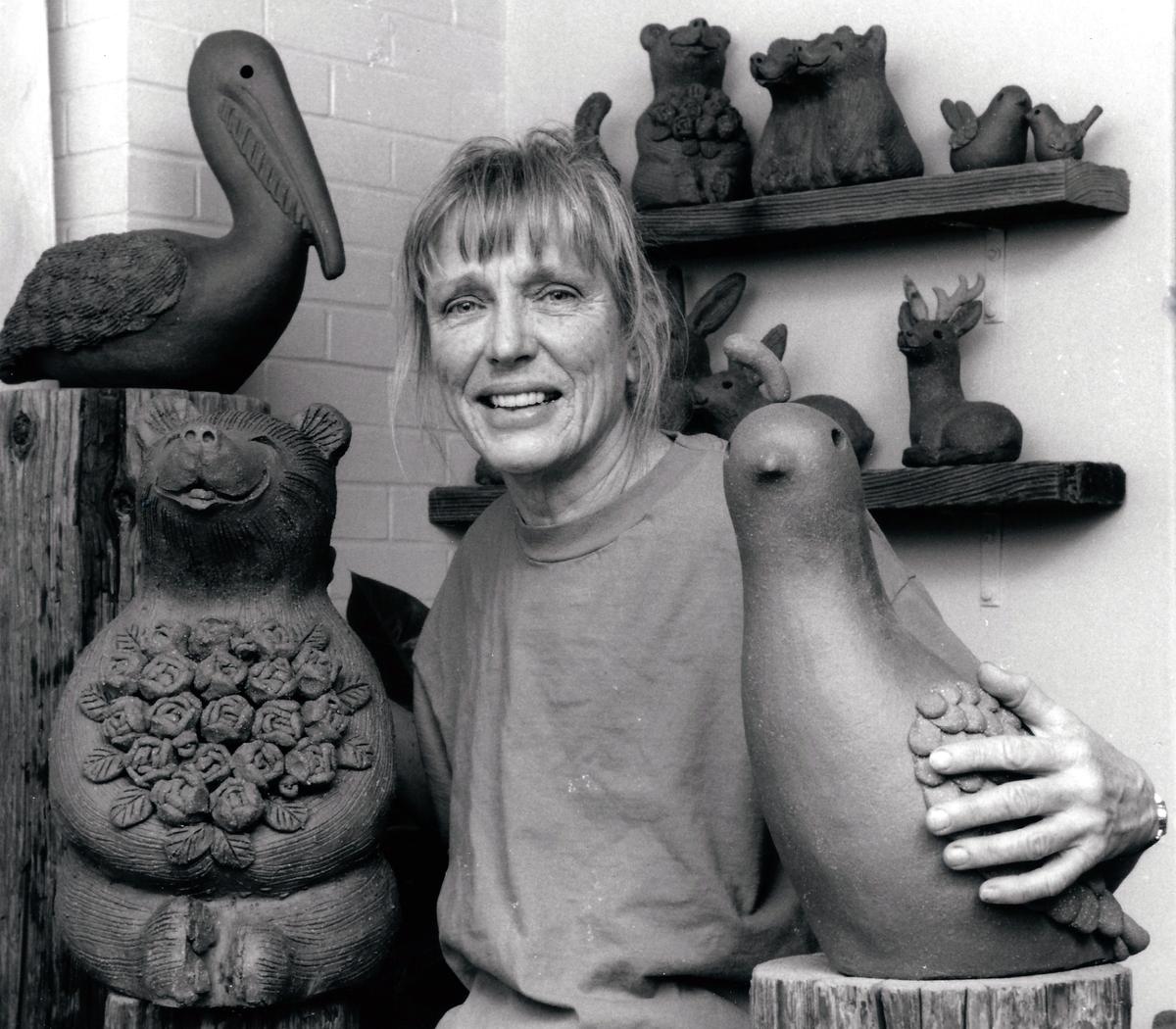
The rich, brown sculptures at Earth Arts Studios are molded without glaze before being put into a kiln to produce Hudson’s iconic designs that stem back to the 1970s. Finding a replacement to produce his grandmother’s designs hasn’t been easy, he added, because training a new sculptor to learn her unique style would be costly, he said. As a small, family-owned art studio, Hudson-Rasmussen said they don’t have the funds to pay new workers during the preliminary training period.
“The issue is, there’s people who are good at ceramics, but it takes a long time for someone to learn how to do this sort of style,” he said. “Once we have someone who’s trained and is productive, we can pay them a good wage to be sculptors, but it’s going to be six months to a year of them making stuff that we can’t really sell or put out there as representative of our studio.”
He said the new program could relieve some of the financial burden on local arts establishments that are just barely scraping by.
He said it’s important many of those new job opportunities are given to a diverse pool of candidates. His grandmother regularly employed women, recent immigrants and people from diverse ethinic backgrounds and he likes that the new funding would give him an opportunity to continue doing that at Earth Arts Studios, he said.
“There’s a lot of people with a lot of talent in different areas and I’d love to bring in someone from a different background and see what perspective they can add to this local tradition,” he said.
The California Arts Council will distribute the funds for the grant program to grantees in local communities, including local governments, cultural arts agencies, community nonprofit organizations and other organizations. These recipients can allocate the funds to small businesses, independent artists, or other groups that are in need of workers.
“There’s all aspects of the creative industries that could qualify,” said Julie Baker, executive director of the California Arts Advocates, a statewide arts advocacy organization that lobbied for the bill. “It’s pretty broad because you don’t want to be overly prescriptive, you want to then hand it to the local agency that is able to design the program based on what the needs are of that community.”
Though the funding for the program has not yet been determined, Baker said she is hopeful that the initiative will launch next year with between $15 million and $27 million.
“We want to start slower to get it established and start to see how we can build it out within every county in California,” she said.
Program aims to create new pipeline of creative workers
The new program could help eliminate roadblocks for people interested in applying for jobs in the creative fields. It was designed to include people who are at the beginning of their careers, including veterans and formerly incarcerated individuals, Baker said.
“The bill really is trying to establish a new pipeline of creative workers with an emphasis on and focus on marginalized communities that have had barriers to access to the creative industries,” she said.
Fresno-based muralist Omar ‘Super’ Huerta hopes the new program will help make a difference for those living in Fresno’s poverty-stricken neighborhoods.
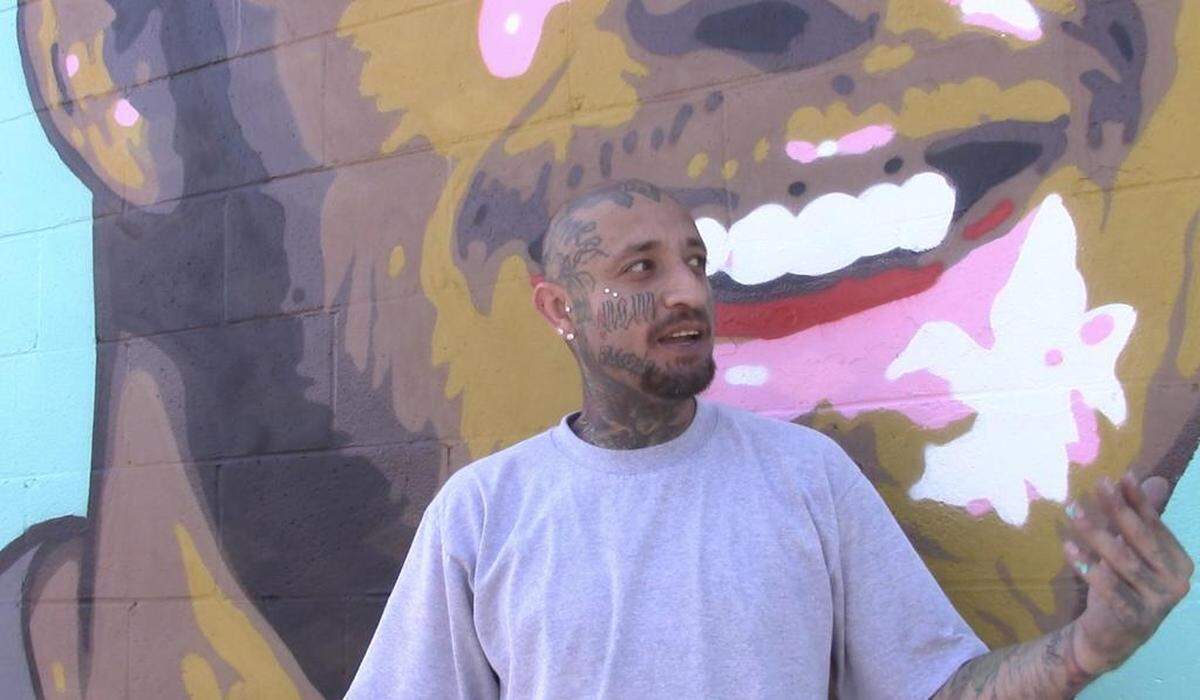
The 41-year-old is well-known around Fresno for his murals of musicians, cultural icons and community members who were victims of gun violence, including 16-year-old Isiah Murrietta-Golding, who was shot in the head by Fresno police in 2017, and street vendor Lorenzo Perez, who was shot and killed while working earlier this year.
Huerta said he always had a passion for art, but didn’t have many opportunities to pursue his ambitions while growing up with a single mom in a predominantly poor neighborhood in southeast Fresno.
Huerta said he loves being an artist because it allows him to give back to his community and help kids find their passions. He said kids from various backgrounds, especially in Fresno’s disadvantaged areas, need more opportunities to get into the arts and cultural sectors.
He’s hopeful the new law will help make a dent in that effort.
“I’m so passionate about what I do here in my city because I know I’m helping in some way,” he said. “If we don’t start to make positive changes, our kids and our grandkids are just going to keep getting into the same things I grew up in.”
This story was originally published October 28, 2021 at 5:00 AM with the headline "California artists lost work in the pandemic. This state law aims to pay them a living wage."